Luxury Is Most Convincing When It Removes Friction
The laundry rooms worth copying are not necessarily the ones with the most marble, cabinetry, or technology. Their real luxury is a sense that every ordinary action has been anticipated. Doors clear one another, supplies appear at comfortable reach, counters remain open, machines operate quietly, and wet garments move without crossing clean work. High-quality materials support this ease because they tolerate repeated use and age gracefully, but expense alone cannot create it. A beautiful room with inaccessible shutoffs or nowhere to place a basket is less luxurious than a modest one whose proportions and details are exact. The most transferable ideas are therefore architectural and operational: tailored storage, controlled lighting, durable touchpoints, acoustic comfort, and serviceable integration. Copy those principles first, then express them through materials that fit the home’s budget and character.
A: Anticipated workflow, tactile quality, quiet operation, generous work space, and serviceable details create lasting luxury.
A: No. Several durable surfaces can look refined when selected for performance and detailed carefully.
A: The feature that solves a recurring household problem, such as ventilated sorting or a well-placed drying pullout.
A: Only when equipment and installation support it without compromising ventilation, controls, access, or service.
A: Use even ambient light, shielded task sources, accurate color rendering, and one restrained decorative gesture.
A: They reduce bending but may raise counters and controls too high, so test the complete elevation.
A: Fund safety, utilities, waterproofing, floor support, durable construction, and qualified installation before decorative upgrades.
A: A limited group of compatible materials usually lets proportion and workmanship read more clearly.
A: Yes. Precise storage, comfortable access, quiet machines, excellent lighting, and open work surface matter more than size.
A: Protect an uninterrupted folding counter and relocate every recurring supply to nearby dedicated storage.
Begin With a Bespoke Workflow, Not Bespoke Millwork
Observe the household’s load volume, stain-treatment habits, air-drying needs, ironing routine, and path to bedrooms. A luxury plan responds to those specifics instead of multiplying generic cabinets. Draw the sequence and assign a landing, tool, or storage location to every repeated action.
Only then commission cabinetry. Custom work delivers value when it fits real baskets, conceals awkward equipment, or creates access standard modules cannot. A wall of shallow decorative cupboards is not bespoke performance.
Use Cabinet Interiors as the Quiet Upgrade
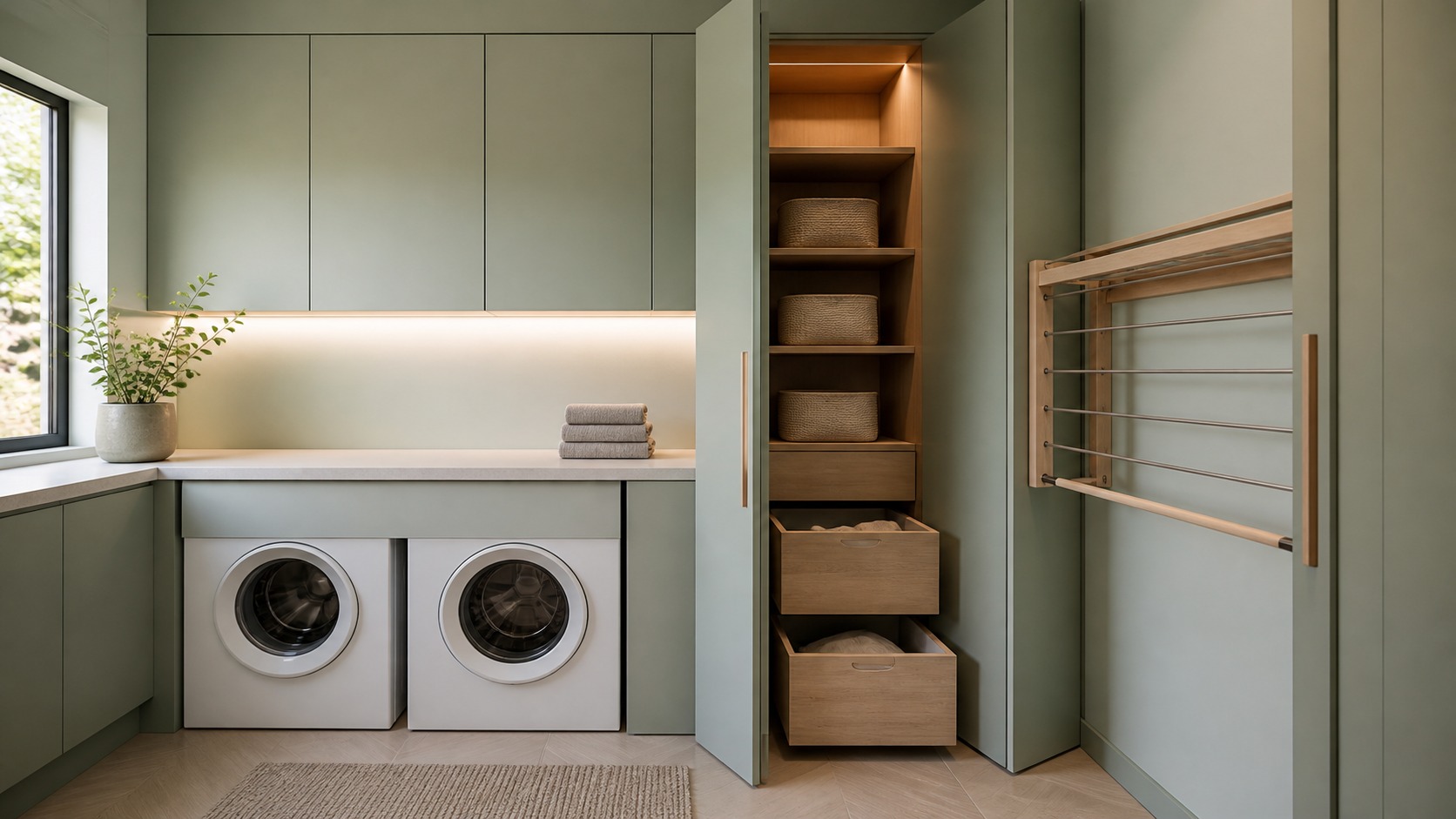
Full-extension drawers, durable liners, adjustable shelves, ventilated hampers, and tall-tool divisions affect daily satisfaction more than ornate door profiles. Specify load ratings for heavy bottles and hardware that remains smooth under frequent use.
Integrate one or two specialty elements with clear purpose: a pullout drying frame, a lift-out sorting system, or a cabinet for a cooled iron. Avoid filling every box with proprietary mechanisms that restrict future flexibility.
Finish interiors where they are visible and protect wet zones with moisture-resistant materials. Consistency inside the doors contributes to the calm experience even when guests never see it.
Choose Stone for Performance Before Prestige
Honed stone, engineered quartz, porcelain slab, and solid surface can all produce a refined counter. Compare stain products, cleaners, heat, seams, repairability, and maintenance before choosing. A prestigious material that etches under the household’s routine creates anxiety rather than ease.
Create One Generous Work Surface
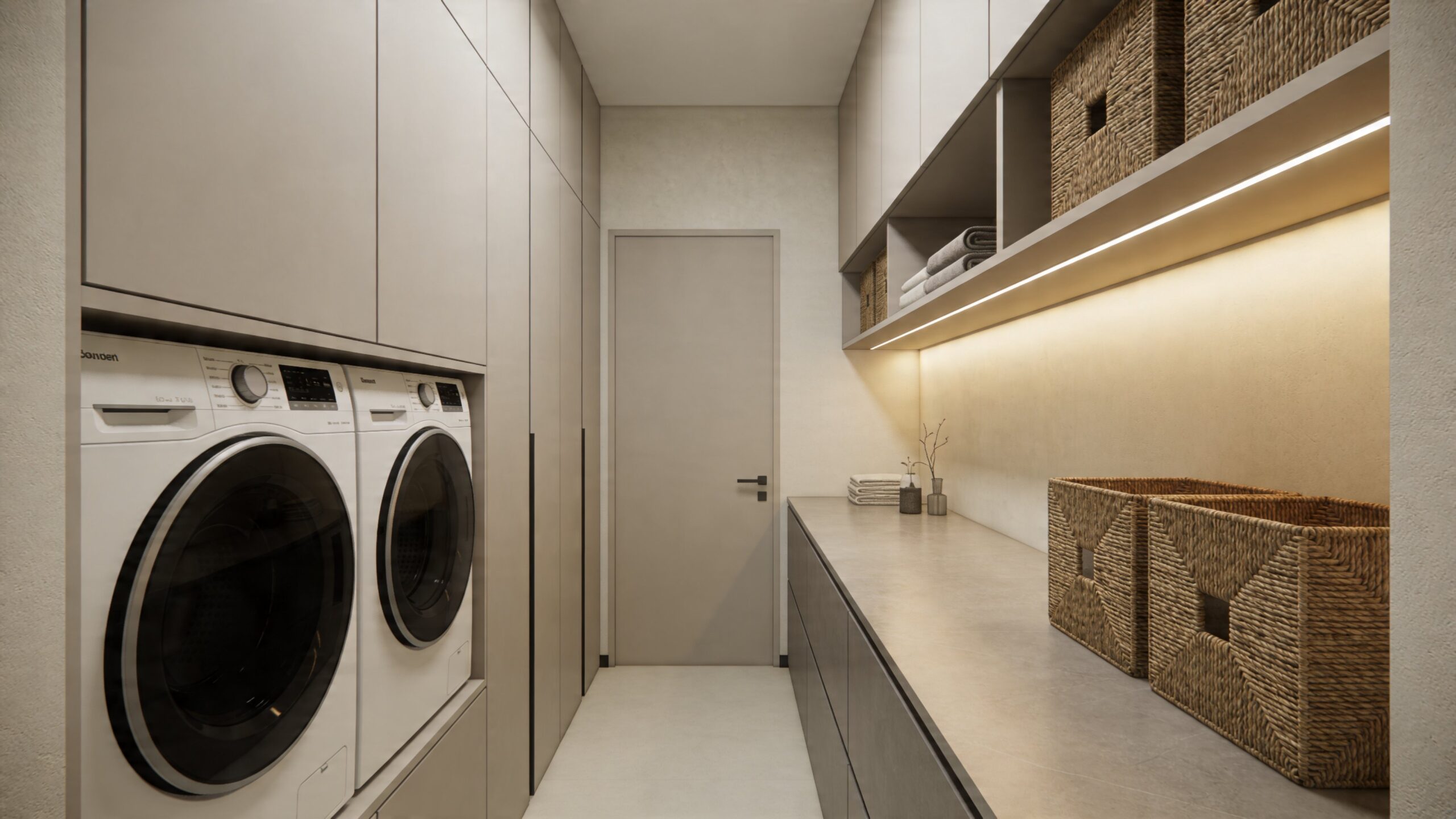
A broad uninterrupted counter allows folding, sorting, and temporary basket landing without choreography. Protect its span by giving bottles, pocket finds, and appliances dedicated nearby storage. Depth and height should suit users and the largest common linens.
Support counters independently above machines and preserve equipment removal. Waterfall ends and thick profiles can look substantial, but they should not trap appliances or narrow circulation.
Treat the Sink as a Designed Workstation
A luxury sink zone combines a basin appropriate to real tasks, a faucet with useful reach, contained splash protection, and storage arranged around accessible plumbing. Integrated or under-mounted details reduce edges, though repair and replacement implications differ.
Provide a landing on at least one side and a hanging option nearby. Select finish and basin depth for comfort, not only dramatic appearance.
Keep shutoffs obvious and protect the cabinet base. Leak detection may add reassurance when testable and maintained, but it does not replace sound installation and inspection.
Invest in Acoustic Comfort
Quiet equipment, correct leveling, strong floor support, and thoughtful wall assemblies matter when the room adjoins living or sleeping space. Cabinet panels should not touch vibrating machines or create resonant cavities.
Soft-close hardware reduces impact, while solid doors and seals may control sound where ventilation requirements permit. Address noise at its source before adding decorative acoustic treatments.
Layer Light for Accuracy and Atmosphere
Even ambient light makes the room comfortable; focused task light supports stain inspection, folding, and sink work; a restrained decorative fixture can establish character. All layers should coordinate in color temperature and avoid glare on appliance doors or polished stone.
Conceal linear sources behind proper shielding so individual diodes do not appear. High color rendering helps users judge fabric and stains accurately. Dimming can soften the room when it is visible from adjacent spaces.
Lighting controls should remain intuitive. Luxury is diminished when a routine task requires navigating several confusing scenes or apps.
Use Hardware as a Tactile Standard
Pulls, faucet handles, drawer slides, and door latches are touched repeatedly. Choose forms comfortable with wet hands and finishes that tolerate cleaning. A coherent metal family can unify mixed cabinet and counter materials.
Test large samples for fingerprints, spotting, and wear. Living finishes develop patina; coated finishes have different repair limitations. Select with realistic expectations.
Build in Ergonomic Relief
Raised equipment may reduce bending, while a lower folding area can support seated work. These moves need coordination because pedestals can make counters too high and deep sinks can create shoulder strain. Mock up critical heights with regular users.
Pullout shelves can provide temporary lower landings; toe-kick lighting can improve floor visibility; reachable storage can reduce dependence on steps. Accessibility is a durable form of luxury because it broadens who can use the room comfortably.
Keep controls, shutoffs, and frequently handled supplies within practical reach without compromising chemical safety. The best room feels accommodating rather than prescriptive.
Conceal Utilities Without Making Them Mysterious
Flush panels and coordinated covers can reduce visual noise, but valves, outlets, vents, and service points must remain identifiable. Use removable pieces and retain documentation showing what sits behind them.
Plan cable management, charging, and accessory outlets inside approved locations. Do not hide cords or heat-producing equipment in ways that reduce ventilation or complicate inspection.
Use Natural Material in Controlled Amounts
Wood introduces warmth against metal and stone. One cabinet volume, drawer bank, or interior niche can be enough. Select stable products, protect edges near water, and coordinate grain direction across adjacent fronts.
Texture can also come from linen, woven fiber, or ribbed tile, but keep lint and cleaning in mind. A limited material palette allows craftsmanship to read more clearly than a showroom of competing finishes.
Repeat each principal material so it belongs to the architecture. A wood cabinet can echo a rail or stool; stone at the counter can return as a short backsplash.
Specify Appliances Around the Room’s Priorities
Capacity, cycle performance, fabric care, energy use, noise, venting, and service availability should lead the choice. Smart features are useful when they reduce waiting or provide meaningful alerts, not when they add visual complexity.
Select equipment early enough to coordinate openings and hookups. Preserve tolerance for future replacements and use approved stacking or pedestal components.
Spend Where Failure Would Be Expensive
Prioritize waterproofing, plumbing, electrical work, ventilation, floor support, durable cabinet boxes, reliable hardware, counter support, and professional installation. These elements protect the home and the visible finishes.
Save on easily changed accents, secondary decorative lighting, or elaborate interior fittings that do not solve a recurring task. A restrained room with excellent fundamentals often looks more expensive than one with costly surfaces and unresolved details.
Luxury worth copying is measured over years. When drawers stay aligned, surfaces remain usable, machines can be serviced, and the workflow still feels effortless, the room has delivered more than a first impression.
Give the Room a Hospitality-Level Arrival
A high-end laundry room often feels different before any cabinet is opened because the arrival has been composed. The doorway frames a calm counter, natural light, or one carefully proportioned cabinet volume instead of the sides of machines and a row of products. Achieve that effect by moving bulk storage away from the first sightline, aligning trim with cabinetry, and providing a destination for the basket carried through the door. The floor transition should be smooth, the primary light control immediate, and the door hardware substantial without obstructing passage. This is not staging for guests; a clear arrival reduces collisions and gives every load a predictable place to begin.
Design Climate and Airflow as Comfort Features
Heat, humidity, and stale air can make an otherwise beautiful room unpleasant. Coordinate dryer exhaust or ventless requirements, room ventilation, make-up air where necessary, and operable windows with qualified professionals. Keep grilles integrated but unobstructed, and avoid cabinetry that traps heat around equipment. Temperature and moisture control protect finishes as well as users.
If the room includes extensive air-drying, allow generous separation between garments and provide airflow across the zone. A quiet ceiling fan or whole-room strategy may be appropriate when approved for the site, but it should not blow lint across clean folding surfaces. Monitor condensation on windows and cool walls after commissioning. Comfortable air is a luxury users notice during long folding or ironing sessions even though it rarely appears in photographs.
Commission Craftsmanship at Touching Distance
Inspect reveals, grain continuity, drawer alignment, stone seams, edge polish, grout, sealant, lighting channels, and the way pulls feel in the hand. View the room from the doorway and then from inches away at the sink and folding counter. Luxury depends on consistency at both scales. Test every drawer under realistic load, open opposing doors together, and listen for rattles while machines operate. Correct small alignment or hardware problems before they become accepted irritations. Keep finish samples and touch-up instructions, but do not use cosmetic repair to excuse poor fit at installation.
Create a Long-Term Stewardship Plan
Record maintenance intervals for stone or counter surfaces, cabinet finishes, ventilation, appliance filters, hoses, leak devices, lighting components, and specialty hardware. Assign storage for replacement filters and approved care products without turning them into visible decor. A concise household record prevents well-intended cleaners from damaging premium finishes.
Plan for change. Leave adaptable shelves, removable fillers, replaceable drivers, and appliance openings with reasonable tolerance. Photograph utilities and concealed supports before completion. If a proprietary pullout or control fails, the room should continue operating while a replacement is sourced. The most copied luxury principle should be resilience: quality elements are protected, working systems remain accessible, and the room can evolve without sacrificing the calm experience that justified the investment.
Judge the Room After the Styling Is Removed
Clear away flowers, folded display towels, decorative bottles, and photography props. The cabinetry, light, circulation, and working surfaces should still feel resolved.
Return only objects that support a real routine or carry genuine personal meaning. Give each one a defined home that does not compete with folding, pretreatment, or machine access.
This final edit distinguishes lasting luxury from temporary staging. The room remains composed on an ordinary wash day because its architecture and workflow, not accessories, create the experience. Finally, compare every desired upgrade with the minutes it saves, the strain it reduces, or the maintenance it prevents. A quieter cycle that can run near bedtime, a drawer that brings heavy bottles forward, or a light that reveals a stain offers measurable benefit. A fragile ornament or inaccessible upper cabinet may only photograph well. This value test keeps the project luxurious in use and prevents budget from drifting toward features that require the household to serve the room. Before approving the design, walk through one complete load with an empty basket, a full basket, hanging pieces, folded items, and supplies. Note every unnecessary turn, reach, temporary pile, and blocked door. Then repeat the exercise while another person passes through the room. This simple rehearsal often reveals more about luxury than another finish sample. It confirms that the visual calm is supported by circulation, reachable storage, comfortable work heights, and enough clear surface to prevent clean and soiled laundry from crossing paths. Resolve those friction points before construction details become fixed. Reserve a small contingency for corrections found during that rehearsal and final commissioning. Adjusting a light, shelf, pull, or door stop before handoff is far less disruptive than living with an avoidable compromise in a room intended to feel effortless.