
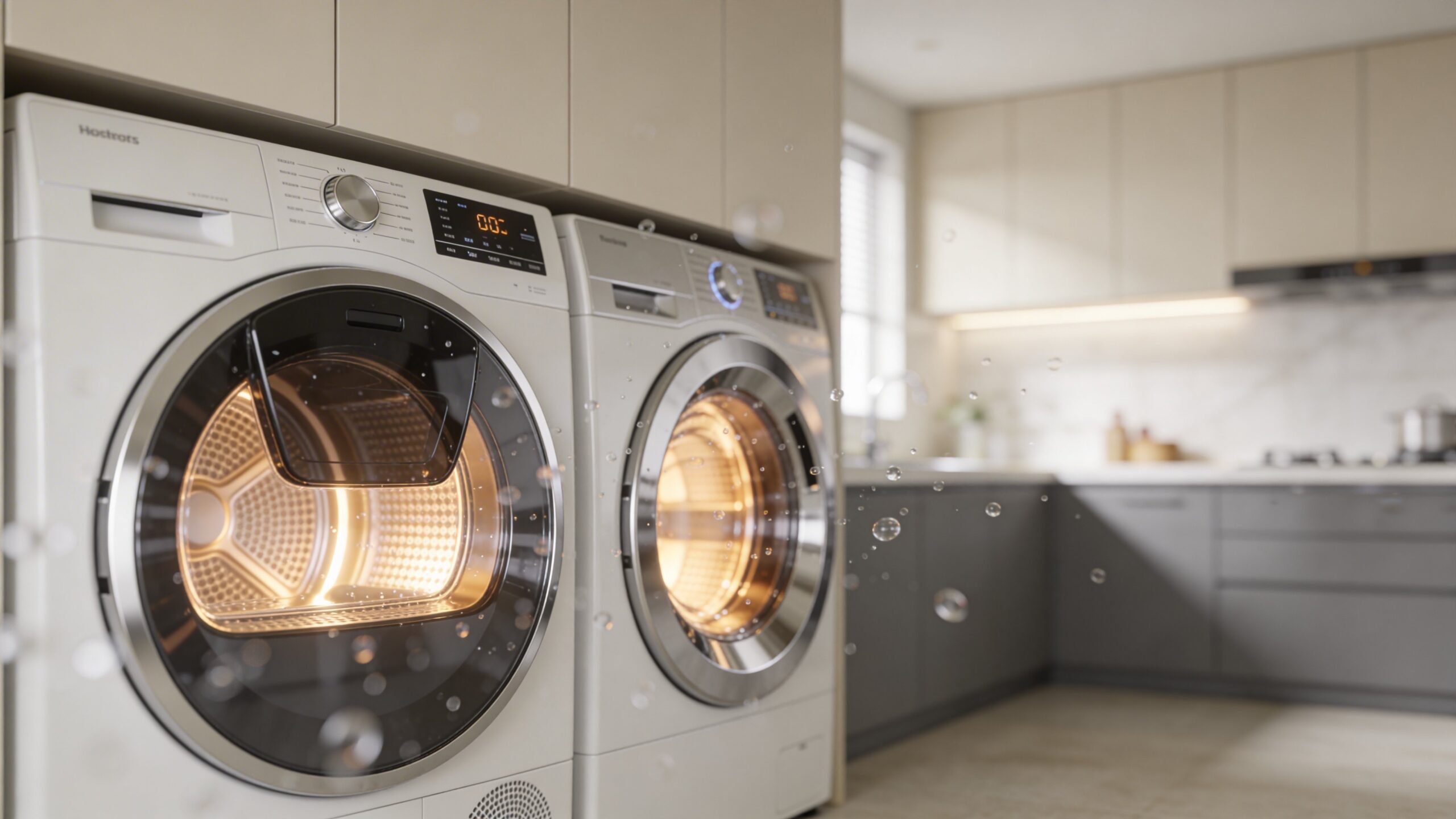
Behind every modern laundry room is a world of clever engineering, smart sensors, and evolving technology. From high-efficiency wash systems to intelligent moisture detection, today’s appliances are packed with features designed to make cleaning clothes faster, gentler, and more energy-efficient than ever before. But with all that innovation comes a new language of technical terms—things like inverter motors, load sensing, steam cycles, and adaptive spin technology. The Appliance Technology Glossary on Laundry Room Street is your guide to understanding the technology that powers modern laundry appliances. Instead of confusing manuals or technical jargon, this glossary breaks down the essential terms and innovations that shape washers, dryers, and the broader laundry ecosystem. Here you’ll discover how different technologies improve washing performance, protect fabrics, reduce energy use, and simplify everyday laundry routines. Whether you’re researching your next appliance purchase, curious about how modern machines work, or simply want to understand the science behind your laundry room, this collection of articles makes complex ideas clear and approachable. Think of it as your translation guide to the technology quietly transforming how we wash, rinse, spin, and care for clothes.
A: High-Efficiency machines use less water and require HE detergent.
A: Most modern washers reach 1,000–1,400 RPM.
A: Yes, they generally use less water and energy.
A: To stop drying once clothes reach the ideal dryness level.
A: It removes wrinkles and odors without a full wash.
A: A dryer that removes moisture through condensation instead of venting.
A: Only for app features and remote monitoring.
A: Safety systems prevent opening during high-speed spins.
A: Uneven loads or improper leveling.
A: Most modern machines last around 10–13 years.