
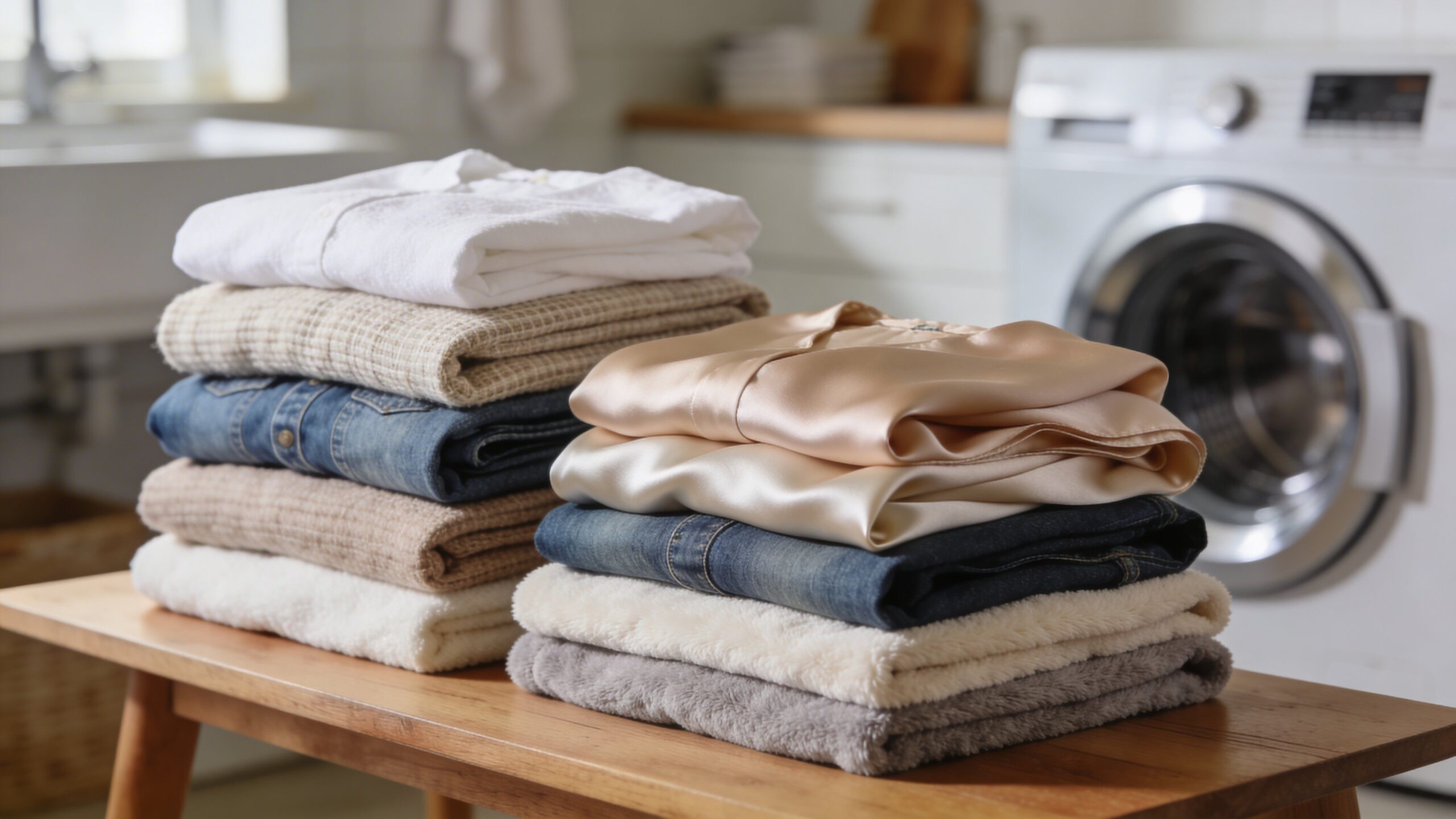
Welcome to the Fabric Glossary, your guide to the language of laundry. From everyday cotton tees to high-performance athletic fabrics and delicate silks, every textile has its own personality—and its own care requirements. Understanding the terms behind fabrics can make the difference between clothes that fade, shrink, or wear out quickly and garments that stay fresh, vibrant, and long-lasting. On Laundry Room Street, we believe great laundry starts with great knowledge. This glossary is designed to help you decode the terminology that appears on clothing tags, detergent guides, and washing instructions. What exactly is microfiber? Why does linen wrinkle so easily? How is rayon different from polyester? These are the kinds of questions that a fabric glossary helps answer. Each article in this section explores a specific textile or laundry concept, explaining how it’s made, how it behaves in the wash, and the best ways to care for it. Whether you’re sorting laundry, choosing wash cycles, or simply curious about what your clothes are made of, this hub helps turn confusing fabric terms into clear, practical knowledge. Consider it your backstage pass to the science and stories woven into the fabrics you wear every day.
A: Natural fibers tighten when exposed to heat and agitation.
A: Linen and cotton wrinkle more easily than synthetics.
A: Yes, polyester and nylon resist wear and stretching.
A: Moisture-wicking synthetics like polyester or microfiber.
A: Use gentle cycles, cold water, and mild detergent.
A: Different fibers need different temperatures and agitation.
A: Yes, high heat can shrink or weaken certain fibers.
A: A combination of fibers designed to improve durability or comfort.
A: Excess detergent or hard water residue can affect fibers.
A: Yes, heavier fabrics like denim hold more moisture.