
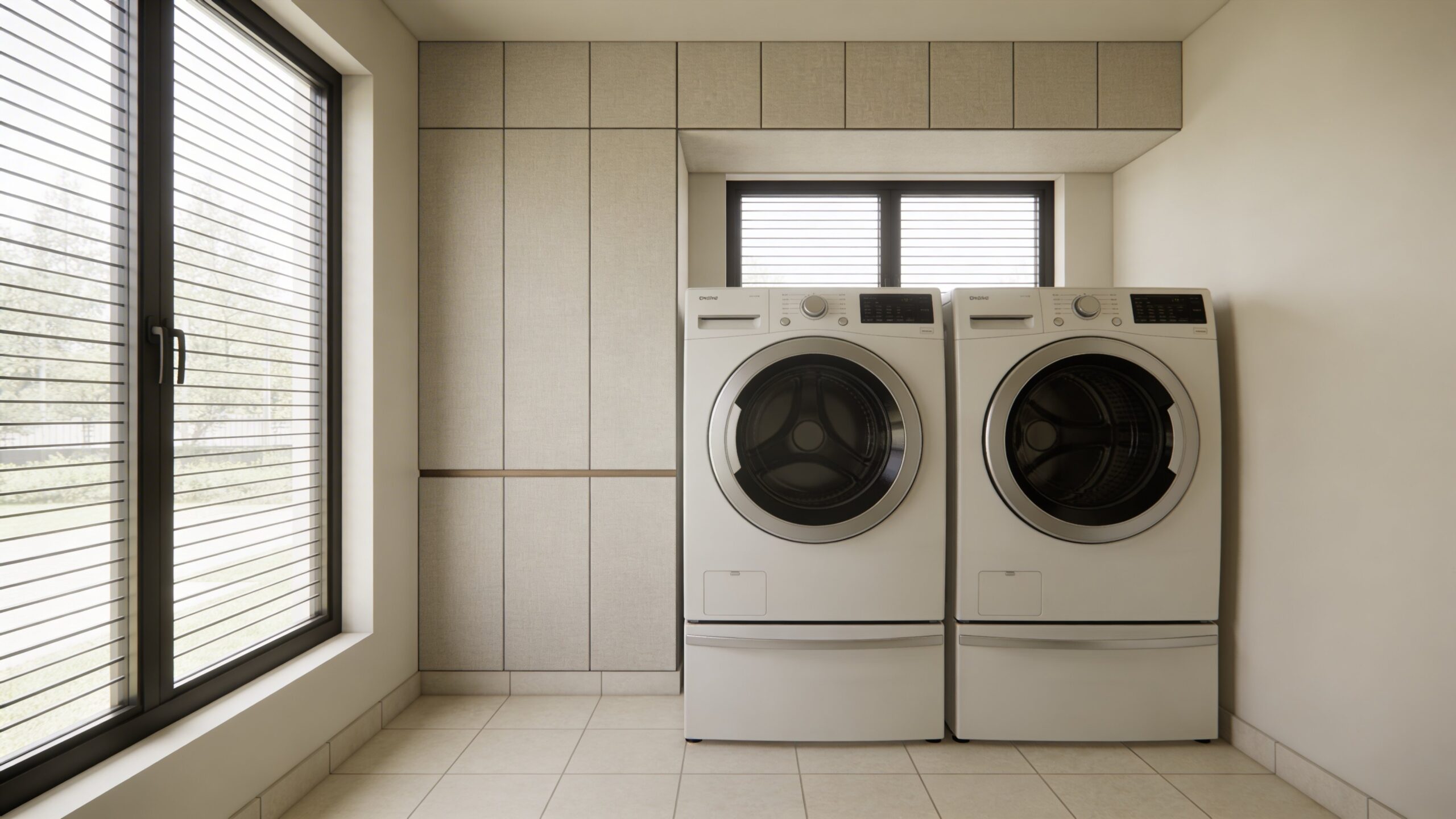
On Laundry Room Street, performance isn’t just about cleaner clothes—it’s about a calmer home. Welcome to our Noise & Vibration Control hub, where we break down the science and solutions behind quieter cycles, steadier spins, and laundry rooms that don’t rattle the whole house. From subtle hums to full-on washer “walks,” sound and vibration tell a story about balance, flooring, installation, and machine design. Here you’ll explore how modern motors reduce decibels, why proper leveling matters more than you think, and which upgrades—like anti-vibration pads or reinforced platforms—can transform a shaky setup into a smooth operation. We dive into the numbers behind dBA ratings, the mechanics of high-speed spin cycles, and smart layout tricks that absorb sound before it travels through walls and hallways. Whether you’re outfitting a compact closet laundry or building a dream utility space, this category connects you with expert insights, buying advice, and real-world fixes. The result? A laundry room that works hard—without working your nerves.
A: Likely an unbalanced load or improper leveling.
A: Yes, especially on wood subfloors.
A: Not necessarily—efficiency depends on extraction rate, not noise.
A: Yes, with reinforced flooring and proper leveling.
A: Mid-40s to low-50s dBA is generally quiet.
A: Worn drum rollers or uneven loads.
A: Only if recommended; leveling is usually sufficient.
A: Yes, if not securely installed.
A: Overloading increases imbalance and vibration.
A: Annually or after moving the unit.