
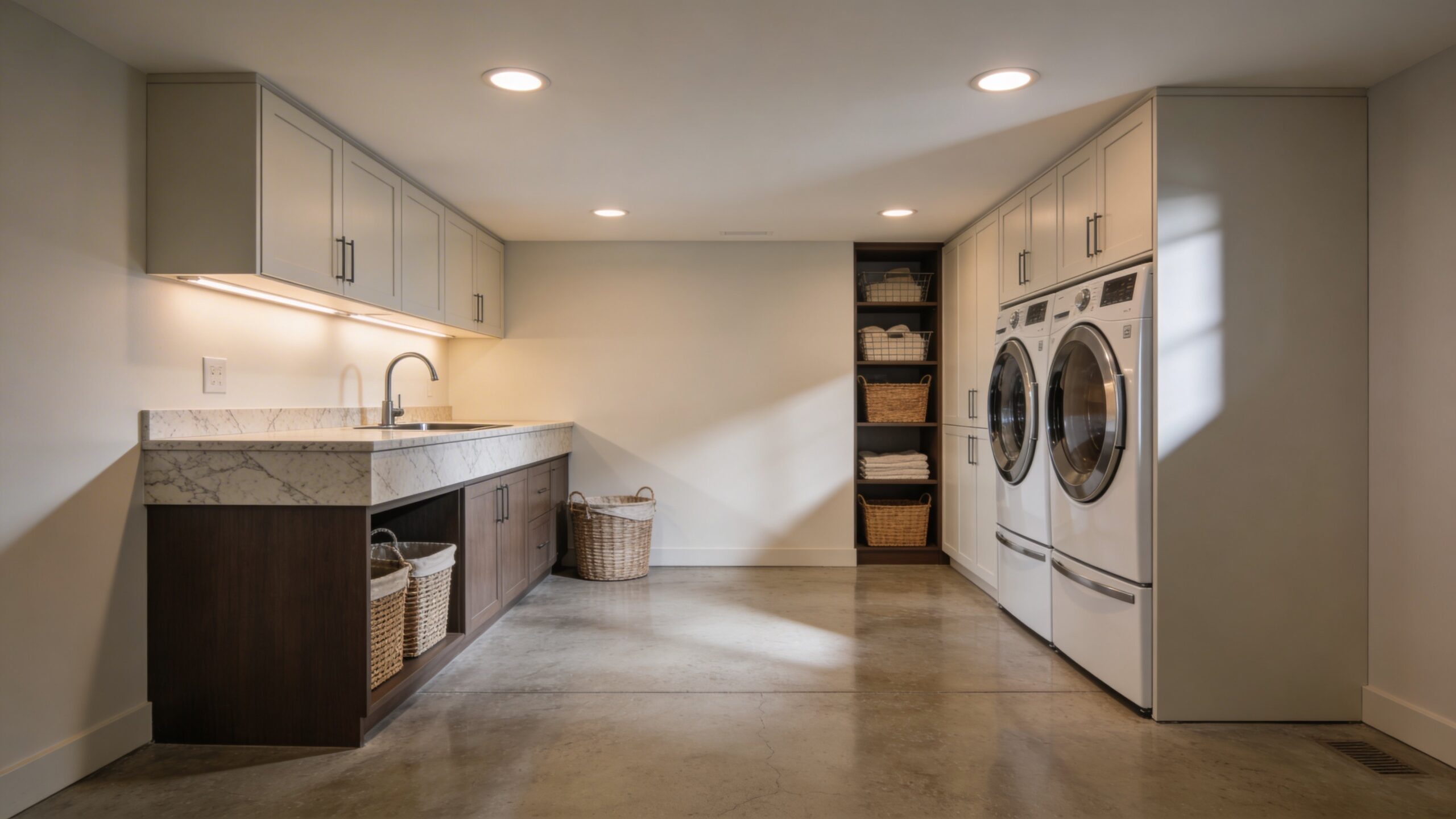
Basement laundry rooms are where practicality meets possibility. Tucked below the main floor, these hardworking spaces are no longer just concrete corners with a washer and dryer—they’re becoming polished, purpose-built hubs designed for efficiency, storage, and style. Whether you’re transforming an unfinished basement into a bright, organized utility zone or upgrading an older setup with smart appliances and moisture control, the basement offers something most main-floor laundry rooms can’t: space to breathe. On this Laundry Room Street sub-category page, we explore layouts that maximize square footage, storage solutions that conquer clutter, and lighting strategies that turn dim basements into welcoming workspaces. You’ll find guidance on ventilation, drainage, soundproofing, and waterproof finishes—along with inspiration for folding stations, utility sinks, and built-in cabinetry that elevate function into design. From compact washer-dryer closets to fully finished laundry suites with mudroom tie-ins, basement laundry rooms can be streamlined, stylish, and surprisingly serene. If you’re ready to rethink what’s possible below ground, you’re in the right place.
A: Not always required, but highly recommended for leak protection.
A: Use ventilation fans and a dehumidifier.
A: Only if it meets code and proper ducting standards.
A: Waterproof vinyl or sealed concrete performs well.
A: Insulate ceilings and use anti-vibration pads.
A: Pedestals or platforms help in flood-prone areas.
A: It’s highly useful for stains and hand-washing.
A: Every 5–7 years.
A: Yes, when properly installed and secured.
A: Add recessed lighting and light wall colors.