
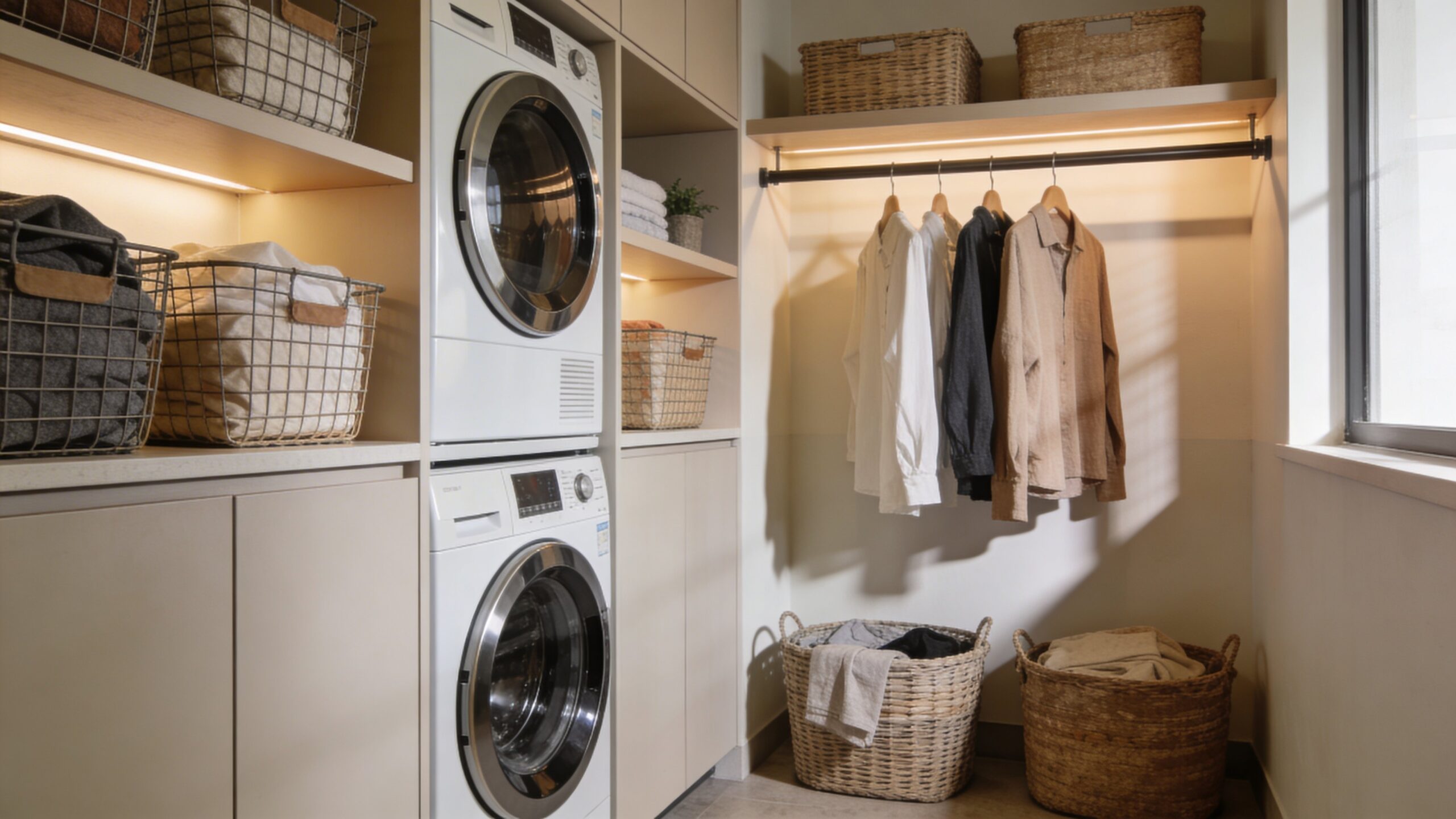
A well-designed laundry room isn’t just about machines—it’s about movement. It’s about how clothes travel from hamper to washer, from dryer to folding station, and finally back into closets without chaos along the way. On Laundry Room Street, our Laundry Room Workflow Design hub explores how smart layouts, strategic storage, and intentional planning can transform a once-overlooked space into a streamlined powerhouse of efficiency. Here, you’ll discover how to position washers and dryers for minimal steps, where to add sorting zones that actually work, and how countertops, cabinets, and hanging bars can support the natural rhythm of laundry day. We dive into space-saving layouts for tight homes, family-focused setups for high-volume households, and design tricks that make even compact rooms feel organized and calm. Whether you’re remodeling from scratch or upgrading an existing setup, workflow is the difference between frustration and flow. Because when the process works, everything feels lighter. Laundry stops being a chore—and starts becoming a smooth, satisfying routine.
A: Sort → Wash → Dry → Fold → Store with minimal walking distance.
A: Yes—dedicated counter space speeds completion.
A: Best for tight spaces, but side-by-side improves transfer speed.
A: At least 36 inches for safe movement.
A: Highly recommended for stain treatment and soaking.
A: Near entry or sorting zone to prevent pileups.
A: Yes, just maintain safe clearance.
A: Level machines and use vibration pads.
A: Bright neutral LED for accurate stain spotting.
A: Design zones that match your household routine.