Why Color Matters More Than Ever in Modern Laundry Room Design
For decades, laundry rooms were designed with one goal in mind: utility. These hardworking spaces were often tucked away in basements, garages, hallways, or spare corners of the home where aesthetics received little consideration. White walls, basic shelving, and exposed appliances were the norm because the room’s appearance seemed secondary to its function. Today, however, the modern laundry room has evolved into something much more significant. Homeowners increasingly view laundry rooms as extensions of their home’s overall design, and color has become one of the most powerful tools for transforming these spaces from purely practical work zones into attractive, welcoming environments.
Color influences much more than visual appeal. It affects mood, perception, energy levels, and even the way a room functions. The right color scheme can make a compact laundry room feel larger, brighten a windowless space, create a sense of cleanliness, or introduce warmth and personality. Because laundry is a repetitive household task, the atmosphere of the room can have a surprising impact on how enjoyable—or burdensome—the experience feels. A thoughtfully selected color palette can turn routine chores into a more pleasant part of daily life.
The growing popularity of open-concept homes and multifunctional spaces has further elevated the importance of laundry room design. Many modern laundry rooms now serve as mudrooms, storage centers, pet-care stations, and household organization hubs. As these rooms become more visible and more frequently used, homeowners are seeking color schemes that balance practicality with style. Understanding how colors interact with lighting, cabinetry, flooring, and architectural features is the key to creating a laundry room that feels both beautiful and highly functional.
A: White, soft gray, greige, sage green, pale blue, and warm cream are all popular choices.
A: Light colors such as white, cream, pale gray, soft blue, and light greige help small rooms feel more open.
A: Yes, dark colors can look beautiful when balanced with good lighting, light counters, or contrasting trim.
A: Either can work; darker cabinets create contrast, while lighter cabinets create an airy, seamless look.
A: White appliances pair well with soft neutrals, navy, sage, pale blue, black accents, and natural wood tones.
A: Stainless steel works well with white, gray, navy, green, charcoal, black, and warm wood finishes.
A: Yes, wallpaper can add color and pattern, especially above wainscoting, behind shelves, or on one feature wall.
A: White, soft gray, warm cream, natural wood, and black accents are timeless choices.
A: Start with cabinets, tile, or one accent wall, then keep the remaining finishes simple.
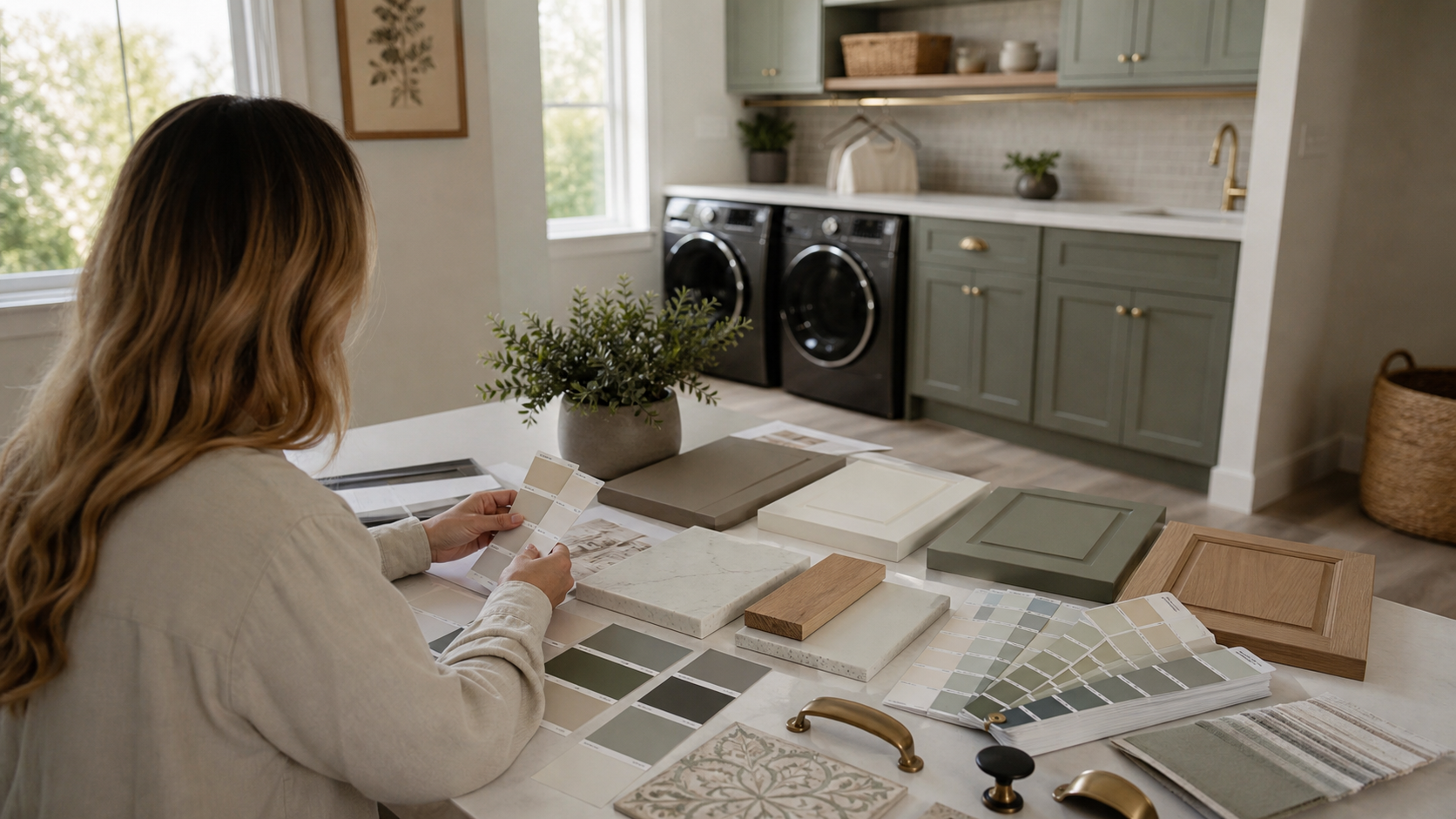
A: Choosing paint without testing it beside the room’s lighting, flooring, counters, cabinets, and appliances.
Understanding the Psychology of Color in Laundry Rooms
Before selecting paint samples or cabinet finishes, it is helpful to understand the psychological effects of color. Every color evokes certain emotions and influences how a room is perceived. While personal preference always plays an important role, understanding these general principles can help homeowners make more informed design decisions.
Light colors such as white, cream, pale gray, and soft beige tend to create a sense of openness and cleanliness. These shades reflect light effectively, making rooms feel brighter and larger than they actually are. This is particularly beneficial in laundry rooms, which are often smaller than other areas of the home. Light color schemes also reinforce the sense of freshness and cleanliness naturally associated with laundering clothes.
Cool tones such as blue, green, and gray create a calming atmosphere. These colors are often associated with relaxation, organization, and cleanliness, making them excellent choices for laundry spaces. Soft blue-gray walls, for example, can create a spa-like environment that feels both peaceful and sophisticated.
Warmer tones such as beige, taupe, greige, and muted earth colors introduce comfort and warmth. These shades help prevent laundry rooms from feeling overly sterile or utilitarian. Richer colors can also create a sense of luxury and character when used strategically. The key is balancing personality with practicality so that the room remains timeless and functional.
Classic White Laundry Rooms Never Go Out of Style
Few color schemes have remained as consistently popular as white. A white laundry room offers timeless appeal, exceptional versatility, and a clean aesthetic that perfectly complements the room’s purpose. While some homeowners worry that an all-white palette may appear too plain, modern design techniques have proven that white can be both sophisticated and visually dynamic.
White walls instantly make a room feel larger and brighter. They reflect both natural and artificial light, helping maximize illumination throughout the space. This is especially valuable in laundry rooms that lack windows or receive limited daylight. The bright, airy atmosphere created by white surfaces contributes to a sense of cleanliness that feels appropriate for a room dedicated to washing and caring for fabrics.
The beauty of white lies in its flexibility. White cabinetry can be paired with virtually any countertop material, flooring option, or accent color. Black hardware creates dramatic contrast, while brushed brass introduces warmth and elegance. Natural wood accents add texture and character without disrupting the overall brightness of the space.
Layering different shades of white is another effective design strategy. Combining crisp white walls with warmer white cabinetry, textured backsplashes, and subtle variations in finish creates visual interest while maintaining a cohesive appearance. The result is a laundry room that feels refined, timeless, and effortlessly stylish.
The Rise of Soft Gray Color Schemes
Gray has become one of the most influential colors in contemporary interior design, and laundry rooms are no exception. Soft gray palettes offer a perfect balance between warmth and coolness, creating sophisticated environments that feel modern without appearing trendy.
One of gray’s greatest strengths is its adaptability. Light gray walls work beautifully with white cabinetry, creating a clean and elegant aesthetic. Darker charcoal accents can introduce contrast and depth, while metallic finishes such as stainless steel, chrome, and brushed nickel complement gray exceptionally well. This versatility allows homeowners to personalize the space while maintaining a cohesive overall design.
Gray also performs exceptionally well in laundry rooms because it conceals minor scuffs, dust, and everyday wear better than bright white surfaces. This practical advantage makes it a particularly appealing choice for high-traffic household spaces. At the same time, gray maintains a polished appearance that contributes to the room’s overall sophistication.
Modern gray color schemes often incorporate subtle undertones of blue, green, or beige. These undertones influence the room’s mood and help coordinate the color palette with adjoining spaces. Whether used as a primary wall color or incorporated through cabinetry and flooring, gray remains one of the most versatile options available.
Blue Laundry Rooms Create a Fresh and Relaxing Atmosphere
Blue has long been associated with cleanliness, tranquility, and freshness, making it a natural choice for laundry room design. From soft powder blue to rich navy, blue color schemes can dramatically transform the atmosphere of the space while maintaining broad appeal.
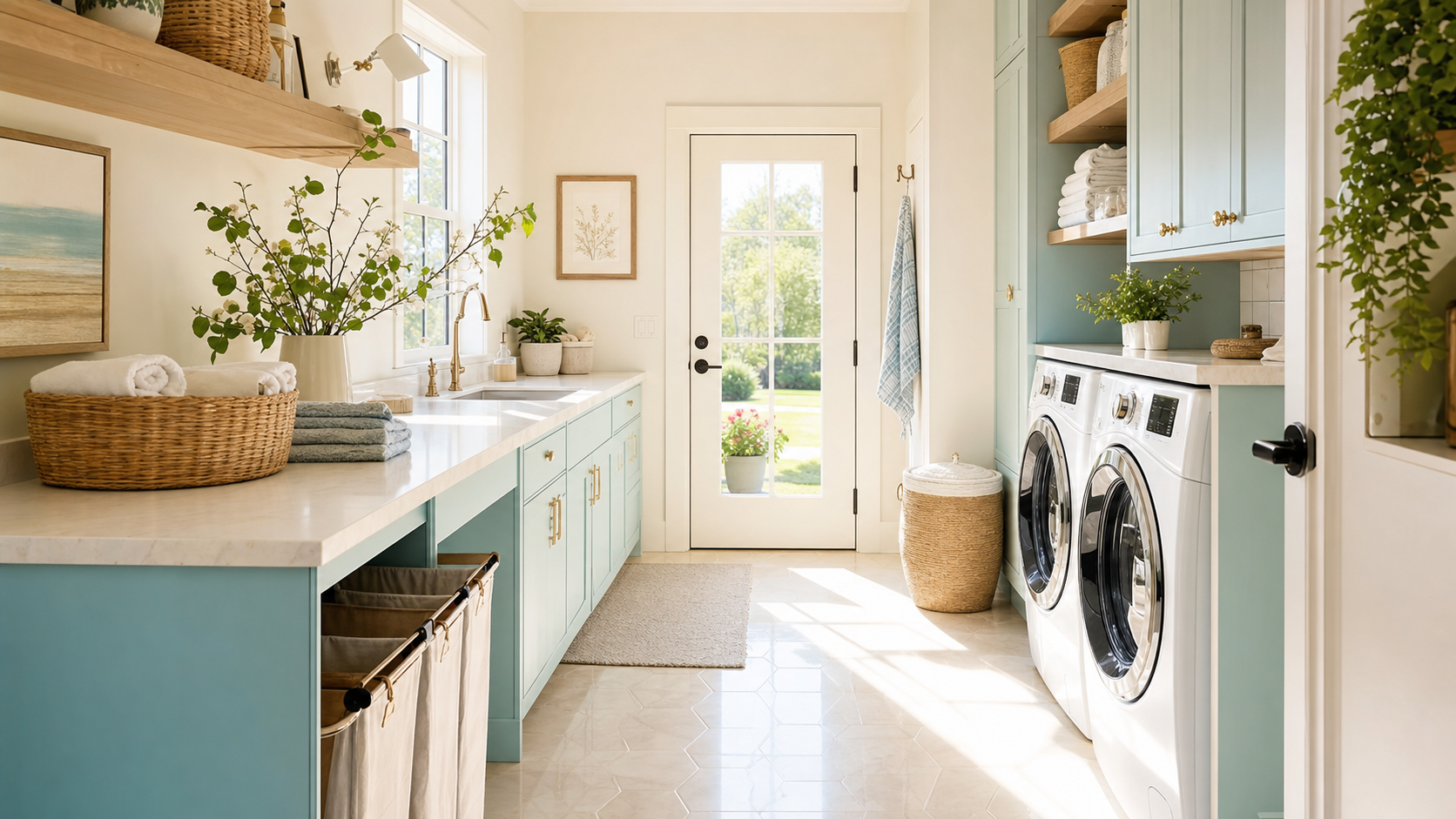
Light blue walls create an airy, uplifting environment that feels bright and refreshing. These shades pair particularly well with white cabinetry and light wood finishes, creating a coastal-inspired aesthetic that feels timeless and inviting. Soft blues are especially effective in smaller laundry rooms because they visually expand the space while introducing subtle color.
Navy blue has emerged as a popular choice for homeowners seeking a bolder design statement. Navy cabinetry paired with white walls creates striking contrast and a sense of sophistication. Brass hardware, marble-inspired countertops, and warm wood accents further elevate the look, creating a laundry room that feels luxurious and highly customized.
Blue’s versatility allows it to work equally well in traditional, farmhouse, transitional, and contemporary interiors. Its connection to water and cleanliness reinforces the room’s purpose while contributing to a calm and pleasant atmosphere.
Earth Tones Bring Warmth and Comfort
As homeowners increasingly seek warmth and authenticity in interior design, earth-toned color schemes have experienced a resurgence in popularity. Shades inspired by nature create welcoming environments that feel grounded, comfortable, and timeless.
Warm beige, taupe, sand, and mushroom tones provide a softer alternative to stark white or cool gray palettes. These colors create inviting spaces that feel cozy without appearing dark or heavy. They work particularly well in laundry rooms connected to mudrooms or other transitional spaces where warmth and comfort are desired.
Greige—a blend of gray and beige—has become especially popular because it combines the sophistication of gray with the warmth of beige. This highly versatile color coordinates effortlessly with a wide range of materials and finishes, making it an excellent foundation for laundry room design.
Earth-toned palettes often incorporate natural wood elements, woven textures, and stone-inspired surfaces. Together, these materials create a harmonious environment that feels both elegant and approachable. The result is a laundry room that feels less like a utility space and more like an integrated part of the home.
Green Color Schemes Inspired by Nature
Green has become one of the most sought-after colors in residential design, and its popularity continues to grow in laundry room applications. Associated with nature, renewal, and balance, green creates spaces that feel fresh, calming, and connected to the outdoors.
Soft sage green has become particularly popular in recent years. Its muted character makes it easy to incorporate into a wide variety of design styles, from modern farmhouse to contemporary minimalist. Sage walls paired with white cabinetry create a fresh and sophisticated appearance that feels both current and timeless.
Deeper greens such as olive, forest, and eucalyptus introduce greater richness and character. These colors work especially well on cabinetry, where they create a custom, furniture-like appearance. Paired with natural wood tones and brass hardware, dark green cabinetry can transform a laundry room into a remarkably stylish space.
Green also complements natural light exceptionally well. As sunlight shifts throughout the day, green surfaces reveal subtle variations in tone and depth, creating a dynamic and visually interesting environment. This connection to nature contributes to a relaxing atmosphere that enhances the overall experience of using the room.
Creating Contrast with Two-Tone Color Schemes
One of the most effective ways to add visual interest to a laundry room is through a two-tone color scheme. Rather than relying on a single dominant color, two-tone designs introduce contrast, dimension, and architectural character.
A popular approach involves pairing white upper cabinetry with darker lower cabinets. This combination maintains brightness while grounding the space with richer tones. Navy, charcoal, green, and even black lower cabinets create striking visual impact without overwhelming the room.
Two-tone wall treatments can be equally effective. For example, a light upper wall color combined with a darker lower section or decorative wainscoting adds depth and sophistication. This strategy can also help define different functional areas within larger laundry rooms.
The success of a two-tone scheme depends on balance. Colors should complement one another rather than compete for attention. When executed thoughtfully, two-tone palettes create dynamic and highly personalized spaces that stand out from more conventional designs.
Coordinating Colors with Flooring, Cabinets, and Countertops
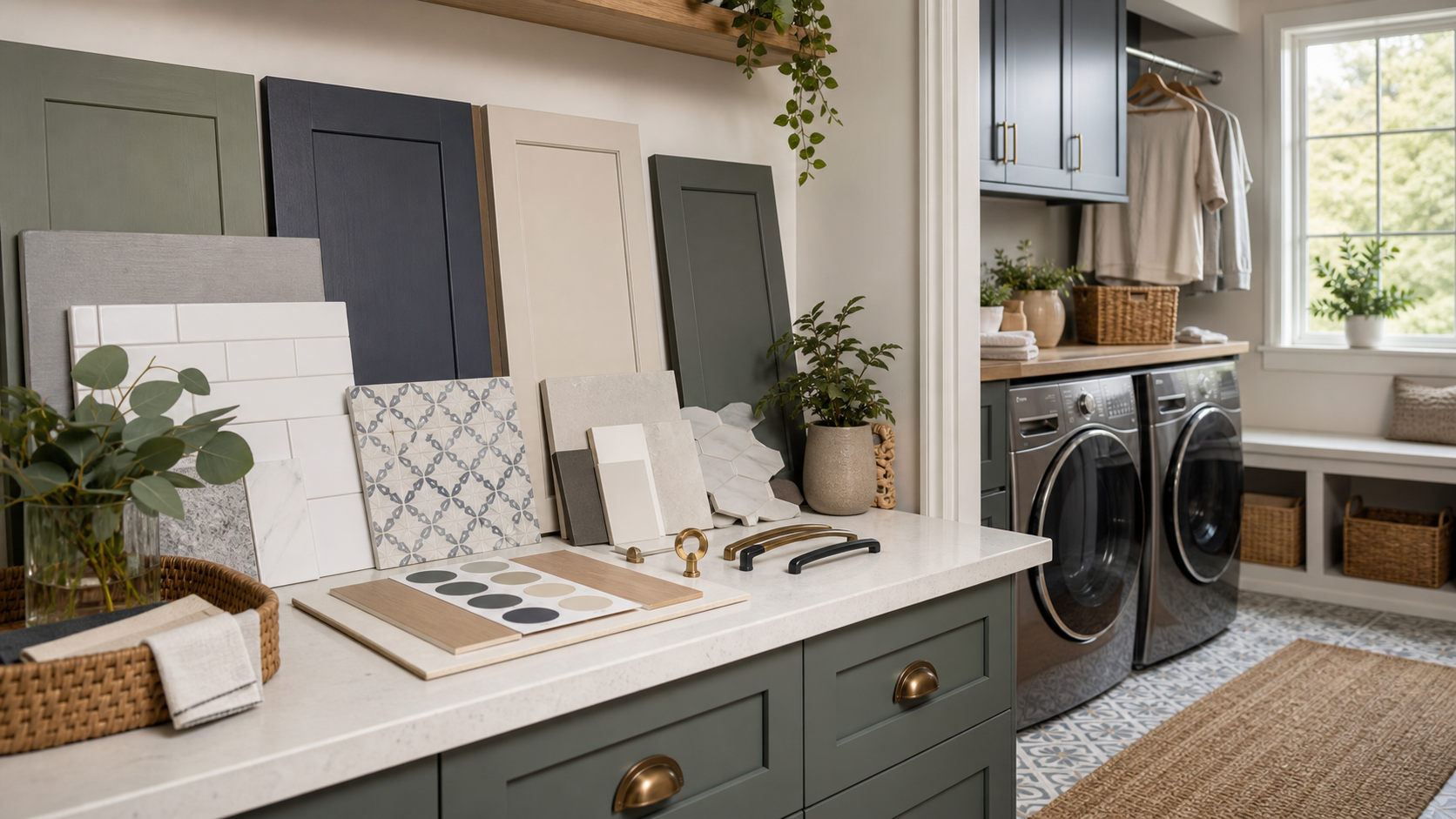
Selecting a wall color is only one part of creating a cohesive laundry room color scheme. The most successful designs consider how walls, cabinetry, countertops, flooring, and accessories interact with one another.
Flooring often serves as the visual anchor of the room. Patterned tile floors may inspire more restrained wall colors, while neutral flooring allows greater flexibility elsewhere. Similarly, countertop materials influence color selection. Quartz surfaces featuring warm veining pair beautifully with earth-toned palettes, while cool marble-inspired countertops complement gray and blue schemes.
Cabinetry deserves special attention because it occupies a significant portion of the room’s visual space. Whether painted or stained, cabinets should coordinate harmoniously with wall colors while contributing contrast and depth. Hardware finishes further influence the overall palette, with brass, black, chrome, and nickel each creating distinct design effects.
The goal is not perfect matching but thoughtful coordination. A cohesive color scheme feels intentional and balanced, allowing each element to contribute to the overall design without dominating the space.
Choosing a Timeless Color Scheme That Lasts
Trends come and go, but laundry room renovations represent significant investments that homeowners typically expect to enjoy for many years. For this reason, selecting a timeless color scheme is often a wise decision.
Neutral foundations provide the greatest longevity. White, gray, greige, soft blue, and muted green remain consistently popular because they adapt easily to changing design preferences. Accent colors can always be updated through accessories, textiles, and decorative elements without requiring major renovations.
Timeless design does not mean boring design. Layering textures, incorporating quality materials, and introducing subtle contrast create visual interest while maintaining broad appeal. The most successful laundry room color schemes feel current without appearing tied to a specific trend.
Ultimately, the best color scheme is one that reflects the homeowner’s personal style while supporting the room’s practical needs. A thoughtfully chosen palette creates an environment that remains enjoyable, functional, and visually appealing for years to come.
Color Is the Foundation of Laundry Room Style
Color has the power to completely transform a laundry room, influencing everything from mood and functionality to perceived size and overall design appeal. Whether embracing the timeless brightness of white, the sophistication of gray, the tranquility of blue, the warmth of earth tones, or the natural beauty of green, the right color scheme can elevate a simple utility space into one of the home’s most attractive and enjoyable rooms.
The most successful laundry room color schemes balance aesthetics with practicality. They work harmoniously with lighting, cabinetry, flooring, and architectural features while creating an atmosphere that supports everyday tasks. Through thoughtful planning and careful coordination, homeowners can design spaces that feel welcoming, organized, and uniquely personal.
As laundry rooms continue evolving into important components of modern home design, color remains one of the most powerful tools available. A well-chosen palette not only enhances the room’s appearance but also improves the overall experience of using the space. The result is a laundry room that feels brighter, more inviting, and beautifully connected to the rest of the home.