Why Small Laundry Rooms Require Smart Design
A small laundry room can often feel like one of the most challenging spaces in a home to design. Unlike larger rooms that offer flexibility and generous storage opportunities, compact laundry areas demand careful planning and strategic decision-making. Every square foot must serve a purpose, and every design choice has a noticeable impact on functionality. Yet despite these challenges, some of the most impressive laundry rooms are actually the smallest. Through thoughtful layouts, efficient storage solutions, and clever design techniques, homeowners can transform even the tightest spaces into highly functional and visually appealing environments.
The increasing popularity of smaller homes, urban living, and multifunctional floor plans has made compact laundry room design more relevant than ever. Many homeowners are working with laundry closets, hallway alcoves, mudroom corners, or narrow utility rooms that must accommodate appliances, storage, and work surfaces within a limited footprint. Rather than viewing these constraints as obstacles, successful designers treat them as opportunities for creativity and innovation.
A well-designed small laundry room is about much more than fitting appliances into a confined area. It is about creating a space that feels organized, comfortable, and efficient. The best designs maximize storage, improve workflow, and maintain an open appearance that prevents the room from feeling cramped. By focusing on functionality and thoughtful planning, homeowners can achieve results that rival much larger laundry rooms while making the most of every available inch.
A: The best design uses vertical storage, bright lighting, clear pathways, hidden clutter, and appliances that fit the available space.
A: Yes, stacked machines save floor space, but side-by-side machines are better if you need a folding counter.
A: Use light colors, reflective finishes, closed storage, sliding doors, and good lighting.
A: Yes, upper cabinets, floating shelves, or cubbies are great for using vertical space.
A: Use closed cabinets, pull-out hampers, matching bins, slim carts, and drawer organizers.
A: White, cream, pale gray, soft beige, light greige, pale blue, and soft green work well.
A: Bright overhead lighting plus under-cabinet or task lighting helps remove shadows.
A: Pocket doors, sliding doors, bifold doors, and barn doors save more space than standard swing doors.
A: Yes, if the layout allows; choose a compact utility sink or small undermount sink.
A: Forgetting door swings, appliance clearances, hose space, ventilation, and room to move with a basket.
Understanding the Value of an Efficient Layout
The foundation of every successful small laundry room is an efficient layout. In compact spaces, poor planning quickly leads to frustration because there is little room for error. Appliances, storage, and work areas must work together seamlessly to support daily tasks while preserving as much open space as possible.
A functional layout begins by considering how laundry is actually done. Clothes are typically sorted, washed, dried, folded, and stored in a specific sequence. Designing the room around this workflow helps reduce unnecessary movement and improves efficiency. Appliances should be positioned to allow easy loading and unloading, while storage and work surfaces should be located within convenient reach.
Clear pathways are equally important. Even in very small rooms, maintaining a sense of openness helps prevent the space from feeling overcrowded. Avoiding bulky furniture, oversized cabinets, and unnecessary obstructions allows the room to function more comfortably while creating a more spacious atmosphere.
Many successful small laundry room designs also prioritize flexibility. Fold-down counters, movable storage solutions, and multifunctional features allow the space to adapt to different tasks without permanently occupying valuable square footage. This adaptability is one of the key characteristics that separates average designs from exceptional ones.
Stacked Washer and Dryer Configurations
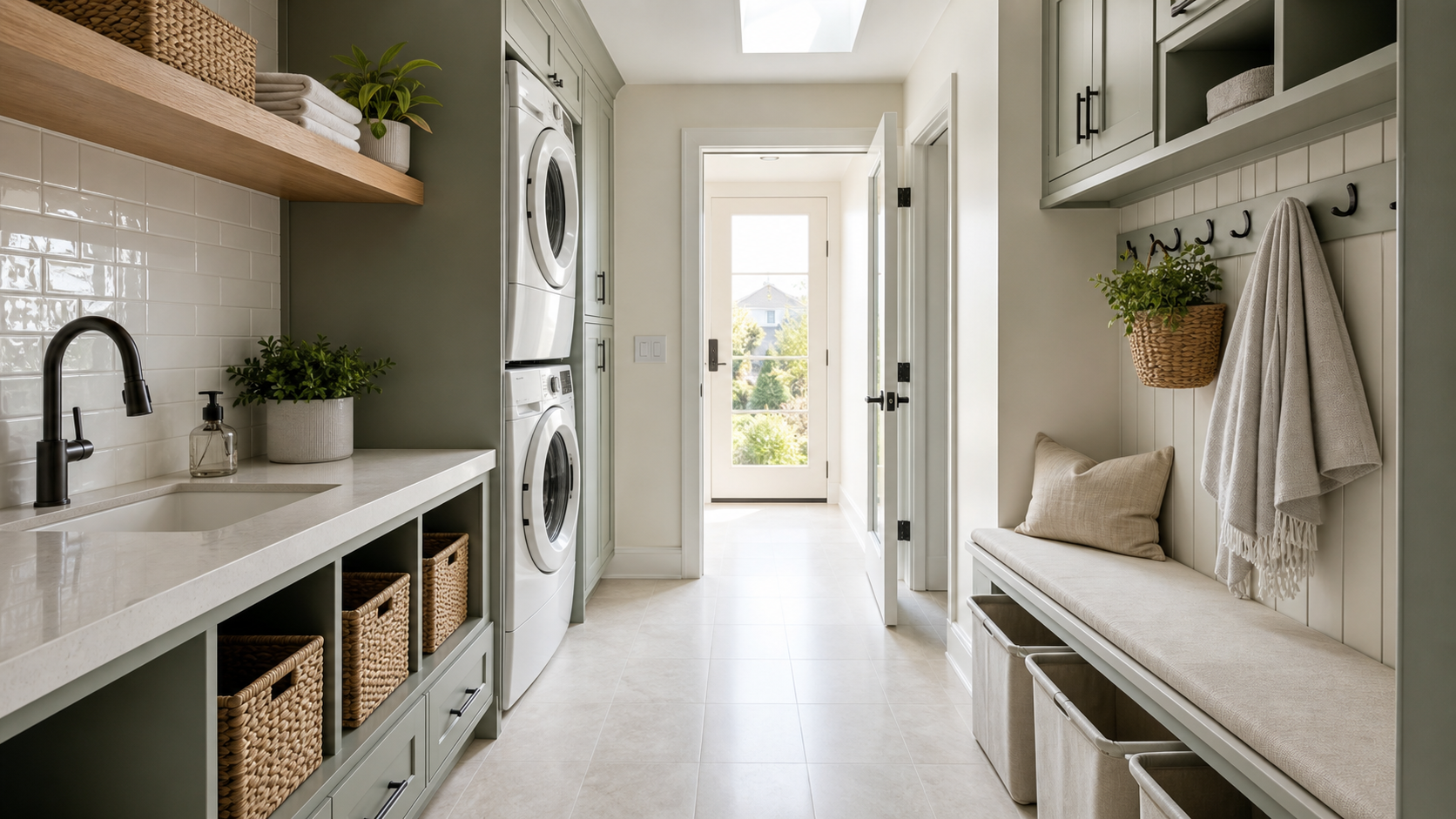
One of the most effective ways to maximize space in a small laundry room is by stacking the washer and dryer. This vertical arrangement immediately frees valuable floor space that can be used for storage, work surfaces, or simply creating a more open environment.
Stacked appliances are particularly beneficial in narrow laundry rooms and laundry closets where horizontal space is limited. By consolidating the machines into a single vertical unit, homeowners can gain several additional feet of usable floor area. This extra space often makes it possible to add cabinetry, shelving, or a folding station that would otherwise be impossible.
Modern stacked washer and dryer systems offer impressive performance while maintaining compact dimensions. Many manufacturers design models specifically for smaller homes, apartments, and condominiums, ensuring that homeowners do not need to sacrifice capacity or efficiency in exchange for space savings.
Beyond their practical advantages, stacked appliances contribute to a cleaner and more organized appearance. Their vertical orientation creates a stronger visual flow, drawing the eye upward and helping the room feel taller and more spacious. This simple design decision can dramatically transform the overall perception of a compact laundry area.
Maximizing Vertical Storage Opportunities
When floor space is limited, the walls become one of the most valuable assets in the room. Vertical storage is essential for maintaining organization and functionality in small laundry rooms because it allows homeowners to expand storage capacity without increasing the room’s footprint.
Floor-to-ceiling cabinetry is one of the most effective solutions. Tall cabinets provide ample storage for cleaning supplies, laundry products, seasonal items, and household essentials while keeping clutter hidden from view. Extending cabinetry to the ceiling also creates a custom-built appearance that enhances the room’s overall design.
Open shelving offers another practical option. Installed above appliances or work surfaces, shelves provide accessible storage while maintaining an airy feel. Carefully arranged baskets, containers, and folded linens can create an organized and attractive display that contributes to the room’s visual appeal.
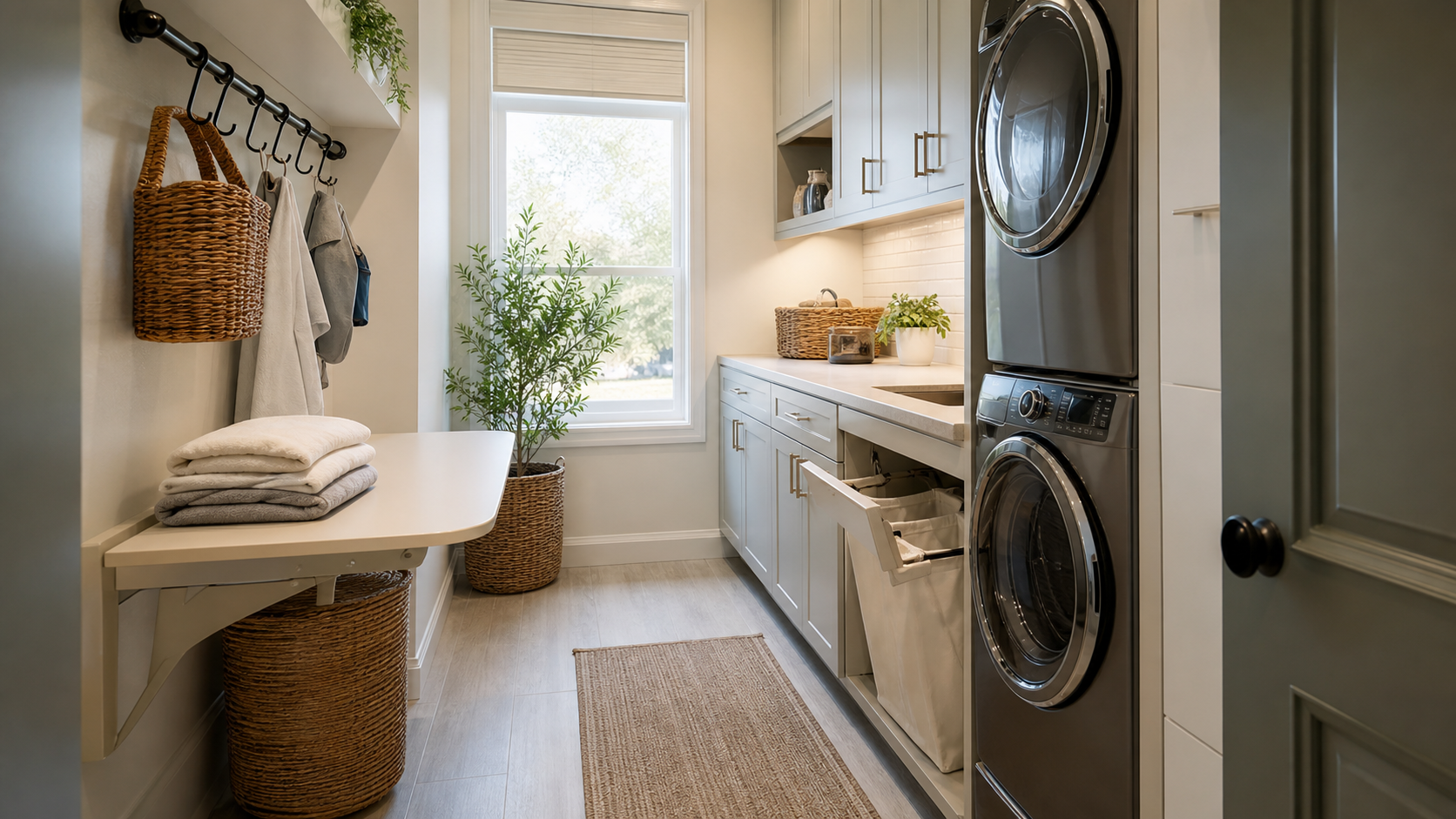
Wall-mounted accessories further increase functionality. Hooks, drying racks, ironing boards, and hanging rods can all be installed vertically to preserve floor space. These additions ensure that every available surface contributes to the room’s efficiency while maintaining a streamlined appearance.
Built-In Storage Solutions for Maximum Efficiency
Storage is one of the most critical elements of small laundry room design because clutter can quickly overwhelm a compact space. Built-in storage solutions provide a clean and efficient way to organize supplies while maintaining an uncluttered appearance.
Custom cabinetry allows homeowners to make use of every available inch. Narrow spaces beside appliances can accommodate pull-out shelves, while awkward corners can be transformed into functional storage compartments. Unlike freestanding furniture, built-in solutions integrate seamlessly into the room’s architecture, creating a more cohesive appearance.
Hidden storage features are particularly valuable. Pull-out hampers, concealed ironing boards, and integrated laundry baskets help keep essential items accessible without contributing to visual clutter. This hidden organization plays a major role in making small spaces feel larger.
Even interior cabinet organization can have a significant impact. Adjustable shelves, drawer dividers, and designated storage zones ensure that supplies remain orderly and easy to locate. The more efficiently items are stored, the easier it becomes to maintain a tidy and functional environment.
Light Colors That Create the Illusion of Space
Color has a profound influence on how spacious a room feels. In small laundry rooms, light and neutral color palettes are among the most effective tools for creating a sense of openness and airiness.
White remains a favorite choice because it reflects light exceptionally well and visually expands the room. White walls, cabinetry, and trim create a clean backdrop that makes even the smallest laundry rooms feel brighter and more inviting. The simplicity of white also allows architectural details and textures to stand out.
Soft neutrals such as light gray, ivory, greige, and pale beige provide similar benefits while introducing subtle warmth. These colors create welcoming environments that feel comfortable without sacrificing brightness. Their versatility allows them to coordinate easily with a variety of materials and finishes.
Maintaining consistency throughout the room further enhances spaciousness. Using similar tones for walls, cabinetry, and trim minimizes visual interruptions and creates a smoother flow. This continuity helps the room feel larger and more cohesive.
Multi-Functional Features That Save Space
One of the hallmarks of successful small laundry room design is multifunctionality. In tight spaces, every feature should work as hard as possible, serving multiple purposes whenever feasible.
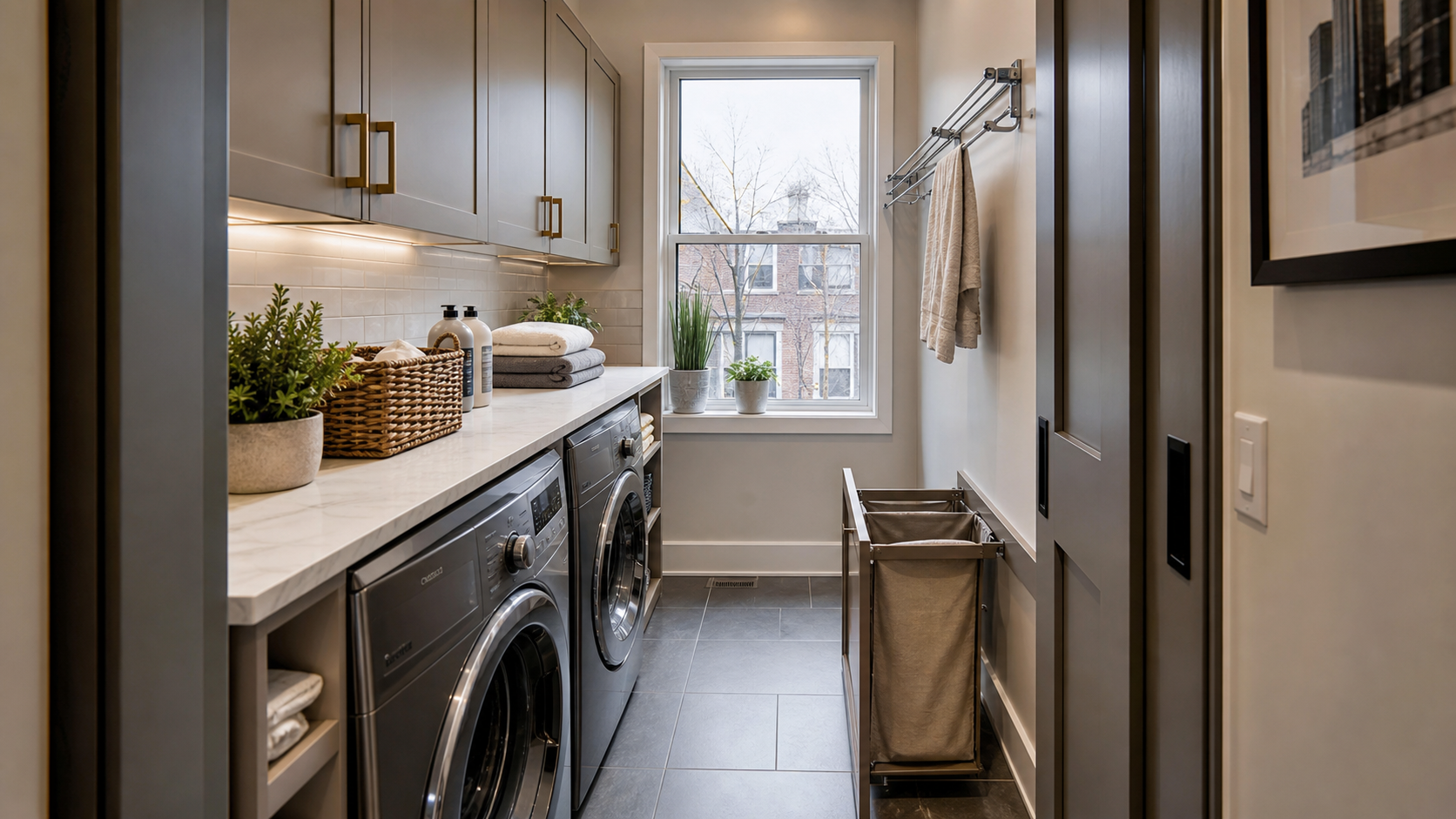
Countertops installed above front-loading washers and dryers provide an excellent example. These surfaces create valuable folding areas without requiring additional floor space. They also help unify the room visually, creating a clean and continuous appearance.
Fold-down workstations offer another versatile solution. Mounted to the wall, these counters can be lowered when needed and folded away when not in use. This flexibility makes them ideal for compact laundry rooms where permanent surfaces might interfere with movement.
Built-in benches with hidden storage, retractable drying racks, and convertible shelving systems further demonstrate how multifunctional design can maximize efficiency. These features allow homeowners to accomplish more within limited square footage while maintaining an organized and spacious environment.
Lighting Strategies That Open Up the Room
Lighting plays a crucial role in making small laundry rooms feel larger. A bright and well-lit room naturally appears more spacious and inviting than one that feels dim or enclosed.
Natural light should be maximized whenever possible. Windows, skylights, and glass doors introduce brightness that expands the perceived size of the room while creating a more pleasant atmosphere. Even a small window can significantly improve the overall experience of using the space.
Artificial lighting should be layered to ensure consistent illumination. Recessed ceiling lights provide general brightness without occupying visual space, while under-cabinet lighting enhances visibility for folding and sorting tasks. These additional light sources eliminate shadows that can make the room feel smaller.
Reflective materials further amplify lighting effectiveness. Glossy backsplashes, polished countertops, mirrors, and metallic accents help bounce light throughout the room, increasing brightness and contributing to a greater sense of openness.
Designing Laundry Closets and Hidden Laundry Areas
Not every home has a dedicated laundry room. Many homeowners rely on laundry closets, hallway alcoves, or hidden laundry areas integrated into larger spaces. Fortunately, these compact solutions can be highly effective when designed thoughtfully.
Laundry closets benefit from vertical organization and concealed storage. Stacked appliances, wall-mounted shelving, and built-in cabinetry maximize functionality while preserving valuable floor space. Sliding doors or bi-fold doors allow the area to be hidden when not in use, maintaining the appearance of surrounding rooms.
Hidden laundry areas often incorporate design elements that help them blend seamlessly with adjacent spaces. Cabinet panels that conceal appliances, coordinated finishes, and integrated storage solutions create a cohesive look that minimizes visual disruption.
These compact arrangements demonstrate that a dedicated room is not required for an effective laundry space. With careful planning, even the smallest hidden areas can deliver impressive functionality and style.
Minimalist Design Principles for Small Laundry Rooms
Minimalism is particularly effective in small laundry rooms because it emphasizes simplicity, organization, and purposeful design. By reducing visual clutter and focusing on essentials, homeowners can create spaces that feel larger and more comfortable.
Clear countertops are a defining feature of minimalist laundry rooms. Storing supplies in cabinets, drawers, and baskets prevents clutter from accumulating and maintains a clean appearance. This visual simplicity contributes significantly to the room’s sense of spaciousness.
Decorative elements should be selected thoughtfully. A few carefully chosen accessories can add personality without overwhelming the space. The emphasis should remain on functionality and organization rather than excessive decoration.
Minimalism also encourages homeowners to evaluate what is truly necessary. Eliminating redundant items and prioritizing efficient storage helps create a more streamlined and enjoyable environment. In small spaces, this disciplined approach often produces dramatic improvements.
Conclusion: Making the Most of Every Square Foot
The best small laundry room designs prove that limited space does not have to mean limited potential. Through intelligent layouts, vertical storage, multifunctional features, thoughtful lighting, and strategic color choices, homeowners can create laundry rooms that feel remarkably spacious and highly efficient.
What makes these designs successful is not the amount of square footage available but the quality of the planning behind them. Every inch serves a purpose, and every design decision contributes to functionality, organization, and comfort. The result is a room that supports daily routines while maintaining an inviting and uncluttered atmosphere.
As homes continue to evolve and space becomes increasingly valuable, small laundry room design will remain an important area of innovation and creativity. By embracing smart solutions and focusing on efficiency, homeowners can transform even the tightest spaces into beautiful and practical laundry rooms that exceed expectations. With the right design approach, a compact laundry room can become one of the most hardworking and impressive spaces in the entire home.