Why Small Laundry Rooms Deserve Big Design Ideas
Many homeowners assume that a small laundry room automatically means sacrificing comfort, organization, and style. Because square footage is limited, it can be tempting to view the space as a purely functional necessity rather than an opportunity for thoughtful design. However, some of the most impressive laundry rooms are not the largest ones. In fact, small laundry rooms often benefit the most from strategic planning because every inch must work harder and smarter. When designed correctly, a compact laundry room can feel surprisingly spacious, highly organized, and exceptionally efficient.
The secret lies in understanding that spaciousness is not determined solely by square footage. It is influenced by layout, lighting, storage, color choices, and the way the room functions on a daily basis. A poorly planned large laundry room can feel cluttered and cramped, while a well-designed small laundry room can feel open, inviting, and remarkably practical. The difference comes down to how effectively the available space is used.
As homes continue to evolve and homeowners seek smarter ways to maximize every area of their property, compact laundry room design has become an increasingly important topic. Whether the laundry area occupies a dedicated room, a hallway closet, a mudroom corner, or a converted nook, thoughtful layouts can dramatically improve both appearance and functionality. By focusing on efficient design strategies, homeowners can create laundry spaces that feel far larger than their actual dimensions suggest.
A: Use light colors, vertical storage, bright lighting, hidden clutter, sliding doors, and clear walking space.
A: They are great for saving floor space, but side-by-side machines are better if you need a folding counter.
A: A stacked washer-dryer, shallow cabinets, wall shelves, and sliding doors usually work well.
A: Yes, upper cabinets, floating shelves, or open cubbies are excellent for using vertical space.
A: Use closed cabinets, pull-out hampers, matching bins, slim carts, and drawer organizers.
A: White, cream, pale gray, soft beige, light greige, pale blue, and soft green work well.
A: Yes, bright overhead light plus under-cabinet or task lighting helps eliminate shadows.
A: Pocket doors, sliding doors, bifold doors, and barn doors save more space than standard swing doors.
A: Yes, if the layout allows; choose a compact utility sink or small undermount sink.
A: Forgetting door swings, appliance clearances, hose space, ventilation, and room to move with a basket.
Understanding the Importance of Layout in Small Spaces
Layout is the foundation of every successful small laundry room. No amount of attractive cabinetry or stylish décor can compensate for a room that functions poorly. Because space is limited, the arrangement of appliances, storage, and work surfaces must be carefully planned to support daily tasks while minimizing wasted movement.
A well-designed layout begins with understanding workflow. Laundry involves a sequence of activities that typically includes sorting, washing, drying, folding, and storing. The most efficient layouts support this progression naturally. Appliances should be positioned in a way that reduces unnecessary steps, while storage and work surfaces should be located where they are needed most. This approach improves convenience while helping the room feel organized and purposeful.
In small laundry rooms, every inch matters. Even minor adjustments to appliance placement or cabinet depth can significantly affect functionality. Designers often focus on maintaining clear pathways and preserving open floor space whenever possible. The fewer visual and physical obstacles present in the room, the larger it will appear.
Perhaps most importantly, a good layout prevents clutter from accumulating. When storage is integrated effectively and work areas are easily accessible, homeowners are less likely to leave supplies, baskets, and clothing scattered throughout the space. This contributes to both improved efficiency and a greater sense of spaciousness.
The Power of Vertical Design
One of the most effective ways to make a small laundry room feel larger is to think vertically. Many homeowners focus primarily on floor space while overlooking the significant storage opportunities available above eye level. Vertical design allows small rooms to accommodate more functionality without increasing their footprint.
Tall cabinetry is among the most valuable tools in compact laundry room design. Extending cabinets to the ceiling creates substantial storage capacity while drawing the eye upward, making the room feel taller. Seasonal items, infrequently used supplies, and household essentials can be stored in upper cabinets, freeing lower areas for everyday necessities.
Open shelving also works well when incorporated thoughtfully. Shelves positioned above appliances or work surfaces provide convenient storage while maintaining an open appearance. Displaying neatly arranged baskets, folded towels, and attractive storage containers helps create visual order while utilizing otherwise unused wall space.
Wall-mounted accessories further enhance vertical functionality. Drying racks, ironing boards, hooks, and hanging rods can all be installed above countertops or appliances, maximizing utility without occupying valuable floor area. By embracing vertical design, homeowners can dramatically improve storage and organization while preserving the room’s sense of openness.
Stacked Appliances Create More Usable Space
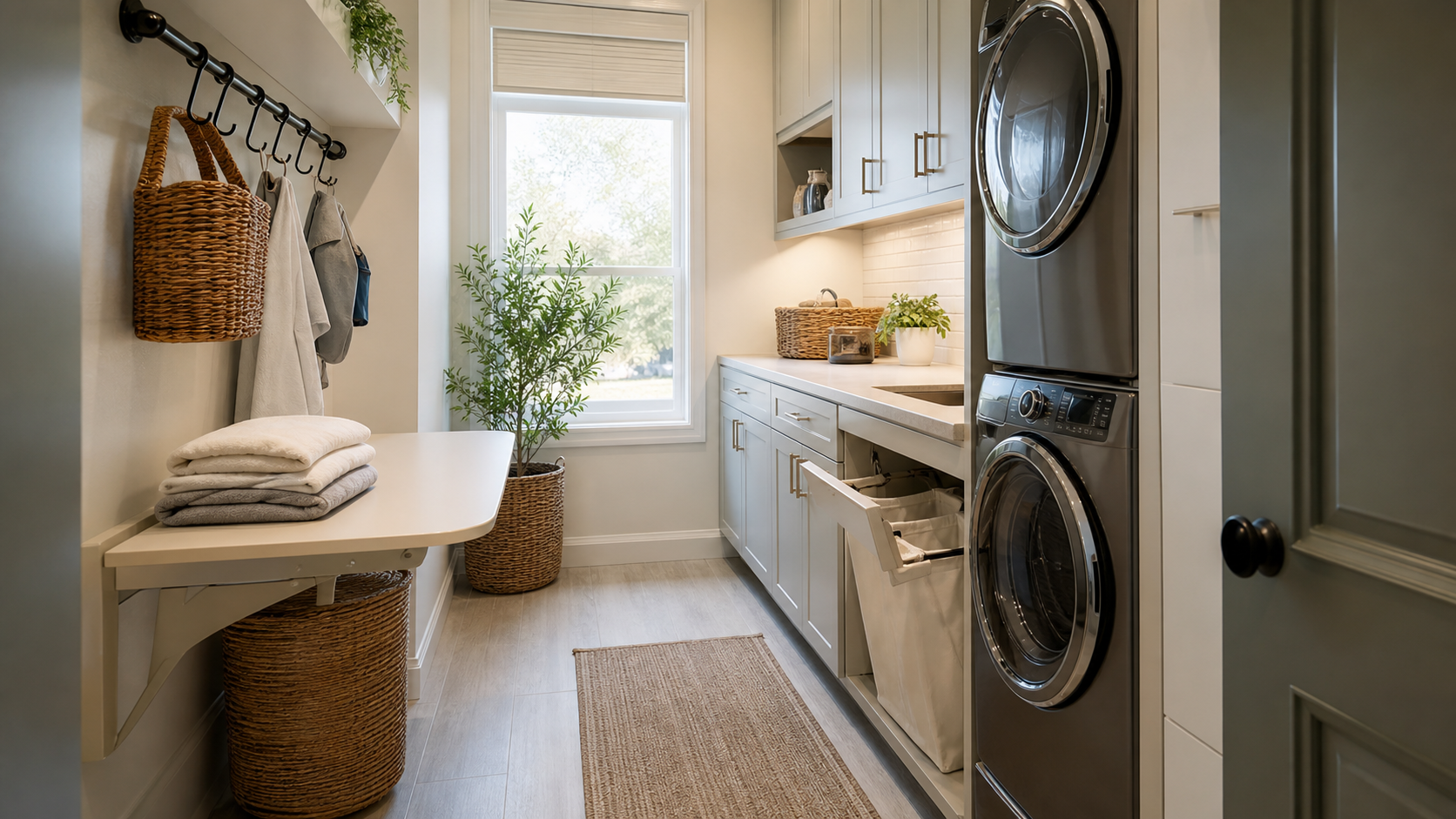
One of the most transformative strategies for small laundry rooms is the use of stacked appliances. By positioning the dryer directly above the washer, homeowners can free up significant floor space that can be dedicated to storage, folding stations, or simply maintaining a more open layout.
Stacked washer and dryer units are particularly effective in laundry closets, narrow utility rooms, and urban residences where square footage is limited. The vertical configuration reduces the overall footprint of the appliances while maintaining full functionality. This creates opportunities to incorporate additional cabinetry, shelving, or work surfaces that would otherwise be impossible.
Modern stacked appliances have become increasingly sophisticated in both appearance and performance. Many models are designed specifically for compact spaces and offer advanced features without sacrificing capacity. Their streamlined appearance also contributes to a cleaner and more organized aesthetic.
Beyond practical advantages, stacked appliances help improve visual spaciousness. By consolidating equipment into a single vertical zone, the room feels less crowded and more cohesive. This simple adjustment can completely transform the perception of a small laundry room.
Incorporating Built-In Storage Solutions
Storage is essential in any laundry room, but in small spaces, it must be exceptionally efficient. Built-in storage solutions help maximize functionality while maintaining a clean and uncluttered appearance. Rather than relying on freestanding shelves or bulky furniture, integrated storage creates a more seamless and spacious environment.
Custom cabinetry is one of the most effective options. Cabinets designed specifically for the room can accommodate awkward dimensions and make use of areas that might otherwise go unused. Narrow pull-out cabinets, corner storage units, and floor-to-ceiling designs all help increase capacity while maintaining a streamlined appearance.
Hidden storage is especially valuable in compact rooms. Pull-out hampers, concealed ironing boards, and integrated laundry baskets keep essential items accessible without contributing to visual clutter. This hidden organization helps preserve the clean lines and simplicity that make small spaces feel larger.
Even seemingly minor features can have a significant impact. Drawer dividers, adjustable shelves, and dedicated compartments improve efficiency while ensuring that every item has a designated location. The more organized the room becomes, the more spacious it will feel.
Using Light Colors to Expand the Space
Color plays a major role in shaping how large or small a room appears. In compact laundry rooms, lighter color palettes are often the most effective choice because they reflect light and create a sense of openness. While dark colors can be beautiful, they tend to absorb light and make walls feel closer together.
White remains one of the most popular choices for small laundry rooms. White walls, cabinetry, and trim create a bright and airy atmosphere that instantly expands the perceived size of the space. The reflective nature of white surfaces helps distribute both natural and artificial light more effectively throughout the room.
Soft neutrals such as pale gray, warm beige, ivory, and greige offer similar benefits while introducing additional warmth and character. These colors create inviting environments that feel larger without appearing sterile. Their versatility also makes them easy to coordinate with cabinetry, flooring, and decorative accents.
Monochromatic color schemes can further enhance spaciousness. By minimizing contrast between walls, cabinetry, and trim, homeowners create a more continuous visual flow that reduces interruptions and makes the room feel larger than it actually is.
Maximizing Natural and Artificial Light
Lighting is one of the most powerful tools for making a small laundry room feel spacious. Bright, well-lit environments naturally feel larger and more welcoming, while poorly illuminated spaces often seem cramped and confined regardless of their actual dimensions.
Natural light should be maximized whenever possible. Windows, glass doors, and skylights introduce brightness that instantly improves the room’s atmosphere. Even a small window can make a significant difference by connecting the interior to the outdoors and reducing the sense of enclosure.
Artificial lighting should be layered to ensure consistent illumination throughout the room. Recessed ceiling fixtures provide general brightness without occupying visual space. Under-cabinet lighting improves visibility for folding and sorting tasks while adding depth to the room.
Reflective surfaces further enhance lighting effectiveness. Glossy backsplashes, polished countertops, mirrors, and light-colored cabinetry help bounce light throughout the space, creating a brighter and more expansive environment.
Folding Stations That Work Smarter
One common misconception is that small laundry rooms cannot accommodate folding areas. In reality, creative design solutions make it possible to include functional work surfaces even in highly compact spaces. The key is choosing options that maximize flexibility while minimizing visual bulk.
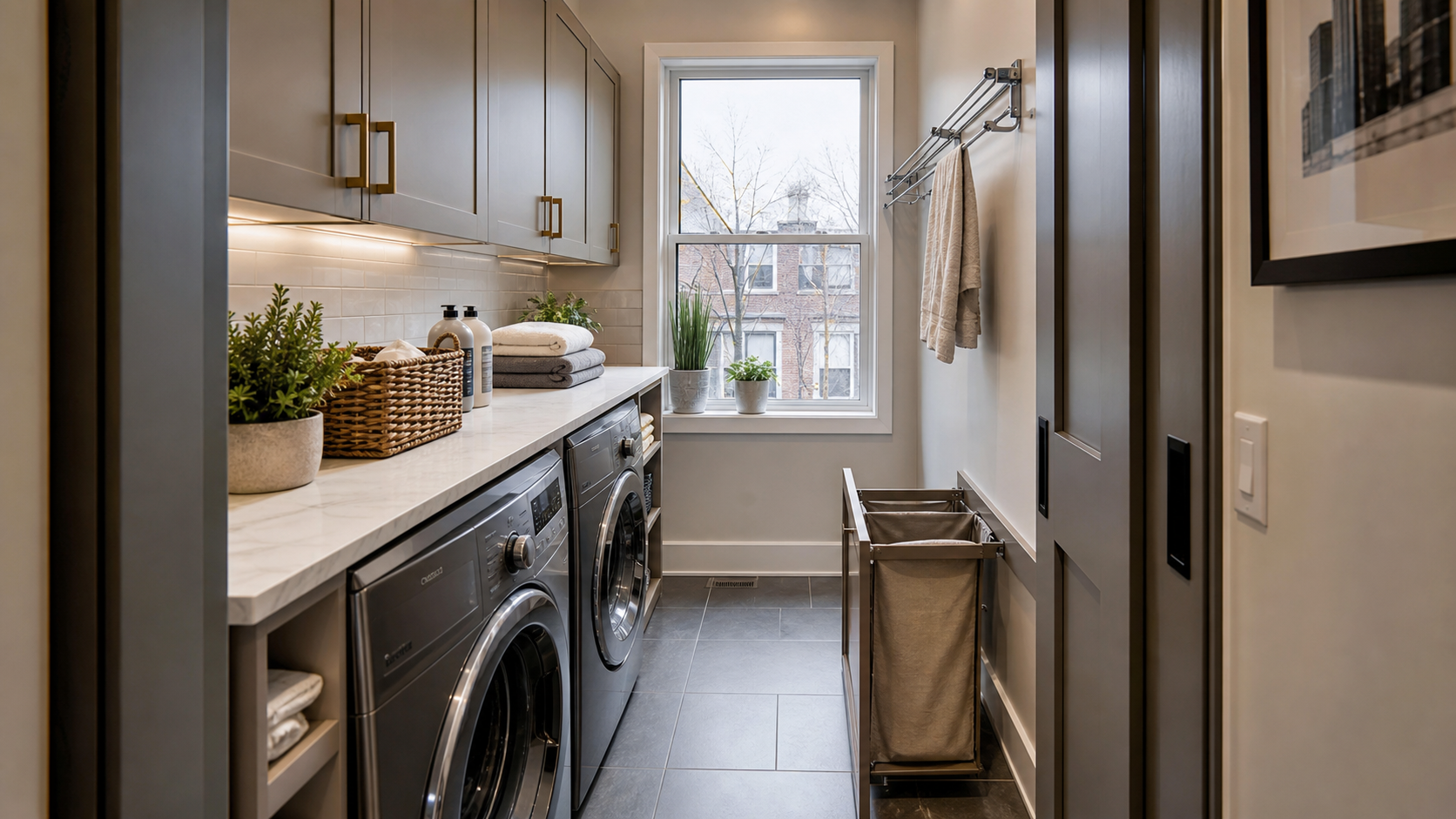
Countertops installed above front-loading appliances provide one of the most efficient solutions. This approach creates a generous folding surface without requiring additional floor space. Continuous countertops also contribute to a streamlined appearance that makes the room feel more cohesive.
Fold-down counters offer another effective option. Mounted to the wall, these surfaces can be raised when needed and folded away when not in use. This flexibility is particularly valuable in narrow laundry rooms where permanent work surfaces might interfere with movement.
Multifunctional design is especially important in small spaces. Workstations that also serve as storage areas or conceal additional features help maximize functionality while preserving the room’s open appearance.
Open Layout Concepts for Multifunctional Spaces
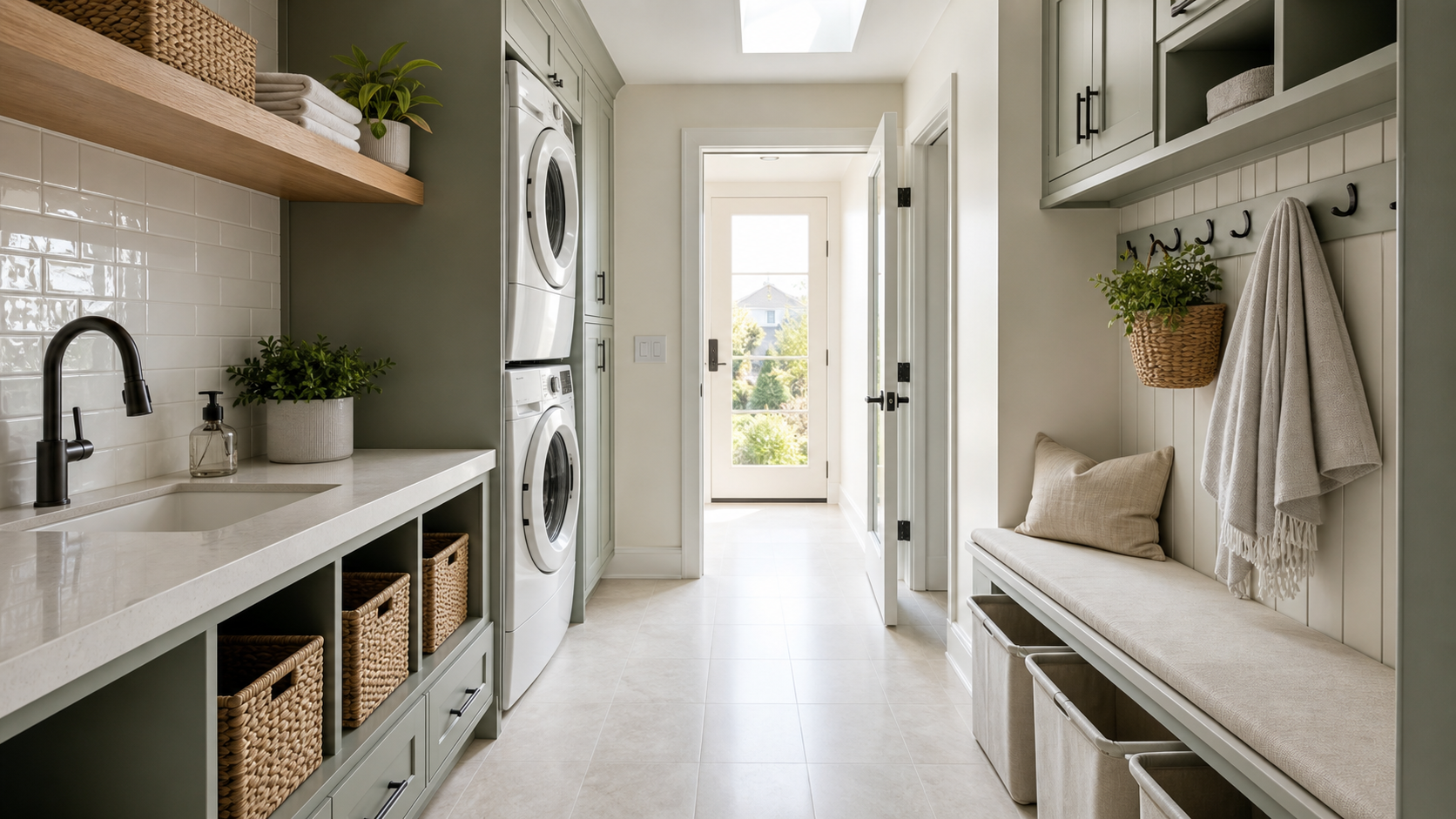
Many modern homes incorporate laundry areas into larger multifunctional rooms such as mudrooms, hallways, kitchens, and bathrooms. When space is limited, combining functions can often create more efficient and spacious environments than dedicating an entire room to laundry alone.
Open-concept laundry areas benefit from careful zoning. Cabinetry, flooring transitions, and color palettes can help define different functions while maintaining visual continuity. This approach allows the laundry space to feel integrated rather than isolated.
Concealed laundry solutions are particularly effective in multifunctional layouts. Sliding doors, pocket doors, and custom cabinetry can hide appliances when not in use, preserving the appearance of the surrounding space. This flexibility allows homeowners to enjoy the convenience of a laundry area without sacrificing aesthetics.
The integration of multiple functions often leads to more efficient use of available square footage. By sharing storage, work surfaces, and circulation areas, homeowners can create spaces that feel larger and more adaptable.
The Importance of Minimalism in Small Laundry Rooms
Minimalist design principles are especially valuable in compact laundry rooms because they reduce visual clutter and emphasize functionality. The goal is not to create an empty space but to ensure that every element contributes meaningfully to the room’s purpose.
Clear countertops are one of the most effective ways to maintain a sense of spaciousness. Storing supplies in cabinets, baskets, and drawers prevents clutter from accumulating and keeps the room visually organized. This simple habit can dramatically improve the overall atmosphere.
Furniture and décor should be selected carefully. Oversized accessories, unnecessary decorations, and bulky storage units can quickly overwhelm a small space. Instead, homeowners should focus on high-quality, multifunctional elements that support both aesthetics and practicality.
Minimalism also encourages better organization. When every item has a designated location, maintaining order becomes easier and more sustainable. This sense of control contributes significantly to the room’s overall comfort and usability.
Conclusion: Small Spaces Can Deliver Big Results
A small laundry room does not have to feel restrictive or compromised. With thoughtful planning, strategic storage, and intelligent design choices, compact laundry spaces can deliver remarkable functionality while feeling surprisingly open and inviting. The key lies in maximizing every available inch while maintaining visual simplicity and efficient organization.
From stacked appliances and vertical storage to light color palettes and layered lighting, countless design strategies can help transform even the smallest laundry room into a highly efficient and attractive space. These solutions improve not only the room’s appearance but also the overall experience of using it every day.
As homeowners continue seeking smarter ways to make the most of their living spaces, small laundry room layouts are proving that size is not the ultimate measure of success. A well-designed compact laundry room can feel spacious, organized, and enjoyable to use while supporting the demands of modern life. With the right approach, even the smallest laundry area can become one of the most functional and impressive spaces in the home.