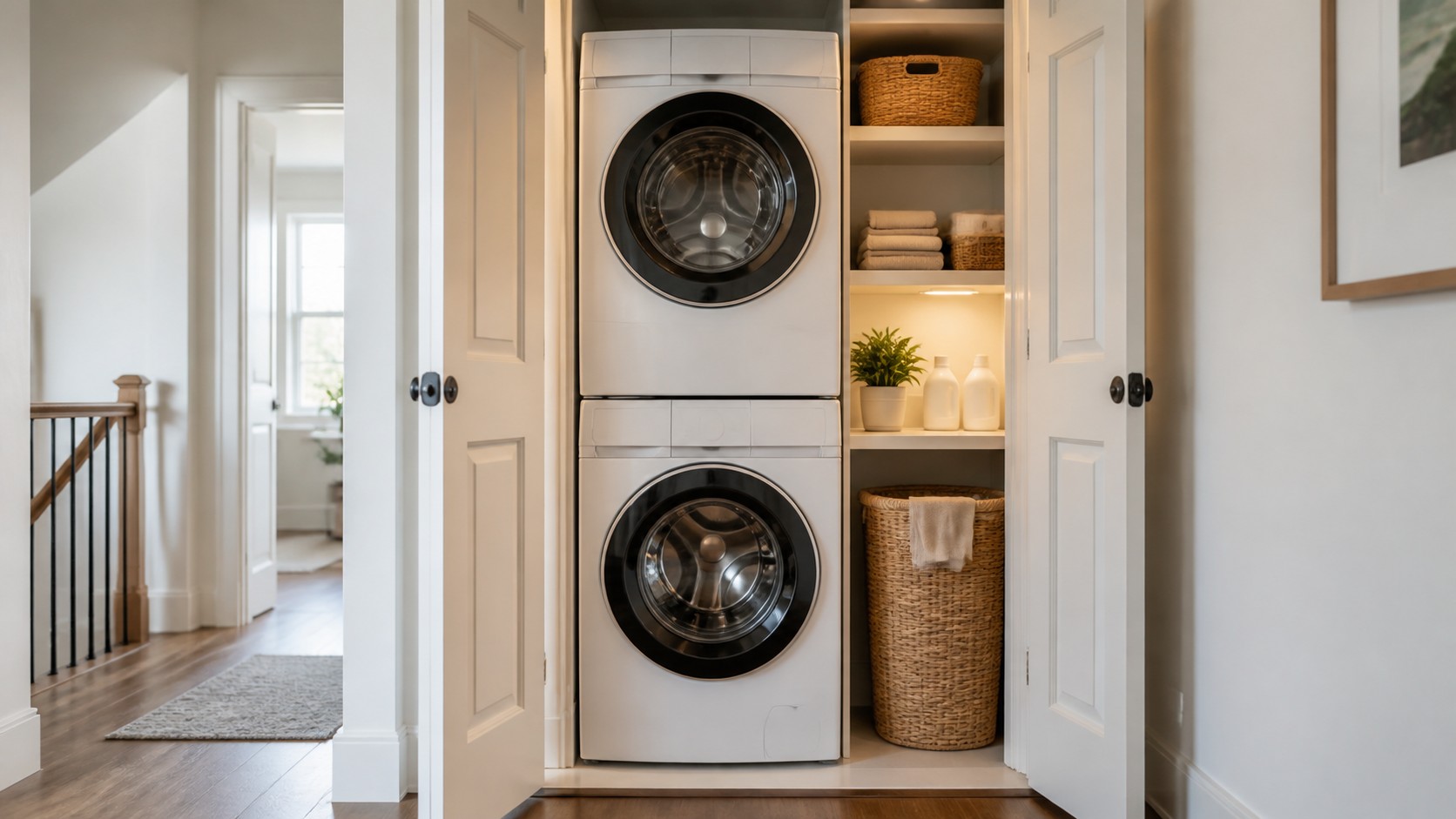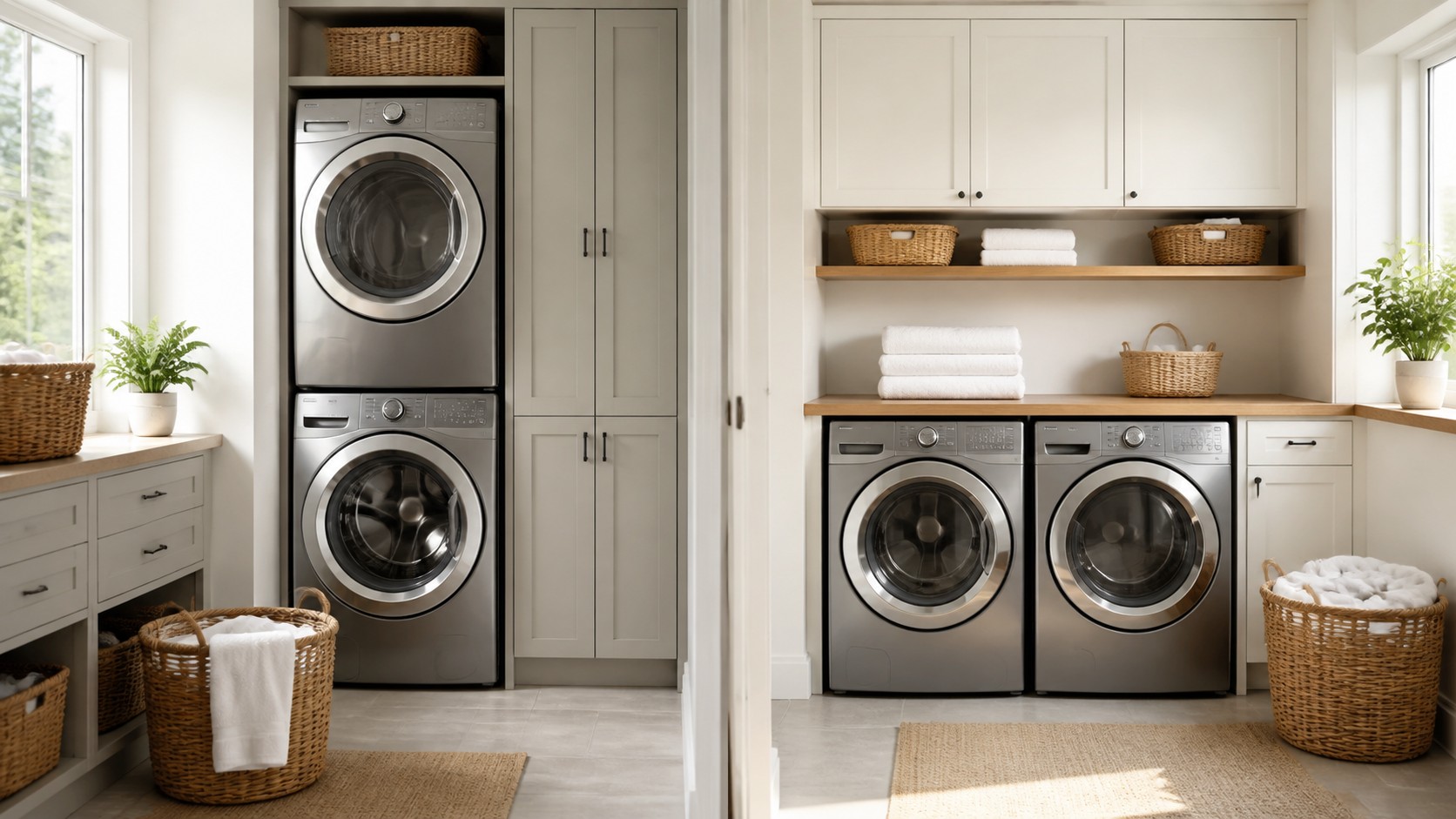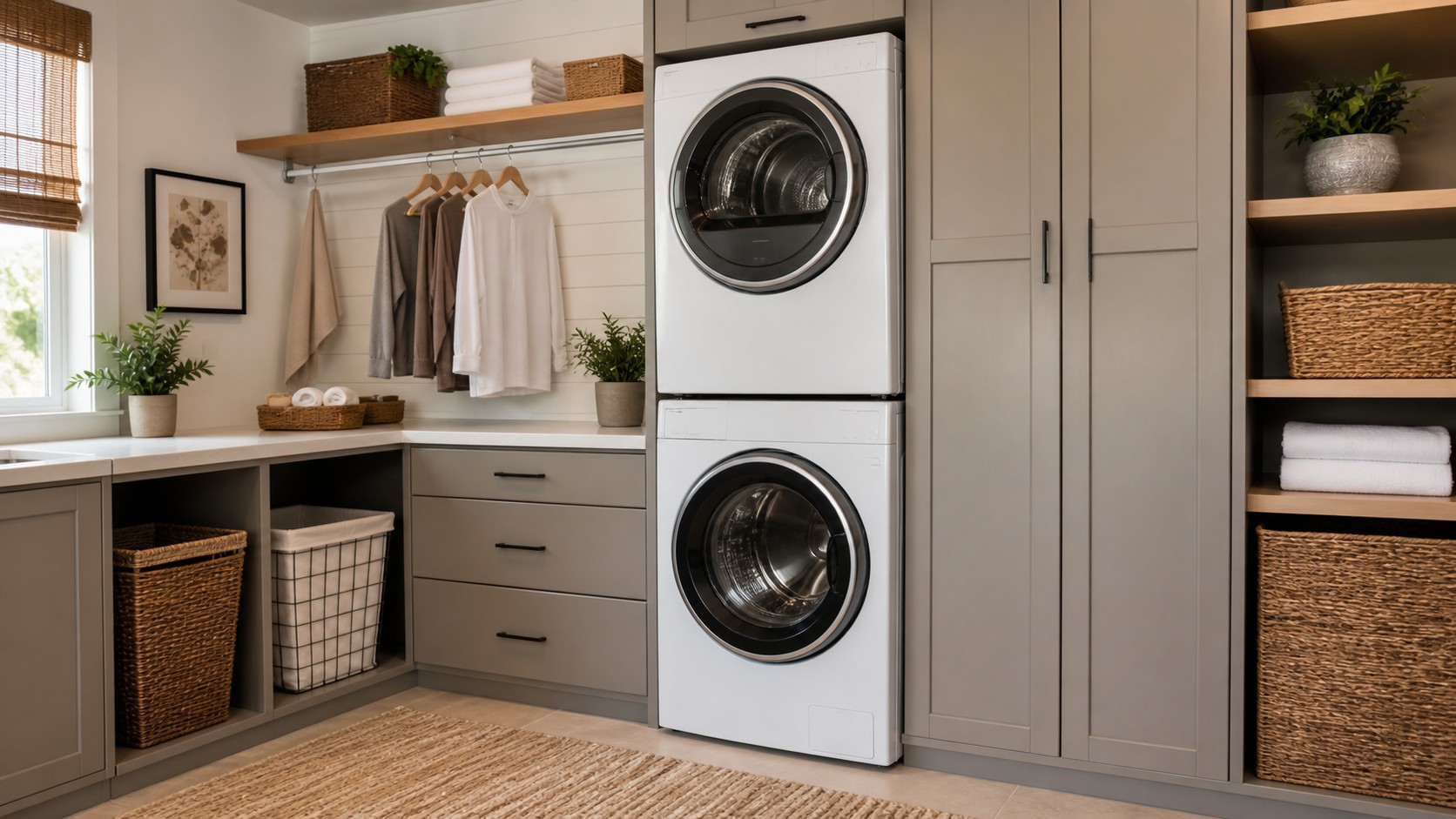
The Best Stackable System Depends on the Home Around It
The best stackable washer and dryer system is not the same for every home because stacking solves different problems in different rooms. In a condo, the best system may be compact, ventless, and quiet. In a family mudroom, it may be full size, sturdy, and paired with storage for towels and sports gear. In an upstairs closet, service access and vibration control may matter more than a long feature menu. Choosing well means matching the stack to the home’s space, utilities, users, and laundry volume rather than chasing one universal best model.
A: Usually a compact or carefully measured full-size front load pair that fits the room without sacrificing reach, venting, or service access.
A: A full-size stack with strong capacity, straightforward controls, and easy lint and filter access often serves families best.
A: The room decides first. Choose vented when the duct path is safe and practical, and ventless when placement flexibility matters more.
A: No. The best value is the system that fits the space, handles real loads, and can be maintained easily.
A: Yes, but cabinetry must preserve clearances, airflow, shutoff access, and removal space.
A: Compatibility and installation fit matter first; capacity, sensors, quiet operation, and controls come after.
A: Not for every home. It works well when laundry loads are smaller and users accept a different rhythm.
A: Yes, with attention to floor support, vibration, leak protection, shutoffs, and noise.
A: A landing surface, hamper space, supply storage, and hanging area make the system easier to use.
A: Compare the whole system: machines, kit, utilities, room layout, storage, maintenance, and future service.
Define Best by Household, Not by Ranking
Stackable washer and dryer systems are often ranked as though every buyer has the same room and routine. Real homes do not work that way. The best system for a city condo may be a quiet compact heat pump setup, while the best system for a busy family may be a full-size front load pair with fast cycles and easy maintenance.
A useful comparison starts by naming the household’s problem. Is the laundry room too narrow? Is the dryer vent impossible? Are baskets blocking a mudroom? Are users carrying clothes upstairs and downstairs? Is the goal more storage, more capacity, or a cleaner-looking closet?
Once the problem is clear, the best stackable system becomes easier to identify. It is the system that solves that problem without creating a worse one, such as unreachable controls, tiny loads, poor service access, or a dryer that cannot keep up.
This is why a home-by-home approach works better than a single winner. Stacking is a layout tool, and layout tools should be judged by how well they improve the space around them.
It also keeps buyers from overpaying for strengths they will not use. A premium full-size stack may be wasted in a guest suite that handles two towel loads a month, while an elegant compact pair may be too small for a household that washes bedding, uniforms, and pet blankets every week.
The right system should feel proportionate. It should match the size of the household, the ambition of the room, and the amount of laundry that actually moves through the machines.
Best for Condos, Apartments, and Tight Closets
Condos and apartments often need laundry systems that respect limited space, shared walls, and building rules. Ventless drying may be valuable when an exterior vent is not available or allowed. Compact width and depth may matter more than maximum drum size.
Noise and vibration deserve extra attention in attached housing. A stacked pair sits tall, and poor leveling can make the setup feel louder than expected. A stable floor, correct installation, and reasonable load sizes help keep the system calm.
Maintenance access should not be sacrificed in a closet. Ventless dryers need filter care, tanks or drains may need attention, and washers may need gasket drying. If the machines are trapped behind tight doors and shelves, the system can become inconvenient quickly.
The best apartment stack is usually the one that fits cleanly, runs quietly, and supports smaller frequent loads. It does not need to pretend to be a full laundry room. It needs to make in-unit laundry dependable and low-friction.
Buyers in managed buildings should also check rules before purchasing. Venting, electrical work, water connections, delivery hours, and appliance dimensions may be limited by the building rather than the product.
A good condo or apartment system should be boring in the best way once it is installed. It should fit through the building, satisfy the rules, stay quiet enough for neighbors, and make routine laundry possible without turning the closet into a maintenance puzzle.
For many small homes, that kind of dependability is worth more than oversized capacity. The best system is the one that can be used often without making the space feel crowded or delicate.
Best for Families and Heavy Laundry Weeks
Families usually ask more from stacked laundry. Towels, bedding, school clothes, workwear, uniforms, and sports gear can pile up fast. A compact stack may fit the room beautifully but struggle to keep pace if every load has to be split.
Full-size stackable front load pairs often make sense when the room has enough height and depth. They can preserve capacity while freeing floor width for hampers, a sink, or storage. The dryer should be large enough to tumble the washer’s wet load without crowding.
Simple controls matter when several people use the system. A machine with too many similar cycles can slow everyone down. Clear normal, towel, delicate, quick, and bulky settings may be more useful than a long menu of rarely used options.
Families should also look at durability details. Door hinges, gasket care, lint access, and drain filters become more important with frequent use. The best family stack is not the fanciest one; it is the one that keeps moving through heavy weeks without needing delicate treatment.
The surrounding storage should be family-proof too. If hampers, detergents, stain sprays, and sports laundry do not have assigned places, the machines may be efficient while the room still feels overwhelmed.
A family system should also be easy to teach. When teenagers, guests, or relatives can understand the normal cycles, lint routine, and hamper flow without guessing, the stack is more likely to support the whole household instead of one person who knows the machine.
Best for Mudrooms and Multi-Use Utility Spaces
Mudrooms are natural candidates for stackable laundry because the machines can move into one vertical zone while the rest of the room handles shoes, coats, bags, pet gear, and cleaning supplies. The laundry system becomes part of a broader household entry routine.
The stack should be paired with storage that reflects what actually lands in the room. Hooks, hampers, a bench, tall cabinets, and a utility sink may matter as much as appliance features. A stacked pair that frees space for those elements can improve the entire entry.
Mudroom laundry also sees dirtier items than a tucked-away upstairs closet. The washer may handle muddy towels, pet blankets, outdoor clothing, and cleaning rags. The dryer needs lint access that is easy to reach and clean, especially when loads shed hair or debris.
Flooring, lighting, and ventilation should be chosen for the whole space. A mudroom stack works best when wet shoes, damp clothing, and appliance heat are all considered together.
The best system for this setting is sturdy, accessible, and integrated. It should support the room’s messiest jobs without making the entry feel crowded.
Best for Design-Focused Laundry Rooms
In a design-focused laundry room, stacking can make the room feel more custom. Moving the machines into one vertical bay can create room for a long counter, a sink, a tall storage cabinet, or a display-worthy tile wall. The appliance choice supports the design rather than dominating it.
A built-in look requires restraint. Cabinets should frame the stack without choking ventilation or blocking service. Shelves should be reachable and useful, not installed high above the dryer just because the wall is empty. Door panels should allow the machines to operate and breathe.
Finishes around the stack can soften the practical nature of the appliances. Wood shelving, patterned flooring, warm lighting, and organized baskets can make the vertical tower feel intentional. The best design still respects the maintenance realities behind the pretty view.
The most polished rooms also give the stack visual breathing room. A narrow reveal, good lighting, and aligned cabinet lines can make the appliances look placed instead of wedged into a leftover gap.
This type of system is best when the homeowner wants both performance and a calmer room. The stack makes space for the design moves, but the layout still has to work with wet laundry in hand.
Design-focused buyers should also be careful with appliance replacement. A stack framed too precisely around one model can become expensive when the next pair has different hinges, vents, or control placement. A little planned tolerance keeps the built-in look from becoming a trap.
What Every Good Stackable System Includes
Every good stackable system includes compatible appliances, the correct stacking kit, proper utility connections, stable installation, and enough clearance for use and service. Those basics are not glamorous, but they determine whether the system feels secure.
The room should also include a landing zone. It might be a counter beside the machines, a pull-out shelf, a cart, or a nearby table. Without a place to set clean laundry, users often balance items on the washer door or carry every small piece across the room.
A hamper strategy belongs in the same conversation. Sorting dirty clothing on the floor can make even an expensive stacked system feel unfinished, especially in a hallway or mudroom where people pass through the space.
Storage should be placed by task. Detergent belongs near the washer. Dryer supplies belong near the dryer but not so high they are annoying. Stain tools need visibility. Hampers should sit where dirty clothes naturally arrive.
Lighting and shutoff access round out the system. A dark closet makes the upper dryer frustrating. Hidden valves make emergencies harder. A best-in-class stackable setup is not just two appliances; it is a small working system designed around repeated use.
When buyers compare options, they should compare the complete setup rather than only the machines. The supporting pieces often decide whether the appliances feel like an upgrade.
This complete-system view is also helpful for budgeting. Spending slightly less on the machines and more on lighting, a proper kit, a useful counter, or better storage can produce a laundry area that works better than a more expensive pair dropped into an unfinished corner.
Choosing the Best System for Your Home
Start with the room’s nonnegotiables: height, depth, width, venting, power, drainage, door swing, and service path. Then define the household’s laundry rhythm. A small quiet stack for frequent light loads is a different purchase from a family stack expected to process bedding and towels quickly.
Next, decide what the saved floor space should become. If stacking only creates an empty corner, the benefit may be modest. If it creates room for a sink, counter, hamper cabinet, or better walking path, the layout value becomes clearer.
Finally, compare specific systems by comfort. Can every regular user reach the controls? Can the dryer door open fully? Is the lint screen easy to clean? Can the washer door remain open when needed? Can a technician reach the machines later?
The best stackable washer and dryer system for any home is the one that answers those questions cleanly. It fits the space, handles the laundry volume, and makes the room easier to live with.
When the final choice improves the room around it, the stack stops feeling like a compromise. It becomes the reason the laundry area has enough storage, enough movement, and enough order to handle ordinary weeks gracefully without spilling supplies, baskets, or clean clothing into nearby rooms during busy mornings and late laundry nights at home every week.