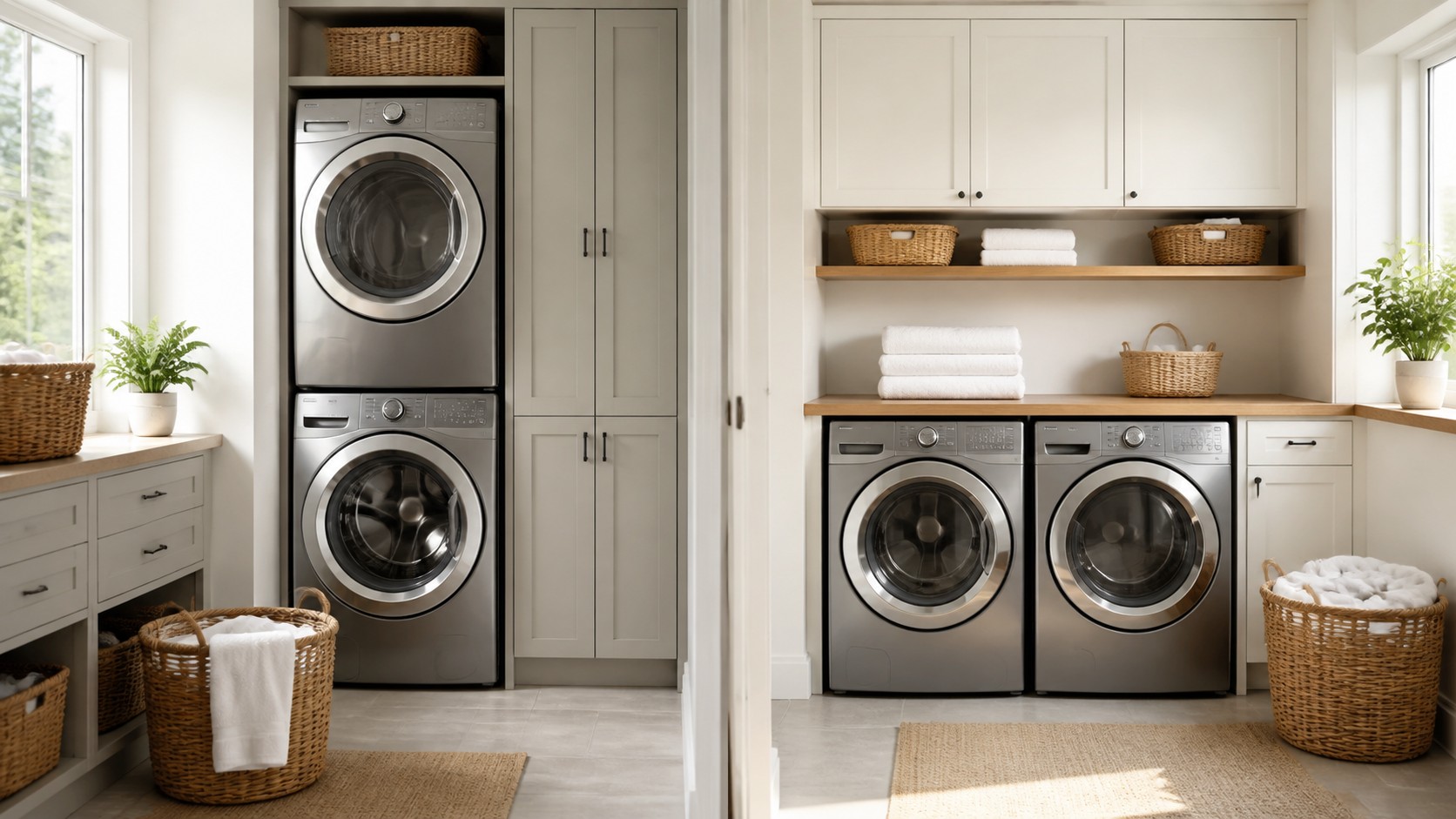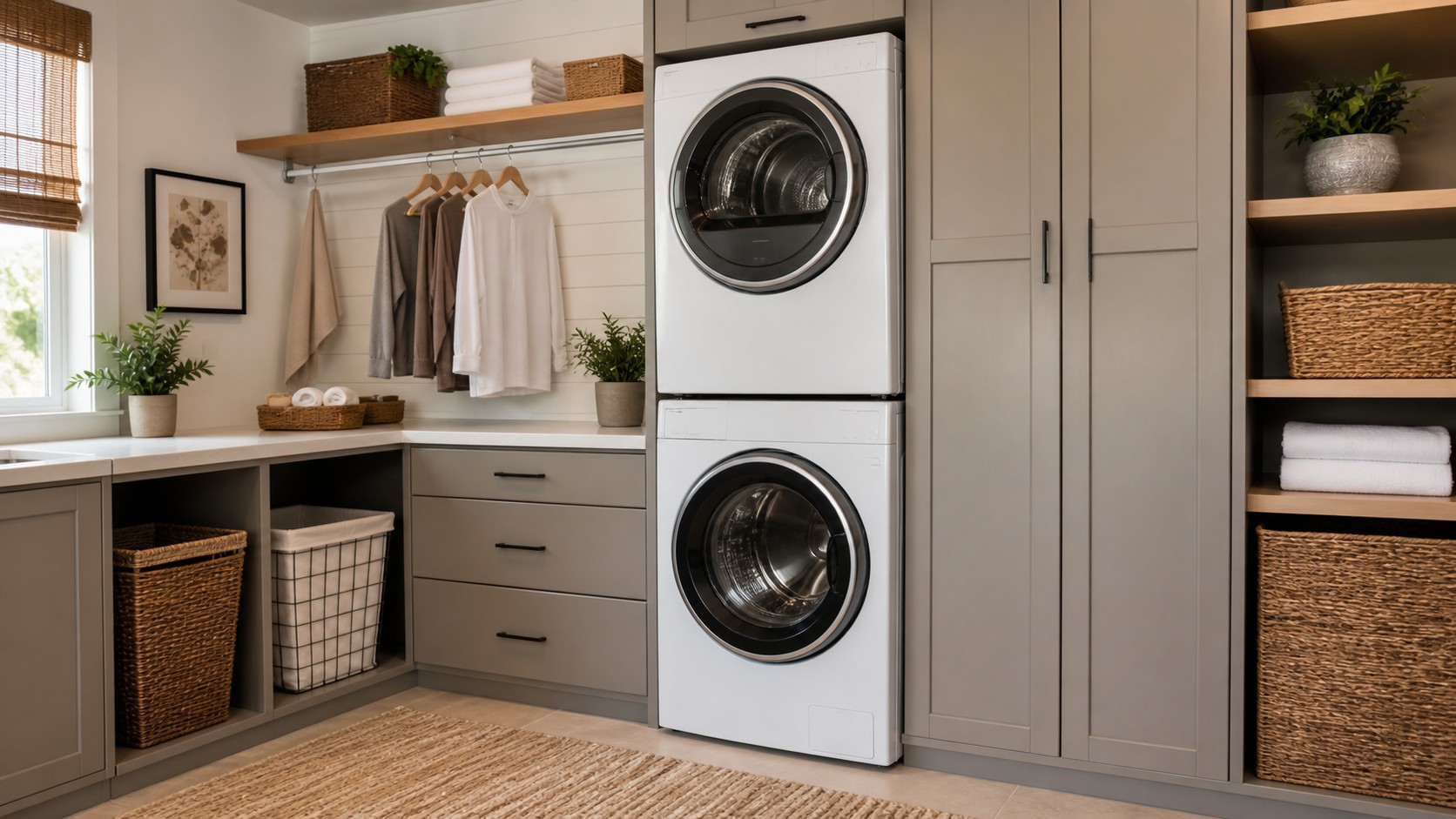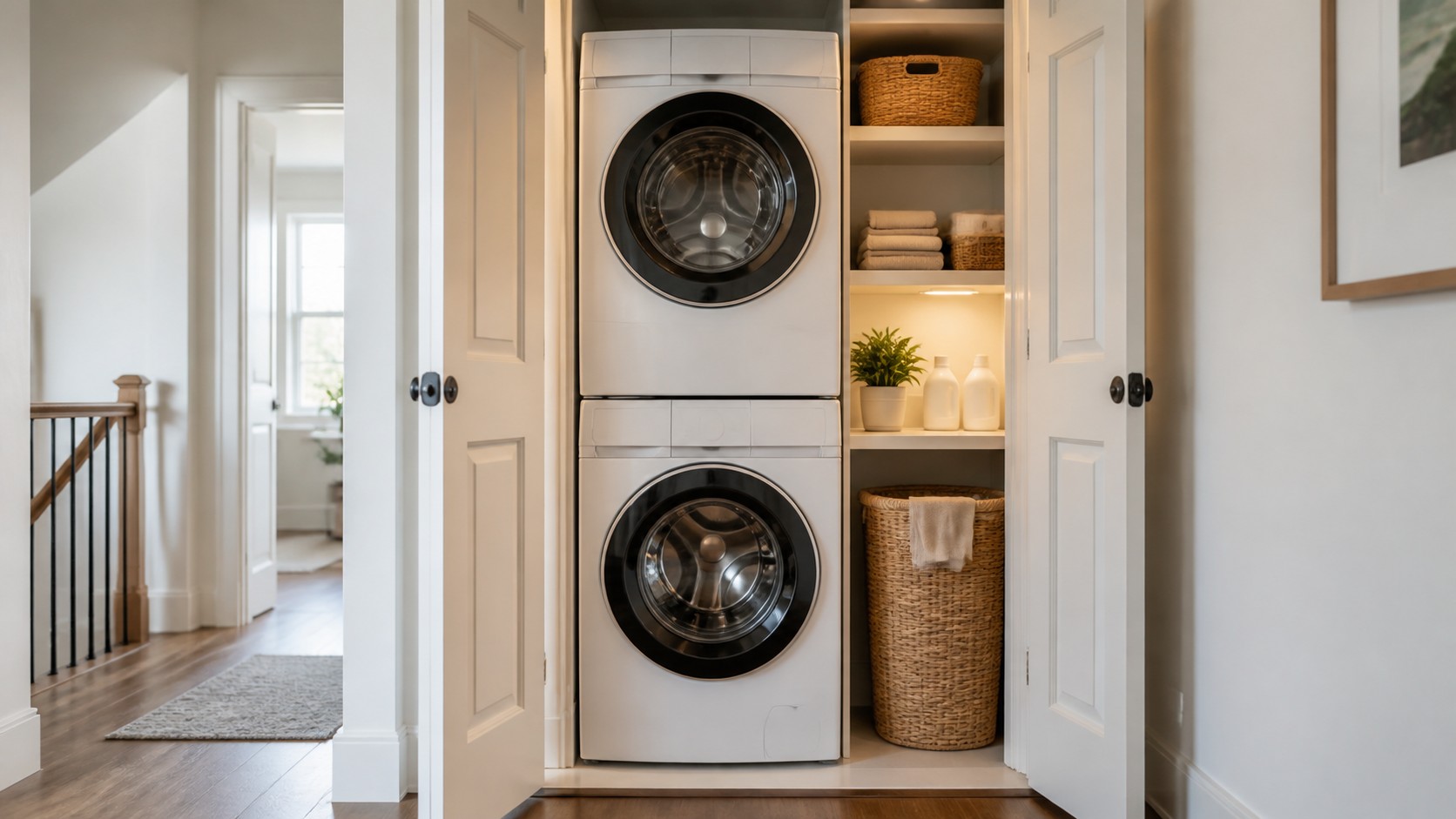
A Stackable Laundry Pair Saves Floor Space, Not Planning
A stackable washer and dryer is a laundry pair designed so the dryer can sit securely above the washer, usually with a manufacturer-approved stacking kit. The appeal is obvious: the machines use one vertical footprint instead of spreading across a wall. The planning is less obvious. A good stacked setup needs the right appliances, safe support, reachable controls, correct venting or drainage, enough height, and a room layout that still lets someone load, unload, clean filters, and service the machines without turning every laundry day into a reach-and-wrestle routine.
A: It means the appliances are designed so a compatible dryer can be mounted above the washer with approved hardware.
A: Usually no. Stacking normally requires a front load washer because the dryer sits above the washer door area.
A: No. A laundry center is one combined vertical unit, while a stacked pair usually includes two separate appliances.
A: They can be full size or compact, depending on the models and the room dimensions.
A: It can if controls are too high, doors swing poorly, or supplies are stored in awkward places.
A: Yes, some stacked dryers are ventless, but drainage, filters, heat, and cycle timing still need planning.
A: People who need low dryer controls, a continuous folding counter above machines, or very large side-by-side capacity may prefer another layout.
A: Yes. The correct kit stabilizes the dryer and protects the appliance warranty and household safety.
A: They can, but clearances, airflow, vibration, shutoffs, and service access must stay intact.
A: Measure height, depth, door swing, utility clearance, and reach before comparing appliance finishes.
How a Stackable Pair Actually Works
A stackable washer and dryer is not created by simply placing one appliance on another. The machines must be designed for the arrangement, and the dryer must be secured with the correct kit. The washer sits below because it carries water, spins at high speed, and weighs more during operation.
Most stackable pairs use front load washers because the washer door needs to remain accessible from the front. The dryer above may be full size or compact, vented or ventless, depending on the model. The stack saves floor width, but it still needs height, depth, airflow, utility access, and room for doors to open.
This distinction matters because buyers sometimes confuse stackable pairs with laundry centers or all-in-one machines. A laundry center is a connected vertical appliance, often with a washer below and dryer above in one frame. An all-in-one machine washes and dries in the same drum. A stackable pair is usually two separate machines working as one vertical layout.
The benefit is flexibility. If the room can support it, stacking can turn a cramped laundry corner into a more complete utility space with storage, hanging, or a sink beside the machines.
That flexibility is why stacked laundry appears in so many different homes. The same basic idea can serve a tiny apartment, a busy mudroom, or an upstairs linen zone, but each version needs its own measurements and habits behind it.
Where Stackable Systems Work Best
Stackable laundry systems shine in rooms where width is scarce and height is available. A narrow closet, condo laundry niche, upstairs hallway, mudroom wall, or bathroom-adjacent utility space may not have room for side-by-side machines. Stacking keeps the appliances in one vertical bay and frees the remaining wall for other tasks.
The best stacked layouts still feel intentional. They include a place for detergent near the washer, a landing zone for clean items, lighting that reaches the upper drum, and enough clearance to stand comfortably while transferring loads. Without those details, the saved floor space can be lost to awkward movement.
A stacked pair can also make a larger laundry room more flexible. Instead of using the entire wall for machines, the room might gain a tall pantry cabinet, broom storage, a soaking sink, or a long folding counter. In that case, stacking is not only a small-space move; it is a storage strategy.
The wrong room for stacking is usually one with low ceilings, hard-to-reach controls, blocked service access, or doors that collide. If the machines fit only by making every interaction uncomfortable, side-by-side or compact alternatives may serve the household better.
A good stackable setup should feel like the room got smarter, not like the appliances were squeezed upward as a last resort.
The most successful rooms usually give the saved floor space a specific purpose. A stack that creates a tall cabinet, a hamper station, or a small folding landing feels deliberate. A stack that simply leaves an awkward empty slot may not deliver the benefit the buyer expected.
Traffic flow is another sign of success. If stacking lets someone open a door, turn with a basket, or pass through the mudroom without shifting laundry piles, the vertical move is doing more than saving inches on paper.
Measurements That Decide the Purchase
Height is the obvious measurement, but it is not the only one. The total stack includes the washer, dryer, leveling feet, kit hardware, and sometimes a little extra room required by the manufacturer. Ceiling slope, overhead shelves, trim, and light fixtures can all interfere with a pair that technically fits on paper.
Depth often causes more trouble than width. Water hoses, drain hose, power cord, gas line, and dryer vent can push appliances forward. A front door that opens into the walking path may make the laundry area feel tight even when the machines are installed correctly.
Reach is the measurement people forget until the first week of use. Dryer controls, lint filters, and the back of the upper drum may be too high for some users. A setup that requires a step stool for normal laundry is rarely pleasant over time.
Delivery and replacement paths deserve attention too. If cabinets are built too tightly around the stack, a future repair may require removing trim or dismantling storage. Planning a few inches of dignity around the machines can save real frustration later.
The opening into the room matters as much as the final niche. Appliances must pass through halls, doors, stairs, and turns before they can be installed. A stacked plan can fail early if delivery dimensions were never checked.
Vented, Ventless, Full-Size, and Compact Choices
Stackable describes the arrangement, not the drying technology. A stacked dryer may still need an outdoor vent, or it may use ventless condenser or heat pump technology. That means the buyer has to solve the dryer question separately from the stacking question.
A full-size stack can handle larger loads and may suit families that want vertical efficiency without giving up capacity. The tradeoff is height, depth, and reach. Full-size front load pairs can be substantial, especially once connections are included.
Compact stacks fit smaller closets and apartments more easily. They can be elegant in the right home, but they ask the household to accept smaller loads and sometimes longer drying. For one or two people, that rhythm may be perfectly comfortable. For a busy family, it may create a bottleneck.
Ventless stacked dryers can open up locations that traditional vented dryers cannot use. They still need attention to drainage, tanks, filters, heat, and manufacturer clearances. The absence of a vent does not mean the absence of planning.
The best stackable system is the one that balances size, technology, and routine. A buyer should not choose compact only because the room is small, or full-size only because bigger sounds safer.
This balance is also affected by how laundry is scheduled. A compact stack can work beautifully for people who run small loads often. A full-size stack can be more forgiving for households that wait and wash everything in larger waves.
Buyers should also think about what happens when laundry is not ideal. Guests may overload the machine, children may mix towels with clothing, and busy weeks may create oversized loads. The chosen system should tolerate ordinary household imperfection.
Daily Use Matters More Than the Product Photo
Stacked laundry looks tidy in photos because the vertical shape is clean. Real use is messier. Someone has to move wet laundry upward, pull dry clothing down, clean the lint screen, keep the washer door open when needed, reach detergent, and manage baskets in the aisle.
A thoughtful layout makes those motions easier. Door swings should encourage a natural transfer from washer to dryer. Supplies should live at washer height. A small shelf, counter, or cart can give hands a place to rest socks, hangers, and folded items.
Lighting is especially important because the dryer drum sits higher. Without good light, dark clothing and small items hide. A closet with a single ceiling fixture behind the user may need task lighting inside the opening.
Noise and vibration also deserve respect. Stacking adds height, and a poorly leveled washer can transmit movement through the pair. Correct installation, firm flooring, and enough clearance from surrounding cabinets help the system feel solid.
Costs and Tradeoffs to Expect
The cost of a stackable washer and dryer includes more than the two appliances. The stacking kit, delivery, installation, vent work, drain connections, electrical changes, cabinetry, and removal of old machines can all affect the final number. A bargain pair is less appealing if the room needs expensive changes to accept it.
There are also functional tradeoffs. Stacking usually removes the possibility of a continuous counter directly over side-by-side machines. Dryer controls may be higher. Service access may require unstacking. Compact stacks may require smaller loads.
On the other hand, the benefits can be substantial. Stacking may create space for a sink, tall cabinet, hamper tower, hanging rod, cleaning supply zone, or simply a less crowded walkway. In a small home, that reclaimed floor space can matter every day.
The best way to judge the cost is to compare the entire room before and after. If stacking improves storage, movement, and laundry flow, it may be worth more than the appliance footprint suggests.
A stackable system is a layout decision as much as an appliance purchase. It should be priced and judged that way.
The layout value can be easy to underestimate because it does not appear on the appliance receipt. If stacking makes room for a sink that handles soaking, a cabinet that removes clutter, or a clear path through a mudroom, the system is improving daily life beyond washing and drying.
A Buyer-Friendly Final Check
Before ordering, confirm compatibility in writing. The washer, dryer, and stacking kit should be approved for one another. The installer should know the appliances will be stacked, and the delivery path should be measured from the door to the final location.
Then walk through one imaginary laundry cycle. Bring clothes to the washer, add detergent, transfer wet items upward, clean the lint screen, pull dry clothing down, fold or hang items, and leave the washer door open if required. Any awkward step in that rehearsal deserves a fix before purchase.
Finally, keep future service in mind. Machines break, hoses age, ducts need cleaning, and appliances eventually get replaced. A stackable laundry area should be compact without becoming trapped.
When those checks pass, a stackable washer and dryer can be one of the most useful layout upgrades in a laundry room. It saves width, clarifies storage, and makes small spaces work harder without giving up the convenience of separate washing and drying.
The final decision should feel practical rather than forced. If the stack is comfortable to reach, possible to service, and supported by the right utilities, it can make a small laundry area feel organized instead of compromised.
That is the standard worth using at the end. A stackable pair should not merely be possible; it should be pleasant enough that the household keeps using the space the way it was designed.
When the plan passes that standard, the buyer can focus on model quality and features with much more confidence. The hard questions have already been answered by the room, the users, and the weekly laundry rhythm.