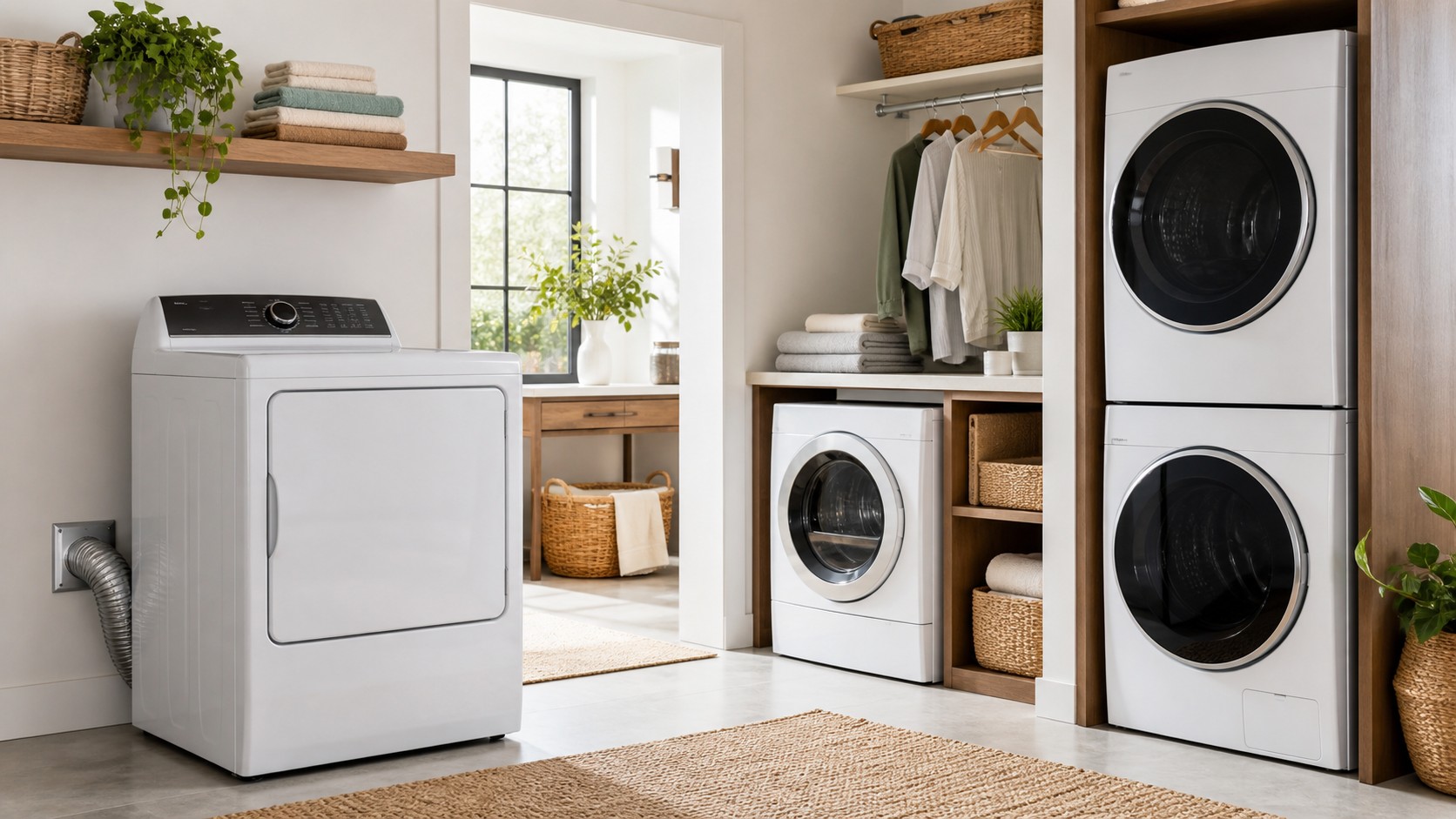
A Dryer Buyer Should Start Behind the Machine
Dryer types are often explained by feature lists, but a better buyer’s guide starts behind the machine. The outlet, gas line, duct, drain, closet depth, and door swing will shape the purchase long before the wrinkle cycle or app notification matters. A dryer that fits the home’s utilities can feel effortless for years. A dryer chosen around a sale tag or matching set can become a daily irritation if it dries slowly, overheats the room, blocks the aisle, or asks for maintenance the household will not actually do.
A: Start with the type the home can install correctly, then compare performance and features inside that practical group.
A: It can be when energy use, ventless placement, and gentler heat matter enough to offset longer cycles and higher upfront cost.
A: Matching can look neat and simplify stacking, but capacity, utility fit, and door movement are more important.
A: A well-installed full-size vented dryer is often fast, especially with a clean short duct and properly spun wash loads.
A: Not always. It can solve venting constraints, but load size, cycle time, drainage, heat, and filter care must be acceptable.
A: It is useful because it can reduce overdrying, but it works best with reasonable load sizes and clean sensor surfaces.
A: They measure the appliance width but forget rear clearance, door swing, duct routing, and service access.
A: They can in some areas, but the answer depends on fuel prices, existing gas service, installation cost, and vent condition.
A: It can work for disciplined smaller loads, but large households often prefer full-size capacity and faster turnaround.
A: Venting, power, capacity, clearances, maintenance access, budget, and the laundry routine should all be settled before purchase.
Treat the Installation as the First Feature
Every dryer buying decision begins with installation because the appliance has to move heat, moisture, lint, and power safely. The right dryer in the wrong room becomes a compromise that shows up every laundry day. Before comparing brands, open the laundry door and look at what the home already provides.
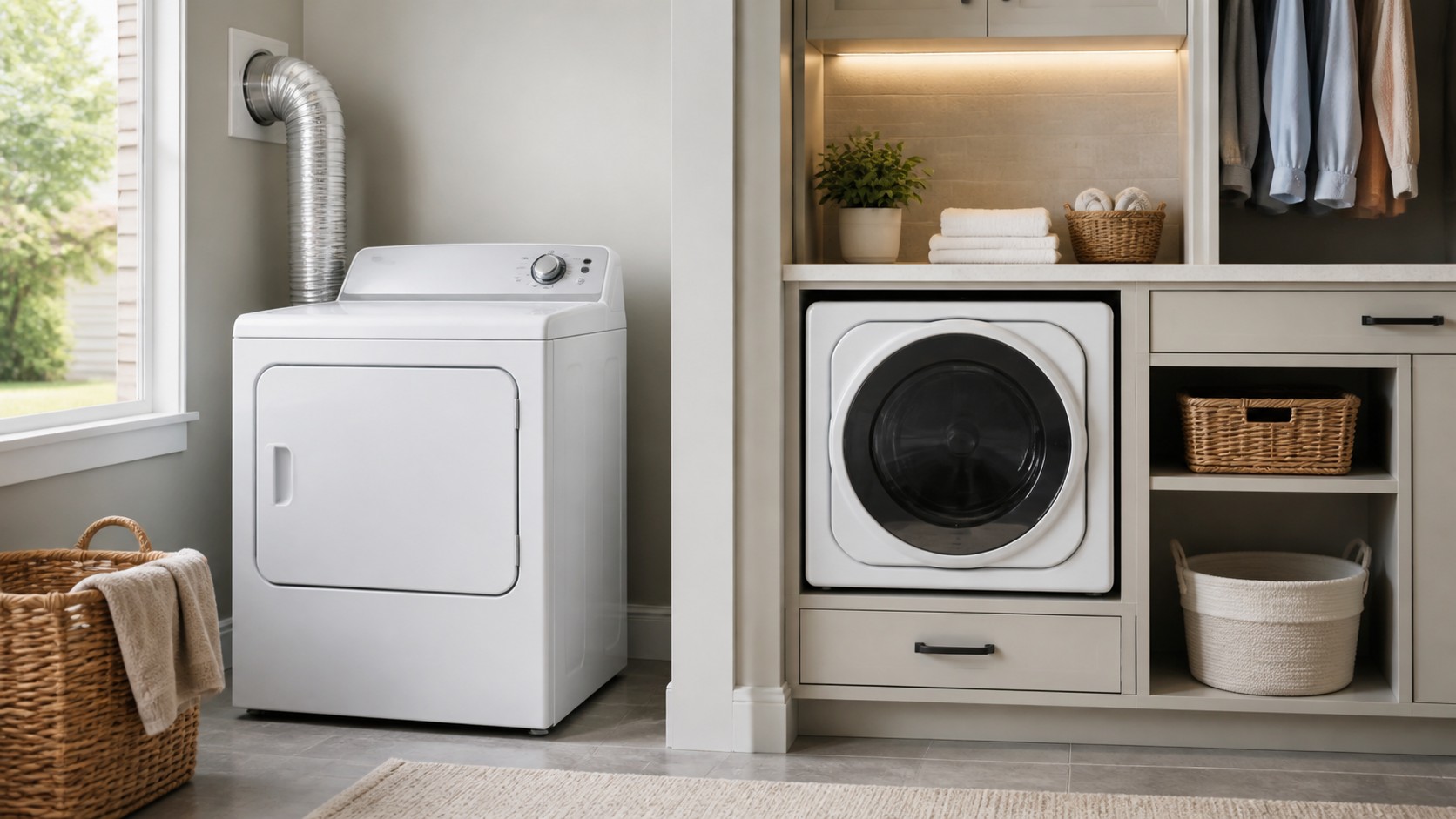
A vented dryer needs a legal and serviceable duct to the outdoors. An electric dryer needs the correct dedicated receptacle. A gas dryer needs fuel service, ignition power, and exhaust. A ventless dryer may need a drain or a routine for emptying a tank. These are not minor details hidden at the end of the process; they are the process.
Clearance matters just as much as utility type. The dryer may fit between two walls on paper but still crowd the room once the door opens, the vent turns, or the user stands with a basket. Many frustrating laundry rooms were technically measured and still poorly planned.
A buyer who starts with installation will usually eliminate several wrong choices quickly. That makes the remaining comparison more useful because every option on the shortlist can actually work in the home.
Installation-first shopping also makes conversations with contractors and delivery teams more productive. Instead of asking whether a dryer is generally good, the buyer can ask whether that model belongs in this exact closet, with this outlet, this duct, this drain, and this amount of working space.
That question may sound plain, but it prevents expensive detours. Many disappointing dryer purchases start with a model that looked right online and only later collided with an outlet, vent route, cabinet depth, or door swing.
Compare Vented, Condenser, and Heat Pump Dryers
Vented dryers are the familiar workhorses. They heat air, pull it through clothing, and exhaust moisture outdoors. Their strengths are availability, relatively quick cycles, and straightforward expectations. Their weakness is dependence on a clean, safe duct route.
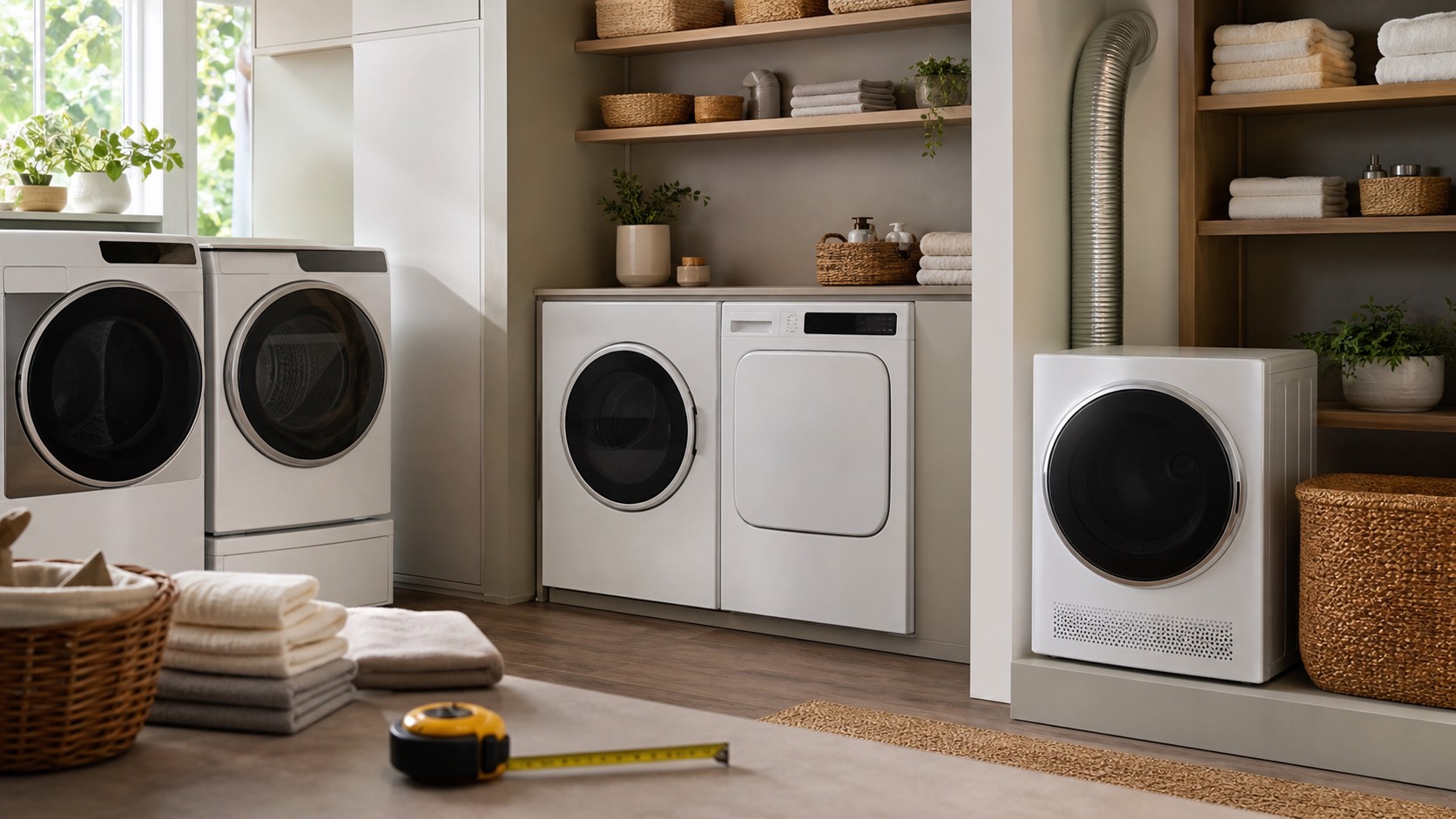
Condenser dryers remove moisture without an outdoor vent. They can be placed where ducting is unavailable, which makes them attractive for apartments, interior laundry closets, and remodels. The buyer must accept water collection or drainage needs and often a slower rhythm.
Heat pump dryers are ventless machines that reuse heat. They can be efficient and gentle on fabrics, and they often release less heat into the room than conventional drying. They may cost more upfront and may ask more from the user in filter and heat-exchanger care.
The best comparison is not simply which technology is newer. A clean, short vent path may make a vented dryer the practical winner. A no-vent condo may make heat pump drying the only elegant option. A small household may love a compact ventless setup that a large family would outgrow quickly.
Good dryer shopping keeps technology tied to context. A type is only better when it is better for the room, the load size, and the user’s tolerance for cycle length and maintenance.
This is especially important when replacing an old dryer. The existing machine may have trained the household to accept slow cycles, excess heat, or awkward venting as normal. A new purchase is a chance to question the room, not just copy the previous appliance.
Replacement shopping should include one practical question: what would make laundry feel better than it did before? The answer might be faster towels, less heat in a closet, quieter operation, simpler filter access, or a dryer that finally fits the way the room is used.
Use Capacity as a Routine Question
Dryer capacity should be judged by real laundry, not only by the number printed on a product page. Wet fabric needs room to tumble. A dryer that is too small for the washer will leave heavy loads damp, wrinkled, or unevenly dried.
Families with towels, bedding, school clothes, uniforms, and pet laundry usually benefit from generous capacity. A single person in an apartment may prefer a smaller machine that fits beautifully and encourages smaller loads. Neither decision is wrong when it matches the routine.
The washer matters because it determines how much wet laundry enters the dryer. A high-capacity washer paired with a modest dryer can create a bottleneck. A washer with strong spin performance can help any dryer by removing more water before the cycle begins.
Capacity also affects the room. Larger drums often come inside deeper cabinets, taller stacks, and wider door swings. The best capacity is the amount that handles normal loads without turning the laundry area into an obstacle course.
A practical buyer should compare capacity with the hardest weekly load. If the dryer can handle the biggest towel load, the comforter that actually fits the home, or the pile of uniforms that appears after practice, the everyday mixed loads are much less likely to become a problem.
Decide How Much Speed Is Worth
Drying speed matters most when laundry backs up. A household running one casual load every few days can tolerate a slower, efficient dryer more easily than a household trying to process towels, bedding, and uniforms on Sunday night.
Vented full-size dryers often feel faster because they move hot moist air out of the machine continuously. Ventless models may take longer because they manage moisture internally. Heat pump models may use lower temperatures, which can be kinder to fabric but different from the hot-dry feel many people expect.
Speed is also affected by load composition. A small mixed load may dry quickly in almost any good machine. A drum full of bath towels will reveal airflow, capacity, sensor accuracy, and heat performance. Buyers should think about the loads they actually dread, not the easy ones.
There is also a comfort question. Some people gladly trade longer cycles for lower energy use, gentler heat, or a dryer that fits in an interior closet. Others need laundry finished quickly because the home runs on tight timing. The better dryer type is the one whose pace will not become a recurring complaint.
Before paying for speed, make sure the basics support it. A clogged vent, overloaded drum, or poor washer spin can make even a powerful dryer feel disappointing.
The washer’s final spin deserves special attention here. A machine that leaves clothes wetter than expected shifts more work to the dryer, which can make two dryers of the same type feel very different in real homes.
Look Past the Control Panel
Feature lists can make dryers look more different than they are. Steam, sanitize, wrinkle care, smart alerts, towels, bedding, delicates, eco, and quick dry all sound helpful. Some are helpful, but they should be tested against how the household does laundry.
Moisture sensing is usually more valuable than a decorative cycle menu because it can protect fabrics from unnecessary heat and stop loads at a better time. Reversible doors can matter more than smart notifications in a tight room. A bright drum light can be surprisingly useful when small items hide along the back edge.
The buyer should ask a blunt question: what problem does this feature solve here? If the answer is vague, the feature is not a reason to choose the dryer. If the answer is specific, such as avoiding wrinkled work shirts or hearing an alert from another floor, it belongs in the comparison.
Dryer buying becomes cleaner when the control panel is treated as the last layer. Moisture path, power, capacity, clearances, and maintenance decide the machine. Features refine it.
That does not mean features are frivolous. It means they should be attached to a known need. A quiet cycle matters in a laundry closet near bedrooms; a remote alert matters when the machines are on another floor; a steam refresh matters when the household uses it instead of rewashing clean clothing.
Plan for Maintenance Before Purchase
Every dryer type has maintenance, and the easiest maintenance is the kind the household will actually do. Vented dryers need lint screen cleaning and periodic duct attention. Gas dryers add fuel-system seriousness and should be installed and serviced appropriately. Ventless dryers often include additional filters, tanks, condensers, or heat exchangers.
The physical location can make maintenance easier or harder. A lint screen that pulls out at the top may be simple in one room and blocked by a counter in another. A tank that needs emptying may be fine at waist height and annoying near the floor. A filter hidden behind a low panel may be neglected if the machine sits in a narrow closet.
Maintenance also affects performance. Drying times creep upward when airflow is restricted or filters are dirty. The user may blame the dryer type when the real issue is care, access, or installation.
Before buying, imagine owning the dryer after the novelty wears off. If the cleaning steps feel reasonable and reachable, the machine is more likely to perform well over time. If the steps already sound burdensome, choose a different type or change the room plan.
Build the Final Shortlist
The final dryer shortlist should be small, practical, and rooted in the home. One option might be a full-size vented electric model because the duct and outlet are ready. Another might be a heat pump model because the laundry closet has no exterior vent. A third might be a compact stackable set because floor space matters more than drum size.
Once the shortlist is limited to installable choices, compare capacity, cycle expectations, noise, warranty support, maintenance access, and cost. This is the point where finishes, matching washers, smart features, and brand preference can enter without taking over the decision.
A complete buyer’s guide does not need to crown one dryer type for everyone. It should help each buyer avoid the wrong category, then choose confidently inside the right one.
The dryer that wins is usually not the flashiest model. It is the one that dries the household’s real laundry, fits the room cleanly, and asks for a level of care the owner can keep up with.
If two models still seem tied, choose the one with the easier ownership story. Clearer filters, better local service, a simpler door path, and a more realistic cycle length will be noticed far more often than a rarely used specialty setting.
A strong shortlist should make the final purchase feel almost uneventful. By that point, the buyer is not gambling on a category; they are choosing among machines that already satisfy the room, the utilities, the service path, and the laundry routine before delivery day arrives and installation begins with fewer surprises.