The Dryer Decision Starts With the Room
Vented and ventless dryers both remove moisture from clothing, but they do it in different ways. A vented dryer sends hot, damp air outside through a duct. A ventless dryer keeps the process inside the appliance, using condenser or heat-pump technology to collect or manage moisture without a traditional exterior vent. The better choice is not simply the faster dryer or the newer technology. It is the dryer that fits the room, the home’s utilities, the user’s expectations, and the maintenance routine the household will actually follow.
A: A well-installed vented dryer often dries large loads faster.
A: Ventless models can fit locations where exterior ducting would be difficult.
A: Some use a drain, while others collect water in a reservoir.
A: Yes, heat-pump dryers are a common ventless option.
A: No. It needs a safe, code-appropriate path outdoors.
A: Lint buildup, crushed ducts, and long vent runs can reduce performance.
A: Many use lower heat, which can be gentler on fabrics.
A: They should check building rules, electrical needs, drainage, and room ventilation.
A: Vented dryers are often cheaper upfront, but installation can change the total cost.
A: The room, vent path, load volume, energy goals, and maintenance habits decide it.
What a Vented Dryer Does
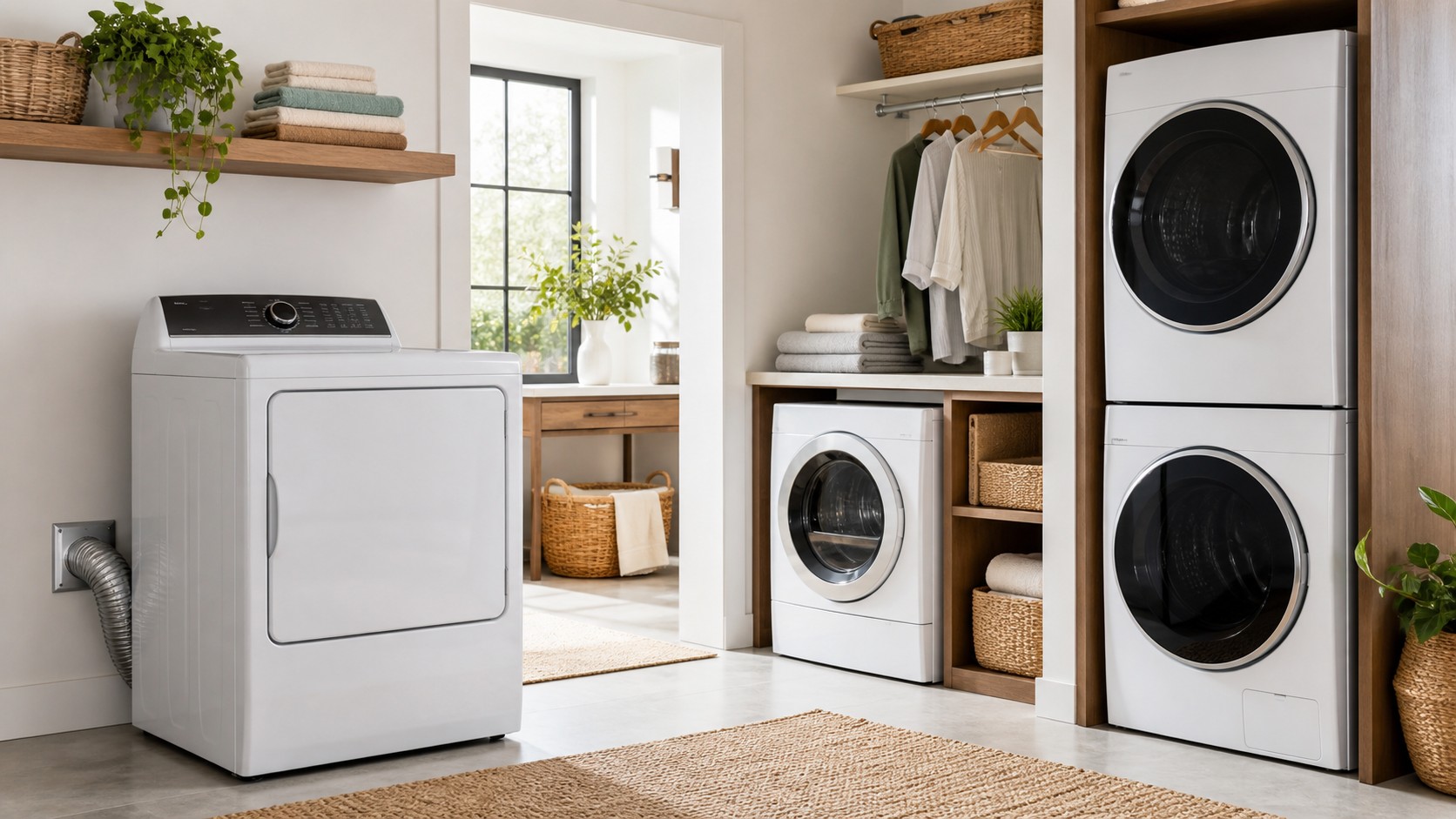
A vented dryer heats air, moves it through tumbling clothes, and pushes the warm moist air outdoors through a duct. This is the traditional dryer setup in many houses. When the duct is short, clean, and properly installed, a vented dryer can dry loads quickly and predictably.
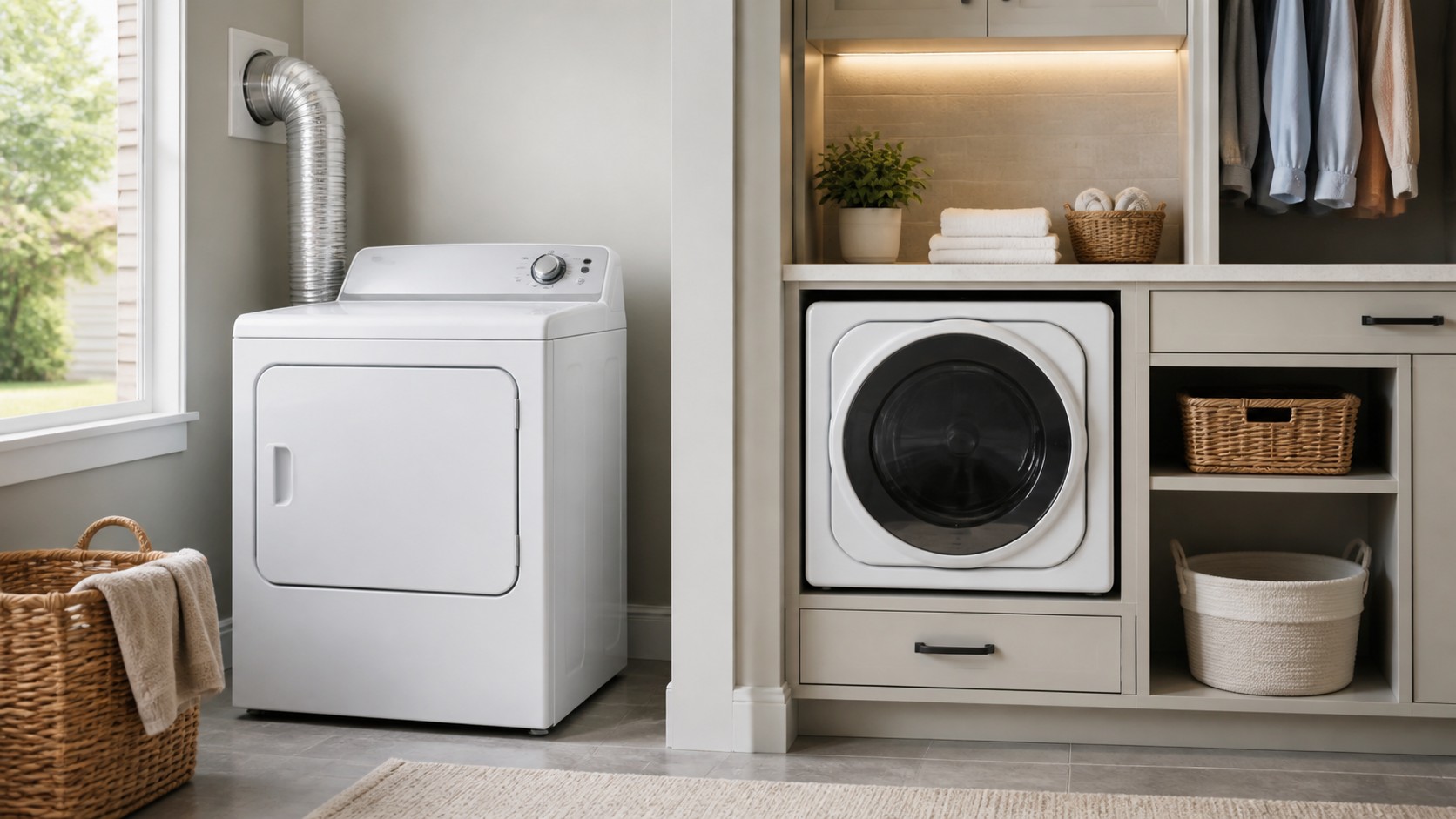
The vent is the defining requirement. The dryer needs a safe path to the exterior, with the correct duct material, length, turns, and termination. A poor duct path can slow drying, collect lint, waste energy, and create safety concerns. The dryer may be familiar, but the installation still deserves respect.
Vented dryers often cost less upfront than comparable heat-pump ventless models. They are widely available and familiar to many repair technicians. For a laundry room that already has a good exterior vent, that simplicity can be appealing.
The downside is location. If the laundry room sits in an interior closet, apartment, condo, or remodel where exterior venting is difficult, a vented dryer may require construction that outweighs the appliance’s advantages.
That room-first approach prevents a common mistake: comparing dryers as if they will be installed in identical spaces. A laundry closet in a condo, a basement utility room, and a main-floor mudroom all place different demands on heat, moisture, noise, and service access.
What a Ventless Dryer Does
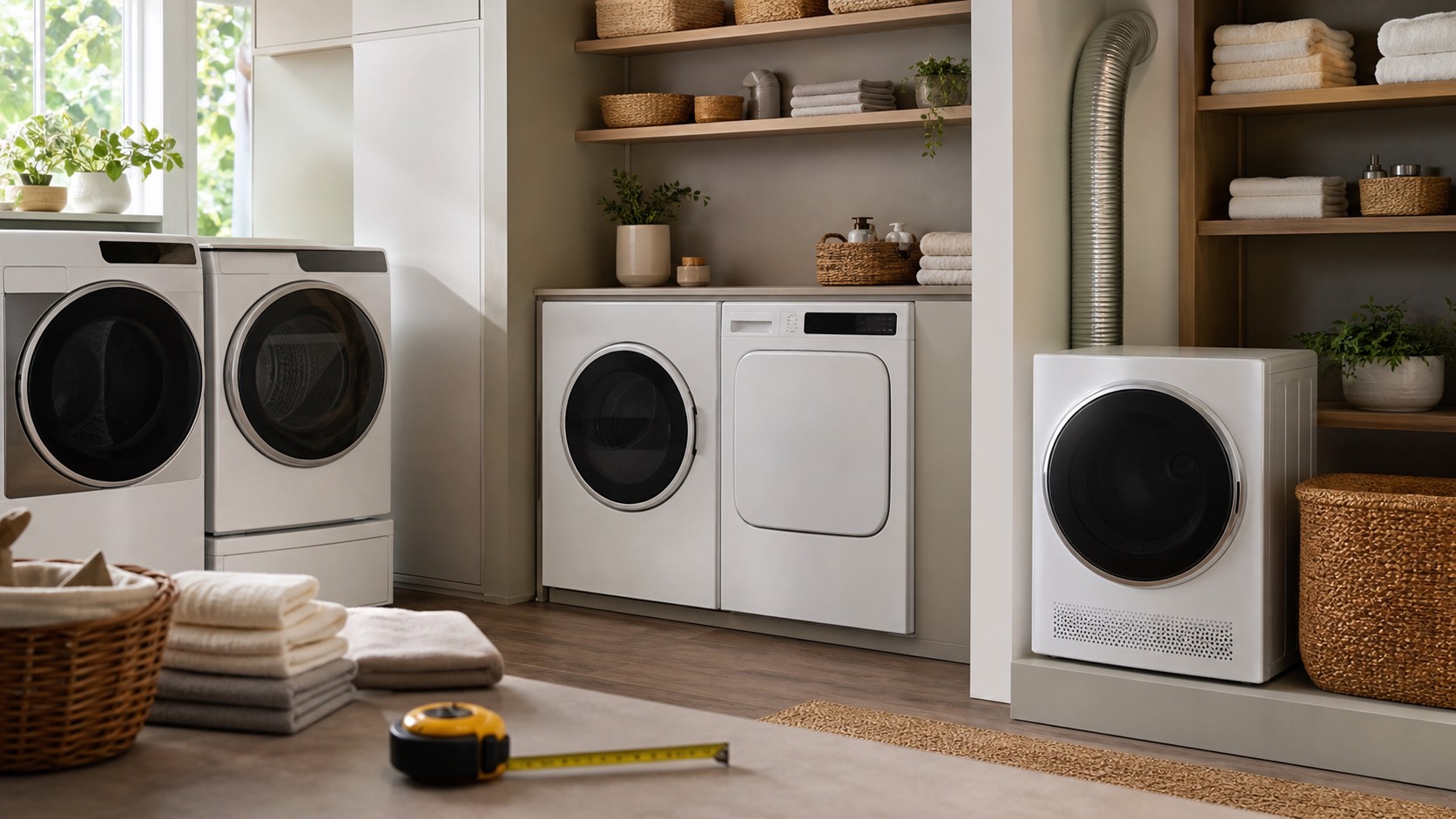
A ventless dryer dries clothes without sending moist air through a traditional exterior duct. Condenser models cool moisture out of the air and collect it or send it to a drain. Heat-pump models reuse heat more efficiently, often drying at lower temperatures and using less energy.
This flexibility opens laundry locations that would be difficult for a vented dryer. Interior rooms, apartments, closets, and historic homes may all benefit from a dryer that does not need a duct to the outside. The installation may still need a drain, reservoir access, electrical compatibility, and room ventilation.
Ventless drying often asks for different expectations. Loads may take longer, especially in heat-pump models. Clothing may feel different at the end of a cycle, and overloading can reduce performance. People used to fast, hot vented drying should understand that the rhythm changes.
The advantage is not only convenience. Heat-pump dryers can be gentle on fabrics and efficient over time. For households focused on energy use or flexible placement, ventless technology can be a serious upgrade rather than a compromise.
Ventless does not mean maintenance-free. Filters, condensers, reservoirs, and airflow paths need attention. The owner has to be comfortable with that care routine.
A vented dryer also depends on the health of the duct over time. Even a good installation can become less effective if lint collects, the exterior flap sticks, or flexible ducting is crushed behind the machine.
A good vent path is usually simple, smooth, and short. Long runs with several bends can make even a powerful dryer feel weak. Before replacing a dryer, homeowners should know whether the existing duct is helping or hurting performance.
Installation May Decide Before Preference Does
The most important question is whether the home already has a safe, effective dryer vent. If it does, a vented dryer may be straightforward. If it does not, adding a vent may involve exterior walls, roof penetrations, long duct runs, code issues, or building restrictions.
Ventless dryers reduce that barrier, but they are not plug-anywhere magic. Some need a drain connection or a container emptied after cycles. They still release some heat into the room. They need space around them according to the manufacturer’s guidance.
Electrical requirements can also differ. Many compact ventless dryers use different power setups than full-size vented dryers. Before buying, confirm voltage, outlet type, breaker capacity, and whether the laundry area can support the appliance.
Installation cost should be compared honestly. A cheaper vented dryer may become expensive if ductwork is difficult. A pricier ventless dryer may be the better value if it avoids construction and fits the room cleanly.
Ventless dryers can make remodels more flexible because the laundry area no longer has to hug an exterior wall. That can open better storage layouts, upstairs locations, or interior closets that would otherwise be ruled out.
Drying Speed and Load Rhythm
Vented dryers are often faster, particularly for large towel and bedding loads. They move hot moist air out quickly, which suits households that process several loads in a row. For large families, that speed can matter more than energy savings.
Ventless dryers, especially heat-pump models, may take longer. That does not make them bad; it means the laundry rhythm changes. They may work beautifully for households that run smaller loads, dry overnight, or do not need rapid back-to-back cycles.
Load size is crucial. Overloading either dryer slows performance, but ventless dryers can be especially sensitive because airflow and moisture management are central to the process. Following load guidance matters.
The drying result may also feel different. Heat-pump dryers often use lower temperatures, which can be gentler but less familiar. Clothes may need a brief cool-down or a different dryness setting before the user learns the machine’s behavior.
The better dryer is the one whose pace fits the household. A fast vented dryer in a good installation is hard to beat for volume. A ventless dryer can be excellent when placement flexibility and efficient operation matter more than speed.
Drying speed also affects behavior after the cycle ends. A household that waits for warm towels right before bedtime may prefer a faster vented machine. Someone who runs smaller loads during the day may barely notice the longer ventless rhythm.
Fabric mix also affects the experience. Heavy cotton towels, jeans, and bedding punish slow drying more than lightweight shirts or small daily loads. A household’s fabric habits can make one dryer type feel much better than the other.
Energy Use, Heat, and Fabric Care
Heat-pump ventless dryers are known for energy efficiency because they reuse heat instead of constantly exhausting warm air outdoors. Over time, that can reduce energy use, especially in households that dry frequently. Condenser dryers vary, so the exact model matters.
Vented dryers may use more energy because they heat air and send it outside. They can also pull conditioned air from the home and exhaust it, which may affect heating or cooling loads indirectly. In some climates and homes, that matters more than people expect.
Fabric care is another difference. Lower drying temperatures can be gentler on elastic, synthetics, and delicate fabrics. A hotter vented dryer may feel faster but can be harder on certain clothing if cycles are not chosen carefully.
Energy savings should be balanced against purchase price, repair cost, and cycle time. A heat-pump dryer may make sense for long-term efficiency, while a vented dryer may make sense for budget and speed in a home already built for it.
Heat-pump efficiency is most compelling when the owner plans to keep the appliance long enough to benefit. Upfront cost, expected use, and local energy prices all influence whether the savings feel meaningful.
Maintenance and Moisture Management
Every dryer needs lint care. Vented dryers require the lint screen to be cleaned and the duct path to be inspected and cleaned periodically. A clogged vent reduces performance and can become dangerous. The exterior termination should stay clear of debris, snow, nests, or damage.
Ventless dryers have their own maintenance. Condenser surfaces, secondary filters, water reservoirs, and drain paths may need cleaning. If those tasks are ignored, drying times can increase and the machine may struggle.
Moisture management is not just inside the appliance. A ventless dryer may add warmth to a small room, and some spaces need better general ventilation. A laundry closet with closed doors may need more attention than a larger utility room.
The best choice is the one whose maintenance feels realistic. A homeowner who will never clean a duct should not ignore vented dryer care. A homeowner who will not empty a reservoir or rinse filters should think carefully before choosing ventless.
Maintenance also affects longevity. Dryers last longer and perform better when airflow, filters, and moisture paths stay clean. The technology matters, but care keeps the machine honest.
Moisture should never be dismissed just because there is no exterior vent. A small closed laundry closet still needs enough air movement to stay comfortable, dry, and free of stale odors.
Filter access deserves a hands-on look before purchase. If the parts that need cleaning are awkward, hidden, or messy, the owner may postpone the task. Dryer performance then declines even though the technology itself is sound.
Which Dryer Is Better for Your Home?
Choose a vented dryer when the home already has a short, safe, well-maintained vent path and the household values faster drying. This is often the practical choice for full-size laundry rooms, large families, and people who process several loads in a row.
Choose a ventless dryer when the laundry location lacks a good vent path, space is tight, energy use matters, or gentler drying is attractive. Apartments, interior laundry closets, condos, and remodels often benefit from the flexibility.
Do not compare only appliance price. Compare installation, energy use, cycle expectations, maintenance, and the room itself. The wrong dryer type can make a beautiful laundry area frustrating; the right one can make a difficult location work smoothly.
The best answer is the dryer that fits the house without forcing the household into habits it will not keep. Start with the room, confirm the utilities, then choose the technology that makes daily drying feel reliable.
The final choice should feel boring in the best way: properly installed, easy to maintain, and predictable on laundry day. Dryer technology is successful when the household stops thinking about it.
For many homes, the answer is settled by architecture. A safe existing vent points one direction; an interior room with no duct path points another. Respecting that reality usually produces a better result than forcing a preferred technology into the wrong space.
The dryer should also be judged with the washer in mind. A washer with a strong spin may reduce drying strain, while a washer that leaves bulky loads wetter will make dryer speed and airflow more important.
Once the installation is clear, the choice becomes much less mysterious. Vented dryers favor speed and familiar ducted rooms; ventless dryers favor flexible locations, efficient heat-pump options, and homes where exterior venting is the obstacle.
That is the practical version of better. The right dryer is not merely the one with the strongest claim; it is the one the room can support and the household can maintain.