Clothes Dryer Types Make More Sense by Installation
The different types of clothes dryers are easier to understand when you begin with the home instead of the showroom. A dryer is not only a box that tumbles clothing with heat. It also needs a power source, a way to handle moisture, enough clearance for airflow, and a rhythm that fits the household’s laundry pace. Once those pieces are clear, terms like vented, ventless, condenser, heat pump, gas, electric, compact, stackable, and all-in-one stop sounding like competing labels and start becoming practical categories.
A: A vented electric dryer is common in many homes because it is familiar, widely available, and straightforward when the right outlet and duct already exist.
A: It is a fuel category. Most gas dryers are still vented dryers, so they need both gas service and outdoor exhaust.
A: Condenser dryers, heat pump dryers, and many all-in-one washer dryer units can work without a traditional exterior dryer vent.
A: Many do, especially compact condenser models, though load size, fabric mix, spin speed, and heat pump design all affect timing.
A: A heat pump dryer is a type of ventless dryer, but it recycles heat differently and is often more energy efficient.
A: No. Stacking requires compatible models, a proper stacking kit, and manufacturer-approved installation.
A: No. They also work in guest suites, upstairs laundry closets, cabins, and secondary laundry areas.
A: Smart features can improve alerts and cycle selection, but heating method, airflow, sensors, and drum size still drive performance.
A: A simple vented dryer can be easy to maintain when the duct is short and accessible, while ventless models require filter and water-path care.
A: Confirm venting, power, space, and household load size before comparing finishes, matching sets, or specialty cycles.
Start With the Way Moisture Leaves the Dryer
The most important difference between dryer types is not the control panel or the shape of the door. It is what the machine does with the damp air pulled from clothing. Traditional vented dryers heat air, move it through the drum, and send lint and moisture outdoors through a duct. That system can be fast and familiar, but it only works well when the vent route is safe, short enough, and maintained.
Ventless dryers solve a different problem. Instead of sending moist air outside, they condense moisture inside the machine and either collect it in a reservoir or move it to a drain. This makes them useful in apartments, interior closets, older homes, and spaces where cutting a dryer vent is impractical or not allowed. The tradeoff is that they usually ask more patience from the user and more attention to filters, tanks, or heat exchangers.
Heat pump dryers belong in the ventless family, but they deserve their own mention because they reuse heat rather than constantly creating and exhausting it. That can lower energy use and reduce the blast of hot air around the laundry area. They are often appealing for efficient homes and small laundry rooms, though they still need proper clearance and routine cleaning.
Once moisture handling is understood, the rest of the categories become easier to compare. Gas, electric, compact, stackable, and smart describe fuel, size, installation, or features. They do not replace the basic question of whether the dryer needs an outdoor vent.
This order also helps when several labels appear on one machine. A compact heat pump dryer, for example, is compact by size, heat pump by drying method, electric by power source, and ventless by installation. Reading the label in layers keeps the buyer from treating those words as separate appliance families.
Vented Electric and Gas Dryers
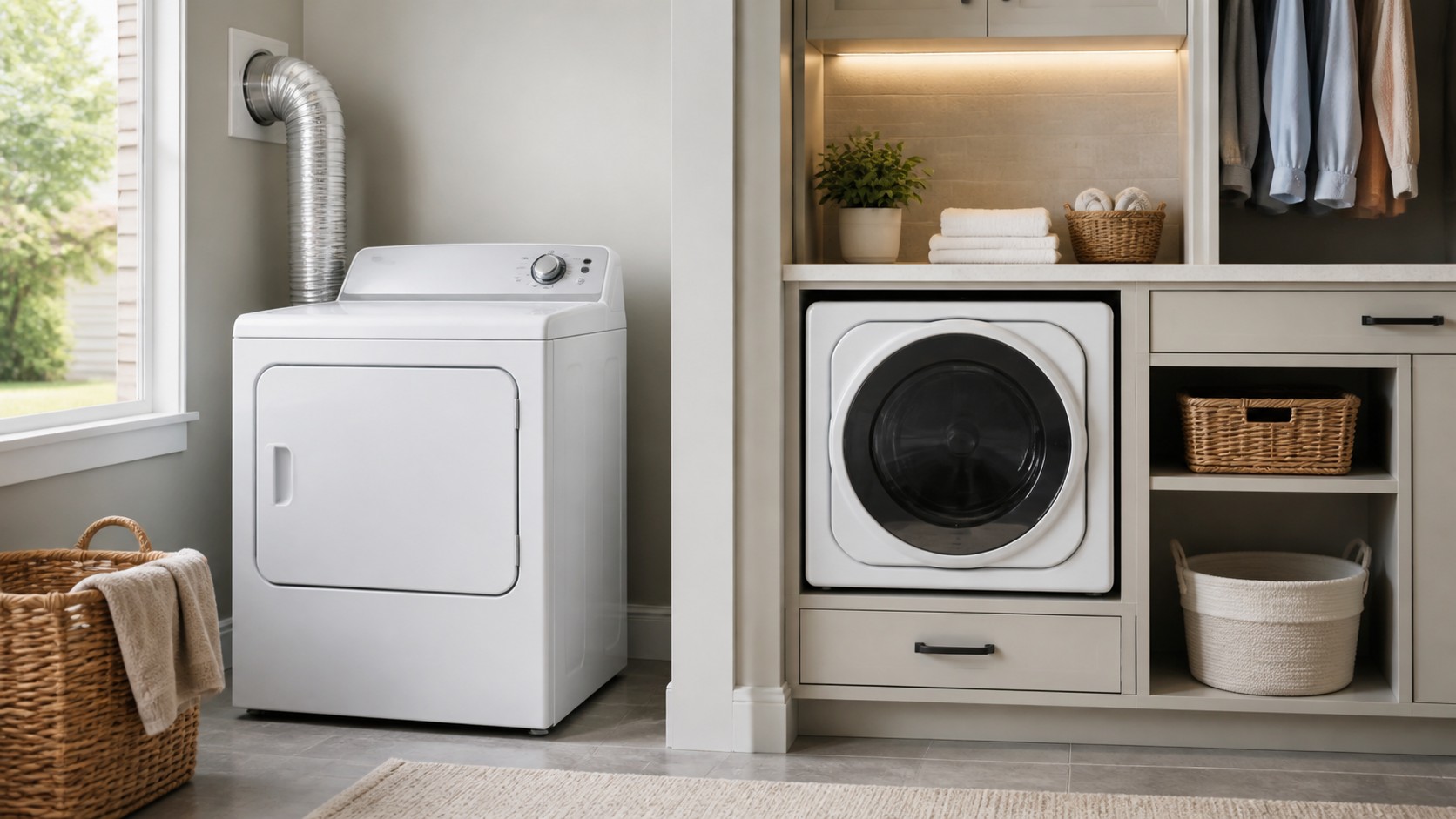
Vented dryers remain popular because they are widely available, familiar to technicians, and capable of drying large loads quickly. Electric versions use electric resistance heat, while gas versions use a gas burner with electrical controls. Both still rely on airflow, which means the ductwork behind the machine matters as much as the dryer itself.
A vented electric dryer usually requires a dedicated high-voltage outlet. A gas dryer usually requires gas service, a shutoff, ignition power, and a proper vent. Homeowners sometimes assume that choosing gas automatically means faster or cheaper drying, but the better question is what utilities already exist and what local energy costs look like.
The weak point in vented drying is often the duct, not the appliance. Long runs, crushed transition hoses, too many bends, and lint buildup can slow drying and create safety concerns. A new dryer will not perform like new for long if the exhaust path is already fighting it.
Vented dryers are strongest in laundry rooms with exterior-wall access, a practical duct route, and enough space behind the machine for safe connections. They are less appealing when the only available location is deep inside the home or where the vent would need an awkward route through finished spaces.
For many households, a standard vented dryer is still the right answer. It simply should be chosen with the room’s actual duct and power conditions in mind, not treated as the default regardless of installation.
A good vented installation should also be easy to inspect later. If the duct disappears behind finished cabinetry or bends sharply where no one can reach it, the dryer may slowly lose performance. Planning access is not decorative, but it is one of the reasons a familiar dryer type keeps working like it should.
This is also where safety and performance meet. Lint is not just a nuisance that collects on a screen; it can gather inside neglected duct runs and make the dryer work harder. A buyer who chooses a vented model should be just as interested in the path out of the house as in the drum inside the laundry room.
Condenser and Heat Pump Dryers
Condenser dryers are useful when a home cannot easily vent outdoors. They cool moist air so water separates from it, then collect that water or send it to a drain. This approach opens laundry possibilities in closets, condos, additions, and older buildings where venting would be disruptive.
Heat pump dryers refine that idea by recycling warmth inside the appliance. They often run at gentler temperatures and can use less energy than conventional electric drying. The experience may feel different for someone used to a hot vented dryer because clothes can come out dry without feeling scorching.
The main compromise is time. Ventless dryers can take longer, especially when they are compact or overloaded. They also depend on good user habits: cleaning filters, emptying tanks when needed, keeping heat exchangers clear, and leaving enough room for airflow around the machine.
These dryers make the most sense when installation flexibility, energy use, or fabric care matters more than the fastest possible towel cycle. They are not a loophole around every planning rule, but they can make laundry possible in rooms where a vented dryer would be unrealistic.
They also change the feel of the laundry room. Instead of a blast of exhaust heat leaving the house, the machine manages warmth and moisture internally. That can be more comfortable in some locations, but it makes clearances, cleaning, and room ventilation worth taking seriously.
Space-Saving Dryer Formats
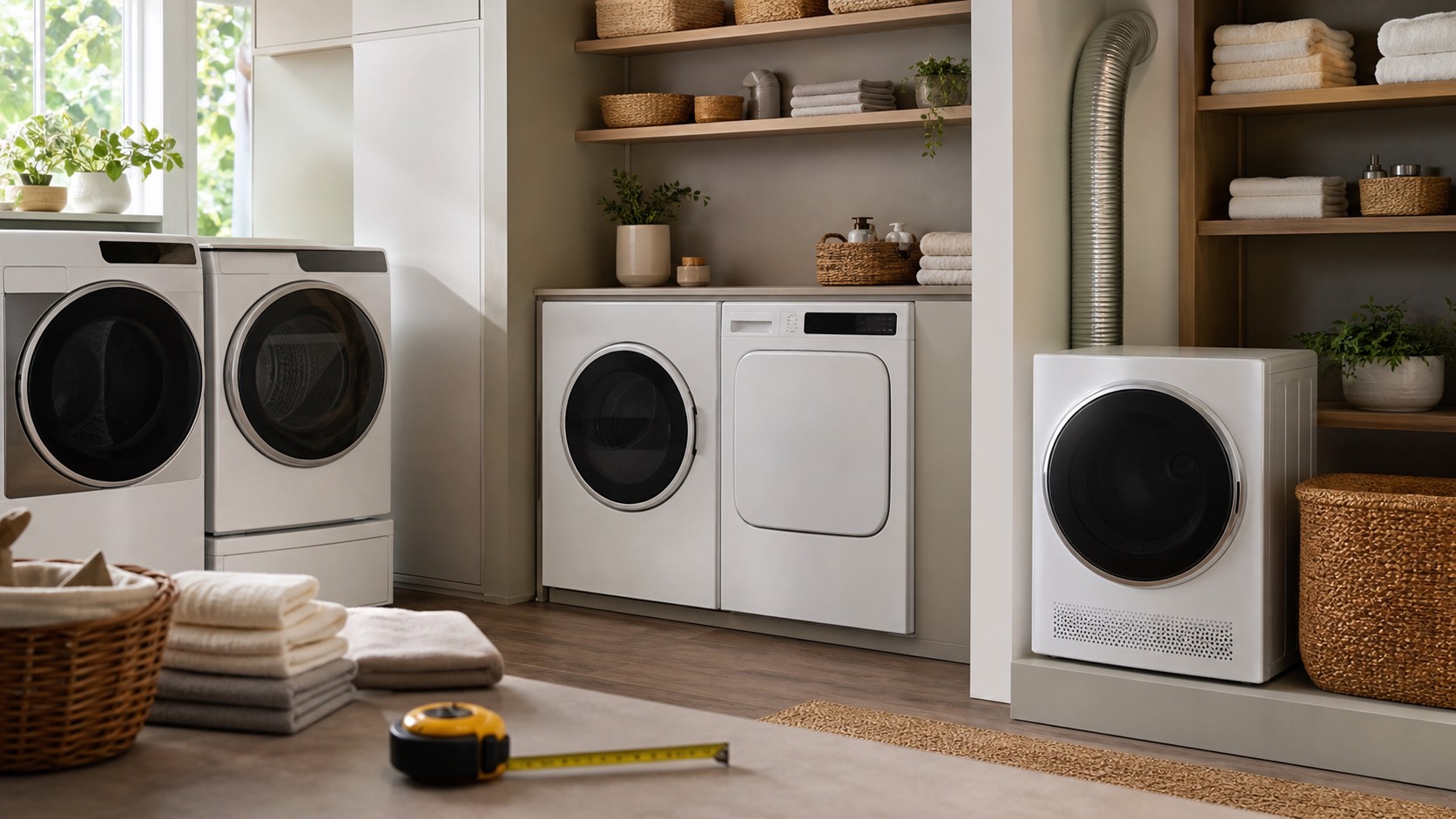
Compact dryers are smaller machines designed for tight spaces. They often pair with compact washers, fit under counters, or stack inside closets. Their smaller drum can be a gift in a narrow home and a frustration in a household that washes heavy bedding every weekend.
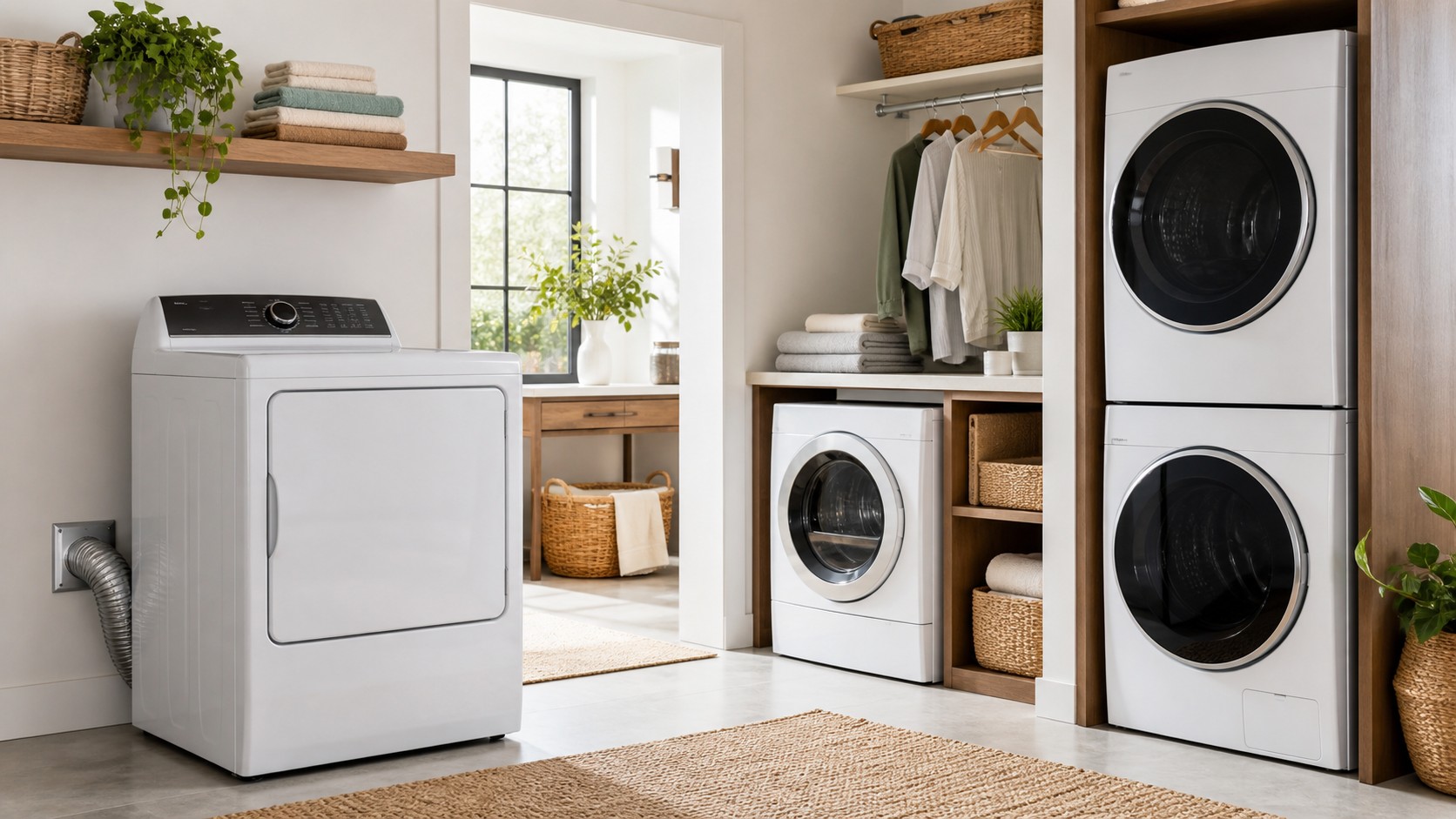
Stackable dryers are not a separate drying technology by themselves. A stackable dryer may be vented, ventless, electric, or sometimes gas, depending on the model. The defining feature is that the dryer can sit safely above a compatible washer using the correct kit.
All-in-one washer dryer units combine washing and drying in a single drum. They are best understood as space-saving appliances rather than high-throughput laundry systems. They can be excellent for condos, accessory dwelling units, small households, and anyone who values one-machine convenience over rapid back-to-back loads.
The practical question is how much laundry must move through the room in a normal week. A compact or all-in-one setup can feel elegant when loads are small and frequent. It can feel undersized when several people expect full-size towels, bedding, uniforms, and clothing to cycle quickly.
Space-saving dryer types are worth comparing with real baskets in mind. The right choice is not the smallest appliance that fits; it is the smallest appliance that still fits the routine.
They also benefit from honest expectations about load sequencing. A person who likes to wash one large load and forget about it may dislike compact drying, while someone who already runs smaller cycles throughout the week may barely notice the difference.
Features Are Secondary to the Drying System
Modern dryers may include steam refresh, wrinkle prevention, app alerts, sensor drying, sanitize cycles, reversible doors, drum lights, and specialty fabric settings. These features can be genuinely useful, but they should not distract from venting, power, capacity, and service access.
Sensor drying is one of the more practical features because it can stop a cycle when clothing is dry rather than running only by time. Even then, sensors work best when loads are sorted reasonably and the machine is not packed beyond its design. A sophisticated control panel cannot overcome poor airflow or an overloaded drum.
Smart notifications can help busy households remember loads before wrinkles set in. Steam can refresh lightly worn garments. Drum lights can make it easier to find small items. Each feature should earn its place by solving a real annoyance in the home.
When comparing dryer types, treat features as the final refinement. First decide how the dryer will handle moisture, where it will fit, how it will be powered, and how large the drum should be. Then choose the feature package that supports those decisions.
This approach protects the buyer from paying for novelty while missing the practical fit. A dryer with fewer cycles can be the smarter appliance if it has the right capacity, a reachable lint screen, and a drying method the home can support without extra drama.
How to Choose Among Dryer Types
A good dryer choice begins with a quiet inspection of the laundry area. Look for the outlet, gas connection, vent route, drain, door swing, closet clearances, and distance to the nearest exterior wall. Those details narrow the field before brand, color, or matching washer design enters the conversation.
Next, think about the laundry load itself. Towels, denim, bedding, pet blankets, baby clothes, workout gear, and delicates all ask different things from a dryer. A household that runs large back-to-back loads may be happier with a full-size vented machine, while a smaller household may prefer ventless flexibility and lower heat.
Budget should include more than the appliance price. New ductwork, electrical upgrades, gas changes, drain work, stacking kits, pedestals, and cabinetry adjustments can change the true cost. Sometimes the dryer with the higher sticker price is cheaper once installation is included; sometimes the familiar standard model wins because the room is ready for it.
The best type of clothes dryer is the one that fits the home’s utilities, the room’s shape, and the household’s patience level. A dryer that looks impressive but fights the installation will never feel like a good purchase.
The Simple Way to Read Dryer Labels
Dryer labels become less confusing when they are separated into layers. First identify the moisture system: vented, condenser, heat pump, or all-in-one. Then identify the power source: electric or gas. Then look at size, stacking ability, capacity, and features.
This order prevents misleading comparisons. A compact heat pump dryer and a full-size gas dryer may both be excellent appliances, but they are solving different problems. One is built for flexible placement and efficiency; the other is built for traditional vented throughput.
Retail categories sometimes blur these distinctions because they are designed for browsing. A model may appear under compact laundry, smart dryers, stackable sets, or energy-efficient appliances all at once. The buyer still needs to ask what the machine does with moisture and whether the home can support it.
Once that habit is in place, dryer shopping becomes calmer. The labels stop competing, and the right shortlist becomes much easier to see.
That calm matters because dryer purchases often happen quickly after an old machine fails. Even under time pressure, sorting labels into moisture system, power source, size, arrangement, and feature package can prevent an expensive mismatch.