A Simple Map of Washing Machine Types
The different types of washing machines can be understood by asking three plain questions: where does the laundry go in, how does the machine move clothes, and what space problem is it trying to solve? Front load machines open from the front. Top load machines open from above. Some top loaders use agitators, while others use impellers. Compact, portable, stackable, smart, and all-in-one machines describe size, layout, or features rather than one single washing action. Once those categories are separated, the appliance aisle becomes much easier to read.
A: The main groups are front load, top load, agitator, impeller, compact, portable, stackable, laundry center, all-in-one, and smart.
A: No. Top load describes the lid location; agitator or impeller describes the wash action.
A: Many front load models are stackable, but compatibility and stacking kits must be confirmed.
A: It is a top load washer with a low-profile plate instead of a tall center agitator.
A: It is a smaller washer designed for spaces where full-size machines are impractical.
A: Renters or small households may consider one if hookups and drainage are manageable.
A: It is a connected stacked washer and dryer unit sold as one appliance system.
A: Smart features are an added layer, not a separate mechanical washing type.
A: Start with door location, then learn the wash action and space format.
A: Remove machines that do not fit, then compare comfort, capacity, and care routines.
Door Style: Front Load and Top Load
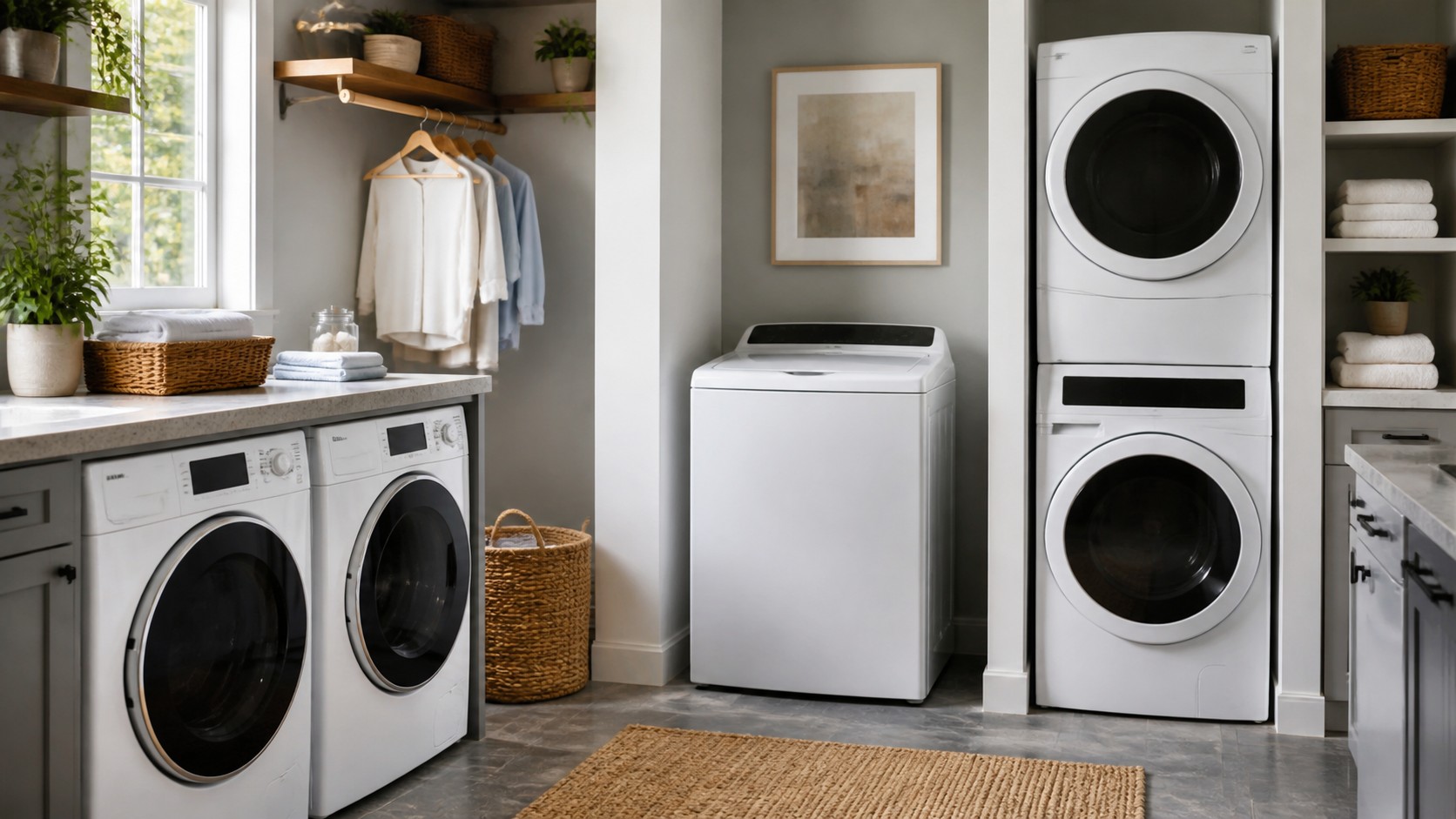
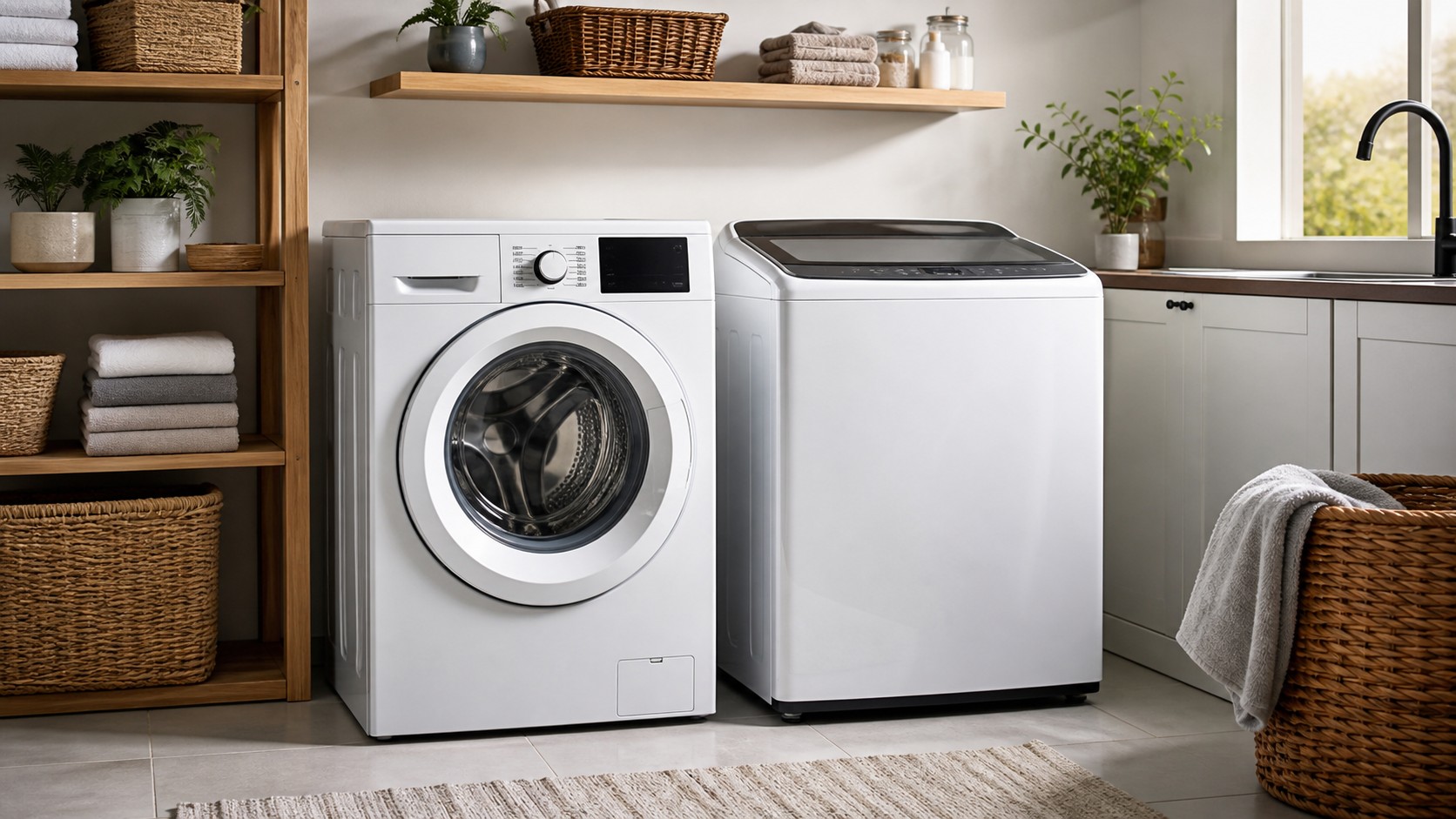
The easiest way to begin is with the door. A front load washer has a round door on the front of the machine. Clothes are loaded horizontally, and the drum tumbles them through water and detergent. This style often appears under counters or in stacked laundry arrangements.
A top load washer opens from above. Clothes drop into a vertical basket, and the wash action happens inside that basket. Top loaders are familiar to many households and can be comfortable for users who prefer not to bend toward a front door.
Door style affects the room. Front load machines need space in front for the door to swing and for the user to crouch or bend. Top load machines need space above for the lid to open. Shelves, counters, closet doors, and baskets should be planned around that movement.
Neither door style explains everything about performance. It simply describes the way the user interacts with the machine. Cleaning action, capacity, water use, and features still vary within each category.
This simple map is also helpful because product names can overlap. A washer can be top load and high efficiency. Another can be front load and stackable. A compact washer can still be smart. Sorting the categories prevents those labels from blending into one confusing feature cloud.
Wash Action: Agitator and Impeller
Many top load washers are described by their wash action. An agitator washer has a central post in the basket. During the cycle, that post helps move clothes through water. People who grew up with traditional washers often recognize this design immediately.
An impeller washer has a low-profile plate at the bottom instead of a tall post. The basket feels more open, which can help with bulky items. Impeller machines often require careful loading because clothes need space to move across the bottom and around the tub.
Agitators can feel more assertive. That may appeal to households washing work clothes, towels, and sturdy fabrics. Impellers can feel roomier and may be gentler in some situations, though they still need the right cycle and load size.
The difference matters because two top load washers can behave very differently. A buyer who asks only for a top loader may still need to choose between the familiar center-post design and the flatter high-efficiency style.
It is helpful to look into the basket before buying. The shape of the interior says a lot about how the machine will handle bedding, jeans, small garments, and mixed family loads.
The door position also shapes storage. A top load washer needs clear vertical space, while a front load washer can support a shelf or counter above. That difference affects how detergent, baskets, and folded laundry fit into the room.
Front load placement is especially important in built-in rooms. The door needs swing space, the gasket needs air, and the user needs room to crouch or stand with a basket. Those details are part of the machine type, not afterthoughts.
Front Load Machines
Front load machines are known for tumbling action, efficient water use, and design flexibility. Because they open from the front, they can sit under a counter when placed side by side. They can also stack with a compatible dryer, making them useful in tight laundry spaces.
They are often strong for fabric care because clothes lift and fall through the drum rather than being wrapped around a central agitator. Many households like them for towels, bedding, delicates, and mixed loads. Fast spin speeds can also remove more water before drying.
The care routine is important. Door seals, detergent drawers, and drum interiors need regular attention. Leaving the door slightly open after use helps moisture escape. Using too much detergent can create residue and odor.
Front load washers are a good match for households that want efficient cycles, counter space, stacking options, and a more built-in look. They are less appealing for users who strongly dislike bending or who know they will not maintain the gasket.
Wash action is one reason two machines with similar capacity can feel different. The shape inside the tub affects how clothing moves, how bulky pieces settle, and how carefully the user must load the machine.
Top Load Machines
Top load machines remain popular because they feel straightforward. The lid opens upward, clothing drops in from above, and many users find the posture more natural. This can be especially appealing in utility rooms where there is no need for a counter over the washer.
Traditional top loaders may use more water than some front load or high-efficiency models, depending on the design and cycle. High-efficiency top loaders use less water and may behave differently from older machines. The lower water level can surprise people who expect a full tub.
Top loaders can be easier to pause and access during a cycle on some models. They can also be easier to keep aired out because the lid opens broadly. Still, they need cleaning and correct detergent use like any washer.
Depth matters. Some large-capacity top loaders have deep baskets that are difficult for shorter users to unload. The comfort advantage of top loading should be tested physically, not assumed.
A top load washer is often a good fit for households that value familiar loading, upright posture, and a simple laundry-room setup. It becomes less convenient when overhead cabinets or shelves interfere with the lid.
Top loaders also differ in water behavior. Some traditional models use deeper fills, while high-efficiency models rely on lower water levels and load sensing. A beginner should not assume every top loader works like an older machine.
For households moving from an older washer, the water level may be the biggest surprise. Newer top loaders may rely on sensing and movement instead of a visibly full tub. Understanding that difference prevents unnecessary worry during the first cycles.
Compact and Portable Washers
Compact washers reduce width, depth, or capacity so laundry can fit into apartments, closets, guest suites, and small homes. They are not simply smaller versions of every full-size model; they change the rhythm of laundry because loads may need to be smaller and more frequent.
Portable washers serve renters or spaces without permanent laundry hookups. They may connect temporarily to a sink or require manual setup and storage. Before choosing one, users should check building rules, drainage, floor protection, and whether the routine will feel manageable.
Compact machines can be excellent when expectations are realistic. A small washer that fits properly and handles regular clothing may be far better than no in-home laundry at all. It may not be ideal for king bedding or large family towel loads.
The best small-machine choice depends on the hardest item the household actually needs to wash. If bulky bedding must be handled at home, capacity matters more. If daily clothing is the priority, compact convenience may win.
Portable machines deserve special caution because the routine extends beyond washing. The user may need to connect hoses, supervise draining, store the unit, and protect flooring. That can be worthwhile, but it should be understood before buying.
Stackable and All-in-One Machines
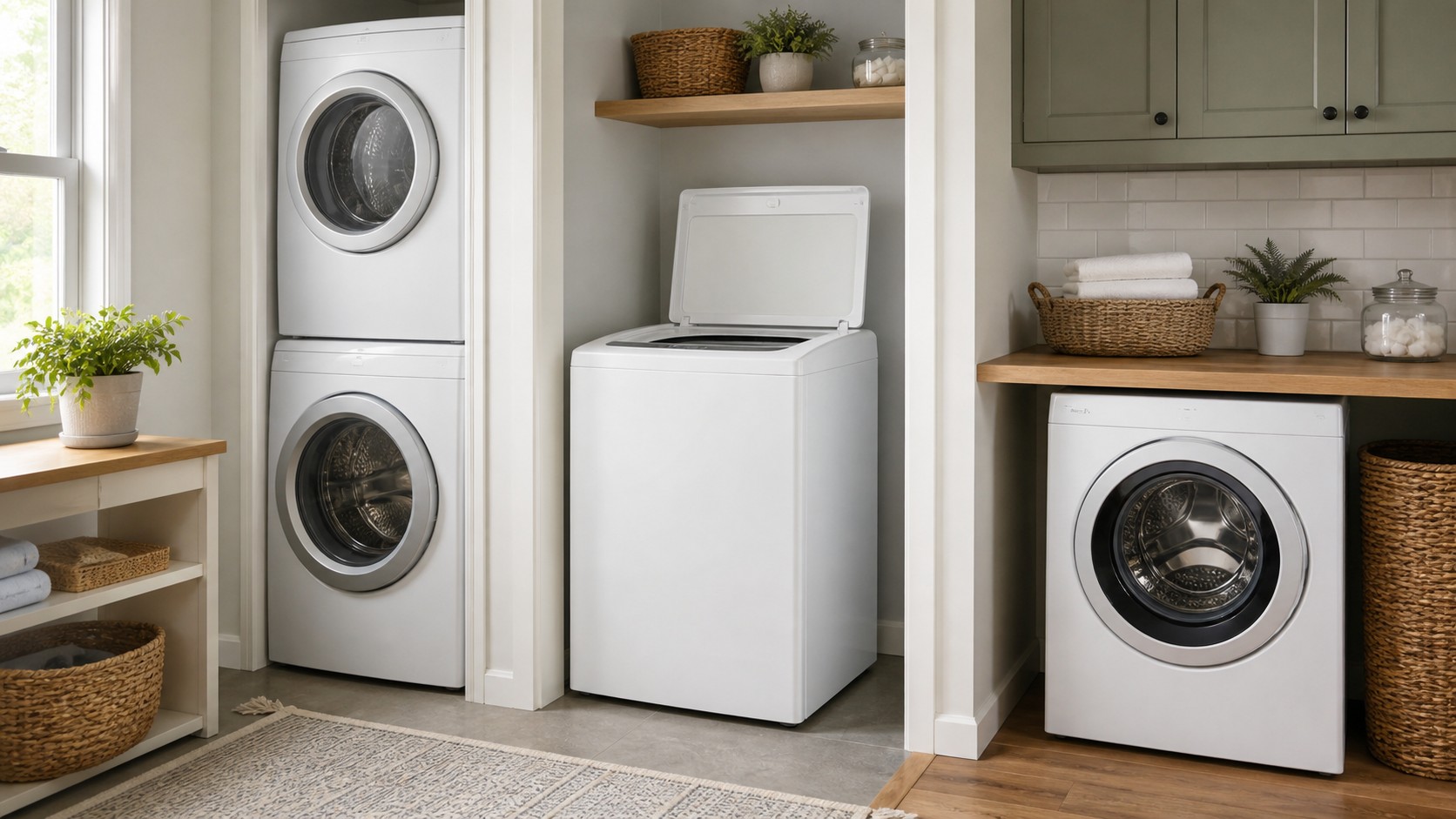
Stackable laundry systems place a dryer above a washer, usually with front load machines. This arrangement saves floor space and can make a closet or narrow laundry room workable. It also changes access because the dryer door and controls may sit higher.
Laundry centers are another stacked format, often sold as a connected tower. They can be useful in apartments, rental units, or secondary laundry spaces. Capacity and cycle options may be different from separate full-size machines, so the specification sheet matters.
All-in-one washer dryer machines wash and dry in the same drum. They are most appealing where space or venting is extremely limited. The tradeoff is that loads are usually smaller, cycle times can be long, and users cannot wash one load while drying another.
These space-saving types are best judged by lifestyle. Someone with modest laundry volume may love the simplicity. A large household trying to process many loads quickly may find the pace too slow.
Installation details are especially important. Stacking kits, floor strength, venting or drain requirements, and service access should be confirmed before the machine arrives.
Combination machines are best for patient users with modest laundry volume. They can be liberating in the right setting, but they are not ideal for households that need multiple loads moving at the same time.
Smart and Specialty Washers
Smart washers add app alerts, remote monitoring, maintenance prompts, or cycle downloads. These features can be useful when they solve a real problem, such as forgotten wet loads or a household that wants reminders. They are less useful when they add steps to a routine that was already simple.
Specialty cycles can support allergen reduction, steam, quick wash, bedding, delicates, activewear, or extra rinsing. Those options matter most when the household has matching laundry needs. A feature used weekly is valuable; a feature used once is mostly marketing.
Some washers also include automatic detergent dispensing. This can reduce overuse and simplify repeated loads, but it requires keeping the reservoir clean and using compatible products. The convenience should be weighed against the care routine.
A beginner should treat smart and specialty features as the final layer. First choose door style, size, loading comfort, and wash action. Then decide which features support the way laundry actually happens in the home.
Once the main types are clear, reviews become easier to interpret. A complaint about cycle time, reach, odor, or capacity can be tied back to the machine family instead of feeling like random appliance noise.
That order keeps beginners from being overwhelmed by appliance language. Once the basic type is right, cycle names and smart features become refinements rather than the whole decision.
It also helps to remember that one label rarely tells the whole story. A machine might be compact, front load, stackable, and smart at the same time, so buyers should read the full description rather than stopping at the first category name.
The goal is not to know every appliance term. The goal is to understand enough about each type to recognize which machines belong on the shortlist and which ones can be ignored with confidence.
From there, the final comparison can become specific: which machine fits, which one feels comfortable, and which one handles the laundry that actually shows up each week. That clarity is what turns a confusing appliance category into a manageable home decision.