The Best Washer Type Depends on More Than the Door
Choosing among washing machine types is easier when the decision is tied to the home instead of to a sales display. Front load, top load, agitator, impeller, compact, stackable, portable, smart, and all-in-one machines each solve a different version of the laundry problem. Some are best for tight rooms. Some are better for bulky family loads. Some make more sense for people who want a counter above the appliances, while others suit users who prefer loading from above. A useful buyer’s guide does not crown one machine for everyone; it helps match the washer type to space, clothing, budget, patience, and care habits.
A: There is no single best type; the strongest choice fits the room, loads, and user comfort.
A: It is worth it when full-size machines would make the room unusable or impossible to equip.
A: They can be effective for sturdy loads, but cycle design and loading habits still matter.
A: An impeller can leave more basket room and suit bulky loads when used correctly.
A: They usually suit smaller laundry volumes better than high-throughput family routines.
A: Smart features mostly improve reminders and settings; core wash design still matters most.
A: Capacity matters, but fit, loading comfort, and maintenance should be considered at the same time.
A: Installation parts, delivery challenges, pedestals, and electrical changes can affect total cost.
A: Use the hardest weekly load and the room layout as the deciding test.
A: It is wrong when it technically fits but makes loading, cleaning, or maintenance frustrating.
Start With the Room, Not the Machine
The laundry room sets the boundaries before the appliance list begins. Door width, stair turns, hookups, flooring, shelves, and available clearance can eliminate options quickly. A washer that looks perfect online may be impossible to deliver, awkward to open, or poorly suited to the venting and drain arrangement already in place.
Measure the space as it will be used, not just as an empty rectangle. Leave room for baskets, appliance doors, hoses, cords, and the person transferring wet clothing. If the washer sits in a closet, check whether doors can stay open during loading. If it sits under cabinets, confirm the lid or door will not collide with storage.
The room also affects whether a washer should be visible or integrated. A finished laundry room may benefit from front load machines under a counter. A basement utility area may reward a durable top loader more than a polished built-in look. An apartment may need compact dimensions above all else.
Once the room is understood, the buying process becomes calmer. The shopper is no longer comparing every washer on the market; they are comparing the washer types that can actually live well in that space.
Budget belongs in the room-first conversation too. A washer that requires new cabinetry, a pedestal, a stacking kit, or electrical work may cost more than its ticket price suggests. A slightly simpler model that fits existing conditions can be the smarter buy.
Front Load Washers
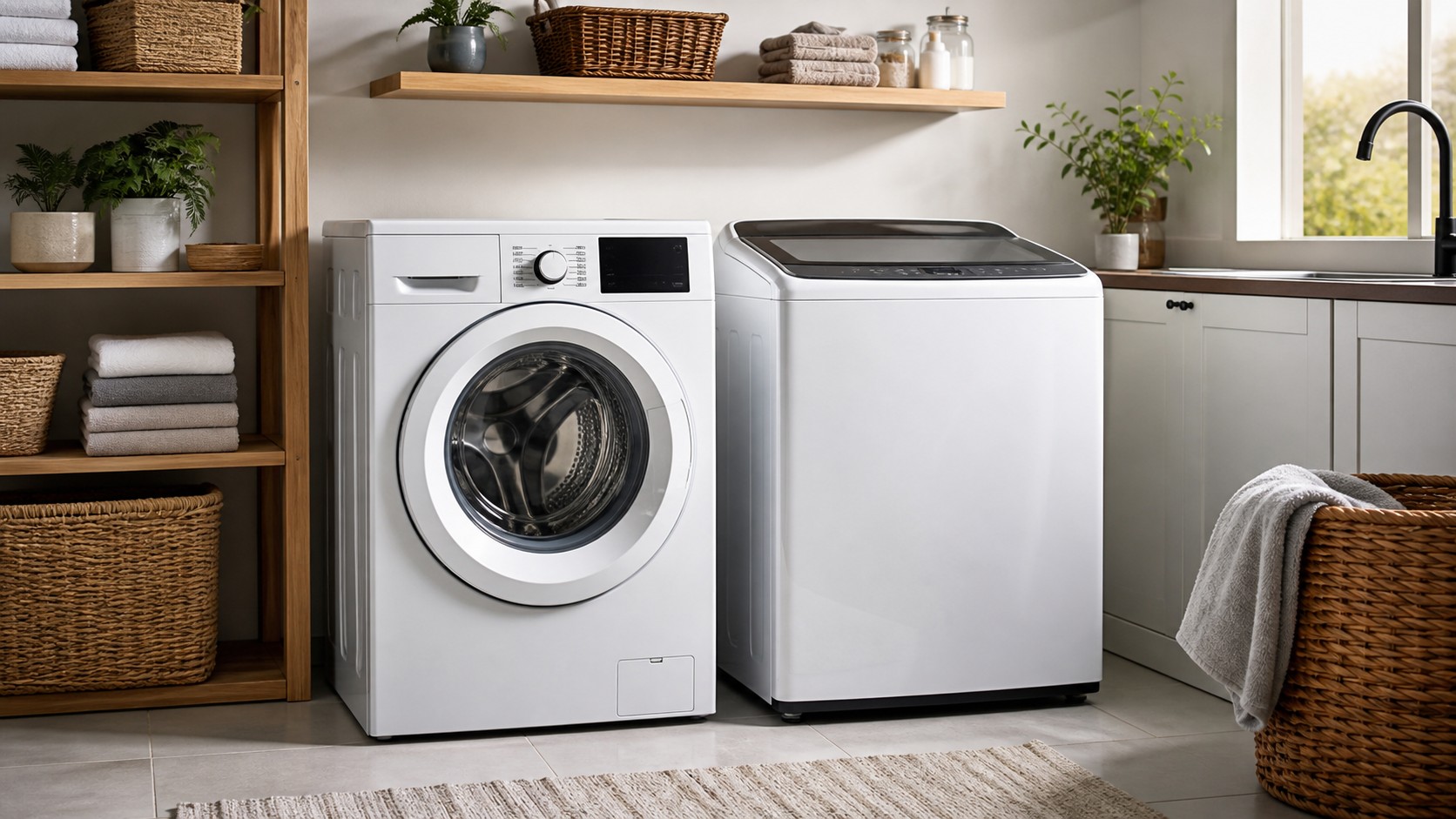
Front load washers open from the front and tumble clothing through water and detergent. They are often chosen for efficiency, fabric care, and their ability to sit beneath a counter. In a designed laundry room, that counter can become one of the most useful surfaces in the house.
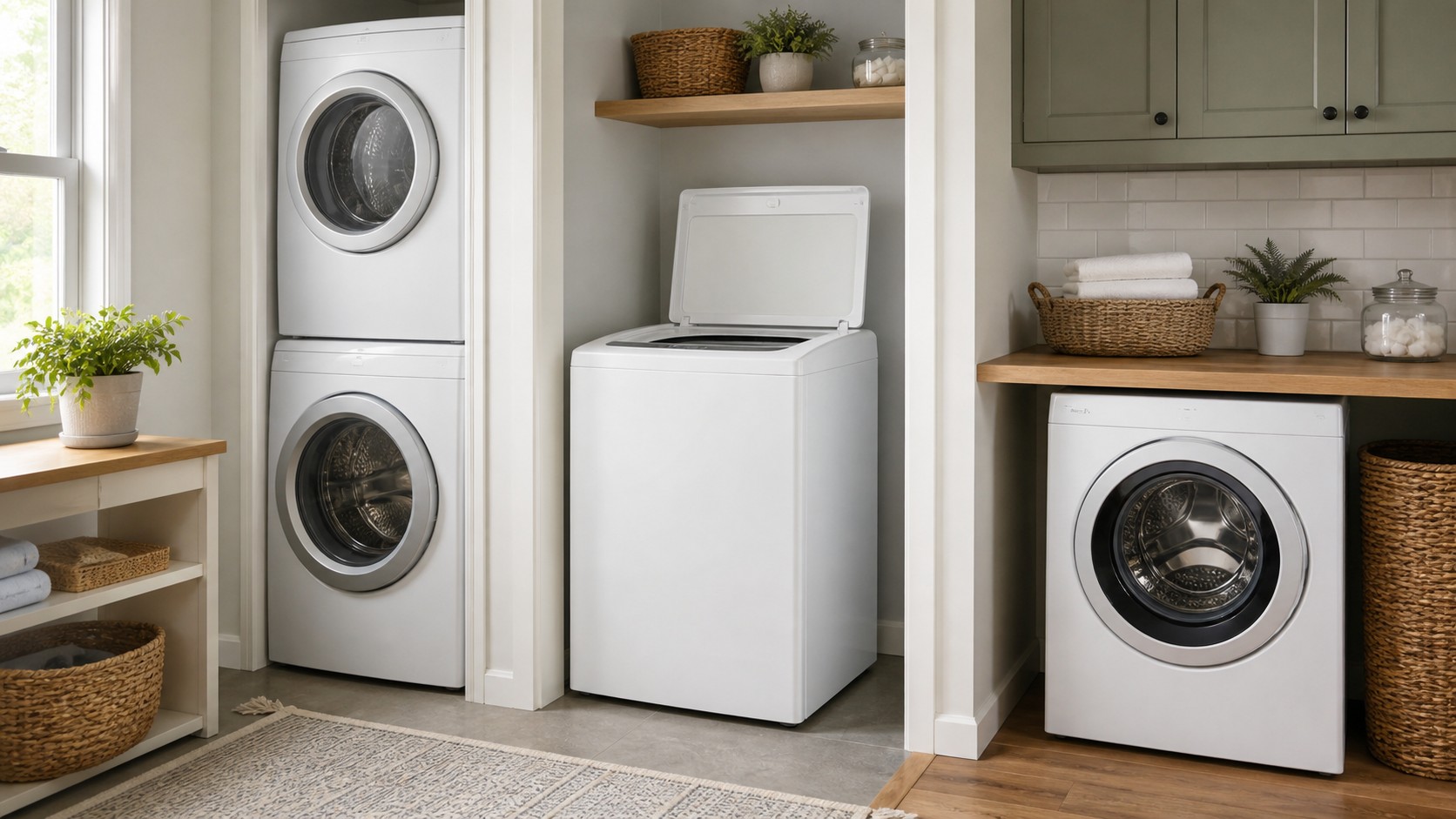
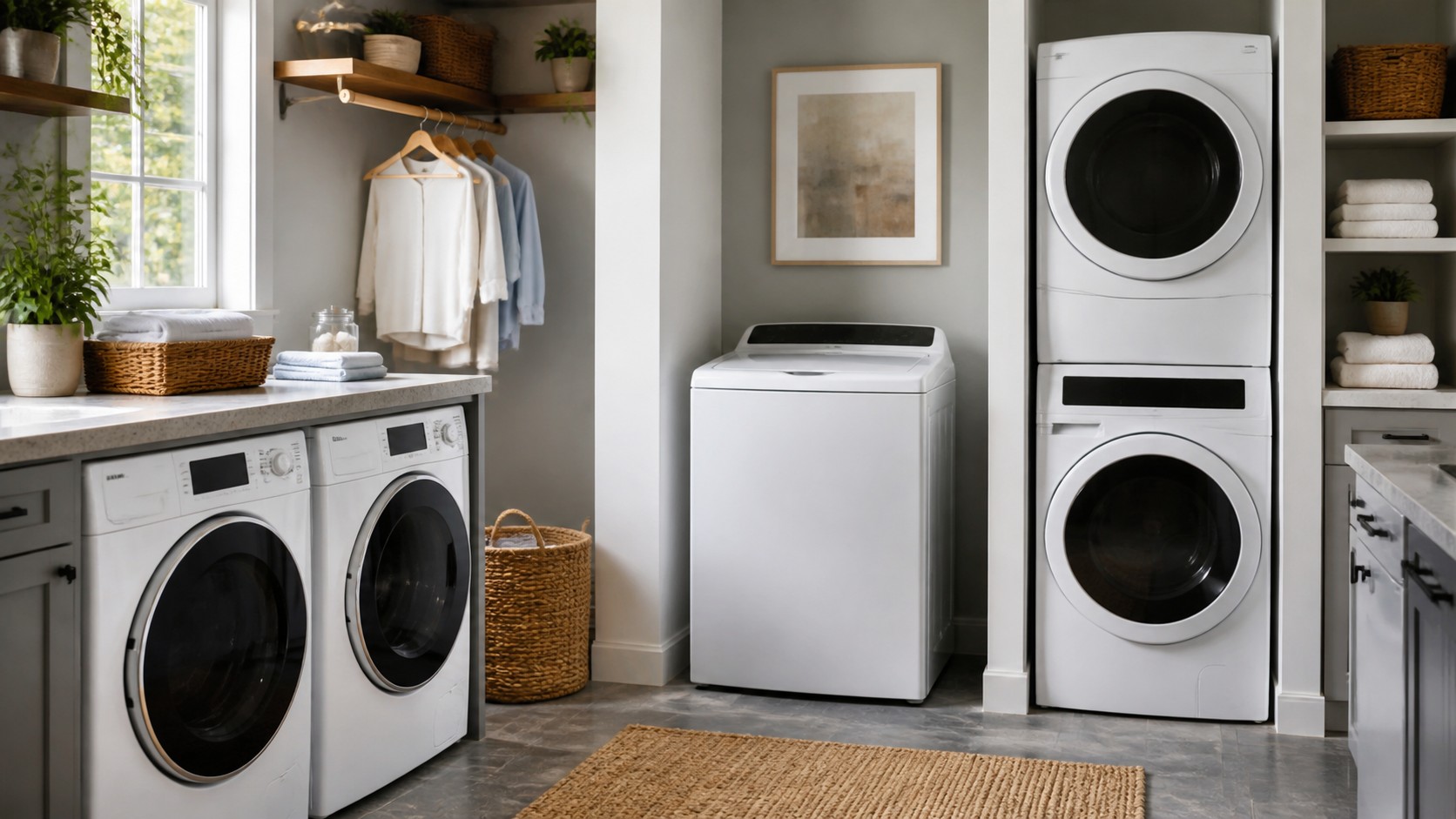
They also work well in stacked arrangements, which makes them valuable in closets, apartments, and narrow rooms. A stacked front load washer and dryer can free floor space for a hamper, sink, cabinet, or simply easier circulation. That layout benefit is one reason front loaders appear in many remodels.
The tradeoff is body position. Loading and unloading require bending unless the machines sit on pedestals. Door gaskets also need care so moisture and residue do not linger. A front loader rewards households that are willing to leave the door cracked, wipe the seal, and use the correct detergent amount.
Front load machines are often a strong choice for mixed clothing, towels, bedding, and households that value efficiency. They are less ideal for people who strongly dislike bending or who know they will not keep up with gasket maintenance.
The buying question is not whether front load technology is good. It is whether its habits feel natural in the room and for the person doing the laundry most often.
Front loaders also influence how the room is organized. Detergent storage, folding counters, and upper cabinets often fit neatly around them. This can make the laundry room feel planned rather than assembled around a pair of appliances.
Top Load Washers
Top load washers open from above, which many people find comfortable and familiar. Clothing drops into the basket without a front door swing, and users can often add forgotten items early in a cycle. For households used to traditional laundry routines, this format can feel simple and reassuring.
There are two major top load families: agitator and impeller. Agitator models use a central post to move clothing. Impeller models use a low-profile disc or plate at the bottom. Agitator machines may feel more forceful, while impeller designs often create more room for bulky items.
Top load washers need vertical clearance. Shelving above the machine must be high enough for the lid to open comfortably, and deep tubs may be difficult for shorter users to unload. A top loader can be easy to load and still awkward at the very bottom of the basket.
This type can be a practical choice in utility rooms, larger laundry spaces, and homes where upright loading matters. It may be less convenient when the room needs a folding counter directly over the machines.
Top loaders can be especially appealing in households where laundry is done quickly between other tasks. The lid opens, items drop in, and the user does not need to crouch. That simplicity is a real advantage when it matches the person using the machine.
Agitator and Impeller Decisions
Agitator washers appeal to people who want visible movement and a more traditional wash feel. They can be useful for sturdy casual clothing, workwear, towels, and households that prefer a familiar machine. The center post does take up basket space, and some fabrics may experience more friction.
Impeller washers create a flatter basket interior. That can help with bulky items and larger loads, though correct loading becomes important because clothes need room to circulate. Users who overload an impeller machine may be disappointed by cleaning results.
The choice depends on laundry texture. A household washing jeans, uniforms, and heavy towels may appreciate the assertive motion of an agitator. A household washing bedding, mixed fabrics, and larger family loads may prefer the open basket of an impeller.
Neither design should be judged only by a quick glance. Look at the cycles, water options, load guidance, and reviews from people with similar laundry habits. The wash action matters, but so does how the machine lets the user control it.
If possible, inspect the basket physically. Reaching, loading, and imagining a wet blanket inside the tub will reveal more than a list of feature names.
The agitator-versus-impeller choice should not be reduced to old versus new. Both designs can be valid. The better one depends on how clothes move, how full the basket gets, and whether the user values a traditional wash feel or a more open tub.
Compact, Stackable, and All-in-One Options
Compact washers are designed for smaller homes, apartments, accessory dwelling units, and secondary laundry areas. They may have lower capacity, but they can make in-home laundry possible where full-size machines would overwhelm the room. The tradeoff is often more frequent loads.
Stackable systems are a layout strategy as much as a machine type. They use vertical space to preserve floor area. This can be excellent in closets, upstairs halls, and narrow laundry rooms, but the dryer height, controls, and service access need careful planning.
All-in-one washer dryer units combine washing and drying in one drum. They can be useful where space is extremely limited or where venting is not available. They usually require different expectations around cycle length, load size, and drying feel, so they should be chosen with patience and lifestyle in mind.
Portable washers serve a different niche. They may help renters or small households, but they bring questions about hookups, drainage, storage, and building rules. They are not a direct substitute for a built-in laundry room.
For secondary laundry zones, compact machines may be perfect even if they would frustrate a large household as the primary washer. Guest suites, upstairs linen closets, and small apartments all change the definition of enough capacity.
Smart Features and Specialty Cycles
Smart features can be helpful when they solve real problems. Remote notifications can remind someone to move a load before it smells stale. Maintenance alerts can prompt cleaning. Specialty cycles can support athletic wear, bedding, allergens, or delicate fabrics when those loads are common.
Features become clutter when they do not match habits. A household that uses the normal cycle for everything may not benefit from a complicated interface. A buyer should look for controls that make daily laundry clearer, not a menu that feels impressive only on purchase day.
Steam, sanitize, quick wash, extra rinse, and stain cycles all have legitimate uses. The question is whether the household will use them enough to justify cost and complexity. A simpler machine with excellent core performance may be better than a loaded model whose features remain untouched.
Connectivity should also be judged by longevity. Apps, updates, and account requirements can change. The washer should still be useful if the smart layer becomes less interesting over time.
A good buyer’s guide treats features as support, not the foundation. Choose the machine type first, then choose features that make that type work better for the household.
Smart features should be tested for clarity. A notification that a load is finished can be genuinely helpful. A maze of settings that makes a normal wash harder is not an upgrade for most households.
Build a Shortlist You Can Trust
A strong shortlist includes only machines that fit the room, match the preferred loading style, handle the typical loads, and have a maintenance routine the household will accept. That removes many distractions quickly.
Compare capacity honestly. Bigger is not always better if it encourages overloading or consumes space needed for folding and storage. Smaller is not always worse if the household prefers frequent, manageable loads.
Read warranty details, service access, and installation requirements before focusing on finish color. A washer is a long-term appliance, and repairs or delivery constraints can matter more than a stylish control panel.
The best washing machine type is the one that disappears into the rhythm of the home. It should clean well, fit comfortably, support the room layout, and avoid creating small daily irritations that grow over time.
A trustworthy shortlist usually has fewer models than shoppers expect. Once fit, loading style, capacity, and maintenance are settled, many flashy options fall away and the final comparison becomes far more practical.
The final buyer decision should sound ordinary: this machine fits, the loading style feels comfortable, the capacity matches our laundry, and the care routine is realistic. If that sentence is hard to say, the search is not finished.
A buyer should also compare how each type handles the awkward loads, not just the normal ones. Pet bedding, mattress pads, muddy towels, and bulky blankets often reveal whether capacity, wash action, and door style truly fit the household.
The safest choice may not be the most feature-heavy model. It is usually the washer type that fits the space, handles the hardest weekly load, and can be maintained without turning laundry into a project.
That kind of decision is less flashy, but it is much more useful. A washer type should become part of the household rhythm, not a constant reminder that the wrong compromise was made.