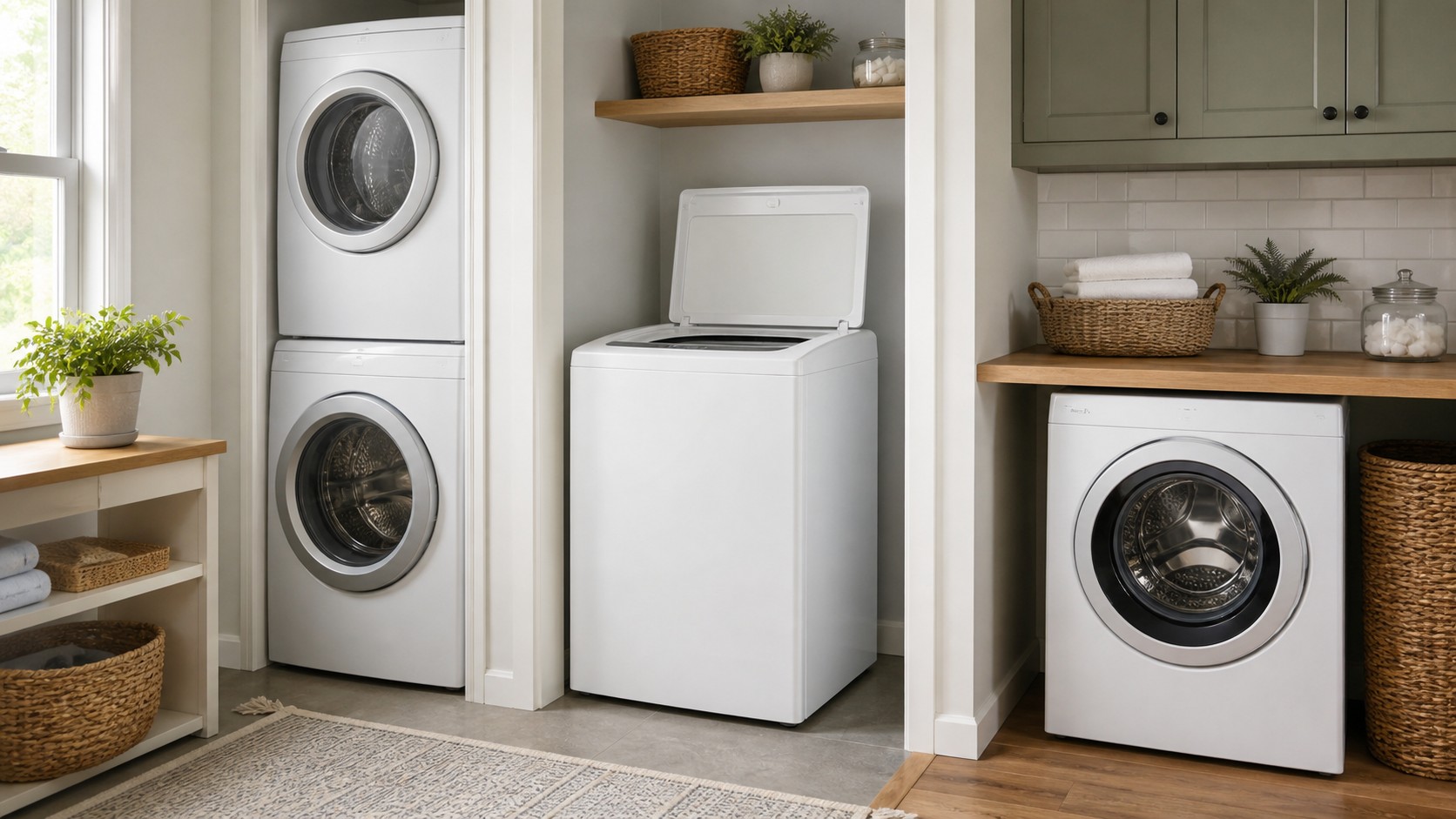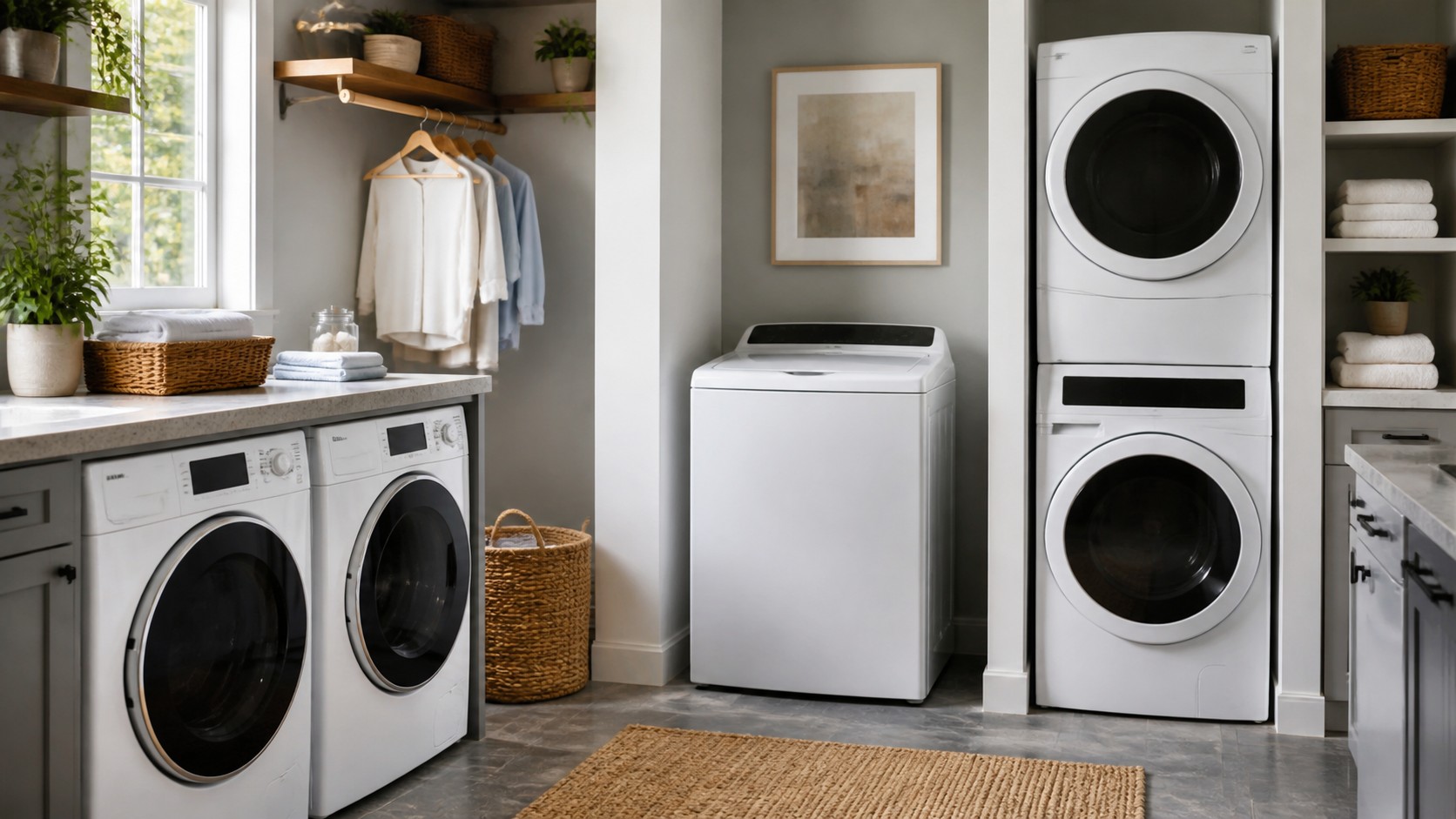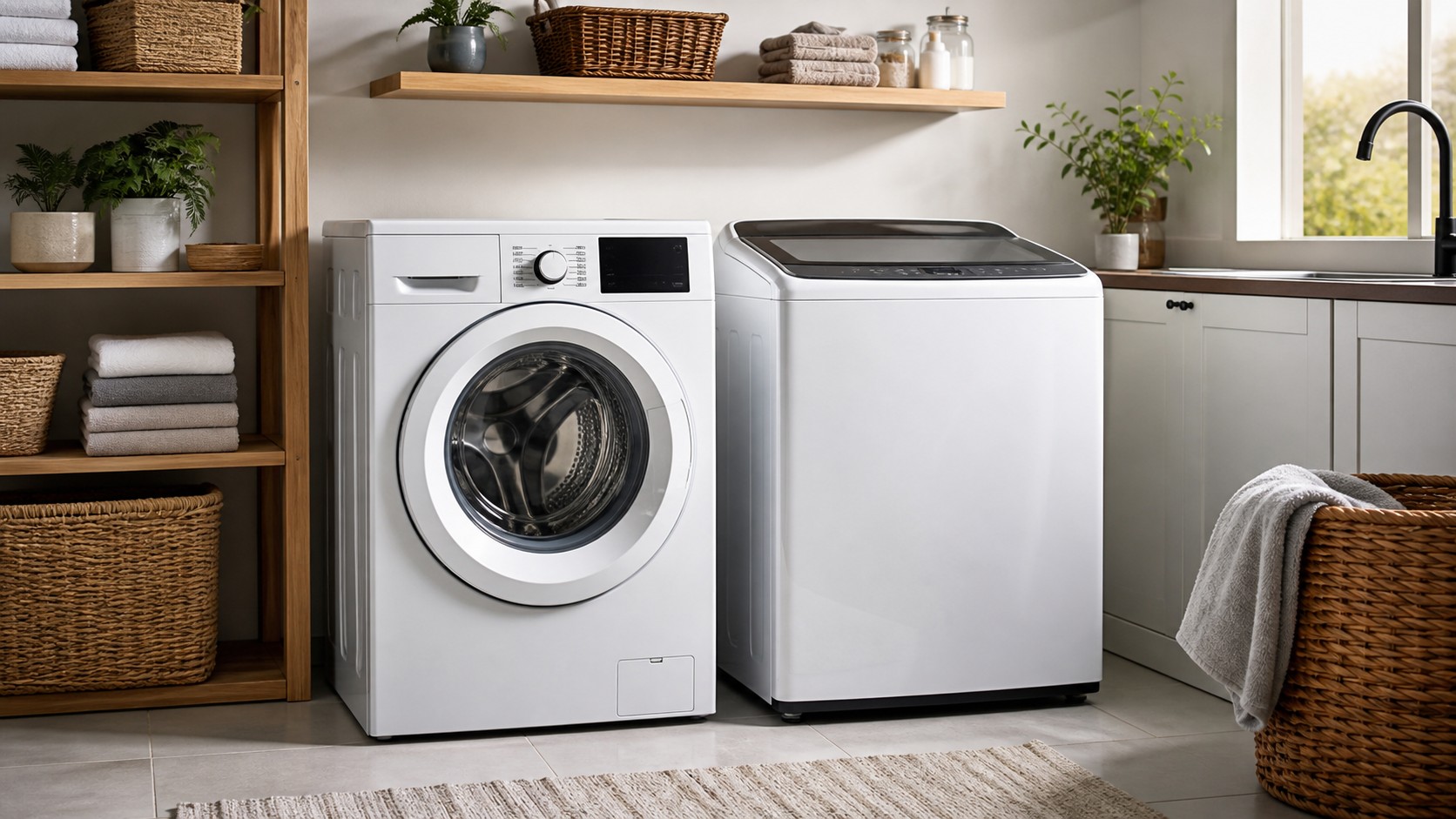
The Better Washer Is the One That Fits Your Routine
Front load and top load washing machines solve the same chore with very different habits. A front load washer tumbles clothes through a shallow pool of water, often using less water and fitting neatly under counters or in stacked layouts. A top load washer opens from above, keeps loading familiar, and can be easier for people who dislike bending. Neither format is automatically better for every home. The better choice depends on the laundry room, the person using the machine, the types of loads being washed, and how much maintenance the household will realistically do.
A: Top loaders avoid crouching, but deep tubs can be hard to reach; front loaders can improve with pedestals.
A: Not always, though many clean efficiently when loaded correctly and maintained well.
A: No. Modern top loaders include both traditional agitator and high-efficiency impeller designs.
A: Front load machines are the normal choice for stacked washer and dryer layouts.
A: Many can, but the basket depth, wash action, and actual capacity need to match the bedding.
A: Moisture trapped around the gasket and detergent residue are common causes.
A: Choose the quieter model and check vibration performance; format alone does not settle noise.
A: Traditional models often do, while high-efficiency top loaders use less than older designs.
A: Reach, door movement, basket depth, and the loading posture should all be tested.
A: Pick the format that fits the room and feels easiest for the person doing laundry most often.
How the Cleaning Action Feels Different
Front load washers clean by lifting clothes and dropping them through water and detergent. That tumbling action is usually gentle on fabrics and can be very effective when the machine is loaded correctly. Because the drum turns horizontally, clothes move through the wash rather than being pulled around a central post.
Top load washers vary more than people expect. Traditional agitator models use a central post to move clothing through the water. Impeller models use a low-profile disc or plate at the bottom of the basket. Agitators can feel familiar and forceful, while impellers may offer more usable basket space and a less bulky interior.
The cleaning difference is not just about format. Detergent amount, water temperature, load size, soil level, and cycle choice all matter. A poorly loaded front loader can underperform, and a well-used top loader can handle a household beautifully. The machine type sets the style of washing; the user’s habits finish the job.
For delicate clothing, front loaders often have an advantage because the tumbling motion avoids some of the twisting associated with aggressive agitation. For very dirty casual loads, some homeowners still prefer the visible movement and soaking habits of a top loader. The better choice depends on the laundry basket, not only the spec sheet.
The comparison also changes by fabric mix. A household with delicate work clothes and athletic fabrics may care more about gentle motion and precise cycles. A household washing rugged towels, uniforms, and outdoor clothes may care more about quick access, soak options, and confidence with heavy soil.
Loading Comfort Is a Real Buying Factor
The most obvious difference is the door. Front load washers ask the user to bend, squat, or use a pedestal. That can be fine in a room with a counter above the machines, but it may be uncomfortable for someone with back, knee, or balance concerns. Pedestals raise the opening but add cost and height.
Top load washers allow clothing to be dropped in from above. Many people find that easier because they can stand upright while loading. The tradeoff is reaching down into the basket to retrieve small items at the end of the cycle. For shorter users or very deep tubs, that reach can be more awkward than expected.
A showroom test is worthwhile. Open the washer, mimic loading a towel, reach for the back of the drum or bottom of the basket, and imagine doing that several times a week. The better washer is not the one that seems most advanced; it is the one the household can use without irritation.
Laundry room layout changes comfort too. A front loader beside a clear folding counter may feel efficient. A top loader under low cabinets may feel cramped. A front loader stacked with a dryer can save space but place the dryer controls higher. A top loader may need open space above the lid, which affects shelving.
Comfort should be considered for everyone who does laundry, not only the person buying the machine. Teenagers, older relatives, guests, or a spouse may interact with the washer differently. If the machine is shared, choose the format that creates the least friction for the most frequent users.
Comfort can also change over time. A format that feels fine during one quick test may become tiring during several loads of towels and bedding. Repeating the motion in the showroom may feel silly, but it reveals the truth faster than reading another comparison chart.
Capacity and Bulky Loads Need Context
Capacity numbers can be misleading without context. A large top load washer may handle bulky comforters well because the opening is wide and the basket feels accessible. A large front load washer may clean bulky items efficiently but require careful loading so the drum can tumble properly.
Think about the loads that cause trouble now. If bedding, towels, sports gear, pet blankets, or work clothes dominate the week, capacity and cycle strength matter. If the household mostly washes smaller clothing loads, a huge basket may not be necessary and may encourage overloading.
Front load machines often make it easier to add a counter above side-by-side appliances, which helps with sorting and folding. Top load machines sacrifice that counter opportunity but may make quick loading feel simpler. Capacity is therefore tied to the whole room, not only the tub.
For families, the right answer may depend on rhythm. Some prefer fewer large loads. Others prefer quick, frequent loads that move through the week. A washer that matches that rhythm will feel better than one selected only for the biggest advertised capacity.
Capacity should be paired with restraint. A large washer is helpful only when the drum has enough room for items to circulate. Stuffing either format too tightly can leave detergent trapped, reduce rinsing, and make the dryer work harder afterward.
Water, Energy, and Cycle Expectations
Front load washers are often chosen for efficiency. They typically use less water because the drum does not need to fill the same way many top loaders do. Less water can also mean less energy used to heat water, depending on cycle choices and household habits.
High-efficiency top load washers can also reduce water use compared with older traditional models. However, they may feel different to people who expect clothing to be submerged. Some users add too much detergent or choose the wrong cycle because the lower water level looks unfamiliar.
Cycle time deserves attention. Some efficient cycles take longer, and that can frustrate households that do laundry in short windows. A faster cycle is not always better if cleaning suffers, but the machine should fit the household’s schedule. Read real cycle options rather than assuming one format is always quicker.
Spin speed matters too. A strong spin can remove more water before clothes reach the dryer, potentially shortening drying time. Front load washers often spin very fast, but vibration control and floor stability become important. In upstairs laundry rooms, that detail can affect comfort and noise.
Efficiency should be measured by the whole routine. A washer that saves water but leads to rewashing overloaded clothes is not truly efficient. A familiar top loader used correctly may be better for a household than a front loader used carelessly.
Cycle expectations should be discussed with the whole household. Some people want fast turnaround more than maximum efficiency. Others are happy to wait longer if the washer uses less water and spins clothing drier before the dryer starts.
Space Planning Changes the Answer
Front load washers are often the best fit when the room needs a counter, built-in cabinetry, or a stacked arrangement. Side-by-side front loaders can sit under a folding surface, making the room more useful even if the machines themselves cost more.
Top load washers need open space above the lid. That affects shelves, hanging rods, and cabinets. In a narrow laundry closet, the open lid may interfere with storage. In a larger utility room, that may not matter at all, and the easy top access may be worth the tradeoff.
Door swing also matters. A front washer door must open into the room, and the user needs space to stand with a basket. Some doors can be reversed, but not all. Top loaders avoid the front door swing but still require room to reach and sort.
If the laundry room is visible from another space, front loaders may integrate more smoothly into cabinetry. If the laundry area is in a basement or garage, visual integration may matter less than simple access, rugged cycles, and price.
Laundry closets make this decision sharper. A top lid may hit shelving, while a front door may collide with closet doors or block a narrow passage. The appliance should be tested as part of the room, not treated as a freestanding object.
Maintenance Habits Should Be Honest
Front load washers need regular care around the door gasket, detergent drawer, and drum. Leaving the door ajar after use helps the interior dry. Wiping the gasket and using the right amount of high-efficiency detergent can prevent odor and residue. People who dislike those small habits may become frustrated.
Top load washers are often perceived as easier to keep aired out because the lid opens upward and the basket is exposed. They still need cleaning, especially high-efficiency models that can develop residue if overloaded or over-soaped. No washer is maintenance-free.
The better choice is the one whose care routine the household will actually follow. A front loader can be excellent when maintained. A top loader can be excellent when loaded properly and cleaned periodically. Problems usually come from mismatch between machine design and user behavior.
Water hardness, detergent type, fabric softener use, and laundry frequency all affect maintenance. A household that washes daily may keep moisture and residue moving differently from one that washes once a week. The machine should suit those patterns.
Ask about filter access, cleaning cycles, gasket care, and service reputation before buying. A washer that performs beautifully but is annoying to maintain may not feel like the better machine after the first year.
Maintenance also includes the space around the machine. A front loader wedged too tightly against cabinetry may be harder to wipe and air out. A top loader under cramped shelves may collect dust and detergent residue where it is awkward to reach.
How to Choose Without Regret
Choose a front load washer if you value efficiency, gentle fabric care, stackability, and the option for a counter above the machines. It is especially strong in designed laundry rooms where the appliances need to integrate with cabinetry.
Choose a top load washer if upright loading, familiar use, and simple access matter more. It can be a strong choice for households that prefer dropping items in from above, want a traditional laundry feel, or dislike front-door gasket care.
Do not choose based on reputation alone. Measure the room, test the loading motion, think about the largest weekly loads, and decide how much maintenance is realistic. The better washer is the one that makes the whole laundry routine easier.
If both formats could work, let the room decide. A tight closet may benefit from stacking. A room with low shelving may favor front loading under a counter. A spacious utility room may give top loading plenty of room to shine.
If the decision still feels close, compare the annoyance you are more willing to live with. Some people would rather wipe a front gasket than reach into a deep top-load tub. Others feel exactly the opposite. That honest preference is worth respecting.