A Laundry Floor Can Change the Whole Room
A laundry room floor is not just the surface under the machines. It is the visual field that ties together appliances, cabinets, baskets, light, and the doorway view from the rest of the house. When the flooring is chosen with intention, the room can shift from leftover utility space to a finished part of the home. Pattern can make a small room feel designed, warm color can soften white machines, and a durable stone-look surface can bring order to a hardworking mudroom. The best transformative flooring ideas begin with the way the room should feel, then choose materials strong enough for water, vibration, detergent, and daily traffic.
A: Yes. It changes the largest uninterrupted surface and can define the entire mood.
A: Patterned tile usually creates the strongest before-and-after effect.
A: It can be, but restrained walls and cabinets keep it livable.
A: Porcelain tile is often the most versatile high-durability choice.
A: Yes, especially in matte stone-look or warm wood-look designs.
A: Only when you want the pattern to feel sharper and more graphic.
A: A strong floor can work well if the pattern scale suits the footprint.
A: The floor should share an undertone or transition cleanly into the next room.
A: No. Rugs add comfort, but the permanent surface still needs resilience.
A: Cabinet color, hardware, baskets, and towels can all follow the flooring palette.
Decide What Needs to Change
Some laundry rooms need energy. Others need calm. Before choosing tile, vinyl, concrete, or a runner, name the weakness in the current room. A blank white laundry closet may need pattern underfoot so the space feels deliberate. A crowded mudroom laundry may need a quieter floor that visually settles shoes, baskets, and cabinets. A basement laundry may need a warmer finish so the room feels less temporary.
The floor can solve different design problems depending on the house. In a narrow room, a continuous floor with gentle variation can make the space feel longer and less chopped up. In a square room, a graphic tile can give the layout a focal point. In a laundry area visible from a hallway, the floor may need to connect with nearby wood or tile so the open door does not create a visual jolt.
The transformation should be useful, not theatrical for its own sake. A dramatic floor that becomes slippery, hard to clean, or visually exhausting will lose its charm quickly. A better goal is a surface that makes the room feel more finished while still behaving like a laundry floor on the messiest day of the week.
This first decision also protects the budget. Once the desired change is clear, the rest of the room becomes easier to edit. Cabinet paint, hardware, baskets, shelves, and wall color can all take their cues from the floor instead of competing for attention.
A floor-led refresh also helps homeowners avoid overdecorating. When the foundation has character, the room can use fewer signs, jars, and small accessories. That restraint is useful in laundry rooms because surfaces are already needed for sorting, folding, stain treatment, and baskets.
Use Pattern as Architecture
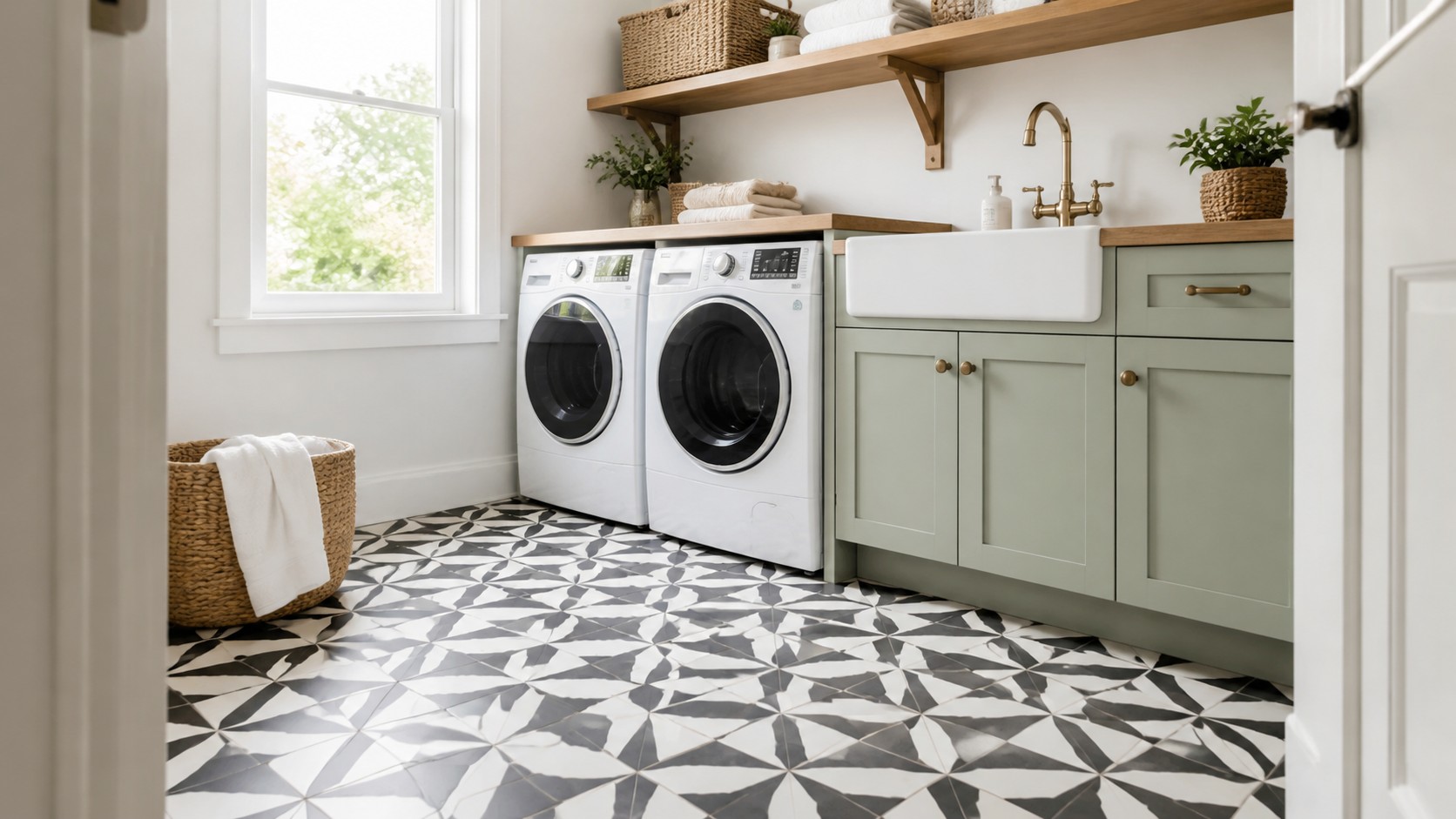
Patterned flooring can transform a laundry room faster than almost any wall treatment because it covers a broad surface without stealing storage space. A black-and-white geometric tile gives a simple laundry room structure. A softer encaustic-inspired pattern can make a cottage or farmhouse laundry feel collected. A restrained checkerboard can bring classic utility-room charm without requiring bold cabinets.
Scale matters. A very tiny pattern can look nervous around appliance doors, grout lines, and baskets. A very oversized pattern can disappear in a small closet because too little repeat is visible. The best pattern is readable from the doorway and still pleasant when someone stands directly over it sorting clothes.
Pattern works best when the surrounding finishes show restraint. If the floor has movement, let cabinet fronts, counters, and walls become quieter. That does not mean the room must be plain. It means the floor gets to lead while other details support it through color, texture, or material quality.
Grout is part of the pattern too. High-contrast grout sharpens the geometry and can make the floor feel busier. A closer grout color softens the repeat and often feels easier to live with. Samples should be viewed on the floor, not only in hand, because angle and distance change how active the pattern appears.
A patterned laundry floor should also be chosen for cleanability. Laundry spaces create lint, hair, dust, and detergent residue. A pattern with gentle variation can hide ordinary traces between cleanings, while a high-gloss or high-contrast surface may show every mark.
The best pattern choices also respect the direction of movement. If people enter from a hallway and walk straight to the machines, the floor can subtly lead the eye inward. If the room is mostly viewed from the doorway, the pattern should look complete from that single angle.
Change the Mood With Color
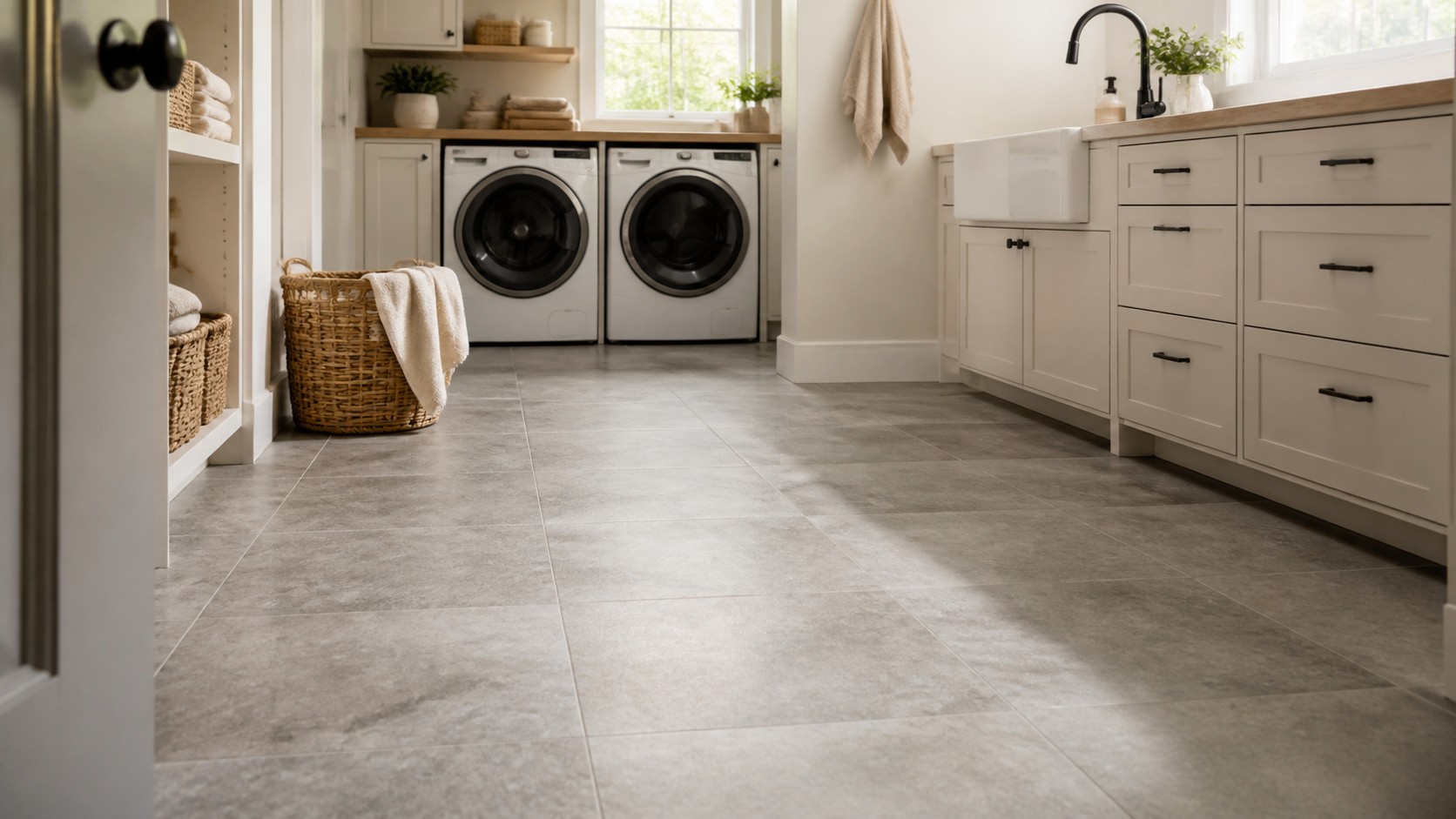
Color is one of the most powerful ways a floor changes the room. Warm greige, limestone, oat, terracotta, or muted taupe can make a laundry room feel softer and more residential. Cool gray can look crisp, but it needs warmth elsewhere so the room does not feel clinical. Deep charcoal can ground the space, though it may show lint more clearly than a mid-tone floor.
The floor color should be judged beside the actual machines. White appliances reflect light and can make some floors look darker by contrast. Stainless or dark appliances may need a lighter floor to keep the room from feeling heavy. Cabinet color matters as well; sage, cream, navy, oak, and white all pull different undertones from the same tile sample.
A transformative floor often repeats one color elsewhere in the room. A gray-green cabinet can echo a veined tile. A wood shelf can warm a stone-look vinyl plank. A woven basket can connect with a beige tile or washable runner. Those small echoes make the floor look intentional rather than isolated.
Color should also respect the rooms nearby. A laundry room can have more personality than a hallway, but it still belongs to the same house. If the doorway is usually open, choose a floor that creates interest without fighting the adjacent flooring or trim.
Choose a Material That Earns the Look
Porcelain tile is often the strongest choice when a homeowner wants high style and serious resilience. It can mimic stone, concrete, handmade tile, or graphic cement tile while handling water better than many natural materials. In a laundry room with a sink or heavy use, that combination is valuable.
Luxury vinyl plank or tile can transform a room in a different way. It brings warmth underfoot, often costs less to install than tile, and can create continuity with nearby hallways or mudrooms. Wood-look vinyl can soften a laundry room full of white appliances, while stone-look vinyl can create a cleaner foundation for a busy family entry.
Sheet vinyl deserves a fair place in the conversation. A single continuous surface can be helpful in small laundry rooms where seams are undesirable. Modern sheet designs can look calmer and more refined than older versions, especially when the goal is a simple, washable, budget-conscious refresh.
Sealed concrete can turn a basement laundry from unfinished to intentional, but only if the surrounding room supports it. Good lighting, finished storage, a washable runner, and clean wall surfaces help concrete read as design rather than default. Natural stone can be beautiful, but it needs sealing and careful product selection because laundry chemicals and moisture are real factors.
A material earns its place when it can survive the room it transforms. The best-looking floor is not the right floor if a detergent drip, wet towel, or appliance movement makes the homeowner nervous every week.
Make Transitions Feel Designed
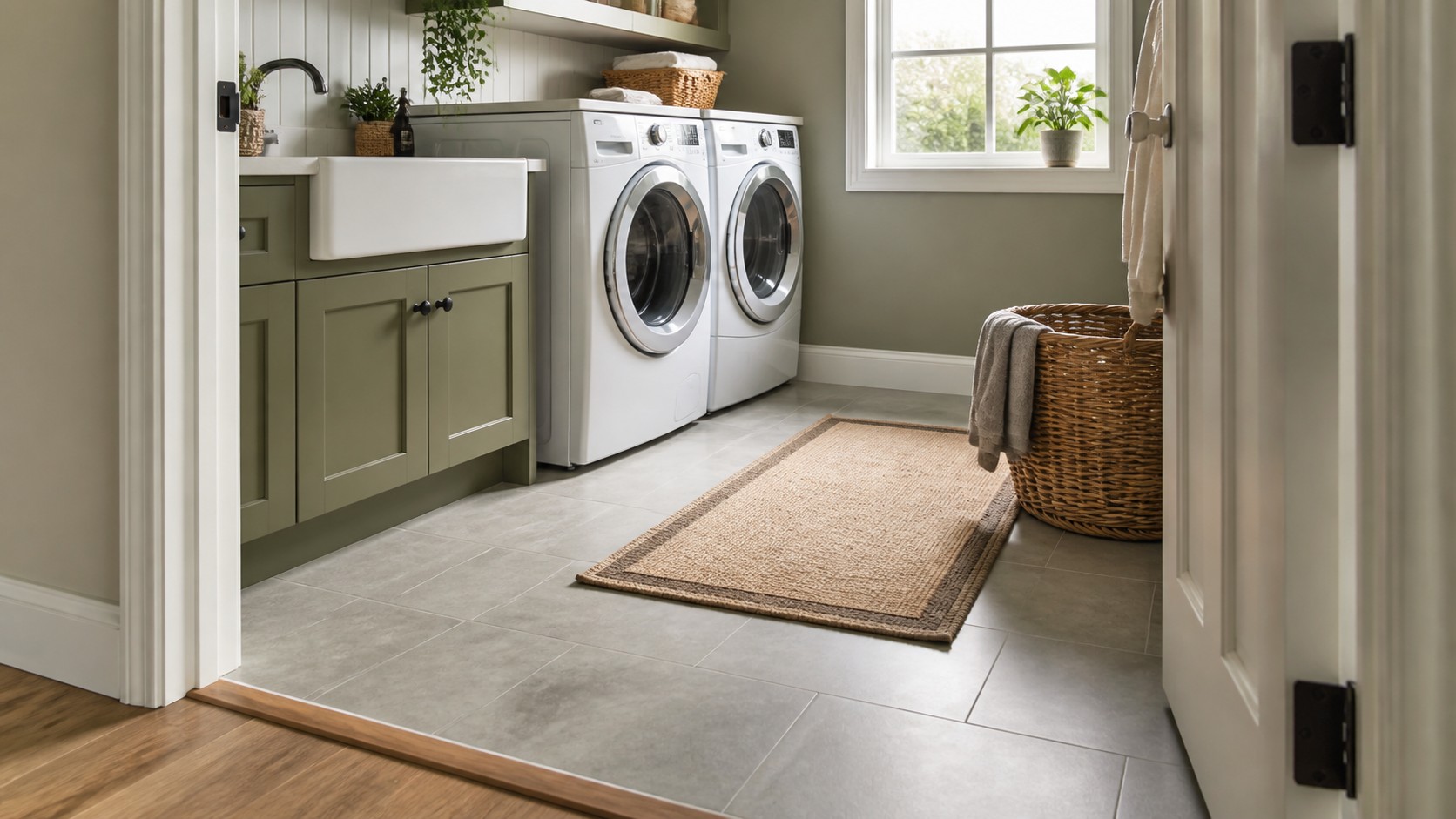
Laundry rooms rarely exist in isolation. They connect to hallways, mudrooms, kitchens, closets, basements, or bathrooms. The transition at the doorway affects whether the new floor feels like an upgrade or an interruption. A clean threshold, coordinated color, and sensible height change can make even a bold laundry floor feel connected to the rest of the home.
Transitions also affect daily use. Baskets, hampers, rolling carts, and feet cross that line repeatedly. A high or awkward transition becomes more annoying in a laundry room than it might in a guest room because the user is often carrying something. Smoothness is a practical design detail.
If the laundry floor is intentionally different, give the change a reason. A mudroom laundry may shift to tougher tile because wet shoes and damp towels pass through. A hidden laundry closet may carry the hallway floor inside for visual quiet. A basement laundry may use sealed concrete because the slab is already part of the story.
Baseboards and toe-kicks belong in this same decision. Water-resistant trim near machines, sinks, and mop zones helps the finished floor look protected. When the edges are clean, the floor feels like part of a complete renovation rather than a surface swap.
Use Texture Without Making Cleaning Hard
Texture can make a laundry room floor feel richer and safer. A matte porcelain tile, lightly embossed vinyl, or honed stone-look surface gives the room depth while reducing glare. It can also improve confidence when socks, damp towels, or cleaning sprays are involved.
Too much texture creates its own problem. Deep grooves, rough surfaces, and busy relief can hold lint and dust. A laundry room already produces fibers from clothing and towels, so the floor should not trap what the room naturally sheds. The texture should be felt more than fought.
A washable runner can add another layer of texture without replacing the durable floor underneath. This works especially well in front of a folding counter or washer pair. The runner should be easy to launder and breathable enough that moisture does not sit trapped below it.
Texture also shapes the mood of the room. A smooth stone-look floor feels calm and modern. A handmade-look tile feels warmer and more personal. A wood-look resilient floor feels casual and residential. The right texture makes the laundry room feel like it belongs to the household rather than to a utility catalog.
Samples should be tested with bare feet, socks, and a quick sweep. A floor that looks beautiful but feels unpleasant or cleans poorly will not deliver the transformation the room deserves.
Let the Floor Guide the Final Room
Once the flooring is chosen, the rest of the room should become simpler to finish. Hardware can repeat a tone from the floor. Cabinet color can contrast or soften it. Baskets, towels, and shelves can echo its warmth. The floor becomes the anchor, and the rest of the room stops feeling like a collection of separate decisions.
This is why flooring should not be treated as the last neutral choice. In a laundry room, it may be the most expressive surface and the hardest one to replace later. Choosing it early helps every other finish feel calmer and more deliberate.
A transformed laundry room still has to work. The machines need clearance, the floor needs protection during installation, and the surface should be cleaned with products that suit the material. Save spare tiles or planks, record grout color, and keep maintenance notes with the appliance paperwork.
The best laundry room flooring ideas make chores feel less like an afterthought. They give the room personality, support the mess, and create a visual foundation that holds up long after the renovation excitement fades.
The transformation is most successful when it still looks good during a busy week. A room full of half-folded towels and active loads should still feel anchored by the floor rather than visually falling apart.
A floor that transforms the room should not make the room precious. Laundry is still a working process, and the chosen surface should welcome hampers, wet socks, and repeated cleaning without making the household nervous.