How to Compare Laundry Room Flooring Options
Choosing laundry room flooring is easier when each option is judged against the same realities: water exposure, appliance weight, vibration, comfort, cleaning, budget, and the style of the rooms nearby. A floor that works beautifully in a bedroom may be risky beside a washer. A floor that survives a basement utility room may feel too cold for a finished upstairs laundry. The best choice is rarely about one perfect material. It is about matching the flooring option to the room’s location, the household’s habits, the installation conditions, and the level of maintenance the owner is willing to handle.
A: Porcelain tile with careful installation is one of the safest traditional choices.
A: Luxury vinyl and washable runners usually feel warmer than tile or concrete.
A: Only with caution, because water at seams or edges can cause damage.
A: No. It remains useful where seam reduction, budget, and easy cleaning matter.
A: Porcelain, natural stone, and well-finished concrete can all look elevated in the right setting.
A: Usually yes, so machines sit level and future replacement is easier.
A: Moisture-tested concrete, tile, or suitable vinyl products are common candidates.
A: Yes, if it is washable, breathable, and placed where it will not trap moisture.
A: It can, so grout type, color, sealing, and cleaning habits matter.
A: Choose based on water risk, subfloor, comfort, maintenance, budget, and nearby room style.
Begin With Location and Risk
A laundry room on a concrete basement slab has different flooring needs than an upstairs laundry closet near bedrooms. The basement may face slab moisture, cooler temperatures, and utility-grade use. The upstairs room may carry more concern about leaks over finished ceilings. A main-floor laundry near a kitchen or mudroom may need to coordinate visually with surrounding spaces while still resisting water and dirt.
Before comparing materials, identify the room’s risk profile. Does it include a sink? Are pets washed or dried there? Do sports uniforms, muddy towels, or cleaning supplies pass through? Are the machines full-size and heavy? Is there a floor drain, drain pan, or leak sensor? These conditions shape the right answer more than general flooring popularity.
This is also the time to inspect the subfloor. Uneven wood, cracked concrete, old adhesive, or moisture issues can limit options or add preparation costs. A flooring choice is only as reliable as the surface beneath it.
A good comparison also separates the visible material from the whole flooring system. Underlayment, adhesive, grout, sealer, transitions, and subfloor preparation can decide whether the final result lasts. Two floors that look similar on the surface may perform very differently once installed.
The right comparison starts with priorities. A household may value leak confidence first, comfort second, and style third, while another may need visual continuity with an open hallway.
Tile Options: Porcelain, Ceramic, and Stone
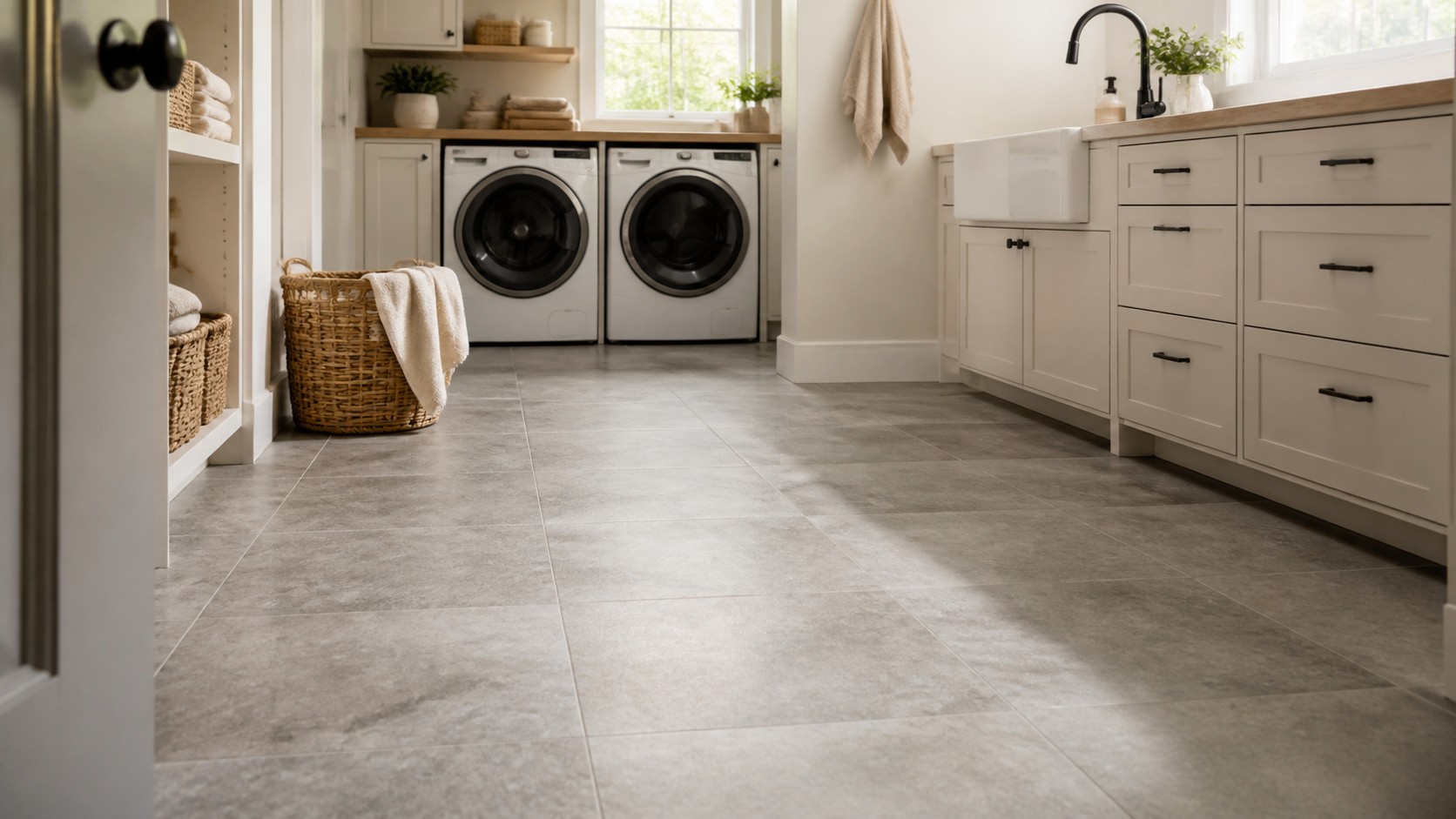
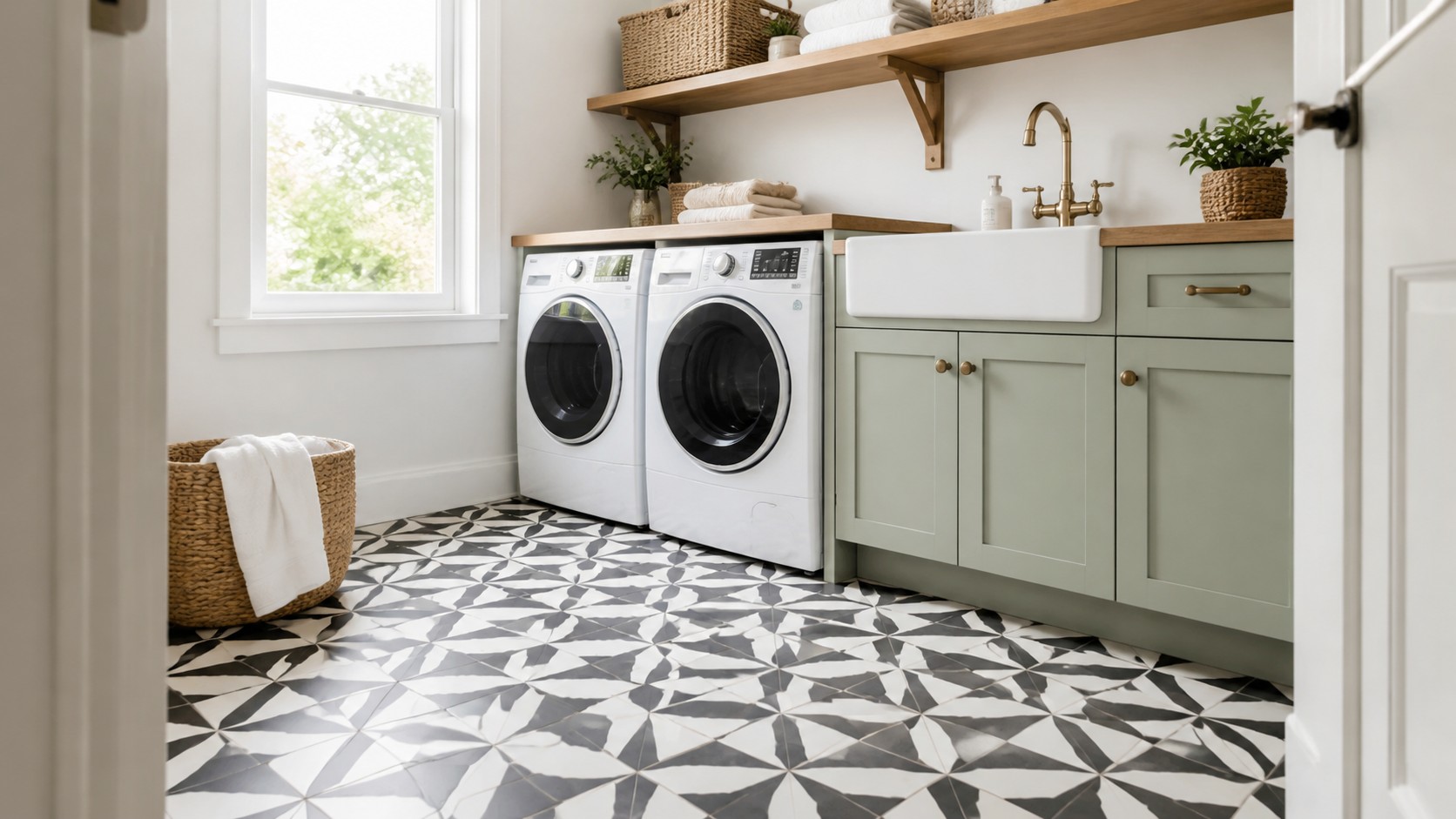
Porcelain tile is a leading laundry room choice because it handles water well, resists wear, and comes in nearly every style direction. It can look like stone, concrete, handmade tile, or a bold pattern. For a finished laundry room, it offers the rare combination of practicality and design presence. Large-format porcelain can reduce grout lines, while patterned porcelain can make a small room feel special.
Ceramic tile can also work, but it should be selected with attention to rating, density, and installation conditions. Not every ceramic tile is suited to a hard-working floor with heavy appliances. Natural stone is the most character-rich of the tile family, but it carries maintenance responsibilities. Some stones need regular sealing and gentle cleaning, and certain detergents or acidic products can leave marks.
Tile’s main drawbacks are hardness, coldness, and grout upkeep. Those issues can be managed with runners, mats, radiant heat, thoughtful grout color, and good installation. For many households, tile remains the most confidence-building option because it handles the laundry room’s worst moments better than many alternatives.
Porcelain’s strength makes it a common recommendation, but it is not automatically the warmest or quietest choice. In homes where comfort matters, homeowners often pair it with a runner or choose a larger-format tile to reduce grout maintenance. These adjustments can make a durable option feel more livable.
Stone should be chosen with realistic expectations. Its variation and texture can be beautiful, yet laundry rooms expose floors to products that may stain or etch sensitive surfaces. A stone-look porcelain may be the better answer when the desired mood is calm and natural but the household wants easier care.
Tile options should be compared by more than appearance. Surface texture, grout width, tile rating, subfloor stability, and installer experience all influence how the floor performs.
Vinyl Options: Plank, Tile, and Sheet
Luxury vinyl plank is popular because it can bring a wood look into the laundry room without the same moisture concerns as real wood. It is generally warmer and more forgiving underfoot than tile, and it can connect visually to hallways, mudrooms, or open household areas. Luxury vinyl tile offers similar practical advantages with stone or tile visuals.
Sheet vinyl deserves a fair comparison. Because it can be installed with very few seams, it can be useful in small laundry rooms where water risk is real and budget matters. Modern sheet vinyl is available in calmer, more convincing designs than older versions, and it can be comfortable for daily use. It may not have the prestige of tile, but prestige is not the same as performance.
Vinyl products vary dramatically, so read specifications. Wear layer, core type, texture, installation method, and warranty all matter. The edges, seams, and transitions need as much care as the main field of flooring. A product advertised as waterproof can still perform poorly if installed against instructions or placed over a damp, unsuitable subfloor.
Vinyl’s repair story should be part of the decision. Some plank systems allow a damaged piece to be replaced more easily than sheet goods, while sheet vinyl may offer fewer seams in the first place. The better choice depends on whether the room’s biggest risk is localized damage or water finding joints.
Vinyl categories can sound similar while behaving differently. The product’s construction, wear layer, locking system, and approved room conditions matter more than the broad label on the display.
Concrete, Laminate, Wood, and Hybrid Choices
Sealed concrete is practical when the laundry room already sits on a slab. It can look modern, minimal, and durable, especially with good lighting and finished cabinetry. The surface must be sealed correctly, and cracks or moisture issues should be addressed rather than treated as decorative character. Concrete can feel hard, but mats and runners can improve comfort in standing zones.
Laminate and wood require more caution. Some modern laminate products have better water resistance than older versions, but laundry rooms still expose seams and edges to risk. Engineered wood may be tempting when continuity with adjacent rooms matters, yet leaks, damp baskets, and appliance movement make it less forgiving than tile or vinyl. If wood is used, the decision should be made with clear understanding of the maintenance and risk tradeoff.
Hybrid resilient products can be useful, but names and claims vary by manufacturer. Focus on the specific product’s water behavior, installation rules, indentation resistance, and repair options rather than the category name alone.
Concrete can also be visually elevated with the right surroundings. Finished cabinetry, warm lighting, and a soft runner can make it read as intentional rather than unfinished. Without those supporting choices, the same floor may feel like a basement default.
For wood and laminate, the homeowner should decide how much risk is acceptable. Some people value continuity enough to accept careful maintenance. Others would rather choose a convincing wood-look resilient surface and sleep better during every spin cycle.
Less common options should earn their place. Concrete, laminate, wood, and hybrid products can work in certain rooms, but each needs a clear reason and an honest maintenance plan.
Comfort, Noise, and Daily Feel
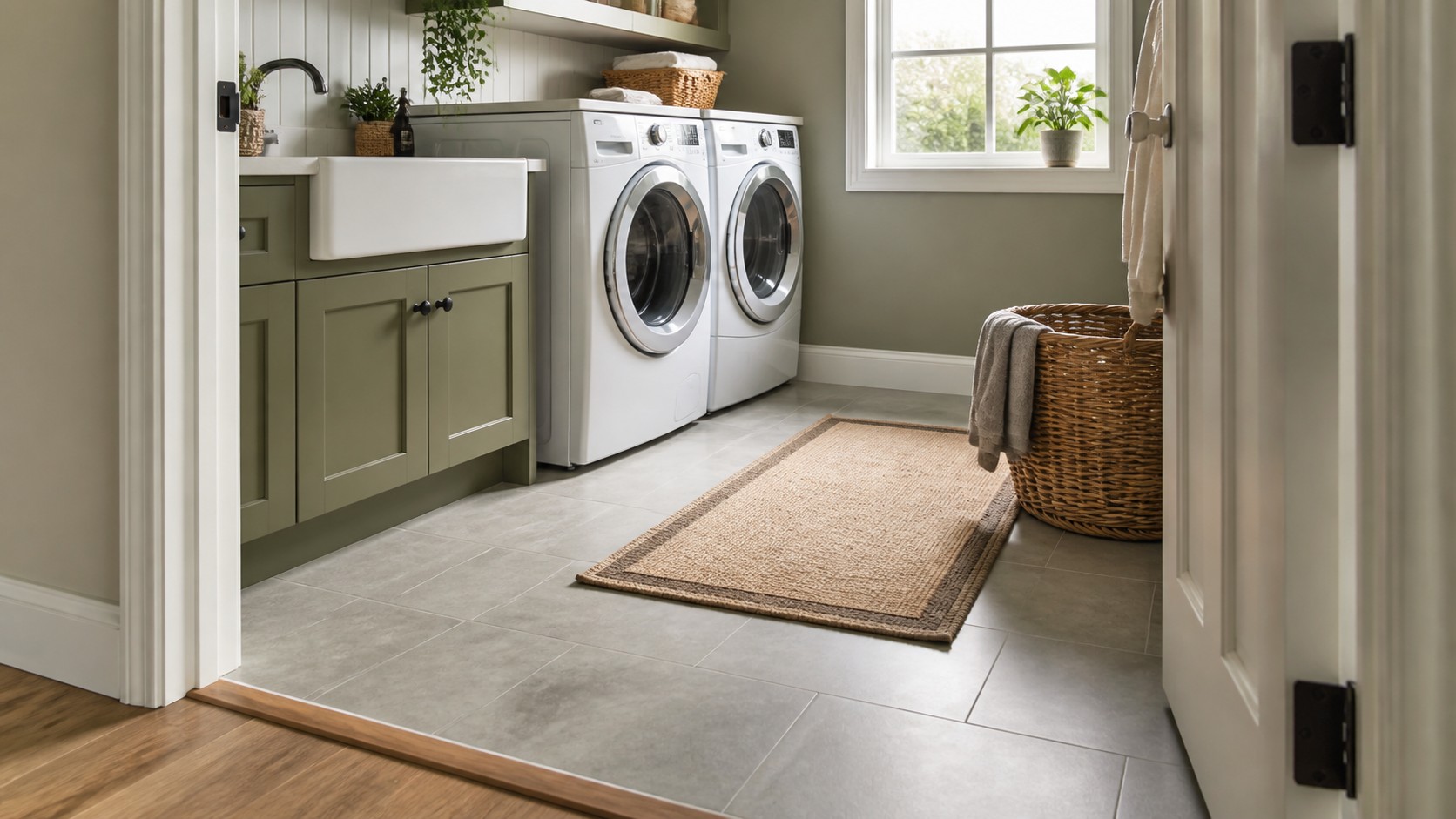
A laundry room floor is not only judged during emergencies. It is felt during ordinary chores. Tile and concrete are tough but hard. Vinyl is more forgiving. Rugs and mats can help, but they need to be washable and should not trap moisture where it can damage the floor or create odor. The person who does the most laundry should have a say in what feels comfortable enough for repeated use.
Noise may also matter. Hard surfaces can make a room feel louder, especially with a spinning washer, empty baskets, and cabinet doors. Softer resilient flooring or a washable runner can reduce some harshness. In upstairs laundry rooms or spaces near bedrooms, sound control may influence the overall design, including doors, underlayment, and appliance selection.
Comfort is not a luxury detail if the laundry room doubles as a care station for ironing, stain treatment, folding, or pet cleanup. A floor that feels punishing may push those tasks elsewhere. The more jobs the room handles, the more underfoot feel matters.
The floor can also affect how the room sounds. A narrow laundry closet with hard tile, hollow doors, and a fast spin cycle may feel harsher than expected. Rugs, better doors, and quieter appliances can all support the flooring choice.
The daily feel of the floor affects whether the laundry room gets used as intended. If folding, ironing, or sorting is uncomfortable, those tasks migrate to other rooms.
Style and Transitions to Nearby Rooms
Laundry rooms increasingly sit in visible parts of the home, so flooring should relate to nearby spaces. That does not always mean matching exactly. A mudroom laundry might use tougher tile than the hallway but repeat a color from the adjacent wood floor. A kitchen-adjacent laundry might use a compatible stone-look surface rather than pretending to be part of the kitchen. A hidden laundry closet might carry the hallway floor through the opening if water risk is modest and continuity matters.
Transitions are both visual and practical. Baskets, hampers, and feet move across thresholds constantly. A clumsy height change can become a trip point or a nuisance. The transition should be planned before installation so the flooring feels intentional from one room to the next.
Pattern should be chosen with sightlines in mind. A bold floor that looks charming in a closed laundry room may feel busy if visible from a calm hallway. A subtle floor may be better when the room already has colored cabinetry or patterned wallpaper.
When sightlines are long, samples should be viewed from the adjoining room too. A floor that looks subtle up close may create a strong pattern from the hallway. A color that seems neutral under laundry-room lighting may clash with nearby wood once the door is open.
Thresholds are especially important in hidden or compact laundries. The user may carry baskets over that line several times a week. A smooth, durable transition protects both the flooring and the person using the space.
Nearby rooms should influence color and transition details. Laundry flooring can be tougher than the hall, but it should still look like it belongs in the same house.
Maintenance and Long-Term Ownership
Every flooring option has a maintenance personality. Tile asks for grout care. Stone asks for sealing and gentle products. Vinyl asks for protection from gouges, heat, and incompatible cleaners. Concrete asks for sealer attention. Rugs ask for washing and drying. The right floor is one whose maintenance fits the household’s habits.
Plan for repairs before they are needed. Keep spare planks or tiles. Photograph product labels. Record grout color and sealer information. Use appliance-moving pads or professional help when machines need service. Many laundry floor problems happen not during normal use but during installation, repair, or appliance replacement.
The ultimate choice should feel calm, not merely trendy. A laundry room floor is successful when it handles water risk, supports the machines, cleans easily, feels acceptable underfoot, and makes the room look finished. When those conditions align, the floor becomes a dependable foundation for one of the home’s hardest-working routines.
Maintenance should be written down at the end of the project. Save the product name, cleaning instructions, grout color, sealer schedule, and spare material location. Future repairs become easier when the information is not trapped in memory or an old receipt.
A final decision should leave the owner with confidence, not lingering worry. The floor should be understandable: why it was chosen, how it should be cleaned, and what to do if damage occurs.