Laundry Room Floors Need Beauty With Backup
Laundry room flooring has to do more than look good in a renovation photo. It handles detergent drips, wet towels, heavy appliances, vibration, baskets dragged across the surface, pet messes, and the occasional leak scare. The best laundry room flooring ideas combine durability with a style that fits the rest of the home. That might mean porcelain tile in a patterned design, luxury vinyl plank with a warmer feel, sealed concrete in a modern utility space, or stone-look tile that gives the room a calm foundation. A good floor should be water-resistant, easy to clean, comfortable enough for repeated chores, and attractive enough that the laundry room feels finished rather than forgotten.
A: Porcelain tile is one of the strongest choices when installed over a stable base.
A: Yes, many luxury vinyl products handle moisture well and feel warmer than tile.
A: Waterproof or highly water-resistant flooring is strongly preferred because leaks and wet loads happen.
A: It can, but real wood carries more moisture risk than tile or vinyl.
A: Yes, if the tile is durable, slip-aware, and paired with grout that can be maintained.
A: Sheet vinyl, luxury vinyl, and large-format tile are often easy because they reduce grout or seams.
A: Not always, but they can show lint, dust, and detergent residue more clearly.
A: A washable runner can add comfort, but it should not trap moisture under appliances.
A: Matching can improve flow, but water resistance should lead the decision.
A: Subfloor moisture, appliance weight, utility locations, and transitions should be reviewed first.
Why Laundry Room Flooring Works Harder Than It Looks
A laundry room floor lives with a specific mix of hazards. It may not see the mud of an entry or the food spills of a kitchen, but it deals with water, heat, vibration, chemicals, weight, and repetitive movement. A washer can shake. A supply hose can leak. A damp towel can sit longer than planned. A detergent cap can drip onto the same spot every week. The floor has to tolerate all of that without becoming stained, swollen, slick, or difficult to clean.
Style still matters because laundry rooms are increasingly visible and finished. Many sit near kitchens, mudrooms, bedrooms, or hallways rather than in unfinished basements. The best floor supports the room’s design while quietly handling stress. That is why the strongest choices are not simply pretty; they are pretty with a practical reason behind them.
The floor also influences how finished the laundry room feels. Cabinets, counters, and shelves can be attractive, but a weak or mismatched floor keeps the room in utility territory. A durable floor with a deliberate color, pattern, or texture can make even basic appliances feel more integrated.
Think about the worst realistic day for the room. Maybe a hose drips, a muddy dog towel lands on the floor, or a basket scratches across the surface. If the flooring choice still feels reasonable on that day, it is probably strong enough for normal use.
A laundry floor should be chosen with the same seriousness as a kitchen floor. Both rooms combine water, repeated movement, cleaning products, and heavy fixtures that punish weak materials.
Porcelain Tile: The Durable Design Favorite
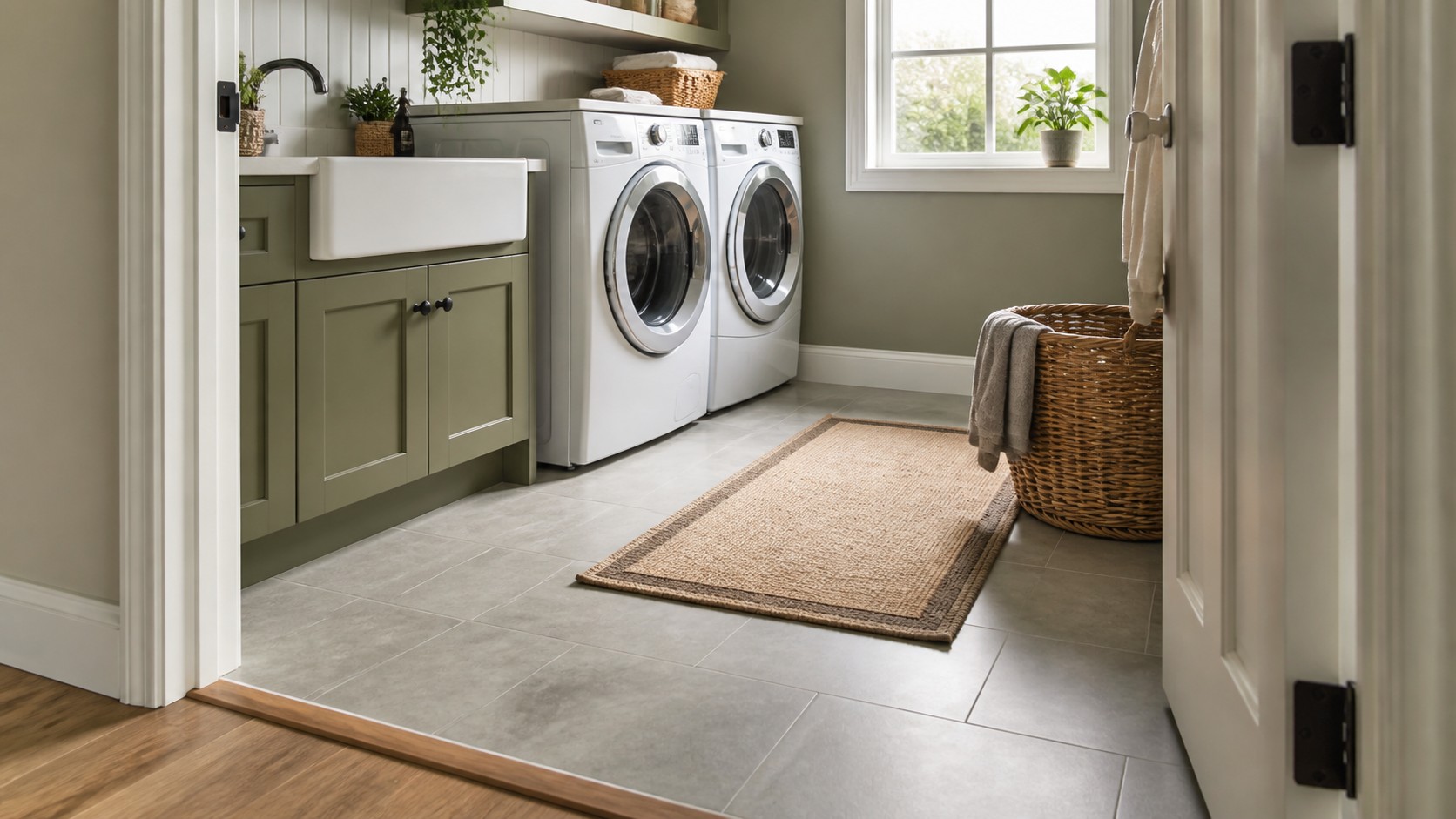
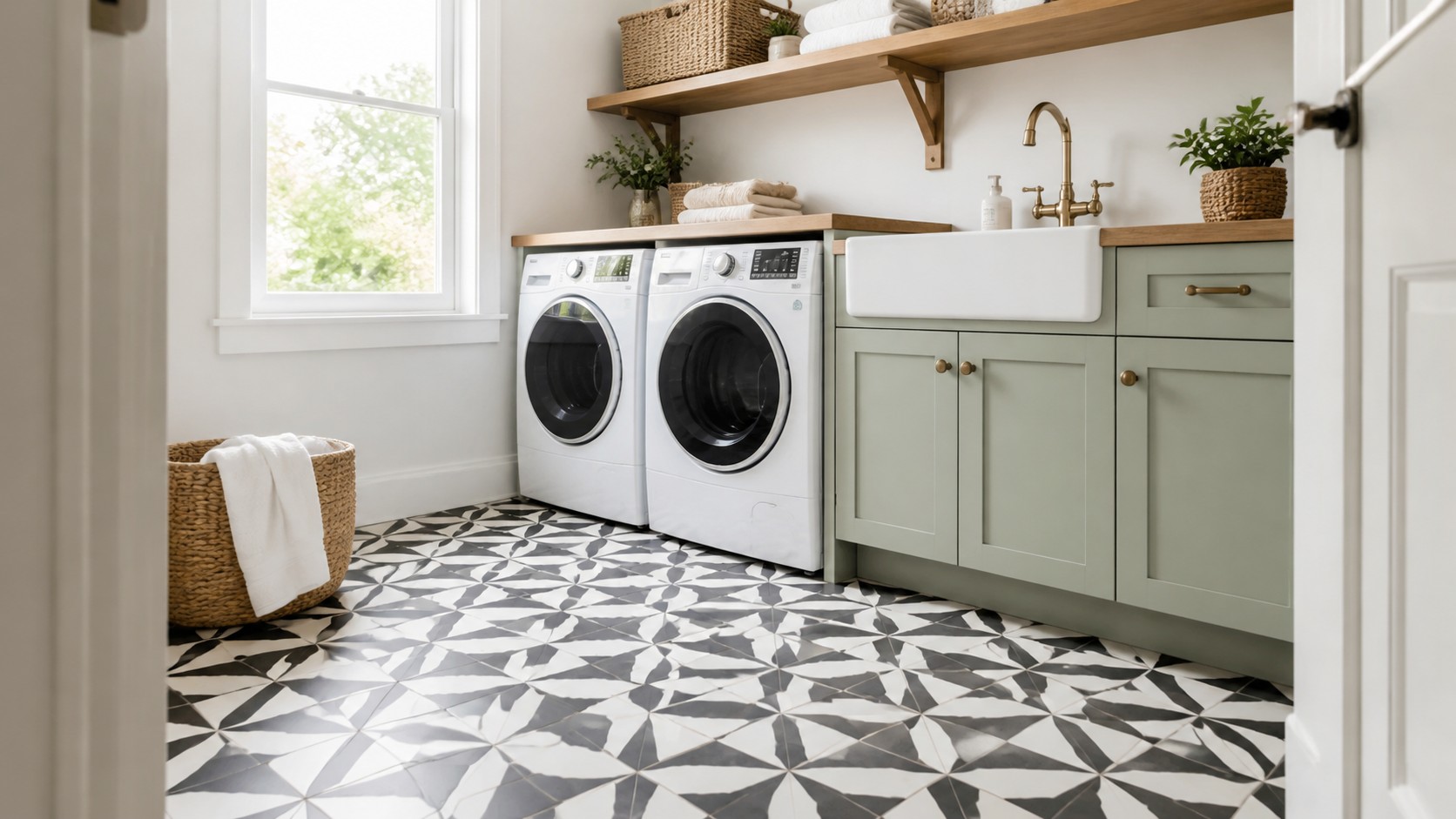
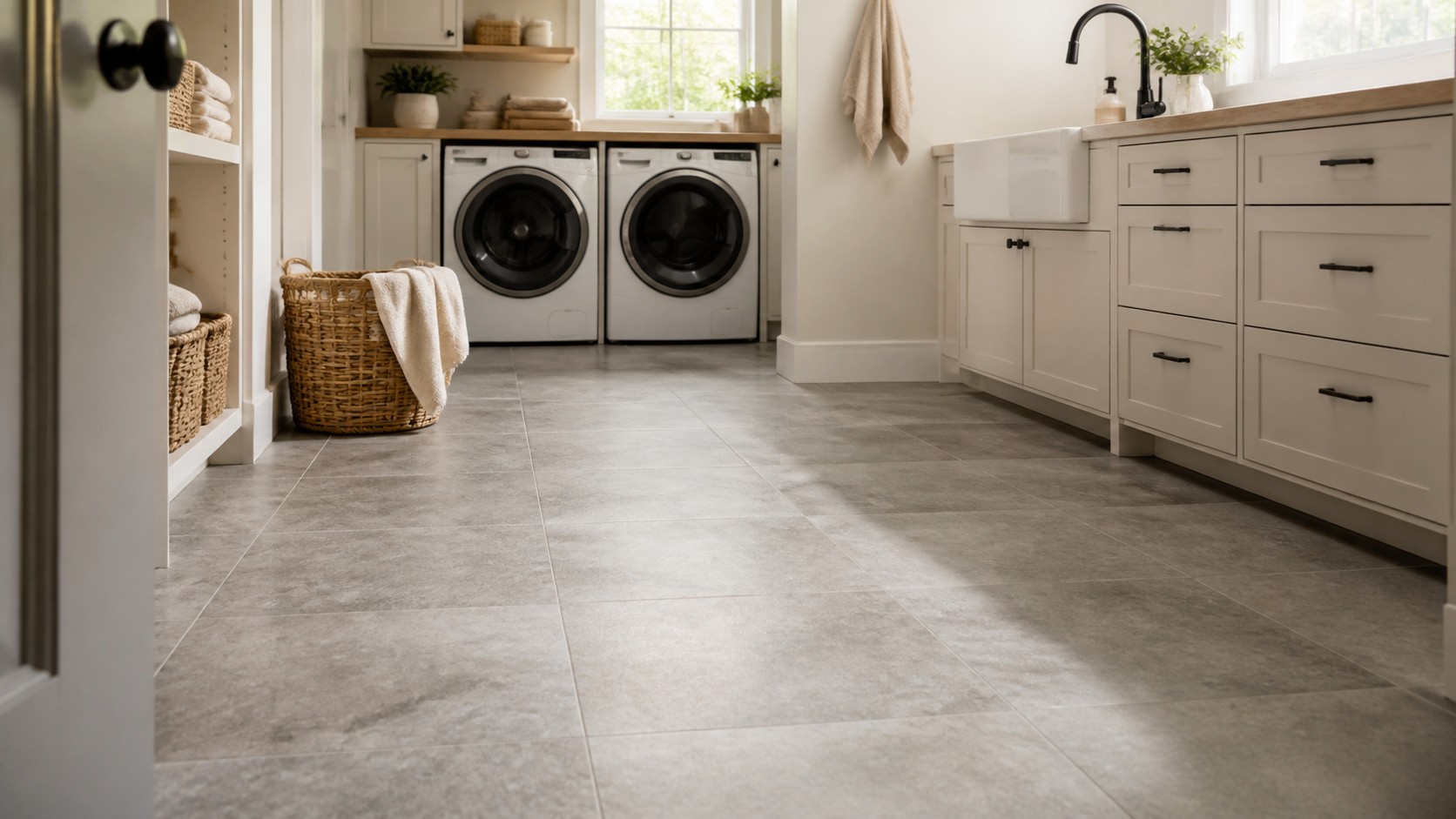
Porcelain tile is one of the best laundry room flooring ideas for homeowners who want durability and design range. It resists water, handles heavy appliances, and comes in patterns, stone looks, concrete looks, and simple solid tones. In a small laundry room, patterned porcelain can make the floor the main design feature. In a larger utility space, a calm stone-look porcelain can create a quieter foundation.
The quality of installation matters. Tile needs a stable substrate, appropriate setting materials, and grout that can handle the room’s use. Poor installation can lead to cracking even when the tile itself is strong. Grout color also deserves thought. Very light grout can show soil and detergent residue, while very dark grout may emphasize every grid line. A mid-tone grout often gives a practical balance.
Tile can feel cool and hard underfoot, so some homeowners add a washable runner where they stand to fold or sort. That small comfort layer can make porcelain feel less severe without giving up the floor’s core durability.
Porcelain is also useful because it can move between styles. It can be crisp and modern, vintage-inspired, quiet and stone-like, or playful and patterned. That flexibility lets homeowners choose durability without accepting a purely utilitarian look.
Slip resistance should be part of the selection. Laundry rooms involve damp socks, wet towels, and cleaning products, so a floor that becomes slick under moisture is a poor tradeoff. A matte or lightly textured porcelain often feels more appropriate than a glossy finish.
Porcelain’s design range is useful for homeowners who want the room to feel finished. The same material category can support a classic checkerboard, a quiet limestone look, or a modern concrete effect.
Luxury Vinyl: Warm, Practical, and Forgiving
Luxury vinyl plank or tile has become popular in laundry rooms because it combines water resistance with a warmer, softer feel than ceramic or porcelain. It can mimic wood, stone, or concrete while being easier to stand on during long folding sessions. For homes where the laundry room connects to a hallway or mudroom, vinyl can also help maintain visual flow without carrying the same moisture concerns as real wood.
Choose carefully. Products vary in wear layer, core construction, installation method, texture, and warranty. A laundry room needs a product rated for moisture and suitable for heavy appliances. Installation details such as expansion gaps, underlayment, and seams should follow manufacturer requirements. Waterproof marketing does not excuse sloppy edges or transitions.
Luxury vinyl works especially well when the goal is a softer residential look. A warm wood-look floor can balance white cabinets and appliances. A stone-look vinyl can suit a basement laundry room that needs practicality without the cold feel of tile.
Vinyl can also reduce the visual shock between rooms. If the adjacent hallway has wood, a wood-look vinyl may make the laundry room feel connected while still offering better moisture behavior. This is useful in remodels where the laundry room door is often open.
Vinyl is especially appealing when the laundry room is part of a larger circulation path. It can keep the visual temperature warm while still respecting the moisture risk around machines.
Sheet Vinyl and Seam Reduction
Sheet vinyl is sometimes overlooked because it feels less glamorous than tile or plank products, but it can be extremely practical. In small laundry rooms, a single sheet can reduce seams where water might find its way down. It is also relatively comfortable underfoot and can be budget-friendly, which matters when a laundry renovation has to share funds with appliances, cabinetry, or plumbing work.
The style options are better than many people remember. Modern sheet vinyl can mimic subtle stone, tile, or simple matte surfaces without looking overly busy. The key is selecting a pattern that suits the room’s scale. A tiny printed pattern may look nervous in a larger laundry area, while an oversized design can overwhelm a closet-sized room.
Like any flooring, sheet vinyl depends on proper prep. Uneven subfloors can telegraph through the surface, and edges must be handled carefully around walls, cabinets, and appliances. When installed cleanly, it offers a durable, easy-clean foundation that deserves serious consideration.
Sheet vinyl is particularly helpful where a laundry room is small, enclosed, or budget-driven. It may allow the homeowner to spend more on a better washer, a useful cabinet, or a leak sensor. A practical floor that supports the whole renovation can be a wiser choice than a showier material that strains the budget.
The main design caution is realism. Choose patterns with restraint and scale. A subtle stone or quiet tile look will age better than a printed surface that tries too hard to imitate expensive materials.
Sheet vinyl can be a smart choice in rental units, utility rooms, or budget renovations. Its practicality allows the rest of the project to focus on storage, lighting, and appliance performance.
Concrete, Stone, and Other Specialty Choices
Sealed concrete can be excellent in modern laundry rooms, basement spaces, and homes built on slabs. It is durable, visually simple, and able to handle utility-room life when properly sealed. The surface can feel cool and hard, but rugs or mats can add comfort. Concrete works best when its plainness feels intentional, paired with good lighting, cabinetry, and storage rather than left as an unfinished afterthought.
Natural stone can be beautiful, but it asks for more maintenance. Some stones stain, etch, or absorb moisture unless sealed correctly. In a laundry room, where detergents and cleaning products may spill, that matters. Stone-look porcelain often gives a similar calm or elevated appearance with fewer worries. Rubber flooring, meanwhile, can be useful in utility-heavy areas, though it may not suit every home’s design language.
The right specialty floor depends on context. A stylish main-floor laundry may need a refined surface. A basement laundry used for sports gear and pet supplies may need toughness first. The best choice is the one that matches the mess level as well as the mood.
In a basement, the choice may be less about style first and more about moisture behavior. Some flooring systems dislike vapor coming through a slab, while others can handle that environment with proper preparation. Testing and product guidance matter more below grade than in many main-floor rooms.
Specialty floors should be tested against the home’s habits. A floor that suits careful adult use may not suit pets, children, sports gear, or frequent cleaning projects.
Color, Pattern, and Visual Cleanliness
Laundry room floors have to look clean even between cleanings. Very dark floors can be handsome, but they often show lint, pale dust, and detergent streaks. Very light floors brighten the room but may show mud or hair. Mid-tone floors, lightly patterned surfaces, and stone-look designs often hide ordinary debris better while still feeling fresh.
Pattern is useful when the room is small or the cabinetry is simple. A patterned tile can make a plain laundry room feel designed without adding clutter to walls or shelves. However, the pattern should not fight the rest of the home. If the laundry door is frequently open to a hallway, choose a floor that relates to nearby materials. A bold floor can work beautifully when the color palette is controlled.
Matte and lightly textured finishes usually feel more forgiving than glossy ones. They reduce glare and can improve slip confidence, though texture should not be so deep that lint and dust cling to it.
The easiest floor to live with is often the one that hides small debris without looking dirty. Laundry rooms produce lint, thread, dust, and grit from clothing. A floor with gentle variation can disguise those traces between cleanings while still looking fresh after a quick sweep.
Pattern scale should relate to room size. A tiny mosaic-style pattern can feel busy in a large laundry room, while a large repeat may be lost in a closet. Bring samples into the actual room and view them beside appliances before deciding.
Color samples should be viewed with lint and towels nearby. Laundry rooms create pale fuzz, dark dust, and product residue, so the best-looking sample is not always the cleanest-looking daily floor.
Installation Details That Protect the Investment
Even the best flooring material can fail if the installation ignores laundry-specific conditions. Heavy machines need a sound base. Tile needs proper substrate preparation. Vinyl needs correct gaps, seams, and transitions. Basements may need moisture testing. Upper-floor laundries may need leak protection and careful attention to drain pans or waterproofing details around vulnerable edges.
Transitions deserve special care. A laundry room often connects to wood, carpet, hallway tile, or mudroom flooring. The transition should be smooth enough for baskets and safe enough for daily walking. If the laundry room has a sink or floor drain, those features should be coordinated before flooring is installed, not improvised afterward.
It is also wise to keep extra material. A few spare tiles, planks, or a piece of sheet vinyl can make future repairs much easier. Laundry rooms are hardworking spaces, and the ability to replace a damaged piece without hunting for a discontinued product is a small but valuable form of insurance.
Installation timing is another practical issue. If cabinets, appliances, and flooring are all being replaced, coordinate the sequence so the new floor is protected. Dragging heavy machines across a fresh surface is one of the fastest ways to damage a project at the finish line.
Good installation protects style as much as performance. Straight transitions, clean edges, and level appliance placement make the finished room feel intentional rather than merely resurfaced.