Concealed Laundry Designs People Actually Enjoy Using
Homeowners tend to love concealed laundry room designs for two reasons: they make the house look calmer, and they make an everyday chore feel more contained. The best designs are not only clever hiding tricks. They are compact rooms with a satisfying rhythm: open the doors, start the load, use the storage, fold or hang what needs attention, and close everything away again. That rhythm can happen in a mudroom, hallway, bathroom-adjacent closet, kitchen wall, pantry edge, or upstairs landing. What matters is that the design feels natural to the home and kind to the person doing the laundry.
A: They reduce visual clutter while keeping laundry close to where people live.
A: No. Larger homes use concealment to keep mudrooms, hallways, and secondary spaces calmer.
A: Built-in cabinetry that matches the surrounding room is the most broadly appealing.
A: Yes, with good lighting, warm materials, and enough clearance to work comfortably.
A: Often they should, especially when airflow or easy transfer matters.
A: A practical counter or pull-out shelf often becomes the most appreciated detail.
A: Not if the surrounding cabinetry and walls stay restrained.
A: Yes, and mudrooms are one of the most natural places for concealed laundry.
A: Detergent, hampers, cleaning tools, and stray garments need planned storage too.
A: Aligned doors, fitted shelves, interior lighting, and materials that match the home.
Why Concealed Laundry Rooms Feel So Appealing
A concealed laundry room offers a kind of visual relief that many homeowners appreciate immediately. Laundry is repetitive, and the supplies that support it are rarely beautiful in their original packaging. When the machines, bottles, baskets, and hanging pieces can disappear behind doors, the surrounding room feels calmer. This is especially valuable in homes where the laundry area sits near a kitchen, entry, bedroom hall, or open living space.
The appeal is also emotional. A concealed design creates a beginning and end to the chore. Open the doors and the room is ready to work. Close them and the task recedes. That simple boundary can make a small home feel more orderly and a busy home feel more manageable. The design is loved not because it hides responsibility, but because it keeps responsibility from visually occupying the whole day.
That boundary is especially helpful in open-plan houses. When many household functions share sightlines, visual closure becomes a form of design comfort. A concealed laundry room lets the home support chores without letting chores dominate the view from the kitchen table, sofa, or entry.
A design people love usually removes a visible frustration. It may hide baskets, shorten a carrying route, quiet a hallway, or make a busy entry feel more composed after a long day.
The Mudroom Cabinet Design
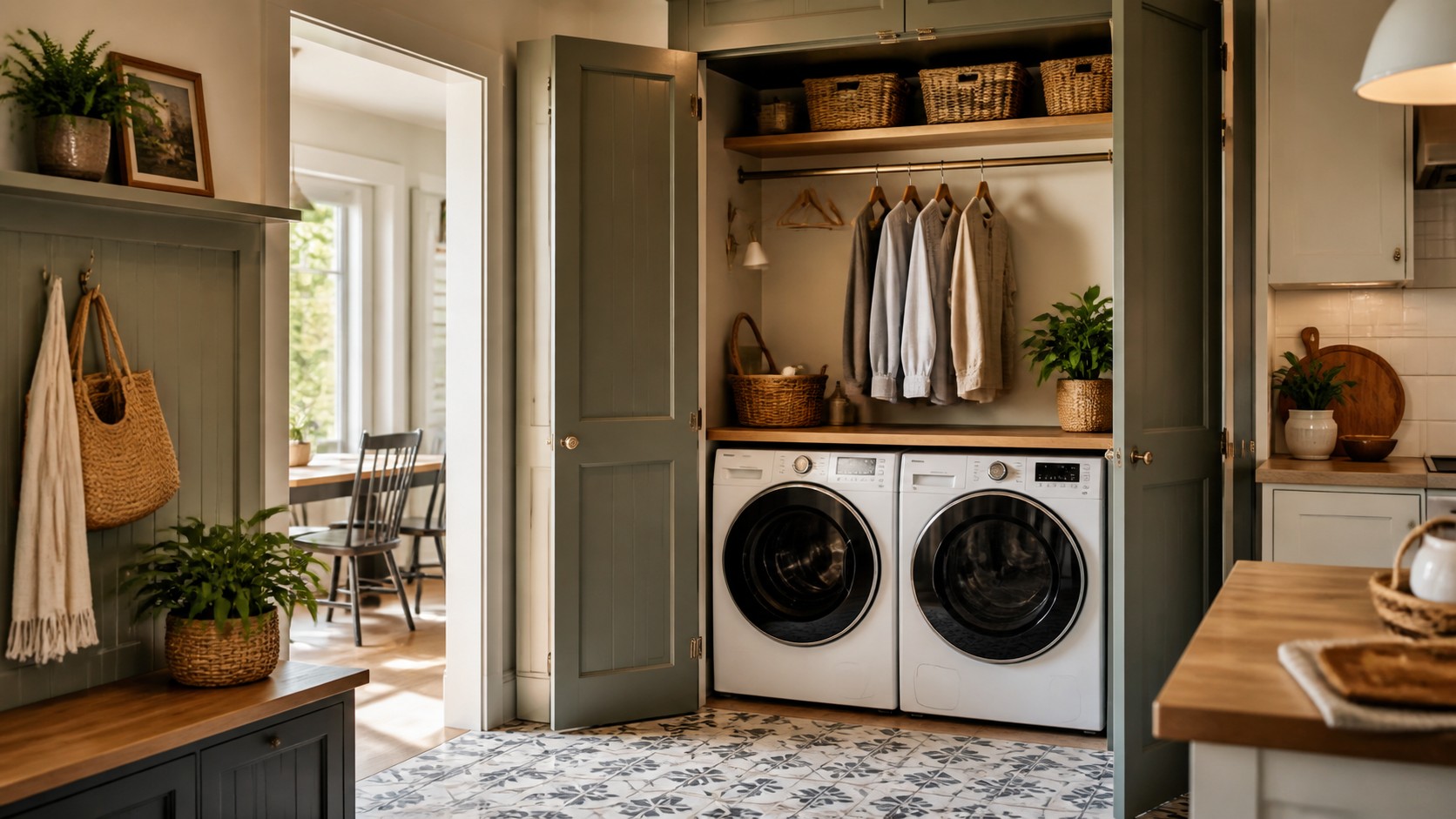
One of the most homeowner-friendly concealed laundry designs is the mudroom cabinet wall. It places laundry near the messy edge of the house, where towels, uniforms, coats, pet blankets, and outdoor clothing already arrive. Machines can sit behind paneled doors, with shelves above and hooks or cubbies nearby. When planned well, the same wall can handle laundry, entry storage, and seasonal gear without looking chaotic.
Durability matters in this location. Flooring should tolerate wet shoes and damp clothing. Cabinet interiors should be easy to wipe. A counter above side-by-side machines can serve both folding and bag sorting, while a rail or hook zone handles air-dry pieces. Homeowners love this design when it reduces the number of piles that used to migrate from entry to hallway to bedroom.
The mudroom version should avoid becoming a catchall. Assign separate zones for laundry and entry items so detergent does not compete with backpacks and shoes. Concealment works best when each hidden section has a job.
A mudroom version can also be adapted for different household routines. Some families need sports bins and towel hooks. Others need a pet-cleanup shelf, a boot tray, or a place for reusable shopping bags. The laundry design feels loved when it responds to the mess that actually enters the home.
Because mudrooms are busy, the closed-door appearance should be simpler than the interior function. Too many exterior cubbies, hooks, and exposed baskets can make the wall look restless. Concealing the laundry behind larger panels allows the rest of the entry storage to breathe.
The mudroom version should be planned for dirt as well as clothing. If the same space handles shoes, bags, and pets, the laundry cabinet needs durable edges and forgiving surfaces.
The Hallway Closet That Acts Bigger Than It Is
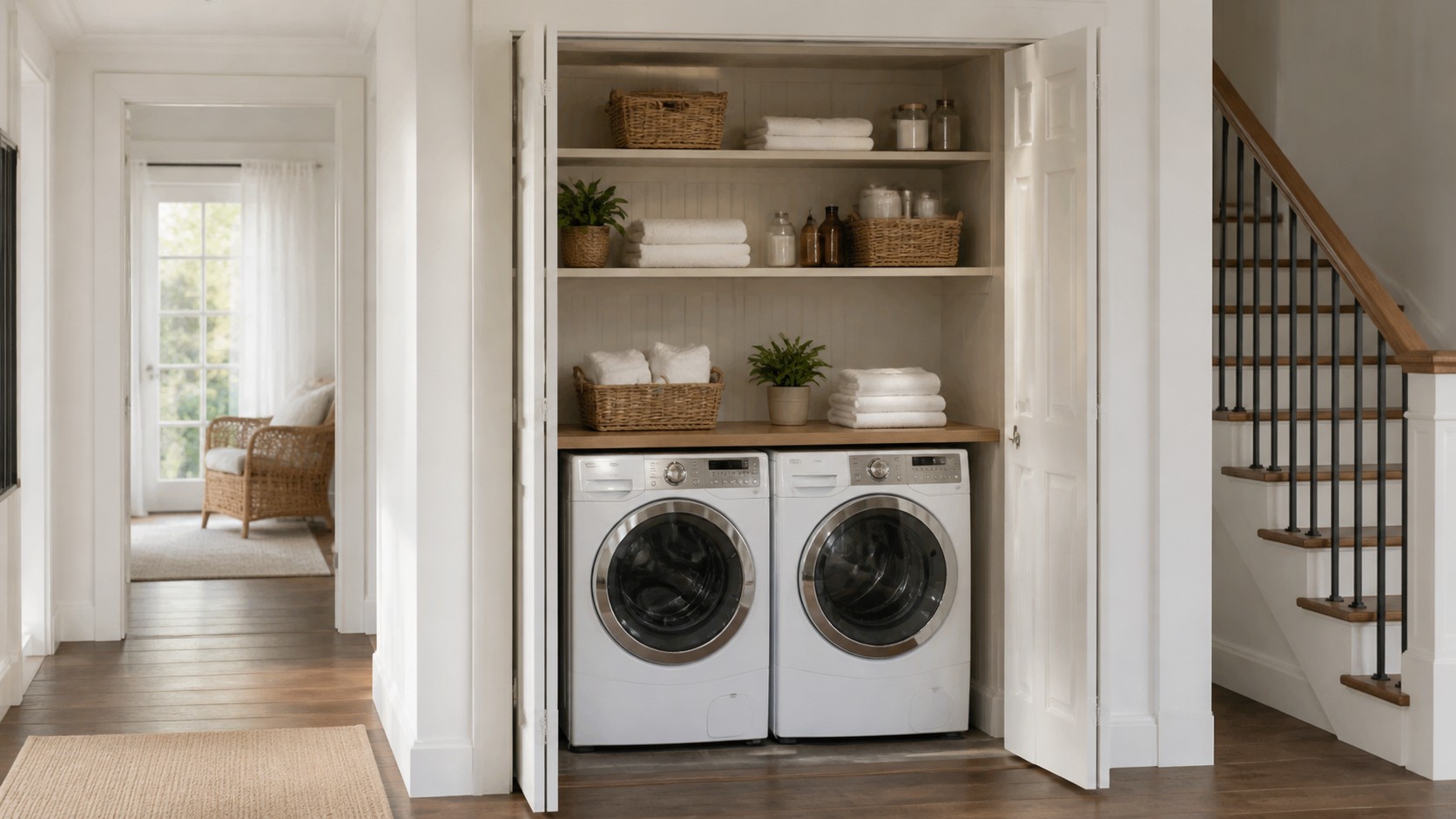
A hallway closet can become a surprisingly effective laundry room when the opening is generous and the interior is planned vertically. Stacked machines leave room for a narrow shelf tower, while side-by-side machines may support a counter under upper cabinets. The hallway location is especially useful near bedrooms or bathrooms because linens and clothing do not travel far.
The challenge is circulation. Doors must open without blocking the hallway for long periods, and baskets need a temporary place to land. Pocket doors, bi-fold doors, or doors that fold back against the wall can make the difference between a charming idea and a daily annoyance. Lighting is also crucial because hallway closets often borrow light poorly from the surrounding space. A bright interior fixture makes the closet feel like a miniature room rather than a dark appliance cavity.
Hallway designs benefit from quiet finishes. A door style that matches linen closets or bedroom doors can make the laundry feel original to the plan. Inside, however, the layout can be much more hardworking, with shelves, hooks, a compact counter, and moisture-resistant surfaces doing jobs the hallway never reveals.
In a hallway, the smallest conveniences are magnified. A light that turns on easily, a shelf at shoulder height, or a basket bay can make a compact closet feel surprisingly complete.
The Kitchen-Adjacent Laundry Wall
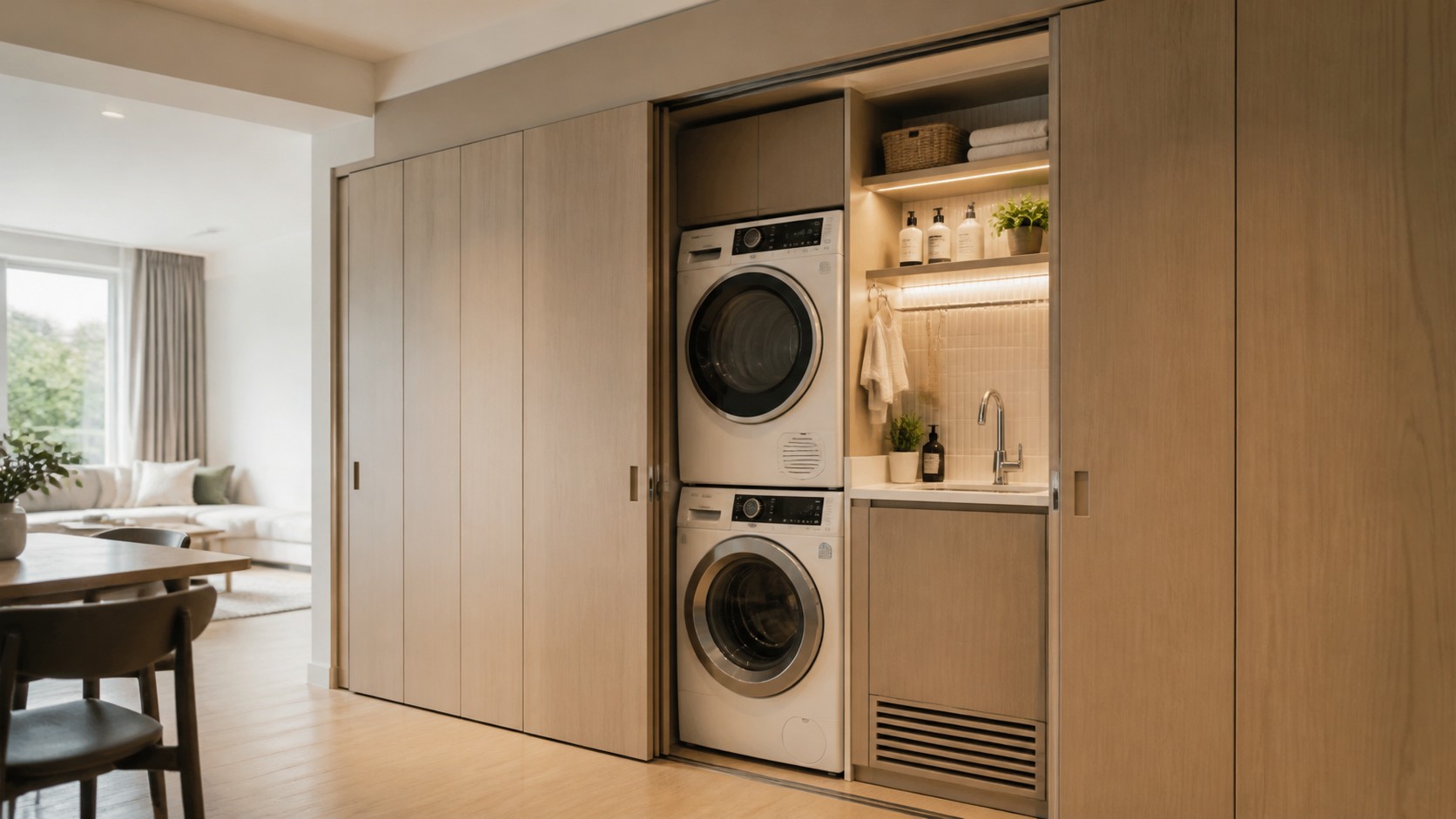
In compact homes, apartments, guest houses, and older floor plans, laundry sometimes belongs near the kitchen because the plumbing route is practical. A concealed kitchen-adjacent laundry wall can work beautifully when the cabinetry is calm and the appliances are quiet. Matching cabinet fronts help the laundry function blend into the room, while interior shelves keep supplies out of sight.
This design asks for particular restraint. The kitchen already has visual activity, so the laundry zone should not add fussy details or exposed product storage. A simple door system, a small counter, and a closed cabinet for detergent usually look better than open shelves full of laundry accessories. If a sink is included, it should be visually integrated rather than looking like a second utility area pressed into the kitchen.
Noise and timing should be considered honestly. If the kitchen is where people gather, a loud spin cycle may be more disruptive than expected. Quiet appliances and solid doors are worth prioritizing in this layout.
Ventilation is the detail that should not be sacrificed for a perfect kitchen look. Cabinetry can match the kitchen beautifully while still providing the airflow and clearances required by the appliances. A designer or contractor should confirm those details before the laundry wall is treated like ordinary pantry storage.
Kitchen-adjacent designs should feel like part of the cabinetry, but they should not be treated like ordinary storage. Appliances bring heat, vibration, water, and service needs into the wall.
The Pretty Reveal: Tile, Paint, and Warm Materials
Many homeowners enjoy a concealed laundry room more when the open view has a little charm. Patterned floor tile, painted interior cabinetry, a wood countertop, or a small backsplash can turn the reveal into a pleasant design moment. Because the space is hidden part of the time, it can often handle more personality than the surrounding hallway or mudroom.
The trick is choosing one or two memorable details rather than decorating every surface. A patterned tile floor can be balanced by plain cabinet fronts. A deep green interior can be paired with simple white walls outside. A wood counter can warm up basic appliances without requiring a full renovation. These details make the laundry zone feel cared for, which is why people respond to them so strongly in real homes.
A pretty reveal is also a good place to express the homeowner’s taste without overwhelming the entire house. Someone who would never choose patterned tile for a kitchen may love it in a small laundry cabinet. Someone who keeps hallways neutral may enjoy a richer cabinet interior because it appears only during use.
The reveal should feel pleasant without requiring styling before every load. Durable materials, tidy containers, and a natural place for hangers do more work than purely decorative accessories.
The Practical Features That Make People Keep Loving It
A concealed laundry design may be chosen for looks, but it stays loved because of small practical comforts. A counter at the right height prevents folding from moving to a bed or sofa. A rail handles shirts that should not go in the dryer. A dedicated lint trash spot keeps the dryer area clean. Interior lighting helps users see controls, stains, and shelf contents. A leak sensor adds reassurance when the machines are hidden.
These features do not need to be elaborate. A pull-out shelf can replace a full counter in a narrow closet. A short rail under a shelf can handle hangers. A simple basket system can separate clean towels from active laundry. Homeowners love designs that make the next step obvious, because laundry becomes less mentally cluttered when the room itself guides the routine.
The best concealed rooms also accept imperfection. They provide a temporary place for an unfinished load, a damp item, or a basket waiting to go upstairs. Without that margin, even a beautiful laundry cabinet can feel demanding.
A design that supports unfinished laundry is usually more successful than one that assumes every load will be completed immediately. Real life includes interrupted cycles, half-folded towels, and a shirt waiting for stain treatment. A shelf, rail, or basket dedicated to that in-between state keeps the surrounding room from absorbing the mess.
This is why homeowners often praise details that sound minor. The small trash container, the exact shelf height, the rail that holds five hangers, or the counter that fits a basket may matter more than the most expensive finish. Pleasure comes from the way the room behaves on an ordinary Tuesday.
Homeowners also appreciate designs that forgive interruptions. A room that can hold an unfinished load without looking chaotic fits the pace of family life better than a perfect but rigid cabinet.
How to Make the Design Match the House
A concealed laundry room should look as if it belongs where it is. In a traditional home, that might mean paneled doors, classic knobs, and painted trim. In a modern home, it may mean flat fronts, shadow lines, and integrated pulls. In a cottage or farmhouse setting, beadboard, warm wood, and woven baskets may feel more natural. The goal is not to copy a trend; it is to make the hidden function sit comfortably inside the architecture.
This is where restraint creates longevity. A concealed laundry room that relies on one fashionable color or novelty door style may date quickly. A room that uses good proportions, durable materials, and details already present in the home will age better. Homeowners tend to keep loving designs that feel specific to their house rather than borrowed wholesale from a photo.
When the closed view is quiet, the open view is useful, and the materials suit the surrounding rooms, the concealed laundry design becomes more than a space-saving trick. It becomes one of those hardworking household details that people mention because it genuinely improves daily life.
The match does not have to be invisible. Some of the best concealed laundry rooms create a subtle sense of discovery when opened. The outside belongs to the architecture; the inside offers a little warmth, color, or texture. That contrast makes the room memorable without making it loud.
The most enduring concealed designs look modest from the outside and thoughtful on the inside. That combination keeps the feature useful, attractive, and easy to live with over time.