Hidden Laundry Rooms That Feel Intentional
A hidden laundry room works best when it feels designed, not merely squeezed into leftover square footage. The goal is to tuck washing, drying, folding, and supplies into a place that supports the rest of the home without announcing itself every time someone walks by. That might mean a hallway closet with folding doors, a mudroom wall with paneled fronts, a kitchen-adjacent cabinet run, or a compact upstairs niche that disappears behind millwork. The best hidden laundry room ideas balance concealment with access: doors must open fully, machines need breathing room, shelves have to hold real supplies, and the room still needs light, ventilation, and a surface for handling clothes. When those practical pieces are solved with care, a concealed laundry zone can feel calmer and more stylish than a larger room that lacks focus.
A: Yes, if the closet has proper utility connections, ventilation, clearances, and doors that open wide enough for daily use.
A: They are excellent for small footprints, but side-by-side machines work better when counter space is the top priority.
A: They often need more planning because doors and cabinetry can trap heat and moisture around appliances.
A: Aligned millwork, good lighting, concealed supplies, and durable interior finishes make the space feel intentional.
A: Usually yes, unless moisture risk or heavy use makes a separate water-resistant surface the smarter choice.
A: Renters can use freestanding shelves, curtain panels, removable hooks, and baskets without altering utilities.
A: Place daily detergent close to the washer but contained on a tray or shelf that can handle spills.
A: A sink is useful but not required; many hidden laundry closets work well with machines, shelves, and a fold-out surface.
A: Limit visible supplies, assign one storage zone per task, and leave a clear landing spot for active loads.
A: Start with appliance dimensions, door clearance, utilities, and ventilation before choosing decorative finishes.
Start With the Place the Laundry Can Disappear
The right hiding place depends on how laundry moves through the household. A bedroom hallway makes sense for families who change clothes upstairs and want shorter carrying routes. A mudroom location helps when sports gear, towels, and pet blankets need washing before they reach the rest of the house. A kitchen-adjacent cabinet can work in an apartment or compact home, but it needs careful attention to noise, ventilation, and the way doors interact with daily traffic.
Look for a location that can be opened without blocking the most important path through the room. A laundry closet that forces people to squeeze around baskets will feel annoying no matter how pretty the doors are. The hidden setup should also support the natural sequence of sorting, washing, drying, folding, and putting away. If one of those steps has no landing zone, clutter will spill into the surrounding space and defeat the purpose of concealment.
Also notice what the proposed location already does well. A hallway may offer excellent access but little depth. A mudroom may have durable finishes but too many competing storage needs. A kitchen wall may share plumbing but demand quieter appliances and cleaner cabinetry. Starting with the strengths of the spot keeps the hidden laundry plan from becoming a forced solution.
A hidden location should also be judged at busy times of day. If the same hallway handles school bags, pets, or guests, the laundry opening needs enough grace to function during real household traffic.
Choose Doors That Match the Room and the Routine
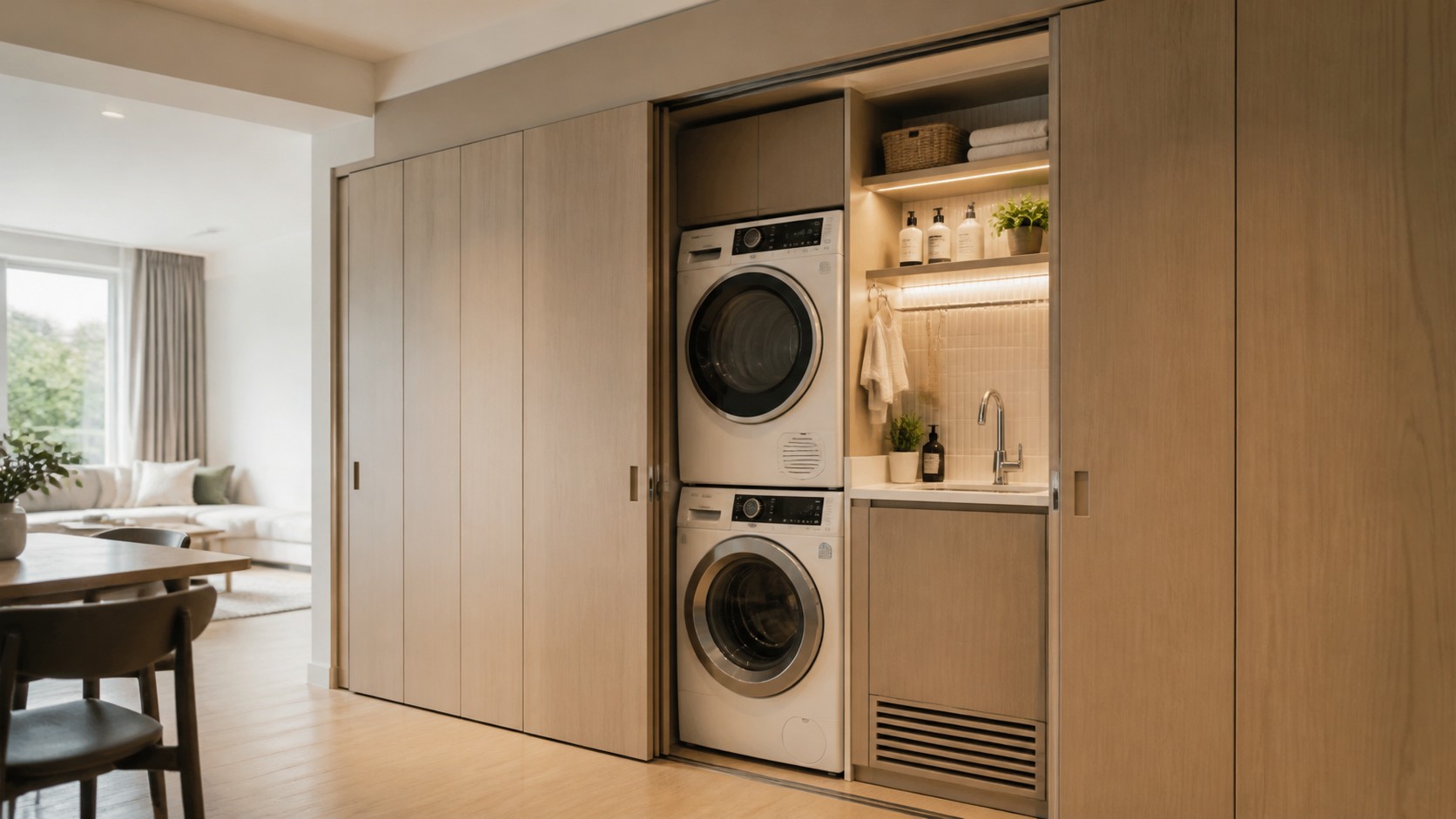
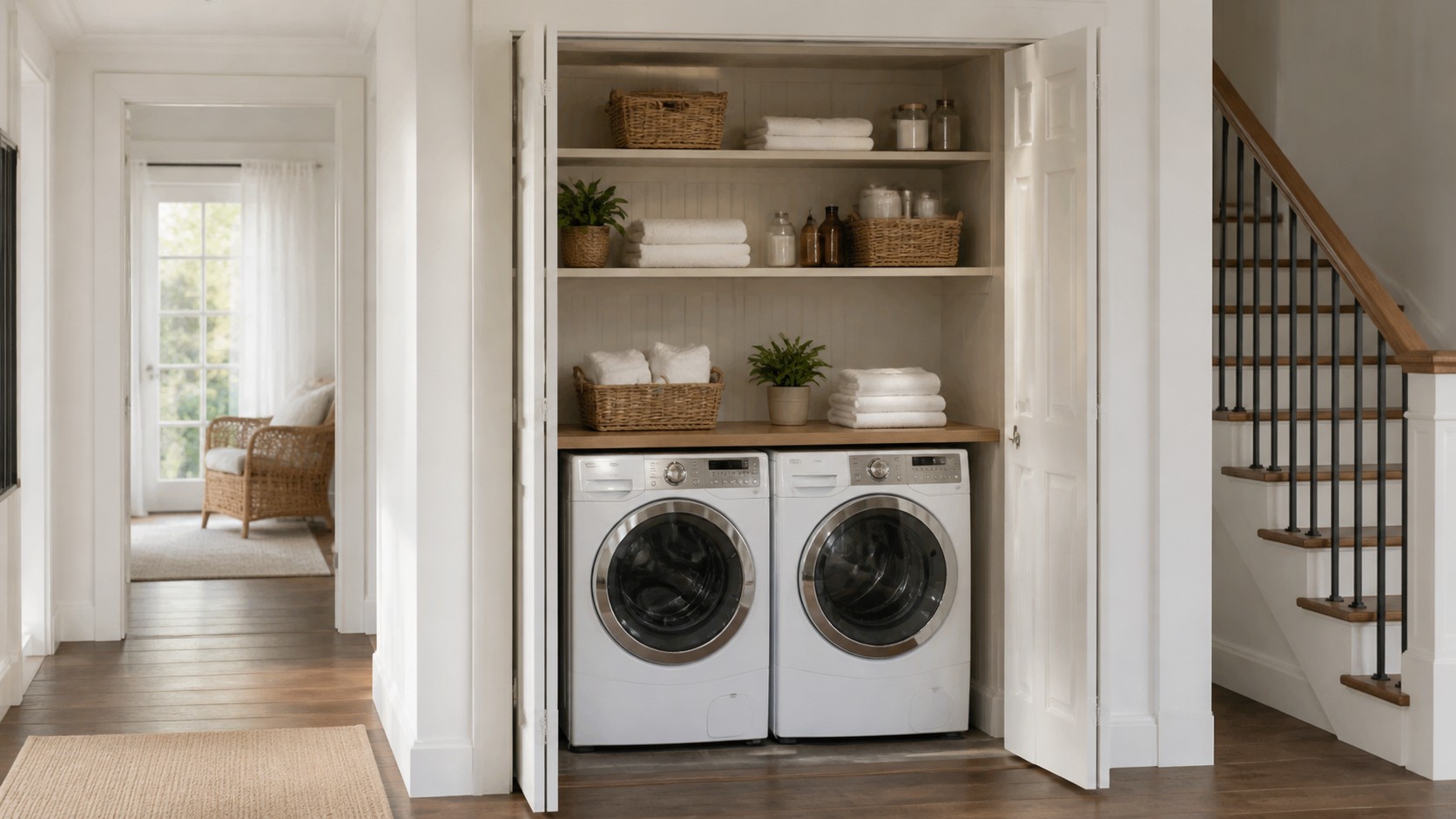
Doors are the defining feature of a hidden laundry room, and they should be chosen for movement as much as style. Pocket doors are elegant because they disappear into the wall while machines are in use, but they require wall depth and clean installation. Bi-fold doors are easier to retrofit and can expose a wide opening, though cheaper versions may wobble or look temporary. Full-height cabinet doors create the most seamless result when the laundry zone sits inside a larger millwork wall.
The best door choice is the one that can stay open comfortably during real laundry sessions. Many people imagine the laundry will be hidden at all times, but doors are often open while loads are being moved, folded, or air-dried. Hardware, hinges, tracks, and pulls should feel sturdy enough for repeated use. When the door system feels effortless, concealment becomes a bonus rather than a daily obstacle.
If the opening is narrow, test the door style with a basket in hand. A door that seems fine during a showroom visit can become frustrating when one arm is full of towels and the other is reaching for detergent. Hidden laundry rooms succeed when the repeated motions are comfortable, not just when the elevation drawing looks balanced.
Door hardware should also match the level of concealment. A tiny knob on a tall cabinet door may look discreet but feel awkward. A recessed pull can be elegant on sliding panels, while a familiar lever or knob may make more sense on doors that imitate a linen closet.
The most elegant door solution is the one people will actually close. If it takes effort, catches on flooring, or blocks a basket, the laundry will slowly become visible by habit.
Build Storage Around Actual Supplies
Hidden laundry rooms cannot rely on vague storage promises. Measure detergent bottles, stain sprays, mesh bags, wool dryer balls, cleaning cloths, backup towels, and baskets before deciding shelf spacing. A beautiful cabinet that cannot hold tall bottles will quickly become messy. Adjustable shelves are helpful because laundry products change size, and households often shift from liquid detergent to pods, powders, or specialty treatments over time.
Try to separate active tools from backup inventory. Daily supplies belong near the washer, ideally on a tray or washable shelf. Bulk products can sit higher, behind doors, or in a deeper cabinet. If the hidden laundry area includes a counter, protect at least part of it from becoming permanent storage. A clear surface is what lets the small zone behave like a real laundry room rather than a closet full of machines.
Do not ignore small storage moments. A hook for a delicates bag, a narrow slot for an ironing board, or a drawer for lint rollers can make the room feel larger than it is. These details also help keep the surrounding hallway, kitchen, or mudroom from collecting laundry tools that have no assigned home.
Storage planning should include the items that appear only occasionally. Guest linens, seasonal towels, and specialty garment care tools need a home too, even if they are not part of every load.
Make the Interior Worth Seeing
A concealed laundry area will not stay concealed every minute, so the inside deserves attention. The view with doors open should look composed from the adjacent room. That does not mean it needs expensive finishes everywhere. It means the interior colors, shelves, lighting, and hardware should look like they belong to the same design story as the rest of the home.
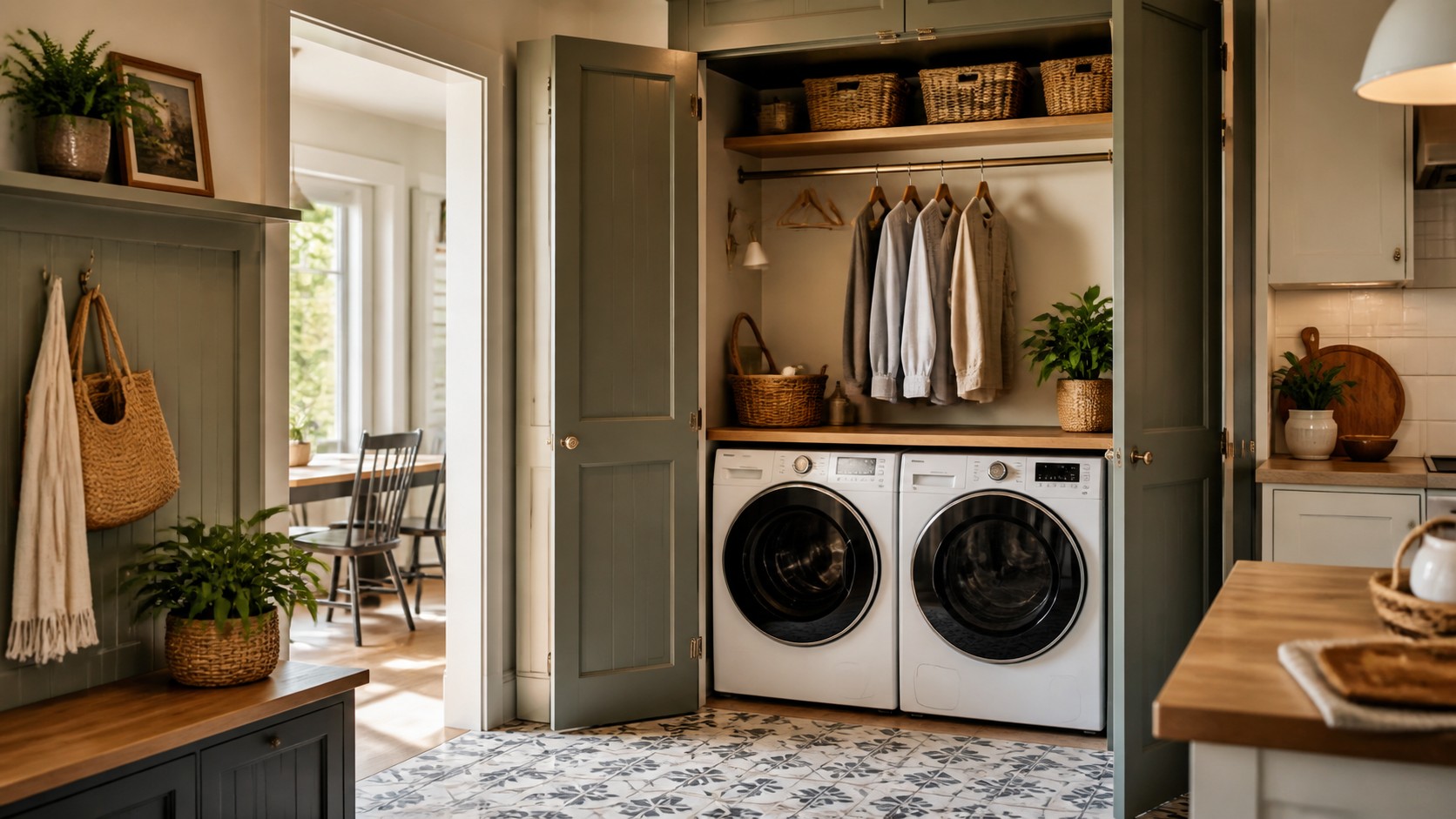
For a quiet look, repeat nearby trim colors or cabinet finishes. For a warmer look, introduce a wood shelf or butcher-block counter. For a bolder space, use patterned tile or a painted cabinet interior that feels intentional when revealed. The key is restraint. Because hidden laundry rooms are small, one strong material often works better than several competing accents.
Think of the open view as a small room portrait. The eye will notice the counter edge, the shelf contents, the floor, and the way appliance fronts sit inside the opening. If those elements feel coordinated, the area can be attractive even during active use. If they feel accidental, the doors will need to do too much visual work.
One useful approach is to make practical objects do some decorative lifting. Rolled towels, a woven hamper, a smooth stone-look counter, or a row of matching containers can make the nook feel finished without adding fragile decor that gets in the way.
Small interiors benefit from one quiet focal point. A warm shelf, a clean tile surface, or a neatly framed hanging rail can make the reveal feel designed without cluttering the opening.
Protect the Room From Moisture, Heat, and Vibration
Concealment should never interfere with appliance safety or performance. Dryers need the correct venting or heat-pump clearances, washers need access to supply valves and drains, and both machines need enough space for service. Cabinet panels that look beautiful but trap heat can shorten appliance life or create humidity problems. If the laundry area sits on an upper floor, vibration control and a drain pan may matter more than decorative details.
Moisture-resistant flooring, washable paint, and durable shelf surfaces are smart in tight enclosures. Even careful households deal with drips from wet sleeves, damp towels, or detergent caps. A hidden laundry room should be able to handle those ordinary messes without swelling, staining, or smelling musty. Good design is the part you see, but resilience is the part that keeps the idea working.
If the laundry is near bedrooms or living areas, sound belongs in this same planning category. Quiet machines, solid doors, anti-vibration pads approved for the flooring, and thoughtful scheduling can make the concealed location feel civilized. A hidden room that is loud still announces itself.
Plan for maintenance with the same seriousness as appearance. A beautiful hidden room loses its charm quickly if a technician cannot reach a hose, outlet, filter, or vent without damaging the finish.
Use Lighting to Make the Nook Feel Bigger
Laundry closets often fail because they are dark. A single ceiling light in the hallway may leave the washer controls, shelf contents, and folding surface in shadow. Small recessed lights, a slim fixture inside the enclosure, or under-shelf LED strips can make the laundry zone feel cleaner and more spacious. Lighting also reduces the chance that socks, stain marks, or care labels are missed.
If the laundry is hidden behind tall doors, connect the light to a wall switch or door-activated control rather than relying on a lamp that occupies shelf space. Warm but clear light usually works best in a home setting. It should be bright enough for tasks without making the nook feel like a utility closet in a commercial building.
Good lighting can also make the storage system easier to maintain. When the back of the shelf is visible, duplicates and empty containers are less likely to accumulate. In a small concealed space, seeing clearly is one of the simplest ways to keep the room from slowly turning into a crowded closet.
For a more polished result, choose lighting with a color temperature that resembles nearby rooms. Harsh cool light can make a warm hallway cabinet feel disconnected. A clear but residential light keeps the hidden zone practical while preserving the mood of the home.
Lighting also supports safety. Clear visibility around cords, hoses, and wet areas makes the compact room easier to use, especially in evening routines or windowless hallways.
Let Style Support the Disappearing Act
The exterior of a hidden laundry room should be calm enough to fade into the architecture. In traditional homes, paneled doors and classic hardware can make the opening feel like a linen cabinet. In modern homes, flat fronts and minimal pulls help the wall read as a clean surface. In cottage or farmhouse spaces, beadboard, painted wood, and warm baskets can make the laundry area feel charming instead of purely functional.
Inside the doors, choose details that are pleasant but easy to maintain. A washable runner, closed baskets, a stone-look counter, or a simple backsplash can make the space feel styled while still supporting wet garments and heavy use. Avoid decorative choices that create extra work. A hidden laundry room should reduce visual stress, not become another area that needs constant staging.
The strongest hidden laundry ideas are the ones that respect both sides of the door. Closed, the area should blend into the home. Open, it should provide the tools, clearances, and surfaces needed to finish laundry without improvising. When both views work, the room feels like a smart design decision rather than a compromise.
When in doubt, simplify the exterior and improve the interior. The closed view needs calm, while the open view needs the tools and surfaces that make the chore genuinely easier.