The Better Laundry Layout Depends on Width, Reach, and Work Surface
Stackable washer and dryer versus side-by-side is really a question about how the room should work. Stacking saves floor width and can create space for storage, a sink, or a better walkway. Side-by-side machines keep both doors and controls lower, and they can support a folding counter above the pair. Neither layout is automatically better. The right choice depends on room dimensions, user comfort, dryer technology, load size, cabinetry plans, and the way laundry moves from hamper to washer to dryer to folded stack.
A: It is better when saving width improves storage, walkway space, or room function without creating reach problems.
A: Often yes, because it can support a continuous counter directly above the machines.
A: Stacking often works best in narrow closets, especially when doors and controls remain usable.
A: Side-by-side is usually simpler because each machine can be reached without unstacking.
A: Not necessarily. Full-size stackable pairs can have strong capacity, while compact stacks are smaller.
A: Yes, depending on the dryer model and installation requirements.
A: Both can look custom when cabinetry, lighting, clearances, and storage are planned well.
A: Side-by-side or carefully chosen compact stacking may be more comfortable than a tall full-size stack.
A: Stacking does not have to, but poor leveling or weak flooring can make movement more noticeable.
A: Room width, reach, counter needs, storage goals, service access, and laundry volume should decide together.
Compare the Layout, Not Just the Machines
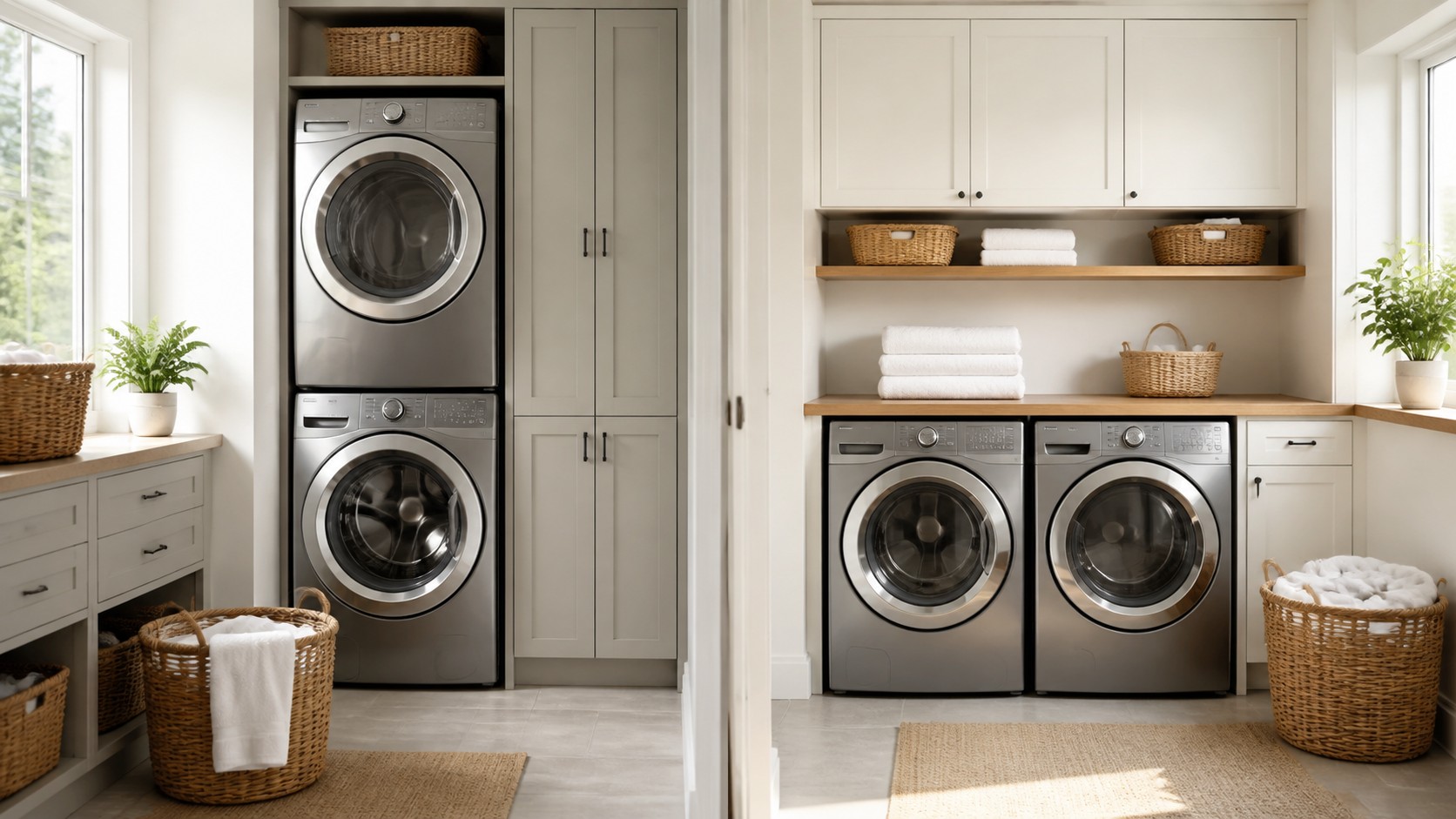
Stackable and side-by-side laundry layouts can use similar washer and dryer models, so the real comparison is how the machines shape the room. Stacking moves the dryer above the washer and saves width. Side-by-side spreads the appliances across the wall and keeps both doors low.
That one change affects storage, folding, reaching, service, and traffic. A stacked pair may create space for a tall cabinet or sink. A side-by-side pair may create a useful work surface above the machines. The better layout is the one that gives the room what it is missing.
It helps to ignore product photos at first and sketch the room. Show doors, baskets, hampers, counters, shelves, valves, vents, and the path people walk through. The layout that looks best in a blank rectangle may not be the one that works best with real obstacles.
Both arrangements can be excellent. Both can also be frustrating when chosen for the wrong reason.
The safest way to compare them is to give each layout a job. One version should show what happens to storage, counter space, and traffic when the machines go vertical. The other should show what the room gains when the appliances stay low and wide.
When Stackable Is the Better Choice
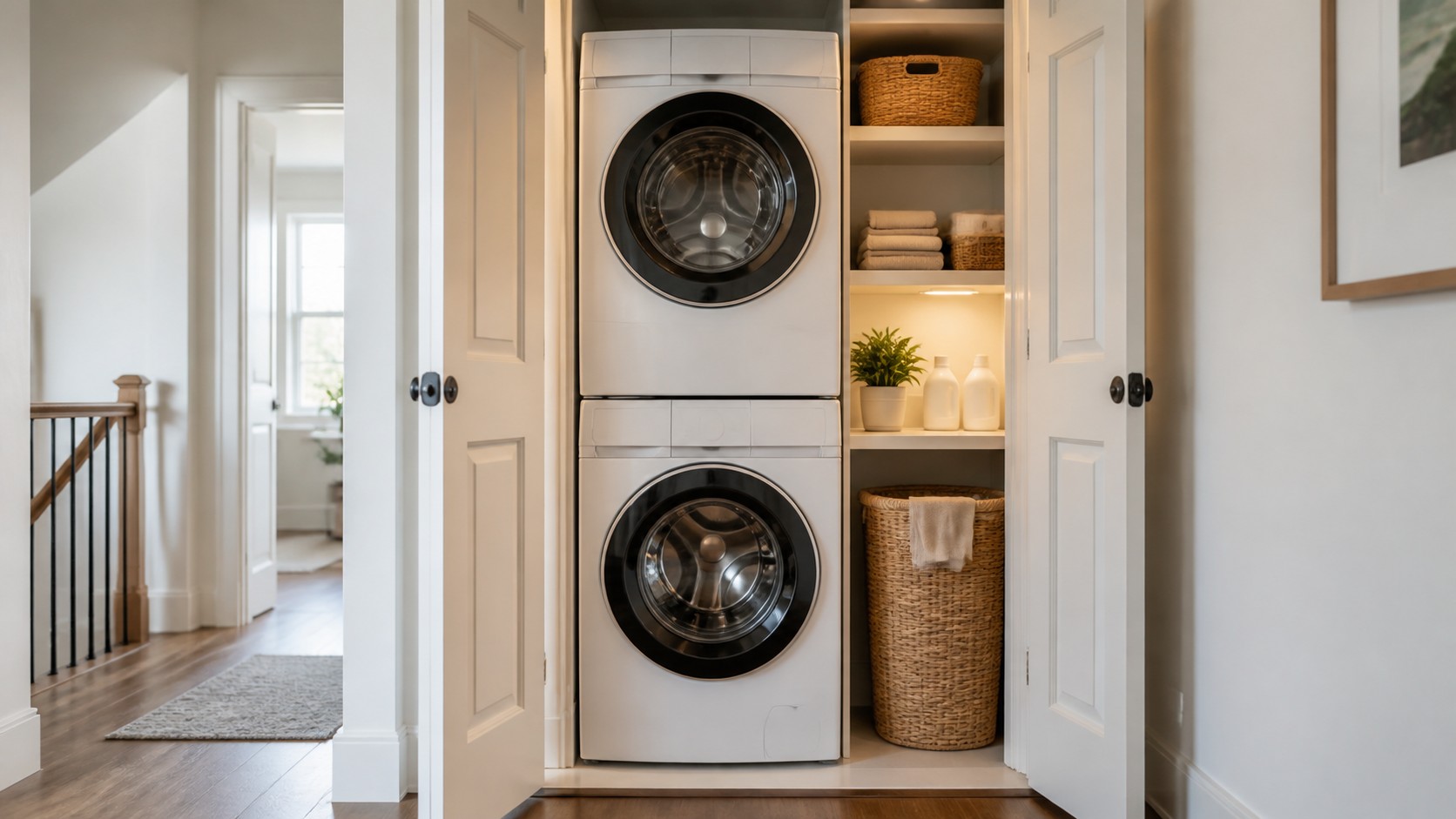
A stackable washer and dryer is often better when the room is narrow, the laundry is in a closet, or the homeowner wants to recover floor width for another function. By placing the dryer above the washer, the layout compresses the appliance footprint into one vertical bay.
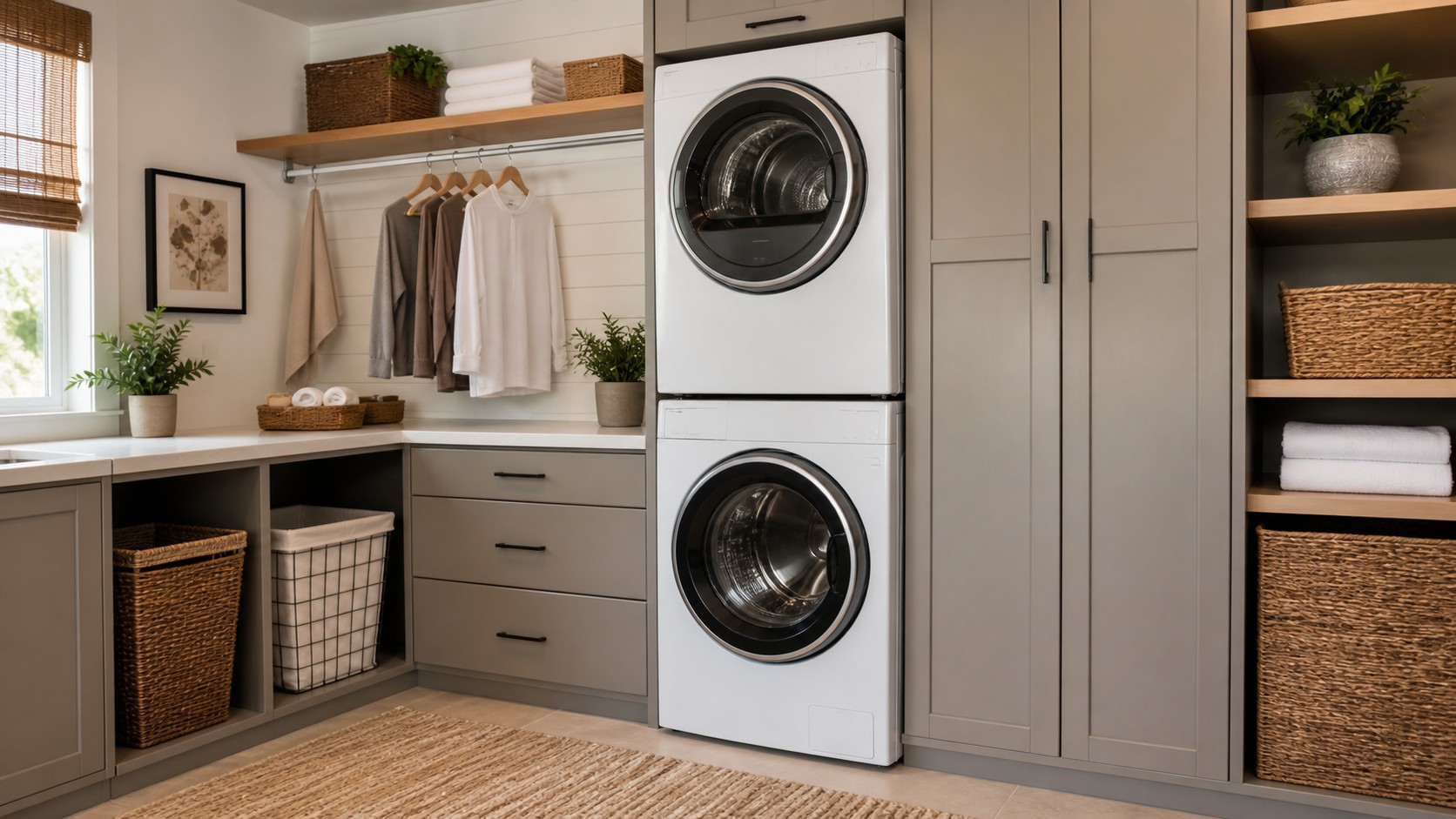
That saved width can be meaningful. It might allow a utility sink, tall broom cabinet, hamper tower, pet-washing storage zone, or simply a clearer walkway. In a mudroom, stacking can stop laundry appliances from taking over the entire entry wall. In a condo, it can make in-unit laundry possible without a dedicated room.
Stacking also works well when the machines need to hide behind doors. A single vertical opening can feel cleaner than a wide appliance wall. With good lighting and thoughtful shelf placement, a laundry closet can function like a small room instead of a cramped cabinet.
Vertical planning can also make a shared room feel less appliance-heavy. When the machines occupy one bay, the rest of the wall can behave like storage, entry organization, or a utility zone rather than a long row of metal doors that dominates every view from the doorway during ordinary household traffic, especially in mudrooms and hallway laundry closets where floor width is precious.
The weakness is reach. The dryer door, controls, and lint screen move higher. If regular users cannot use them comfortably, the layout may become annoying no matter how much floor space it saves.
Stackable is best when height is available, reach is comfortable, and the reclaimed width is put to work.
It is less convincing when the saved width has no purpose. If the room does not gain storage, a sink, a clearer path, or a better concealed opening, stacking may add reach challenges without delivering a meaningful payoff.
When Side-by-Side Is the Better Choice
Side-by-side machines are often better when the room has enough width and the household values a work surface. A counter over the washer and dryer can become the folding zone, stain-treatment area, sorting surface, and landing place for clean laundry. That surface is hard to duplicate in a stacked layout unless another counter fits nearby.
This arrangement also keeps both drums and control panels lower. For many users, that means easier loading, unloading, and lint cleaning. Pedestals can raise the machines further, though they may also raise the counter too high for comfortable folding.
Service access can be simpler with side-by-side machines. A technician can reach one appliance without removing a dryer from above a washer. Replacement can also be easier if the room has enough working space.
The weakness is wall consumption. In a small laundry room, side-by-side machines may occupy the only long wall and leave no good place for a sink, storage, or hampers. A beautiful counter is less useful if baskets block the doorway because nothing else fits.
Capacity and Performance Are Separate Questions
People sometimes assume side-by-side machines are automatically larger and stacked machines are automatically compact. That is not always true. Many full-size front load washer and dryer pairs can be stacked with the correct kit, and many side-by-side pairs can be compact.
Capacity should be compared by model, not layout. A full-size stacked pair can handle family laundry when the room has enough height and depth. A compact side-by-side pair may still require smaller loads. The dryer’s capacity should complement the washer so wet clothing has room to tumble.
Performance also depends on installation. A vented dryer with a poor duct will struggle whether it is stacked or side-by-side. A ventless dryer will require filter care and cycle patience in either arrangement. A washer on an unstable floor can vibrate in either layout, though the effect may feel more dramatic when machines are stacked.
The layout should support performance rather than distract from it. Choose the arrangement that allows proper venting or drainage, stable leveling, and load sizes that match the household.
Once those fundamentals are set, compare machines within the preferred layout. That keeps the decision grounded.
This also prevents a common mistake: blaming the layout for a machine mismatch. A compact dryer that cannot keep up with a large washer will frustrate users whether it sits high or low. A properly matched pair will feel more capable in either arrangement.
Storage Changes the Answer
Storage is often the hidden reason one layout wins. A stacked pair can open a tall vertical storage zone beside the machines. That space might hold cleaning tools, bulk paper goods, detergents, hampers, ironing supplies, or seasonal linens. For a small home, tall storage may be more valuable than a counter above appliances.
Side-by-side layouts create a different storage opportunity. A counter above the machines can anchor upper cabinets, open shelving, and under-counter hampers nearby. The room becomes a horizontal work wall, which is useful when folding happens in the laundry room.
The best choice depends on what the household lacks. If clean clothes are always carried elsewhere to fold, a side-by-side counter may solve the daily problem. If supplies, mops, and baskets are scattered because there is no vertical storage, stacking may be the better move.
A room can look larger after either choice when storage is planned honestly. It can also look worse when the layout saves space but fails to assign that space a job.
Comfort Should Have Veto Power
Comfort should be allowed to overrule a clever layout. A tall stacked dryer may look efficient, but if a user strains to reach the controls or misses socks at the back of the drum, the efficiency fades. A side-by-side pair may promise a counter, but if the user has to bend painfully for every load, it may not be the right answer either.
Households should consider everyone who uses the machines. Shorter adults, older family members, teenagers, guests, and anyone with mobility limits may experience the same layout differently. A laundry room used by one tall person can make different choices than a shared family laundry.
Door swing is part of comfort. The ideal transfer path lets the washer open, the dryer open, and the user stand naturally between or beside them. If doors collide or force wet clothes around an obstacle, the layout will feel clumsy.
The best test is physical. Stand in the room with a basket and mimic a load transfer. Reach where the dryer controls would be. Imagine cleaning the lint screen. That quick rehearsal can reveal problems no specification sheet will show.
A layout that feels good in the body will stay satisfying longer than one that only looks efficient.
Comfort can even change how often laundry gets finished. When transfer, folding, and filter cleaning are easy, loads are less likely to sit half done. A room that reduces small points of friction can make the chore feel noticeably lighter.
How to Make the Final Decision
Start by measuring the room both ways. Draw the stacked footprint and the side-by-side footprint with doors open, connections behind the machines, and storage around them. Include the space a person needs to stand and turn with a basket.
Then list what the laundry room needs most: counter, sink, storage, walkway, hidden appearance, capacity, service simplicity, or easier reach. Rank those needs before comparing appliance models. The better layout should solve the top two or three needs clearly.
Do not ignore future maintenance. Side-by-side machines are often easier to access. Stacked machines can still be serviceable, but only if the room allows removal and the installation is not boxed in too tightly.
Finally, match the appliance technology to the chosen layout. A stacked ventless dryer may solve one room, while a side-by-side vented pair may be perfect in another. The layout and dryer type should support each other.
The right choice is the arrangement that makes laundry easier after the novelty is gone. Stackable wins when vertical efficiency improves the room. Side-by-side wins when horizontal workflow, counter space, and reach matter more.
A Practical Tie-Breaker
If both layouts seem possible, use the missing-surface test. If the home desperately needs a folding counter in the laundry room, side-by-side has a strong advantage. If the home desperately needs floor width for storage, walking, or a sink, stacking has a strong advantage.
Next, use the reach test. If the upper dryer feels awkward, do not force a full-size stack. If bending to front load machines feels awkward, consider pedestals, a different layout, or another appliance type. The goal is not to win an abstract debate; it is to make repeated chores easier.
Finally, use the service test. Imagine replacing one machine in five or ten years. The chosen layout should not require tearing apart half the room. A laundry space can be compact and still remain humane to maintain.
When those tie-breakers are answered honestly, the better choice usually becomes obvious. The room tells you whether it wants to go vertical or horizontal for everyday laundry work over time in real life.