The Hidden Power of Great Laundry Room Lighting
When homeowners envision a beautiful laundry room, they often picture stylish cabinetry, high-efficiency appliances, elegant countertops, and smart storage solutions. While these design elements certainly contribute to the overall appearance and functionality of the space, one feature has the power to influence every aspect of the room more than almost anything else: lighting. The right lighting can make a small laundry room feel larger, a dark corner feel inviting, and an ordinary utility area feel like a professionally designed extension of the home. Unfortunately, lighting is frequently treated as an afterthought, leaving many laundry rooms feeling dim, uninspiring, and less functional than they could be.
Modern laundry rooms have evolved far beyond their traditional role as purely practical spaces. Today, they often serve as multipurpose hubs for organization, cleaning, storage, pet care, and even household management. As these rooms become more integrated into everyday living, homeowners are seeking ways to make them more comfortable, attractive, and enjoyable to use. Lighting plays a central role in achieving that transformation. Beyond simply illuminating the room, it affects mood, productivity, safety, and visual appeal. A well-planned lighting strategy can completely redefine how the space feels and functions.
The most successful laundry room designs recognize that lighting is both a practical necessity and a design opportunity. Through thoughtful fixture selection, strategic placement, and layered illumination, homeowners can create a space that supports daily tasks while enhancing the room’s beauty. Whether the goal is to modernize an outdated laundry room, brighten a windowless space, or add luxury to a high-end laundry suite, the right lighting ideas can make a dramatic difference.
A: A layered mix of overhead, task, and accent lighting usually works best.
A: Yes. Better lighting can make the room feel brighter, cleaner, bigger, safer, and more stylish.
A: Yes, LEDs are efficient, long-lasting, bright, and available in many color temperatures.
A: Neutral white helps with visibility, while warm white creates a softer and cozier feel.
A: It is not required, but it is very helpful over counters, sinks, and folding stations.
A: Yes, especially over islands, sinks, or counters where they will not block movement.
A: Use bright overhead lighting, light paint colors, reflective tile, and under-shelf or under-cabinet lighting.
A: Yes, especially when entering with hampers, towels, or cleaning supplies in your hands.
A: Slim LED fixtures, recessed lights, or motion-sensor strip lights work well in tight spaces.
A: Relying on one dim ceiling light and leaving counters, cabinets, corners, and work zones in shadow.
Layered Lighting Creates a Professional Design
One of the most effective lighting strategies used by interior designers is the concept of layered lighting. Rather than relying on a single overhead fixture, layered lighting combines multiple sources of illumination that work together to provide balance, flexibility, and visual depth. This approach transforms a room from merely functional to thoughtfully designed.
Ambient lighting serves as the foundation of the entire lighting plan. This is the general illumination that fills the room and allows people to move comfortably throughout the space. Recessed lights, flush-mount fixtures, semi-flush fixtures, and ceiling-mounted LED systems commonly provide ambient lighting in laundry rooms. The goal is to eliminate dark areas and establish consistent brightness throughout the room.
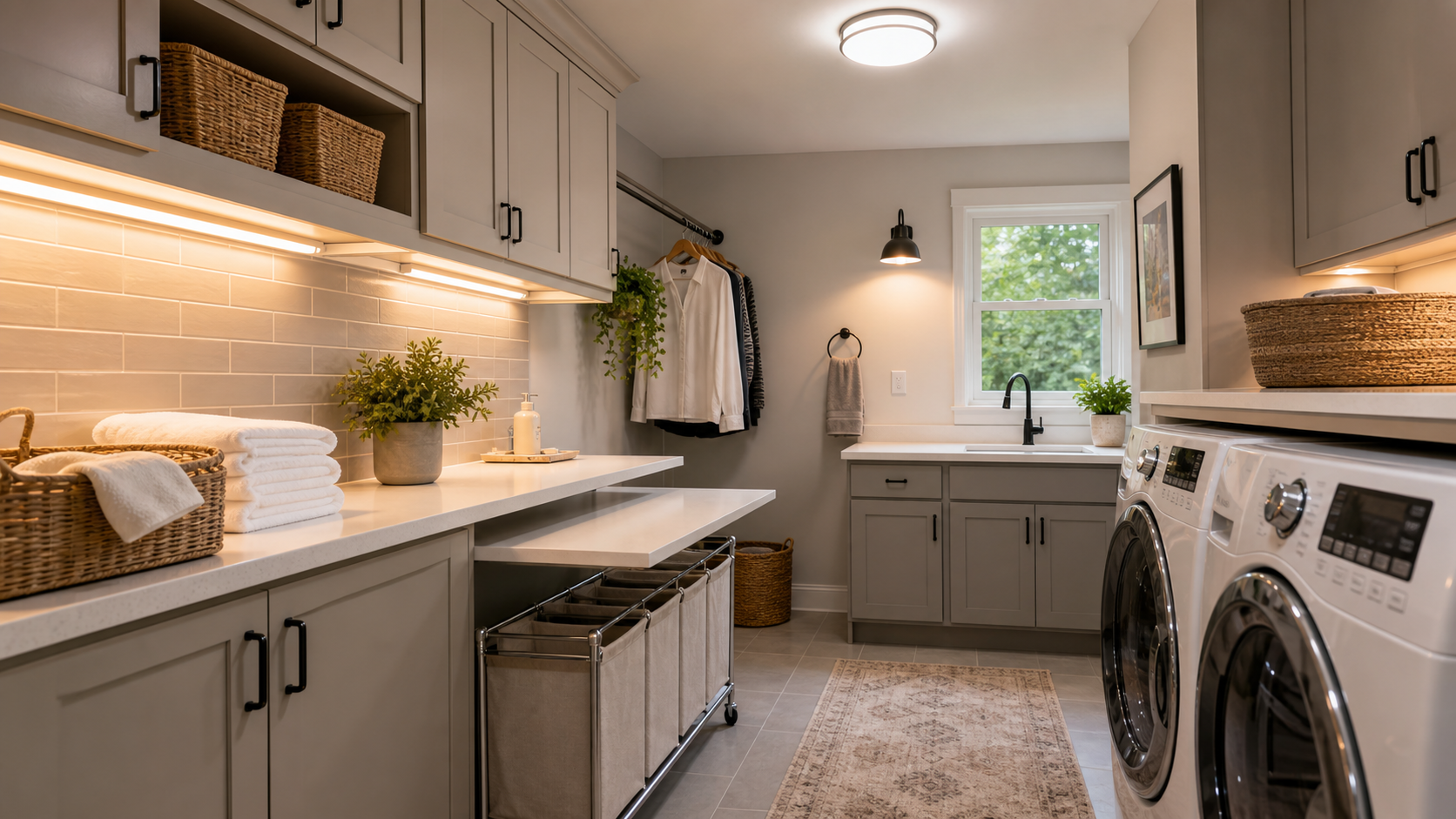
Task lighting forms the second layer and focuses on work-specific areas. Laundry rooms involve countless detailed activities, including reading garment labels, inspecting stains, sorting clothing, measuring detergent, and folding clean laundry. Focused task lighting ensures that these activities can be performed comfortably and accurately. Under-cabinet lighting, directional spotlights, and dedicated work-area fixtures help achieve this goal.
Accent lighting completes the layered approach by adding atmosphere and visual interest. Although many homeowners associate accent lighting with living rooms or kitchens, it can be equally transformative in a laundry room. Lighting installed inside glass-front cabinets, beneath floating shelves, or along toe kicks creates depth, highlights design features, and introduces a sense of sophistication that elevates the entire space.
Brighten the Room with Natural Light
Few lighting sources can compete with the beauty and effectiveness of natural daylight. Whenever possible, homeowners should take advantage of sunlight as part of their overall laundry room lighting strategy. Natural light enhances visibility, improves color accuracy, and creates a cheerful environment that makes everyday chores feel less burdensome.
Large windows can dramatically improve the appearance of a laundry room. Sunlight makes the space feel larger, cleaner, and more welcoming. It also provides excellent visibility for identifying stains, sorting clothing by color, and performing detailed cleaning tasks. Even small windows can make a significant difference when positioned thoughtfully within the room.
For laundry rooms that lack exterior walls, skylights and solar tubes offer excellent alternatives. These solutions bring daylight into otherwise enclosed spaces without sacrificing valuable wall space. Frosted glass can provide privacy while still allowing sunlight to enter. Combined with reflective surfaces such as glossy backsplashes, polished countertops, and light-colored cabinetry, natural light can be distributed effectively throughout the room.
Designers often recommend maximizing daylight whenever possible and using artificial lighting to supplement it rather than replace it. This balanced approach creates a more comfortable environment and reduces energy consumption during daytime hours.
Recessed Lighting for a Clean and Modern Look
Recessed lighting remains one of the most popular choices for modern laundry room design, and for good reason. These fixtures provide excellent illumination while maintaining a sleek, unobtrusive appearance. Because recessed lights are installed directly into the ceiling, they create a clean architectural look that complements virtually any design style.
One of the greatest advantages of recessed lighting is its ability to distribute light evenly throughout the room. Properly spaced fixtures minimize shadows and eliminate dark corners, making the space feel brighter and more open. This is particularly beneficial in laundry rooms where visibility is essential for daily tasks.
LED recessed lights are especially attractive because of their energy efficiency and longevity. Modern LED systems consume far less electricity than traditional bulbs while providing excellent brightness and color quality. Many models also offer dimming capabilities, allowing homeowners to adjust light levels according to the time of day or specific activities.
In larger laundry rooms, recessed lighting can be combined with decorative fixtures and accent lighting to create a highly customized lighting scheme. The result is a professional-quality design that balances practicality with visual sophistication.
Add Personality with Decorative Pendant Lighting
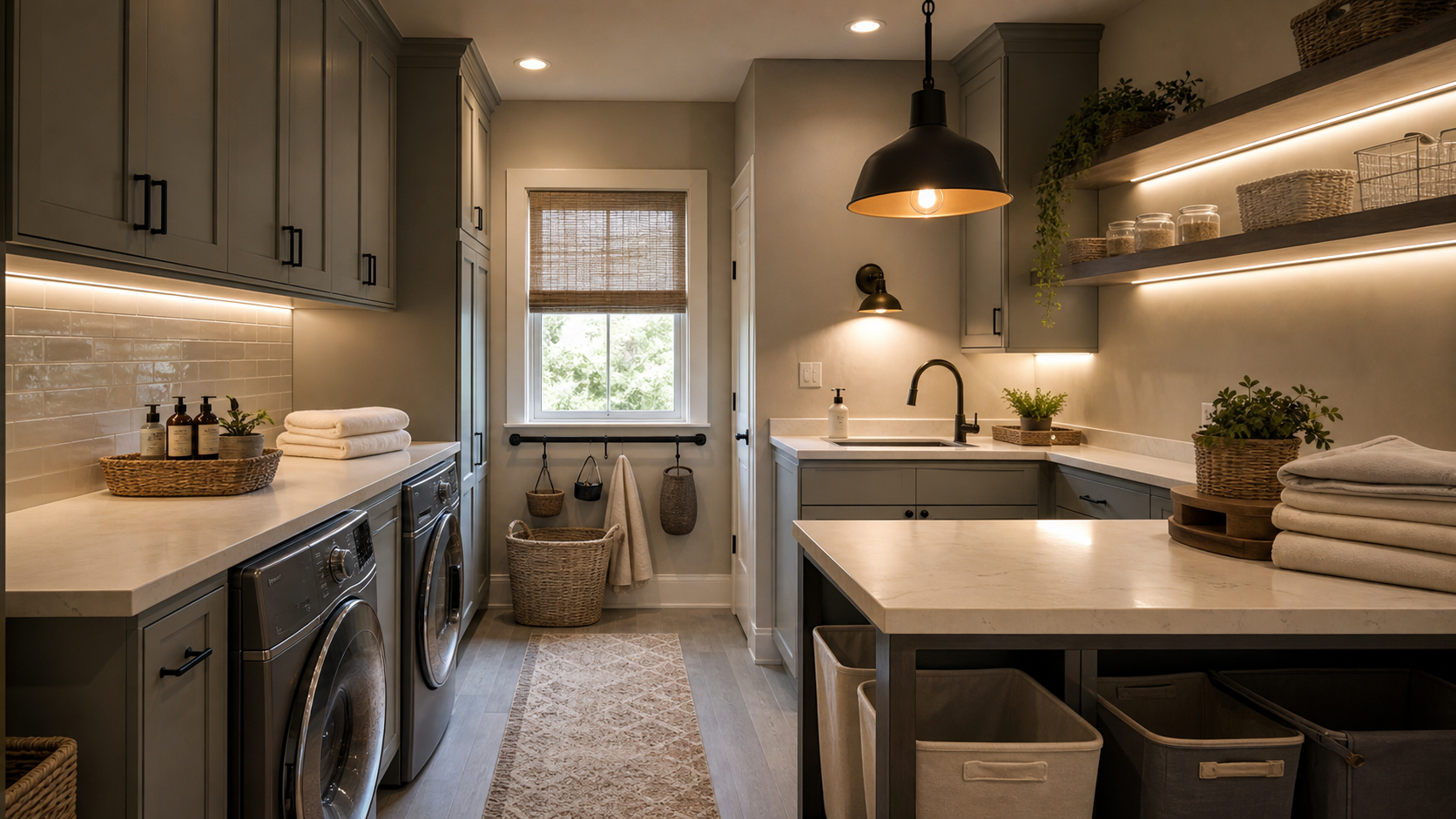
Laundry rooms no longer need to be purely utilitarian spaces. Decorative pendant lighting provides an opportunity to introduce personality, style, and architectural interest while maintaining excellent functionality. In recent years, pendants have become increasingly popular in laundry room design, particularly in spaces that include islands, folding stations, or extended countertops.
Pendant lights naturally draw the eye and create focal points within the room. Whether featuring industrial metal finishes, elegant glass shades, rustic farmhouse details, or contemporary geometric designs, they help establish the overall aesthetic direction of the space. A carefully selected pendant can serve as both a light source and a decorative statement.
Beyond their visual appeal, pendants provide targeted illumination exactly where it is needed. Positioned above folding counters or work surfaces, they create focused lighting that improves visibility while adding warmth and character. Their versatility allows homeowners to customize both the appearance and functionality of the room.
The growing popularity of open-concept laundry spaces has further increased demand for decorative lighting. As laundry rooms become more visible within the home, attractive fixtures help integrate them seamlessly into the surrounding design while elevating their overall appeal.
Under-Cabinet Lighting Improves Everyday Functionality
Among all laundry room lighting upgrades, under-cabinet lighting delivers some of the greatest functional benefits. While often associated with kitchens, this lighting solution is equally valuable in laundry spaces where countertops and work surfaces play an important role.
Upper cabinets frequently cast shadows across counters, making it difficult to see clearly while folding clothes or treating stains. Under-cabinet lighting eliminates these shadows by directing light exactly where it is needed. This simple improvement can dramatically enhance visibility and reduce eye strain during routine tasks.
LED strip lights have become the preferred option for under-cabinet installations. They are energy efficient, easy to conceal, and available in a variety of brightness levels and color temperatures. Many systems include dimming controls, allowing homeowners to customize illumination based on specific needs.
In addition to improving functionality, under-cabinet lighting contributes to the room’s visual appeal. The soft glow creates depth, highlights backsplash materials, and reinforces the layered lighting approach used in professional interior design. This combination of practicality and aesthetics makes it one of the most valuable upgrades available.
Illuminate Storage Areas for Better Organization
Storage plays a critical role in laundry room functionality, yet many storage spaces remain poorly lit. Deep cabinets, tall shelves, utility closets, and pantry-style storage areas often become difficult to navigate, particularly in rooms with limited natural light. Integrated storage lighting offers an effective solution.
Interior cabinet lighting helps homeowners quickly locate detergents, cleaning supplies, stain removers, and household essentials. This feature is particularly useful in larger laundry rooms where extensive storage systems may contain dozens of different products. Illuminated shelves improve visibility while creating a more organized and efficient workspace.
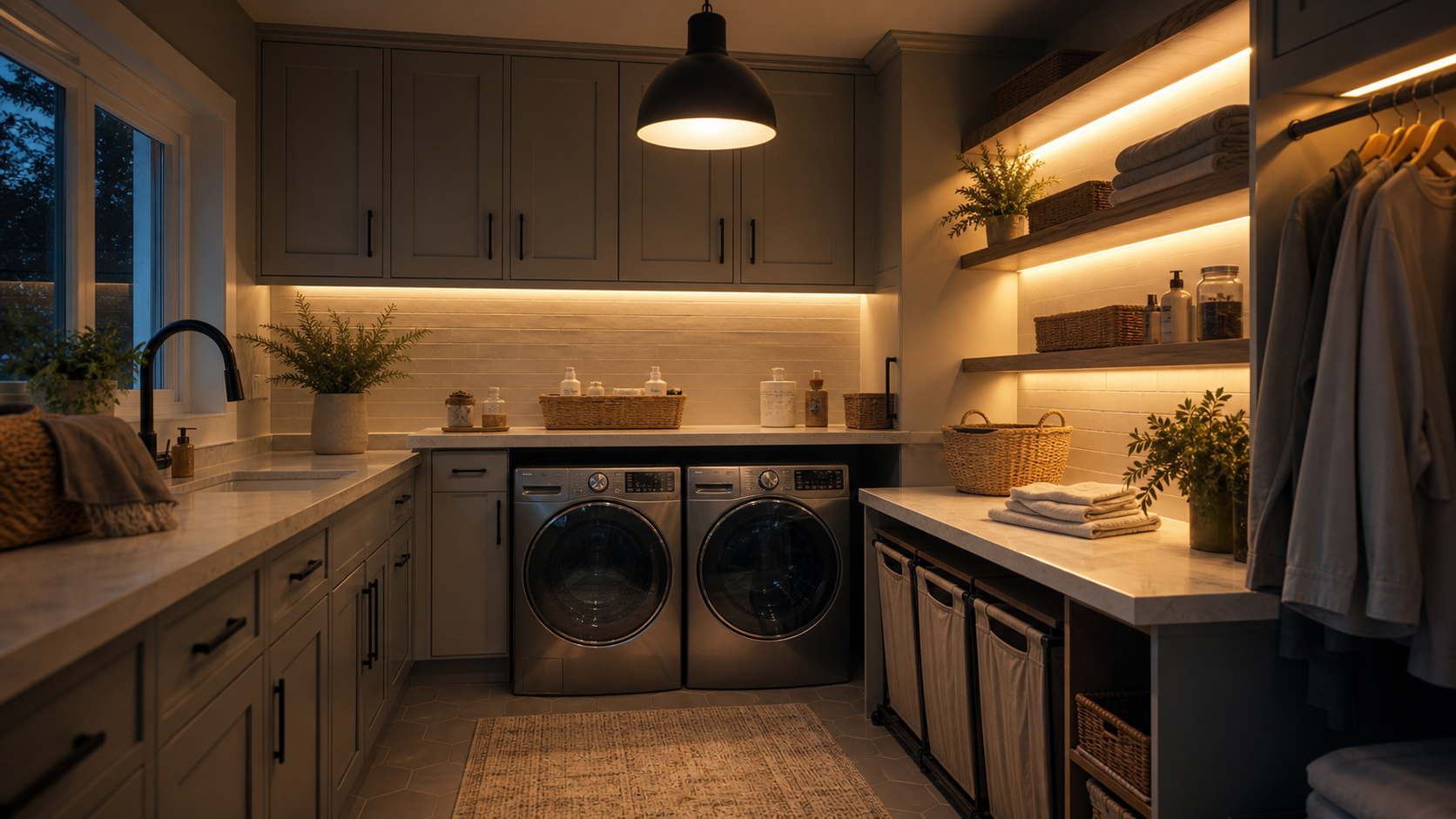
Open shelving can also benefit from integrated lighting. Small LED fixtures installed beneath shelves create attractive displays while providing practical illumination. Decorative baskets, folded linens, and storage containers become easier to access while contributing to the room’s overall design.
As homeowners increasingly seek custom-built laundry rooms, illuminated storage has become a hallmark of premium design. What was once considered a luxury feature is now an accessible upgrade that significantly improves both appearance and usability.
Choosing the Best Color Temperature for Laundry Rooms
Color temperature is one of the most important yet misunderstood aspects of lighting design. Measured in Kelvin, color temperature determines whether light appears warm, neutral, or cool. Selecting the appropriate temperature can dramatically affect the room’s functionality and atmosphere.
Warm white lighting, generally ranging from 2700K to 3000K, creates a cozy and inviting environment. While ideal for living spaces and bedrooms, it may not provide the clarity needed for detailed laundry tasks. Colors can appear slightly muted, making stain detection more difficult.
Neutral white lighting between 3500K and 4000K is often considered the ideal choice for laundry rooms. This range provides excellent visibility while maintaining a comfortable atmosphere. Clothing colors appear more accurate, and the room feels bright without becoming overly sterile.
Daylight lighting, typically 5000K and above, closely resembles natural sunlight and provides exceptional clarity. It is particularly useful in task-oriented areas where precision matters. Many homeowners choose to combine neutral ambient lighting with brighter task lighting to achieve the best balance between comfort and functionality.
Smart Lighting Brings Convenience and Efficiency
Technology has revolutionized residential lighting, and laundry rooms are increasingly benefiting from these innovations. Smart lighting systems offer convenience, flexibility, and energy savings that traditional fixtures simply cannot match.
Motion-sensor lighting is one of the most practical upgrades available. Lights automatically turn on when someone enters the room and switch off when the space is unoccupied. This feature is especially useful when carrying heavy laundry baskets or managing multiple household tasks at once.
Smart bulbs and connected fixtures allow homeowners to adjust brightness, color temperature, and operating schedules through smartphone apps or voice assistants. Different lighting scenes can be programmed for specific activities, such as sorting laundry, folding clothes, or cleaning the room.
These technologies also improve energy efficiency. Automated schedules, occupancy detection, and remote controls help minimize unnecessary electricity usage while ensuring that optimal lighting is always available when needed. As smart home systems continue to evolve, integrated laundry room lighting will likely become a standard feature in modern homes.
Creating a Luxury Laundry Room Through Lighting Design
Luxury is often associated with kitchens, bathrooms, and primary suites, but modern homeowners are increasingly applying high-end design principles to laundry rooms as well. Lighting plays a central role in creating this elevated experience.
Sophisticated lighting plans incorporate multiple layers of illumination, combining recessed lighting, decorative fixtures, under-cabinet lighting, and accent lighting to create depth and visual interest. Each layer serves a specific purpose while contributing to the overall atmosphere of the room.
Architectural lighting details such as illuminated shelves, toe-kick lighting, and cabinet interiors add a sense of refinement that distinguishes luxury spaces from ordinary utility rooms. These subtle touches create visual drama while enhancing functionality.
Reflective materials further amplify the effects of lighting. Quartz countertops, glass backsplashes, metallic hardware, and glossy finishes interact beautifully with both natural and artificial light. Together, these elements create a polished, designer-inspired environment that transforms the laundry room into one of the most attractive spaces in the home.
Conclusion: Lighting Is the Design Element That Changes Everything
Few design upgrades have the power to transform a laundry room as completely as lighting. While appliances, cabinetry, and storage solutions provide essential functionality, lighting shapes the entire experience of using the space. It influences visibility, efficiency, mood, organization, and aesthetics in ways that many homeowners underestimate.
By combining natural light, ambient illumination, task lighting, and decorative accents, homeowners can create a laundry room that feels bright, spacious, and welcoming. Recessed fixtures provide a clean foundation, pendant lights add personality, under-cabinet lighting improves functionality, and smart technology introduces modern convenience. Together, these elements form a cohesive design strategy that elevates both appearance and performance.
As laundry rooms continue evolving into highly designed, multifunctional spaces, thoughtful lighting will remain one of the most effective tools for enhancing their value. Whether upgrading a compact laundry closet or designing a luxurious laundry suite, investing in quality lighting can transform the room completely. The result is a brighter, more beautiful, and more enjoyable space that makes everyday household tasks feel significantly more rewarding.