Why Laundry Room Lighting Deserves More Attention
Among all the rooms in a home, the laundry room is often one of the most overlooked when it comes to lighting design. Homeowners frequently invest significant time and money selecting appliances, cabinetry, flooring, paint colors, and storage systems, yet lighting decisions are often made at the last minute. This oversight can dramatically affect how the room functions and feels on a daily basis. A poorly lit laundry room can make simple tasks frustrating, create unnecessary shadows, reduce visibility, and make even a beautifully designed space feel dull and cramped. In contrast, a thoughtfully illuminated laundry room can improve efficiency, enhance comfort, and elevate the overall appearance of the space.
The role of the modern laundry room has evolved considerably over the past decade. What was once a hidden utility space tucked away in a basement or hallway has become an important part of the home’s design. Many laundry rooms now serve as mudrooms, pet-care stations, household organization centers, craft areas, and secondary entry points. Because these spaces are used frequently and often serve multiple purposes, lighting has become a critical component of successful design. The right lighting not only improves functionality but also creates an environment that feels welcoming and enjoyable to use.
Great lighting design combines science, aesthetics, and practicality. It influences how colors appear, how large a room feels, and how effectively everyday tasks can be completed. Whether designing a compact laundry closet or a spacious custom laundry suite, understanding lighting fundamentals can help homeowners create a space that works beautifully while looking exceptional.
A: A layered mix of overhead ambient lighting, focused task lighting, and optional accent lighting works best.
A: It should be bright enough for sorting colors, reading labels, treating stains, folding clothes, and cleaning safely.
A: Yes, LEDs are efficient, long-lasting, bright, and available in many shapes and color temperatures.
A: Neutral white helps with visibility, while warm white creates a softer, cozier look.
A: It is not required, but it is very useful over folding counters, sinks, and stain-treatment areas.
A: Yes, especially above islands, utility sinks, or long counters where they will not block movement.
A: Slim LED fixtures, recessed lights, or motion-sensor strip lights are good choices for tight laundry closets.
A: Use bright overhead lights, light paint, reflective tile, under-cabinet lighting, and multiple fixtures.
A: Yes, especially when the laundry area connects to a hallway, bathroom, mudroom, or open living space.
A: Relying on one dim ceiling light and leaving counters, cabinets, corners, and work zones in shadow.
The Foundation of Good Laundry Room Lighting
Every successful lighting plan begins with a solid understanding of the different layers of illumination. Professional designers rarely rely on a single light source because one fixture alone cannot effectively address every need within a room. Instead, they use a layered lighting strategy that combines ambient, task, and accent lighting to create a balanced and flexible environment.
Ambient lighting serves as the room’s primary source of illumination. It provides general brightness that allows people to move comfortably throughout the space while establishing the overall mood of the room. Ceiling-mounted fixtures, recessed lights, and flush-mount LEDs typically fulfill this role. The goal is to eliminate dark areas and ensure consistent visibility throughout the room.
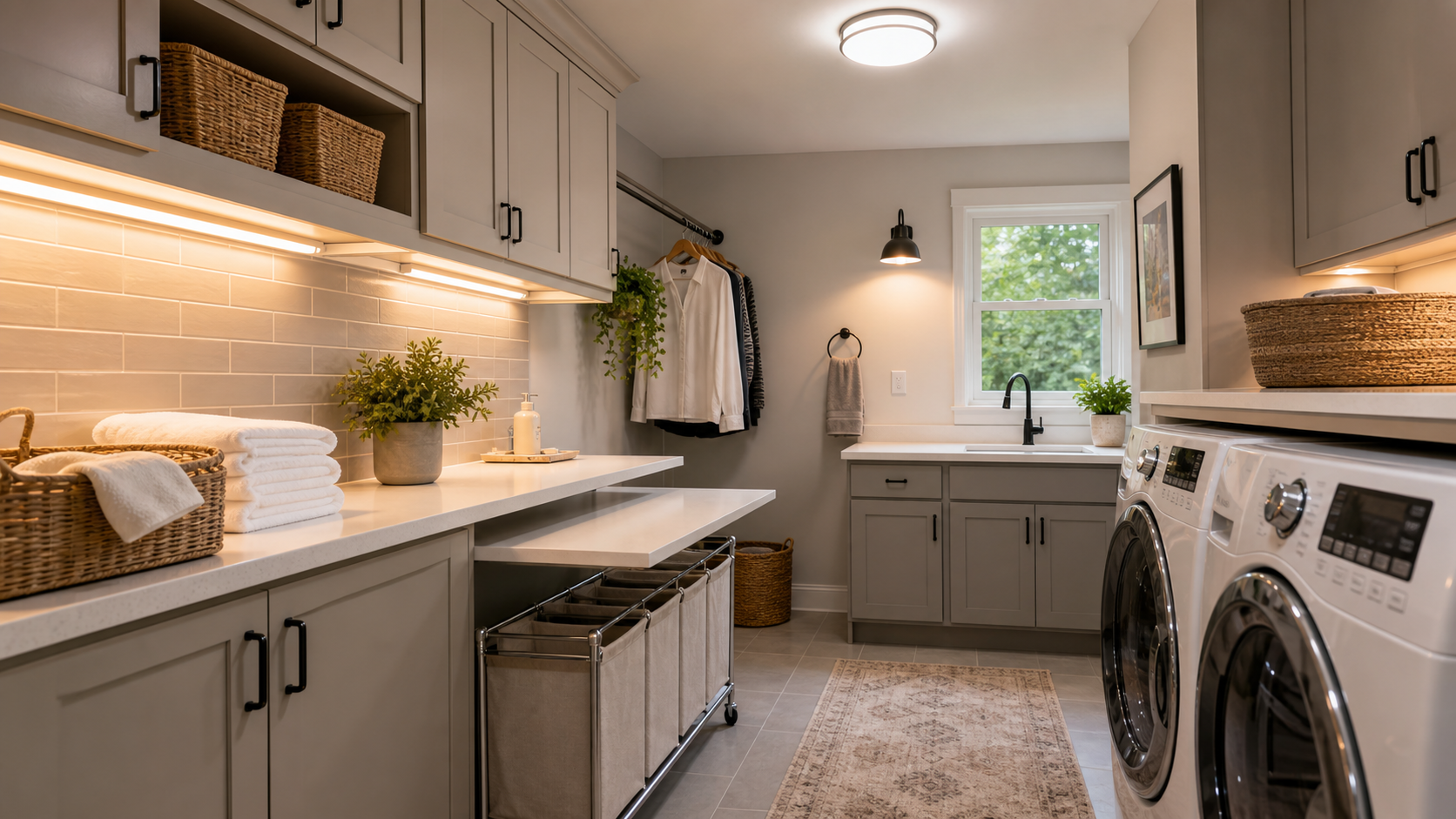
Task lighting focuses on specific work zones where additional brightness is required. Laundry rooms involve numerous detailed activities, including sorting clothes, reading care labels, treating stains, measuring detergents, and folding garments. These tasks demand clear visibility and accurate color rendering. Under-cabinet lighting, focused LED fixtures, and directional lighting help illuminate these critical areas while reducing eye strain.
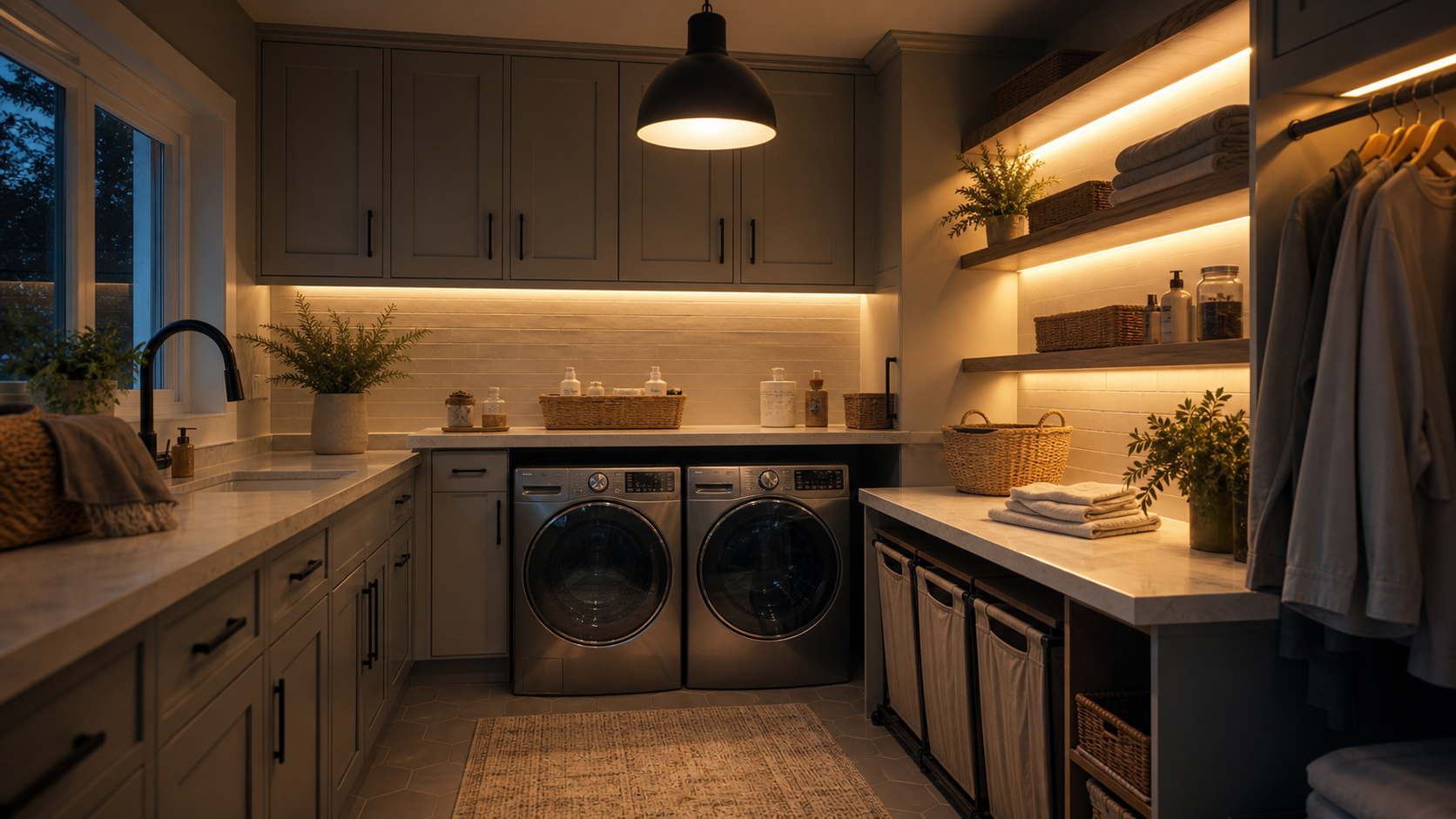
Accent lighting adds dimension, character, and visual interest. While not strictly necessary for functionality, accent lighting helps transform a purely practical space into a thoughtfully designed room. Lighting inside cabinets, beneath shelves, or along toe kicks introduces depth and sophistication. Together, these layers create a lighting scheme that feels complete, professional, and highly functional.
Maximizing Natural Light in the Laundry Room
Natural light remains one of the most valuable assets in any interior space. Beyond its obvious practical benefits, sunlight creates a bright and uplifting atmosphere that artificial lighting often struggles to replicate fully. Whenever possible, homeowners should incorporate natural daylight into their laundry room design.
Windows are perhaps the most effective way to bring natural light into a laundry room. Large windows can make a compact room feel dramatically larger while providing excellent visibility for daily tasks. Natural light helps reveal fabric colors accurately, making it easier to separate garments and identify stains. It also creates a sense of cleanliness and freshness that aligns perfectly with the room’s purpose.
For laundry rooms located in interior portions of the home, alternative daylight solutions can be equally effective. Skylights introduce overhead sunlight that reaches deep into the room, while solar tubes channel natural light from the roof into enclosed spaces. Frosted or textured glass can provide privacy without sacrificing brightness. These solutions allow homeowners to enjoy the benefits of daylight even in locations where traditional windows may not be feasible.
Reflective surfaces can further enhance natural illumination. White cabinetry, glossy tile backsplashes, polished countertops, and strategically placed mirrors help distribute sunlight throughout the room. By maximizing available daylight, homeowners can reduce reliance on artificial lighting while creating a more inviting environment.
Selecting the Ideal Ceiling Lighting
Ceiling lighting serves as the backbone of the laundry room’s lighting system. Because it provides the primary source of illumination, choosing the right fixture is essential for both functionality and style. Fortunately, modern homeowners have access to a wide variety of options that can suit virtually any design preference.
Flush-mount fixtures remain a popular choice for smaller laundry rooms. Their compact design keeps ceilings visually uncluttered while delivering ample brightness. Semi-flush fixtures offer a similar advantage while introducing a more decorative element. These fixtures are available in countless styles, making it easy to coordinate them with the room’s overall design aesthetic.
Recessed lighting has become a favorite among designers because of its versatility and clean appearance. Installed directly into the ceiling, recessed fixtures create a streamlined look while providing even illumination throughout the room. Proper spacing helps eliminate shadows and ensures consistent brightness across work surfaces, appliances, and storage areas.
In larger laundry rooms, decorative ceiling fixtures can make a powerful design statement. Oversized pendants, contemporary chandeliers, and architectural lighting installations add personality while serving as focal points. These fixtures help elevate the room from a purely functional area to a carefully curated part of the home.
Why Task Lighting Is Essential
Task lighting is arguably the most important component of a laundry room lighting plan because it directly affects the room’s usability. While ambient lighting creates overall brightness, task lighting provides focused illumination exactly where detailed work occurs.
Laundry countertops are among the most important areas to illuminate properly. Folding clothes, sorting laundry, and treating stains require clear visibility and accurate color perception. Under-cabinet lighting is particularly effective because it eliminates shadows created by upper cabinets and directs light precisely onto work surfaces.
Utility sinks also benefit from dedicated task lighting. Whether hand-washing delicate garments, scrubbing shoes, or cleaning household items, adequate illumination improves both safety and efficiency. Wall-mounted sconces or focused ceiling fixtures positioned above the sink ensure that tasks can be performed comfortably.
Storage areas should not be overlooked. Deep cabinets and shelving systems can become difficult to navigate when poorly lit. Integrated cabinet lighting helps homeowners locate supplies quickly while maintaining better organization. These seemingly small improvements can significantly enhance the daily experience of using the laundry room.
Understanding Color Temperature and Light Quality
Color temperature plays a crucial role in how a laundry room looks and functions. Measured in Kelvin, color temperature determines whether light appears warm, neutral, or cool. Selecting the appropriate temperature can dramatically influence both the atmosphere and practicality of the space.
Warm white lighting, generally ranging from 2700K to 3000K, creates a cozy and inviting ambiance. While this type of lighting works beautifully in living rooms and bedrooms, it may not provide the clarity needed for detailed laundry tasks. Colors can appear slightly altered, making it more difficult to distinguish subtle shades and stains.
Neutral white lighting between 3500K and 4000K is often considered the optimal choice for laundry rooms. It provides a clean and balanced appearance while maintaining excellent color accuracy. This range offers enough brightness for practical tasks without creating a sterile or overly clinical environment.
Daylight lighting, typically above 5000K, closely resembles natural sunlight and provides exceptional visibility. While highly effective for task-oriented spaces, excessive use can make a room feel harsh. Many designers recommend combining neutral ambient lighting with brighter task lighting to achieve the ideal balance between comfort and functionality.
Decorative Lighting That Enhances Style
As laundry rooms become increasingly integrated into the home’s overall design, decorative lighting has emerged as an important design element. Rather than treating lighting solely as a functional necessity, homeowners are using fixtures to introduce character, texture, and visual interest.
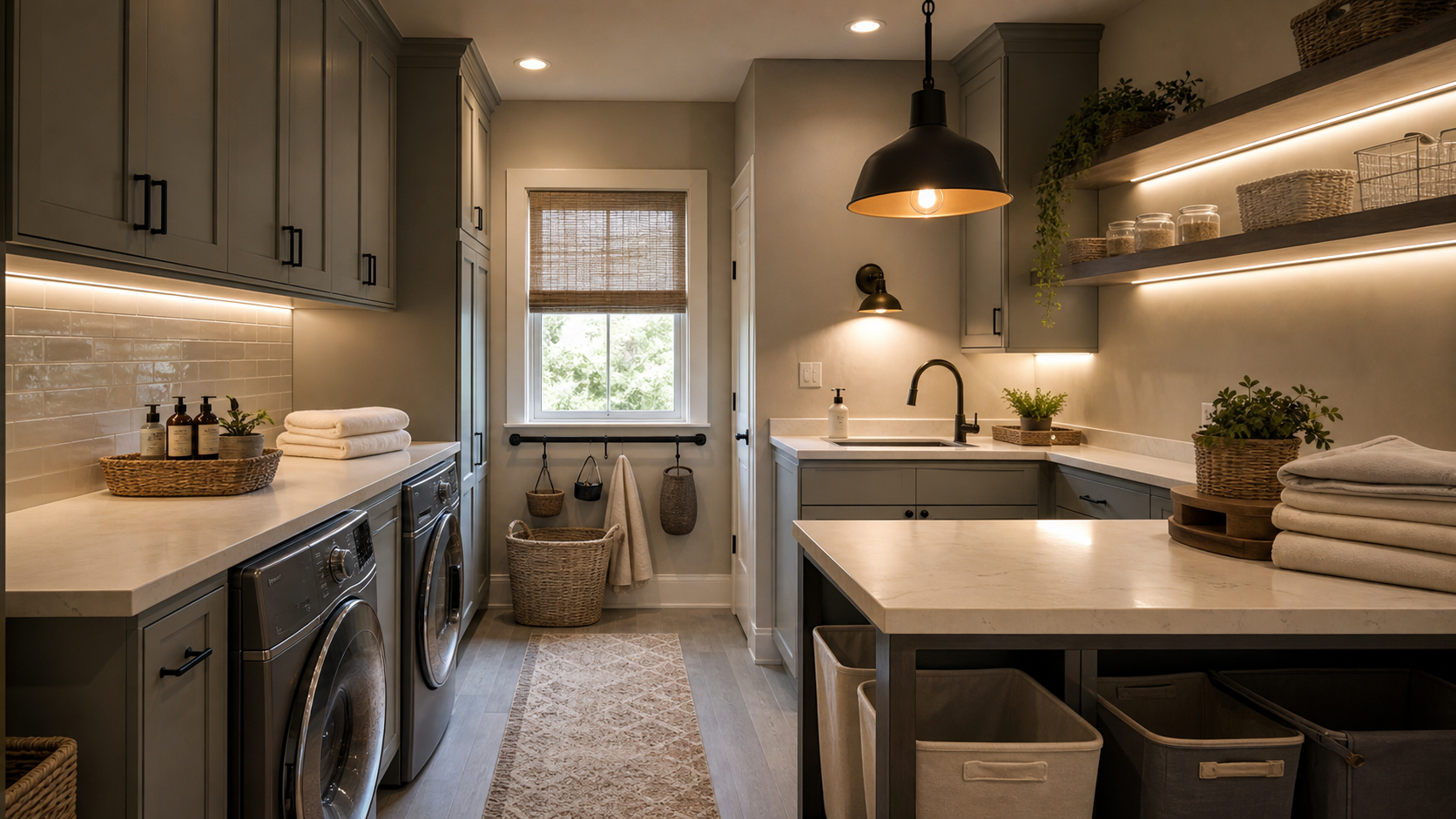
Pendant lighting has become particularly popular in laundry rooms featuring islands or extended countertops. These fixtures provide focused illumination while acting as decorative focal points. Available in styles ranging from industrial and farmhouse to contemporary and minimalist, pendants help define the room’s personality.
Wall sconces offer another attractive option. Positioned near cabinetry, sinks, or decorative features, sconces provide both task and accent lighting while contributing architectural interest. Their versatility makes them suitable for a wide variety of design styles.
Even simple flush-mount fixtures can become design statements when chosen thoughtfully. Modern manufacturers offer an extensive range of materials, finishes, and silhouettes that allow homeowners to customize the room’s appearance while maintaining excellent functionality.
Smart Lighting Solutions for Modern Homes
Technology has transformed nearly every aspect of residential design, and lighting is no exception. Smart lighting systems offer homeowners unprecedented control, convenience, and efficiency within the laundry room.
Motion-activated lighting is one of the most practical innovations available. Lights automatically turn on when someone enters the room and switch off when the space becomes vacant. This feature is especially useful when carrying laundry baskets or moving quickly between household tasks.
Smart bulbs and connected lighting systems allow homeowners to control brightness, color temperature, and schedules through smartphone apps or voice commands. Different lighting scenes can be created for various activities, from bright illumination for stain removal to softer settings for general room maintenance.
Energy efficiency is another major advantage. Smart systems reduce unnecessary electricity consumption by ensuring lights operate only when needed. Over time, these savings can contribute to lower utility bills while enhancing overall convenience and comfort.
Luxury Lighting Ideas for High-End Laundry Rooms
Luxury laundry room design has become increasingly popular as homeowners seek to elevate every area of their homes. Lighting plays a central role in creating the sophisticated atmosphere associated with premium spaces.
Layered lighting remains the foundation of luxury design. Recessed fixtures provide general illumination, while decorative pendants introduce elegance and personality. Accent lighting highlights architectural features and creates visual depth throughout the room.
Cabinet lighting is a hallmark of upscale laundry rooms. Illuminated interiors make storage areas more accessible while adding a custom-built appearance. Similarly, shelf lighting and display lighting transform practical storage into attractive design features.
Toe-kick lighting offers another luxury touch. Installed along the base of cabinetry, these subtle fixtures create a floating effect that enhances the room’s overall sophistication. Combined with reflective surfaces such as quartz countertops and polished hardware, these lighting details create an environment that feels refined and professionally designed.
Common Laundry Room Lighting Mistakes to Avoid
Even beautifully designed laundry rooms can fall short when lighting mistakes undermine their functionality. One of the most common errors is relying on a single ceiling fixture to illuminate the entire room. This approach often creates shadows and uneven lighting that make everyday tasks more difficult.
Another frequent mistake is choosing fixtures based solely on appearance while neglecting performance. A decorative fixture may look attractive, but if it fails to provide sufficient brightness, the room will ultimately be less functional. Balancing aesthetics and practicality is essential.
Improper color temperature selection can also create problems. Lighting that is too warm may make stain detection difficult, while excessively cool lighting can create an uncomfortable atmosphere. Selecting the appropriate Kelvin range ensures both visibility and comfort.
Finally, many homeowners underestimate the value of task lighting. Without focused illumination in key work areas, even a bright room may feel inefficient. Incorporating multiple lighting layers helps eliminate these issues while improving both appearance and usability.
Conclusion: Transforming the Laundry Room Through Thoughtful Lighting Design
Lighting is far more than a finishing touch in laundry room design. It is a powerful tool that influences every aspect of how the space looks, feels, and functions. From enhancing visibility and improving safety to creating mood and highlighting architectural details, lighting has the ability to transform an ordinary utility room into one of the most attractive and efficient spaces in the home.
The most successful laundry room lighting designs combine natural light, ambient illumination, task lighting, and decorative accents to create a layered and balanced environment. Careful attention to fixture selection, placement, color temperature, and technology ensures that the room supports daily activities while maintaining visual appeal.
As homeowners continue to invest in highly functional and beautifully designed laundry spaces, lighting will remain one of the most important elements of the overall design process. Whether updating an existing room or planning a complete renovation, a thoughtful lighting strategy can dramatically enhance both performance and aesthetics. The result is a brighter, more comfortable, and more enjoyable laundry room that truly transforms the everyday experience of household care.