The Rise of Minimalist Laundry Room Design
Minimalism has evolved from a design trend into a lifestyle philosophy that influences how people organize, decorate, and interact with their homes. Rooted in the idea that less can often accomplish more, minimalist design focuses on simplicity, functionality, and intentional living. While the concept is frequently associated with living rooms, kitchens, and bedrooms, it has become increasingly popular in laundry room design as homeowners seek practical ways to create cleaner, more efficient, and visually appealing spaces. A minimalist laundry room is not about removing everything from the room. Instead, it is about eliminating unnecessary clutter, prioritizing functionality, and creating an environment where every element serves a meaningful purpose.
The laundry room is one of the hardest-working spaces in any home. It is where clothing is washed, folded, sorted, organized, and stored. In many households, it also serves as a mudroom, storage area, pet-care station, or household management center. Because of these multiple responsibilities, laundry rooms can easily become overcrowded with supplies, baskets, cleaning products, and miscellaneous items. Minimalist design offers a solution by focusing on organization, efficiency, and visual simplicity. The result is a room that feels larger, calmer, and significantly more enjoyable to use.
One of the most appealing aspects of minimalist laundry room design is its timelessness. Unlike highly decorative trends that can feel dated after a few years, minimalist interiors emphasize clean lines, quality materials, and enduring functionality. These principles create spaces that remain attractive and relevant for years while adapting easily to changing lifestyles and preferences. As more homeowners prioritize simplicity and intentional design, minimalist laundry rooms continue to gain popularity as practical yet stylish solutions for modern living.
A: Clean lines, simple colors, hidden storage, clear counters, and purposeful design choices.
A: Use vertical storage, stacked appliances, pull-out hampers, wall-mounted racks, and built-in cabinets.
A: White, cream, soft gray, greige, beige, light wood, charcoal, and muted earth tones work well.
A: Yes, but only when items are limited, organized, matching, and visually calm.
A: Use stacked machines to save floor space and side-by-side machines when you want a folding counter.
A: Use closed cabinets, pull-out hampers, matching containers, hidden hooks, and drawer organizers.
A: Yes, add wood tones, soft lighting, woven baskets, warm neutrals, and simple texture.
A: Recessed lighting, under-cabinet lighting, slim LEDs, and simple fixtures work beautifully.
A: Removing too much storage and creating a room that looks clean but does not function well.
A: Give every item a place, keep counters clear, refill supplies neatly, and remove unused products often.
Why Minimalism Works So Well in Laundry Rooms
The laundry room presents a unique opportunity for minimalist design because its primary purpose revolves around efficiency. Every element within the space should support a task or contribute to organization. Minimalism naturally aligns with these goals by removing distractions and focusing attention on what truly matters.
One of the greatest advantages of minimalist design is its ability to make even small laundry rooms feel larger. Visual clutter often creates the illusion of confinement, making rooms appear more crowded than they actually are. By simplifying storage, reducing unnecessary décor, and maintaining clean surfaces, minimalist design creates a sense of openness that dramatically improves the room’s overall atmosphere. This effect is particularly valuable in compact laundry closets, narrow utility rooms, and multifunctional spaces where every square foot matters.
Minimalism also improves functionality by emphasizing organization and accessibility. When supplies are carefully stored, countertops remain clear, and storage systems are thoughtfully designed, everyday tasks become easier and more efficient. Homeowners spend less time searching for items and more time completing chores. This streamlined approach reduces frustration while enhancing the room’s overall usability.
Beyond practicality, minimalist laundry rooms offer psychological benefits. Cluttered spaces often contribute to feelings of stress and overwhelm, while organized environments promote calm and focus. Because laundry is a recurring household responsibility, creating a peaceful and efficient setting can make a meaningful difference in the daily routine.
Choosing a Minimalist Color Palette
Color plays a central role in minimalist design because it establishes the visual foundation of the space. Minimalist laundry rooms typically rely on restrained color palettes that emphasize brightness, cohesion, and simplicity. The goal is not to eliminate color entirely but to use it thoughtfully and intentionally.
White remains one of the most popular choices for minimalist interiors. It reflects light exceptionally well, making rooms feel larger, cleaner, and more open. White walls and cabinetry create a fresh backdrop that allows architectural features, textures, and natural materials to stand out without visual competition. In laundry rooms, white also reinforces the sense of cleanliness associated with freshly washed clothing.
Soft neutral tones provide another effective option. Shades such as warm beige, greige, light taupe, and pale gray introduce subtle warmth while maintaining the simplicity that defines minimalist design. These colors create inviting environments that feel comfortable rather than sterile. Their versatility also allows them to coordinate easily with a wide variety of finishes and materials.
For homeowners seeking slightly more contrast, muted nature-inspired tones such as sage green or soft blue can be incorporated while preserving the minimalist aesthetic. The key is restraint. Colors should support the overall sense of calm and simplicity rather than dominate the room. When chosen thoughtfully, minimalist color palettes create spaces that feel bright, spacious, and timeless.
Streamlined Cabinetry for a Clean Look
Cabinetry serves as one of the most important design elements in a minimalist laundry room. Because cabinets occupy significant visual space, their appearance has a major impact on the room’s overall aesthetic. Minimalist cabinetry emphasizes clean lines, simple forms, and seamless integration with the surrounding environment.
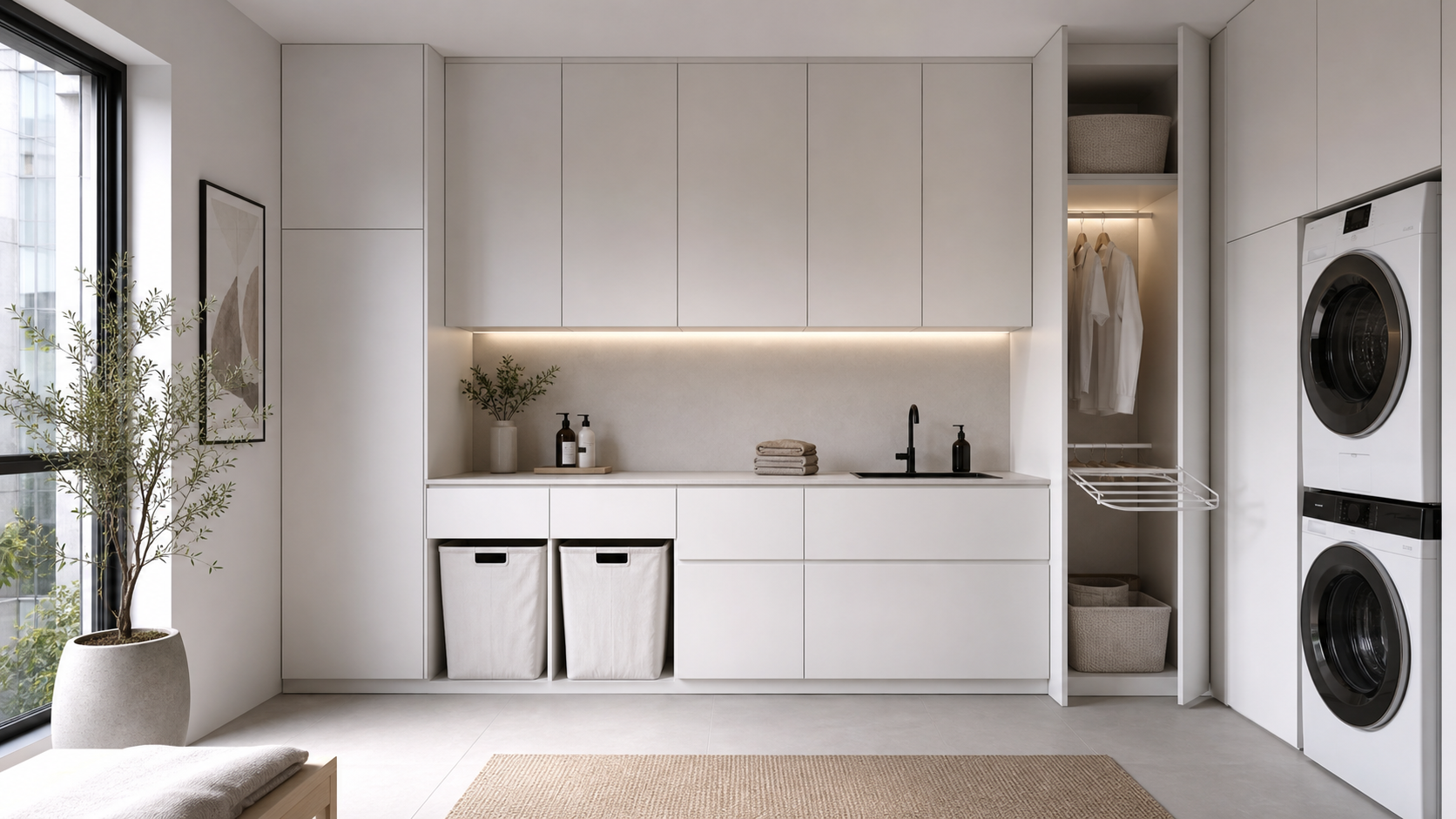
Flat-panel cabinet doors are a hallmark of minimalist design. Unlike highly detailed or decorative styles, flat-panel doors create a sleek and uncluttered appearance. Their simplicity allows the room to feel more spacious while contributing to a modern and sophisticated atmosphere. Many homeowners choose handleless cabinetry or integrated pulls to further enhance the streamlined aesthetic.
Floor-to-ceiling cabinetry is another popular minimalist strategy. Extending cabinets to the ceiling maximizes storage capacity while creating a cohesive and built-in appearance. This approach reduces visual interruptions and helps conceal supplies that might otherwise contribute to clutter. Hidden storage solutions align perfectly with minimalist principles by keeping everyday essentials accessible but out of sight.
The materials and finishes selected for cabinetry also play an important role. Matte finishes, natural wood veneers, and painted surfaces in neutral tones reinforce the simplicity and elegance associated with minimalist interiors. Together, these choices create a laundry room that feels organized, intentional, and highly functional.
Smart Storage Solutions That Eliminate Clutter
Minimalist design does not mean owning fewer necessities. Instead, it focuses on storing those necessities in a way that maintains visual order and efficiency. Smart storage is therefore one of the most important aspects of a successful minimalist laundry room.
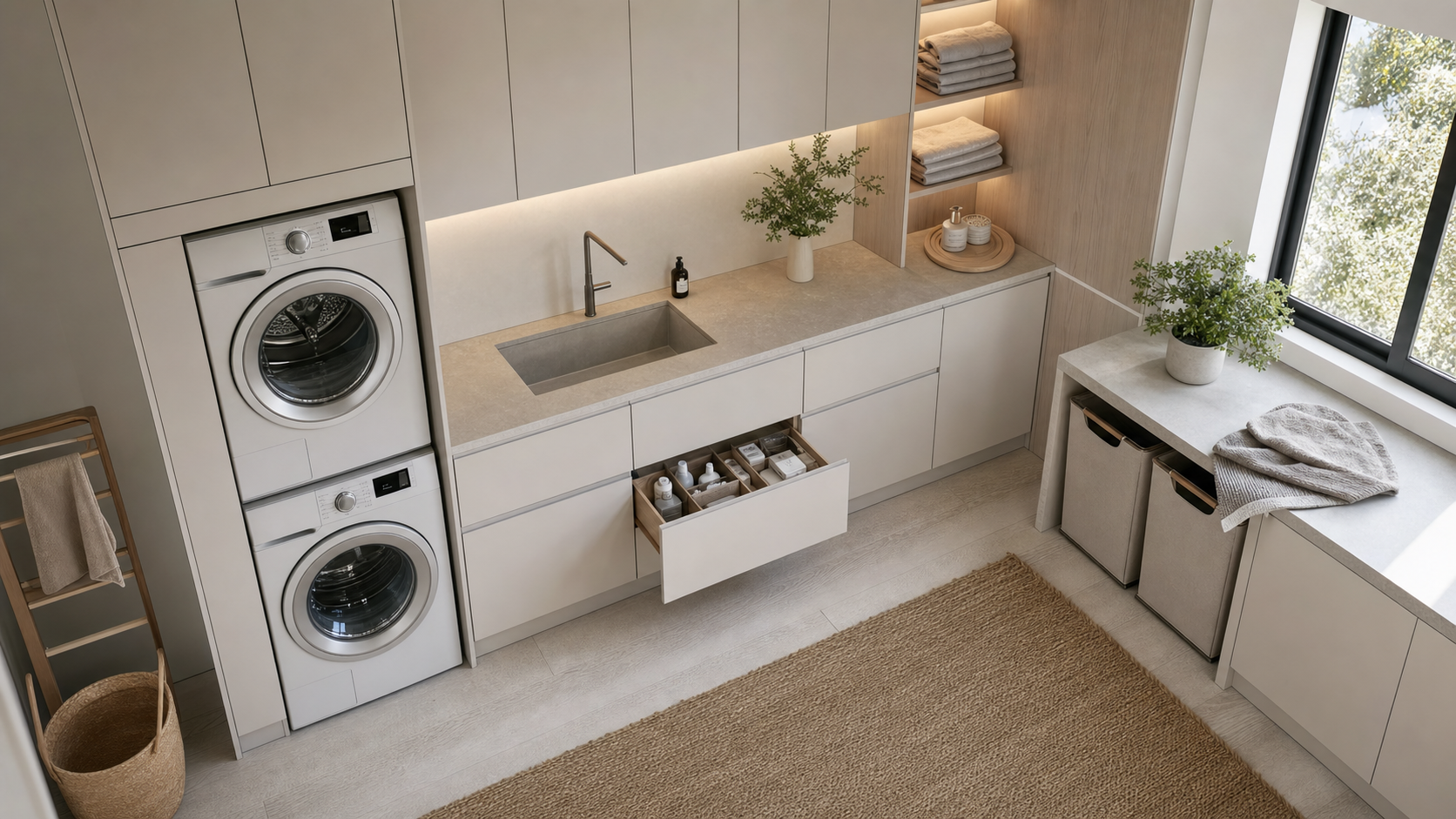
Custom storage systems allow homeowners to allocate space according to their specific needs. Pull-out hampers, dedicated detergent drawers, vertical shelving, and concealed cabinets help keep supplies organized while minimizing visual distractions. Every item should have a designated place, reducing the likelihood of clutter accumulating on countertops or floors.
Open shelving can also be incorporated thoughtfully within minimalist designs. While excessive open shelving can appear cluttered, carefully curated shelves displaying neatly arranged baskets, folded linens, or essential containers add warmth and character. The key is limiting displayed items and maintaining consistency in their appearance.
Storage solutions should prioritize both accessibility and simplicity. Frequently used supplies should be easy to reach, while less commonly used items can be stored out of sight. This balance ensures that the room remains highly functional without sacrificing its clean and uncluttered appearance.
The Importance of Functional Layouts
A minimalist laundry room succeeds not only because of its appearance but also because of its efficiency. The layout should support a logical workflow that minimizes unnecessary movement and maximizes productivity.
The relationship between appliances, countertops, sinks, and storage areas should be carefully considered. Frequently used items should be positioned close to where they are needed. For example, detergents and stain removers should be stored near the washing machine, while folding surfaces should be located adjacent to the dryer. This arrangement streamlines tasks and reduces wasted effort.
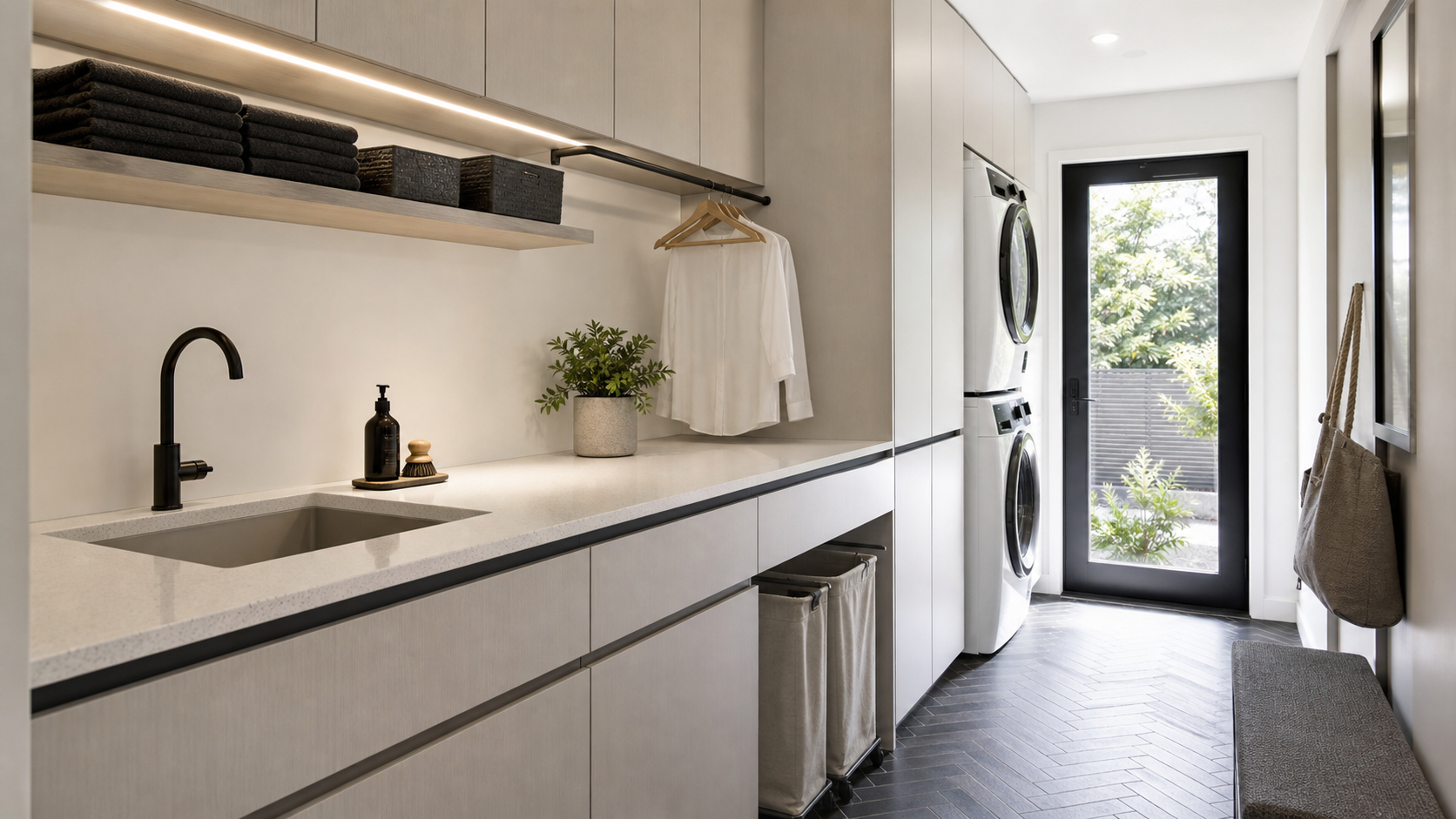
Stacked appliances offer an effective solution for smaller spaces. By utilizing vertical space, stacked washer and dryer units free up valuable floor area that can be dedicated to storage or folding stations. This approach is particularly beneficial in urban homes, apartments, and compact laundry closets.
Open floor space is another important consideration. Minimalist design emphasizes visual breathing room, which contributes to the perception of spaciousness. Avoiding overcrowded layouts helps maintain both functionality and the calm atmosphere that defines minimalist interiors.
Lighting as a Design Feature
Lighting plays a crucial role in minimalist laundry room design because it influences both functionality and atmosphere. A well-lit space feels larger, cleaner, and more inviting, while poor lighting can undermine even the most carefully planned design.
Natural light is especially valuable in minimalist interiors. Large windows, skylights, and glass doors help illuminate the room while reinforcing the connection between indoor and outdoor environments. Sunlight enhances the appearance of neutral color palettes and highlights natural materials, contributing to the overall sense of openness.
Artificial lighting should be equally thoughtful. Recessed ceiling fixtures provide clean and unobtrusive illumination that aligns with minimalist aesthetics. Under-cabinet lighting improves visibility while adding subtle visual depth. The goal is to provide ample brightness without introducing unnecessary decorative complexity.
Warm white lighting often works best because it creates a comfortable and welcoming atmosphere. Combined with reflective surfaces and light color palettes, thoughtful lighting design enhances the room’s functionality while reinforcing its minimalist character.
Incorporating Natural Materials for Warmth
One common misconception about minimalism is that it must feel cold or sterile. In reality, some of the most successful minimalist spaces incorporate natural materials that add warmth, texture, and visual interest without creating clutter.
Wood is among the most popular materials used in minimalist design. Natural wood shelving, countertops, cabinetry accents, and decorative elements introduce organic beauty while softening the room’s overall appearance. Light oak, maple, and ash are particularly effective because they complement neutral color palettes while maintaining a bright and airy feel.
Stone-inspired surfaces such as quartz and marble-look countertops provide durability while contributing subtle texture. These materials add sophistication without overwhelming the design. Their clean appearance aligns perfectly with minimalist principles.
Textiles can also introduce warmth in a restrained manner. Simple woven baskets, linen curtains, and neutral-toned rugs add comfort while preserving the room’s overall simplicity. These carefully chosen details create a balanced environment that feels both functional and inviting.
Minimalist Design in Small Laundry Rooms
Minimalism is especially valuable in smaller laundry rooms where space is limited and every design decision matters. By focusing on simplicity and efficiency, homeowners can create rooms that feel surprisingly spacious despite their modest dimensions.
Light color palettes are particularly effective in compact spaces because they reflect light and reduce visual heaviness. White walls, pale cabinetry, and reflective surfaces help maximize brightness while creating the illusion of greater size. Consistent color schemes further enhance this effect by minimizing visual interruptions.
Built-in storage solutions become even more important in smaller rooms. Floor-to-ceiling cabinetry, stacked appliances, and multifunctional furniture help maximize every available inch while maintaining a clean appearance. Hidden storage reduces clutter and contributes to the room’s overall sense of order.
Minimalist design also encourages homeowners to evaluate what is truly necessary. By eliminating redundant items and focusing on essential functions, even the smallest laundry room can become highly efficient and visually appealing.
Creating a Luxurious Minimalist Laundry Room
Minimalism and luxury are often viewed as opposites, but in reality, they complement one another exceptionally well. Many high-end interiors embrace minimalist principles because simplicity allows quality materials, craftsmanship, and thoughtful design to take center stage.
Luxury minimalist laundry rooms often feature premium materials such as quartz countertops, custom cabinetry, integrated appliances, and designer lighting. These elements create a refined appearance while maintaining the clean aesthetic associated with minimalism. The emphasis is on quality rather than quantity.
Attention to detail is another defining characteristic. Seamless cabinetry, concealed storage, soft-close hardware, and carefully coordinated finishes contribute to a sophisticated and highly functional environment. Every element feels intentional and carefully considered.
The result is a space that feels elegant without appearing extravagant. Rather than relying on excessive decoration, luxury minimalist design creates beauty through precision, craftsmanship, and restraint.
Conclusion: Less Truly Can Be More
Minimalist laundry room designs demonstrate that simplicity and functionality can coexist beautifully. By focusing on clean lines, thoughtful organization, efficient layouts, and carefully selected materials, homeowners can create spaces that feel both stylish and highly practical. Rather than sacrificing comfort or personality, minimalist design enhances the room’s usability while promoting a sense of calm and order.
The principles of minimalism are particularly well suited to laundry rooms because they support the room’s primary purpose: efficiency. Clutter-free surfaces, streamlined storage, neutral color palettes, and intentional design choices create environments where everyday tasks become easier and more enjoyable. At the same time, the visual simplicity contributes to a timeless aesthetic that remains attractive year after year.
As modern homeowners increasingly seek spaces that balance beauty with practicality, minimalist laundry room design continues to grow in popularity. Whether working with a compact laundry closet or a spacious utility room, embracing minimalist principles can maximize both space and style. The result is a brighter, more organized, and more functional room that proves that sometimes the most effective design approach is also the simplest.