A Laundry Room Can Be One of the Most Beautiful Spaces in the Home
For many years, the laundry room was treated as a purely practical corner of the house, hidden away and designed with little imagination. Today, that approach is changing. Modern homeowners are rethinking this hardworking room and turning it into a space that feels calm, organized, and visually refined. A well-designed laundry room does more than hold a washer and dryer. It supports daily routines, reduces clutter, improves efficiency, and brings the same sense of style found in kitchens, bathrooms, and living spaces. Modern laundry room design is all about balancing utility and atmosphere. The best rooms feel easy to use, but they also feel pleasant to be in. Thoughtful cabinetry, layered lighting, durable materials, clean lines, and carefully chosen colors can transform the room from a chore zone into a polished extension of the home. Whether the space is large enough for built-in storage and folding counters or compact enough to require clever vertical organization, modern design offers ideas that can make even the smallest laundry room feel intentional and elevated.
A: Soft whites, warm grays, muted greens, pale blues, and gentle beige tones are all popular choices.
A: It can be, but it looks best when shelves are neatly styled and everyday clutter is kept to a minimum.
A: Durable, moisture-friendly materials like porcelain tile or luxury vinyl are often excellent options.
A: Use light colors, vertical storage, good lighting, and a simple layout with minimal visual clutter.
A: It is not required, but it is one of the most useful additions for folding and sorting clothes.
A: A mix works well, but modern rooms usually look cleaner when most supplies are stored behind cabinets.
A: Yes, many modern spaces combine both functions with storage benches, hooks, and cabinets.
A: A combination of overhead light, task lighting, and natural light creates the most effective result.
A: Add wood tones, woven baskets, soft rugs, and layered textures to balance hard surfaces.
A: Clean lines, smart storage, durable materials, restrained color palettes, and a layout that supports everyday use.
Start With a Clean and Functional Layout
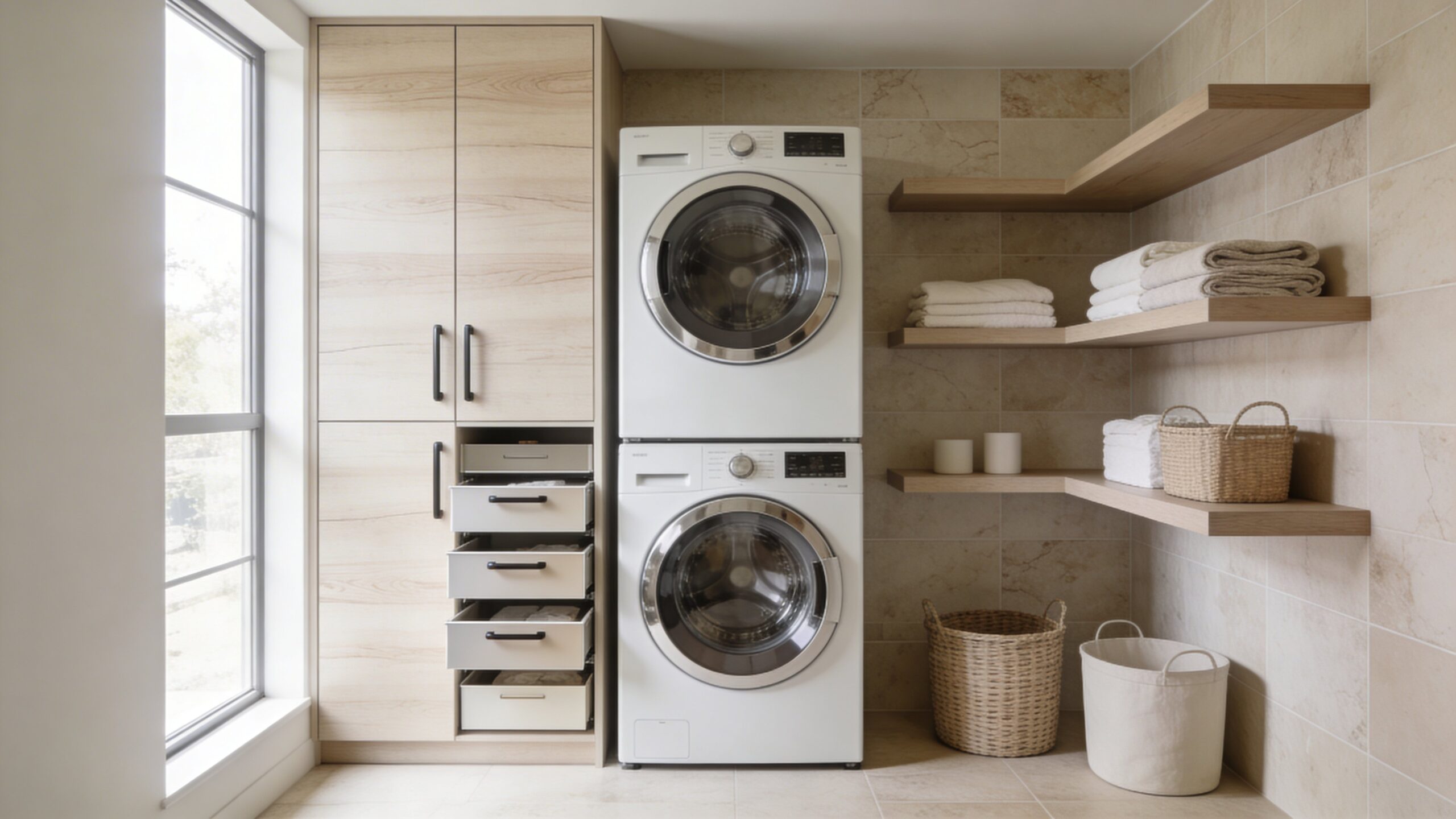
The foundation of any great laundry room begins with layout. Modern design is never just about appearance. It starts with how the room works. A good laundry room layout supports the natural order of laundry tasks, from sorting to washing, drying, folding, and storing. When these steps are arranged logically, the room feels effortless to use. Side-by-side washers and dryers remain a popular choice in larger rooms because they allow space for a countertop above, creating an instant folding station. In smaller homes, stacked appliances can open up precious floor space for cabinets, shelving, or a slim utility sink. The goal is not simply to fit everything in, but to create a sense of flow. When detergent, hampers, drying racks, and baskets all have designated places, the room begins to feel less crowded and far more stylish. Modern layouts also emphasize openness. Even in a narrow laundry room, reducing visual clutter makes a major difference. That may mean choosing flat-panel cabinets instead of ornate doors, using hidden storage rather than open shelving, or selecting appliances with sleek fronts and minimal detailing. A room that functions smoothly almost always looks better because it feels more orderly and less chaotic.
Choose a Color Palette That Feels Fresh and Calm
Color has a powerful effect on how a laundry room feels. Modern laundry room design often leans toward crisp, soothing palettes that make the space feel cleaner and brighter. Whites, warm grays, soft beiges, muted greens, pale blues, and gentle taupes are especially effective because they create a restful background for a room associated with care, routine, and renewal. A bright white laundry room can feel timeless and airy, especially when paired with natural wood accents or matte black hardware for contrast. Soft greige tones can add warmth without sacrificing the clean look that modern design depends on. For those who want a more distinctive character, dusty sage or slate blue can bring depth while still feeling calm and sophisticated. The key is restraint. Modern spaces do not usually rely on loud color combinations. Instead, they use a focused palette that creates a sense of visual harmony.
Color can also be used strategically to shape the room. Lighter walls help smaller laundry rooms feel more open, while darker lower cabinets can ground the design and hide everyday wear. A subtle backsplash in handmade-look tile or a simple wallpaper with delicate pattern can introduce interest without overwhelming the room. When the palette is thoughtfully composed, the laundry room feels less like a utility zone and more like a polished design statement.
Invest in Cabinetry That Hides the Mess
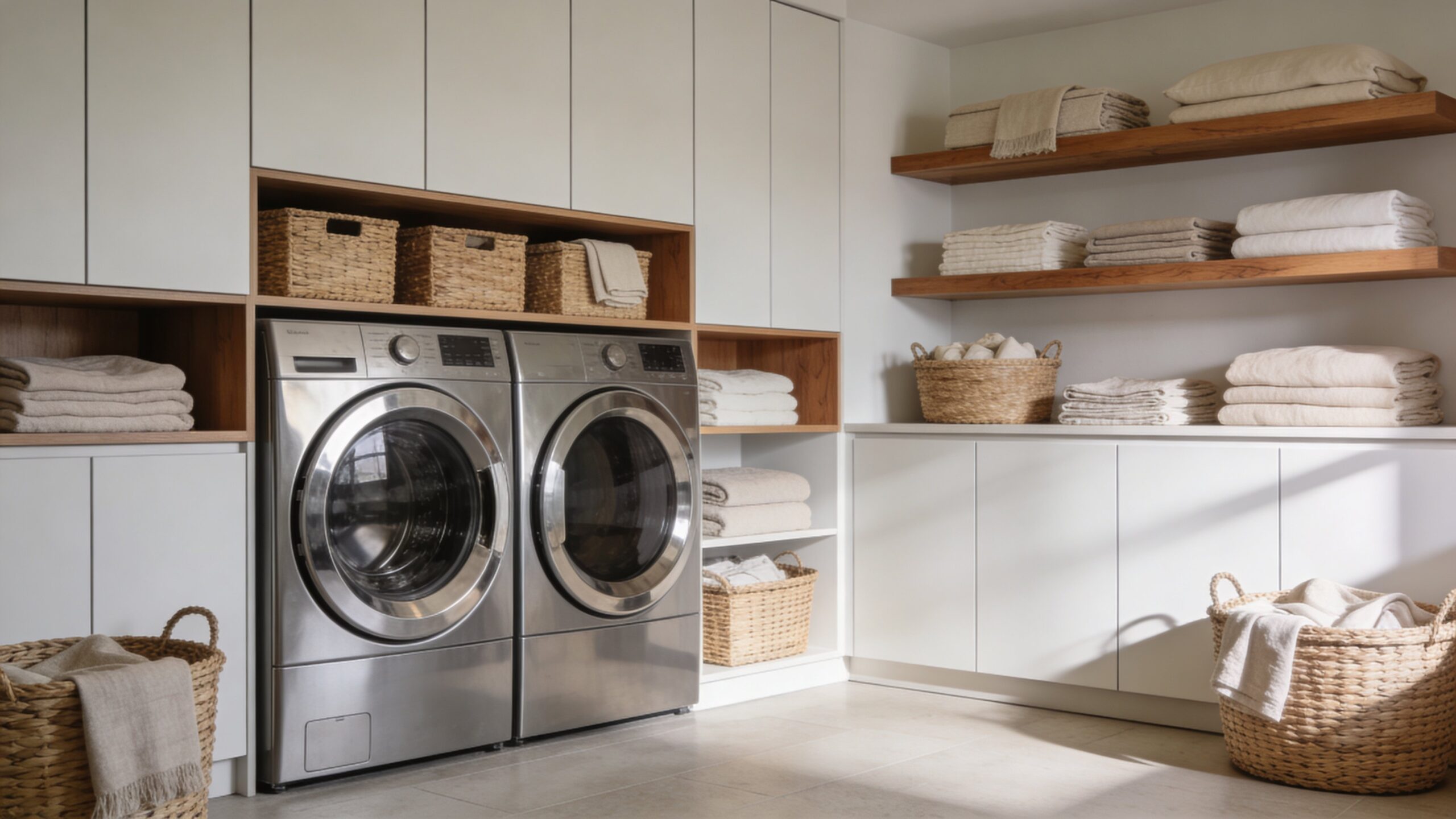
Storage is one of the biggest differences between a basic laundry room and a truly modern one. Laundry products, cleaning supplies, extra towels, baskets, hangers, and miscellaneous household items can quickly make the room feel disorganized. Modern design responds to this by treating cabinetry as both a practical necessity and a visual tool. Full-height cabinets create a streamlined look and keep clutter behind closed doors. Shaker-style or slab-front cabinets work especially well because they feel simple, current, and adaptable. Upper cabinets can hold infrequently used items, while lower cabinets make it easy to store detergents and stain removers where they are needed most. Pull-out hampers, slide-out shelves, and built-in dividers can improve function without changing the room’s clean appearance.
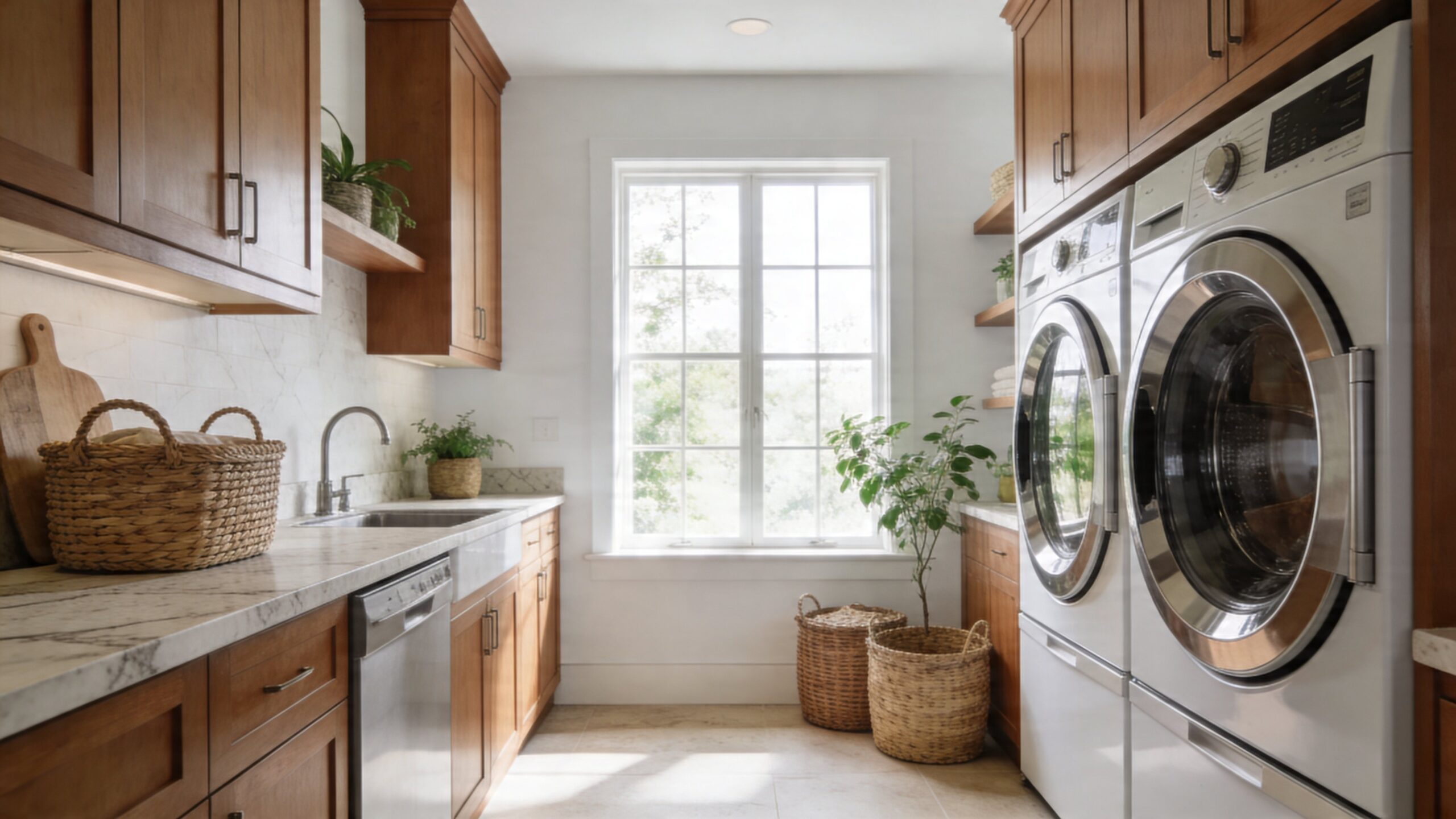
In many modern laundry rooms, cabinetry also extends around the appliances to create a built-in look. This approach makes the washer and dryer feel integrated into the architecture of the room rather than dropped into it. Even a compact laundry space can benefit from custom-looking millwork, especially when the cabinet finish ties into nearby kitchen or bathroom tones. The result is a room that feels planned, cohesive, and far more sophisticated.
Add Counter Space for Folding and Sorting
One of the most valuable features in a laundry room is a dedicated work surface. Counter space gives the room purpose beyond simply housing appliances. It creates a place to fold warm clothes, sort delicate items, organize baskets, or set down supplies. In modern laundry room design, this surface is often one of the details that makes the room feel complete. A countertop over front-loading machines is one of the smartest ways to maximize function. Quartz is especially popular because it is durable, easy to clean, and available in colors that fit a modern palette. Butcher block can add warmth and soften the room’s harder surfaces, while solid surface materials create a seamless contemporary look. Even a narrow counter beside the machines can dramatically improve usability.
This practical surface also contributes to the room’s style. It introduces a horizontal line that makes the design feel stable and finished. When paired with under-cabinet lighting or a simple backsplash, the counter area becomes a visual focal point. Instead of feeling like a purely mechanical room, the laundry area begins to resemble a compact workspace designed with care and attention.
Bring in Texture for a Warmer, More Inviting Look
A modern room should not feel cold. One of the best ways to create a clean yet welcoming laundry room is by layering texture. Because the room often contains hard surfaces such as appliances, tile, stone, and painted cabinetry, texture is what keeps the design from feeling flat or overly sterile.
Wood accents are especially effective in modern laundry rooms. Floating shelves in oak or walnut can warm up white walls. A wood countertop or woven hamper can add organic character. Matte ceramic tile, brushed metal finishes, linen-look window treatments, and textured baskets all contribute to a richer and more balanced design. These elements make the room feel lived-in and beautiful without compromising the streamlined look that defines modern style. Texture can also appear in subtle architectural details. Vertical paneling, shiplap used sparingly, fluted cabinet fronts, or stacked tile patterns can give the room dimension while keeping the palette restrained. These details help create visual depth, which is especially useful in smaller rooms that need personality without clutter. When textures work together, the laundry room feels elevated, layered, and thoughtfully designed.
Lighting Can Transform the Entire Room
Lighting is often overlooked in laundry rooms, but it has an enormous effect on both functionality and mood. Modern laundry room design treats lighting as an essential part of the overall plan. A single overhead fixture may technically illuminate the room, but layered lighting creates a far better experience.
Ceiling lights provide general illumination, while under-cabinet lighting can brighten folding counters and make everyday tasks easier. Wall sconces or decorative flush mounts bring style into the space and help the room feel more finished. If the laundry room has a window, natural light should be emphasized rather than blocked. Sheer shades or minimal window treatments allow daylight to enhance the room’s clean aesthetic. Good lighting also helps materials and colors look their best. Cabinets feel richer, tile patterns become more noticeable, and the room takes on a fresher, more welcoming energy. In a modern interior, light is not only functional. It shapes the atmosphere. A well-lit laundry room feels more open, more organized, and more enjoyable to use.
Make the Most of Small Laundry Rooms
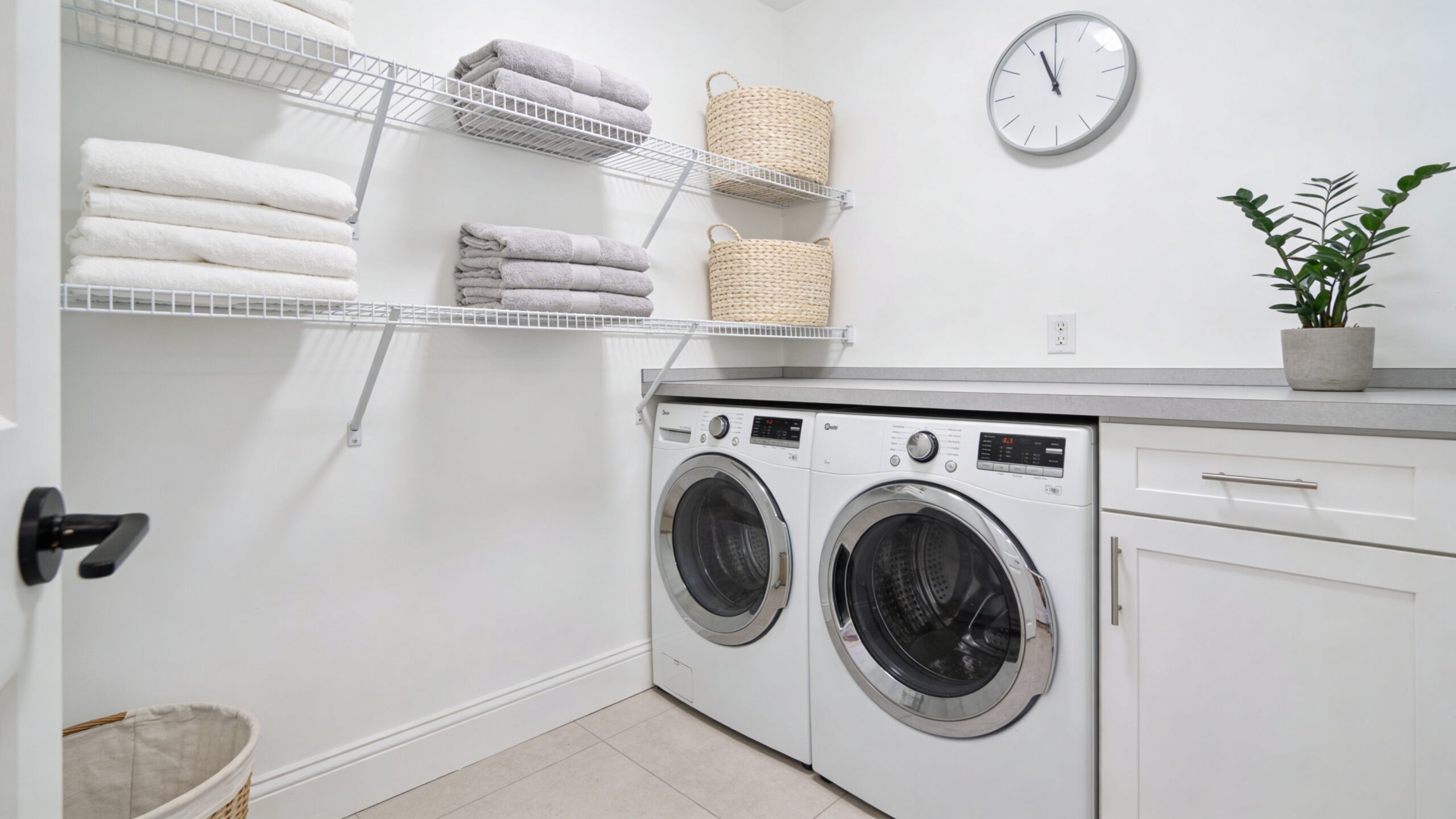
Not every home has the luxury of a large laundry room, but small spaces can still be stunning. In fact, modern design is especially useful in compact rooms because it prioritizes clarity, efficiency, and simplicity. When every element is chosen with intention, even a modest laundry space can feel stylish and high-end. Vertical storage is one of the best strategies for small rooms. Tall cabinets, open shelves above appliances, and hooks mounted on empty walls can expand storage without taking up extra floor area. Slim rolling carts can fit into tight gaps, while fold-down drying racks or wall-mounted ironing boards keep useful tools close at hand without overwhelming the room. Light colors, reflective surfaces, and well-placed mirrors can also help a smaller room feel more spacious.
Compact design works best when unnecessary items are eliminated. Instead of filling the room with decorative objects, modern laundry spaces rely on a few functional accessories that also look good. Matching baskets, labeled containers, and simple hardware help the room feel cohesive. A small laundry room does not need more things. It needs better choices. That is what makes modern design so effective in limited square footage.
Blend Beauty With Everyday Practicality
A stylish laundry room still has to endure real life. That is why material selection matters so much. Modern laundry room design depends on surfaces that can handle moisture, heat, vibration, and constant use while still looking polished. Beauty and durability have to work together. Porcelain tile remains one of the best flooring choices because it is strong, low maintenance, and available in designs that mimic stone, wood, or concrete. Quartz counters resist stains and offer a refined finish. Semi-gloss or washable paint makes it easier to keep walls looking fresh. Cabinet finishes should be chosen for easy cleaning, especially in homes where the laundry room also serves as a mudroom or household storage area. The most successful rooms are those that anticipate daily use. A bench for removing shoes, a rod for hanging shirts, a sink for hand-washing delicate items, or a tucked-away trash pullout can all improve how the room functions. In modern design, elegance comes from usefulness done well. A room that supports the rhythm of daily life will always feel more luxurious than one that looks good but works poorly.
Personal Style Makes the Room Memorable
Although modern design often emphasizes minimalism, that does not mean the room should feel generic. Personal touches are what turn a clean laundry room into a memorable one. The trick is to add character without disturbing the sense of order that makes the space feel calm. Art with simple frames, a sculptural light fixture, a patterned runner, or a vase with greenery can give the room identity. Some homeowners prefer a spa-like mood with warm neutrals and natural materials, while others lean into a sharper contemporary look with black accents and graphic lines. A soft vintage rug can add charm to an otherwise sleek space. A distinctive tile choice behind the sink can become the room’s signature element.
Even utility items can reflect personal style. Glass jars for detergent pods, matte dispensers, matching bins, and beautiful baskets turn everyday storage into part of the design. These details remind us that a functional room does not have to be plain. When the laundry room reflects the overall mood of the home, it feels intentional and complete rather than forgotten.
Create a Multi-Use Space That Works Harder
In many homes, the laundry room does more than laundry. It may serve as a mudroom, a pet-care zone, a craft station, or a backup storage room. Modern design can handle this complexity by organizing the room into clear zones. Instead of forcing every function into one cluttered area, the room can be divided visually and practically. A built-in bench with hooks can create an entry drop zone. Closed cabinets can hide pet supplies or cleaning tools. Open shelves can store baskets or folded linens. A utility sink can serve both laundry needs and messier household tasks. When these features are integrated thoughtfully, the room remains clean-looking even while serving multiple purposes.
This flexibility is one of the biggest advantages of modern design. It allows the room to evolve with the needs of the household while maintaining a strong aesthetic identity. By defining zones and choosing consistent materials across them, the laundry room can become one of the most efficient and attractive spaces in the home.
The Details That Make a Laundry Room Feel Finished
Often, what separates a decent laundry room from an exceptional one is not the major elements, but the finishing details. Hardware, faucets, backsplash materials, trim, and accessory choices all influence how polished the room feels. Modern spaces pay close attention to these details because consistency creates elegance.
Brushed nickel, matte black, champagne bronze, and stainless finishes can all work beautifully when chosen with intention. A slim backsplash protects the wall while adding style. Matching hangers, coordinated baskets, and neatly arranged supplies reinforce the sense of order. Even appliance color matters. White remains classic and bright, while black, graphite, or integrated panel-ready options can create a more dramatic, custom feel. Finishing details also help the room feel connected to the rest of the house. When the same flooring tone, cabinet finish, or hardware style appears elsewhere in the home, the laundry room becomes part of the broader design story. That continuity makes the space feel more important and more thoughtfully planned.
A Modern Laundry Room Elevates Daily Life
Laundry may never become anyone’s favorite task, but the environment where it happens can absolutely change the experience. A well-designed modern laundry room feels lighter, calmer, and more efficient. It reduces friction in everyday routines and adds beauty to a space that is often used more than people realize. Modern laundry room design ideas are not about excess or decoration for its own sake. They are about creating a clean and stylish space where every element has purpose. Smart layouts, concealed storage, durable materials, layered lighting, soft color palettes, and warm textures all contribute to a room that feels both elegant and useful. Whether the room is large, small, tucked into a hallway, or part of a mudroom, thoughtful design can make it feel refined and highly functional. In the end, the best modern laundry rooms succeed because they respect both the demands of daily life and the desire for beautiful surroundings. They prove that practical spaces deserve just as much design attention as the more visible rooms in a home. And when that attention is given, the laundry room becomes more than a place for chores. It becomes a space that supports a cleaner, calmer, and more stylish way of living.