Why Small Laundry Rooms Deserve Big Design Thinking
A small laundry room can easily become one of the most frustrating spaces in a home. It handles dirty clothes, cleaning supplies, folding, sorting, and storage, yet it is often tucked into the narrowest corner possible. That limitation is exactly why smart design matters. When every inch has a purpose, even a compact laundry room can feel clean, efficient, and surprisingly calm. Modern design works especially well in small laundry areas because it favors simplicity, order, and function. Clean lines, light colors, built-in storage, and uncluttered surfaces help a cramped room feel more open. Instead of forcing too much into the space, the best small modern laundry room design ideas focus on what truly improves daily use. The result is a room that works harder while looking more polished.
A: Light neutrals like white, soft gray, beige, or pale greige usually make the room feel larger and cleaner.
A: Often yes, because they free up floor area for cabinets, hampers, or a folding zone.
A: It helps a lot, even if it is shallow, because it adds folding space and a more finished look.
A: Closed cabinets usually look cleaner in small rooms, but open shelves can work if storage is neatly contained.
A: Durable, easy-clean materials like tile or luxury vinyl are strong choices for moisture and daily wear.
A: Use light colors, strong lighting, vertical storage, and avoid leaving supplies exposed on every surface.
A: Yes, because thoughtful finishes can make the space feel calmer, brighter, and more pleasant to use.
A: Sliding, pocket, or bifold doors often work better than standard swing doors in tight layouts.
A: Yes, but it works best when every storage item has a clear home and the room is not overloaded.
A: Clean lines, simple finishes, hidden storage, smart lighting, and an uncluttered layout are key features.
Start With the Layout Before You Buy Anything
The biggest mistake in a small laundry room is thinking decor comes first. In reality, layout is the foundation of everything. Before choosing paint, baskets, or shelving, it helps to study how the room actually works. Measure walls, doors, appliance clearances, hookups, and any awkward corners. In a small room, even a few inches can change what is possible. A modern laundry room layout should make movement simple. You want enough room to load the washer, transfer clothes, reach supplies, and fold without constant bumping or bending. Side-by-side machines can create a useful countertop on top, while stacked units free up floor space for tall storage. In some homes, a single-wall layout works best. In others, a closet-style laundry nook becomes more functional with sliding doors or pocket doors that remove swing clearance.
Choose a Calm, Light Color Palette
Color has enormous power in a tight space. A small laundry room filled with dark, heavy finishes can feel boxed in. A lighter palette makes the room appear brighter, cleaner, and larger. White, warm beige, soft gray, pale taupe, muted sage, and greige all work beautifully in a modern setting.
That does not mean the room has to feel sterile. The best modern laundry rooms use contrast in careful ways. Matte black hardware, warm wood shelves, brushed nickel pulls, or a charcoal countertop can add depth without making the room feel busy. When the palette stays restrained, the space feels intentional. That sense of order is one of the main reasons modern small laundry room ideas are so effective.
Stack Storage Vertically to Free the Floor
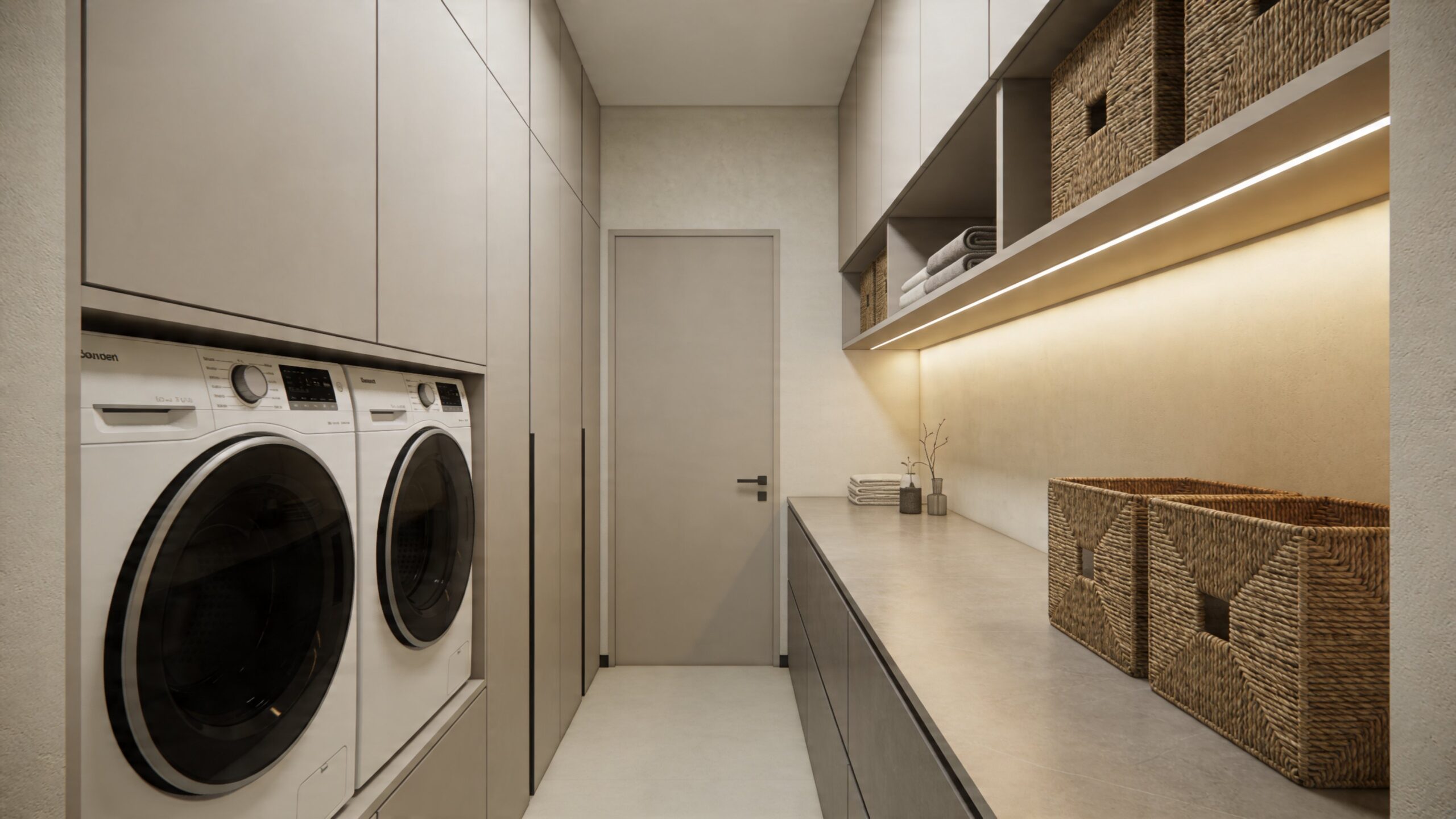
When floor space is limited, the walls become your best asset. One of the smartest small laundry room design ideas is to build upward. Tall cabinets, open shelves, slim wall organizers, and hooks can turn blank vertical space into useful storage without crowding the room.
Upper cabinets are ideal for detergents, stain removers, extra paper goods, and seasonal supplies. Open shelves can hold baskets or folded linens while keeping the room visually lighter. Wall-mounted drying rods, retractable lines, and hanging bars also help without taking up precious square footage. In a compact room, vertical storage often makes the difference between constant clutter and a room that stays under control.
Add a Countertop Over Front-Load Machines
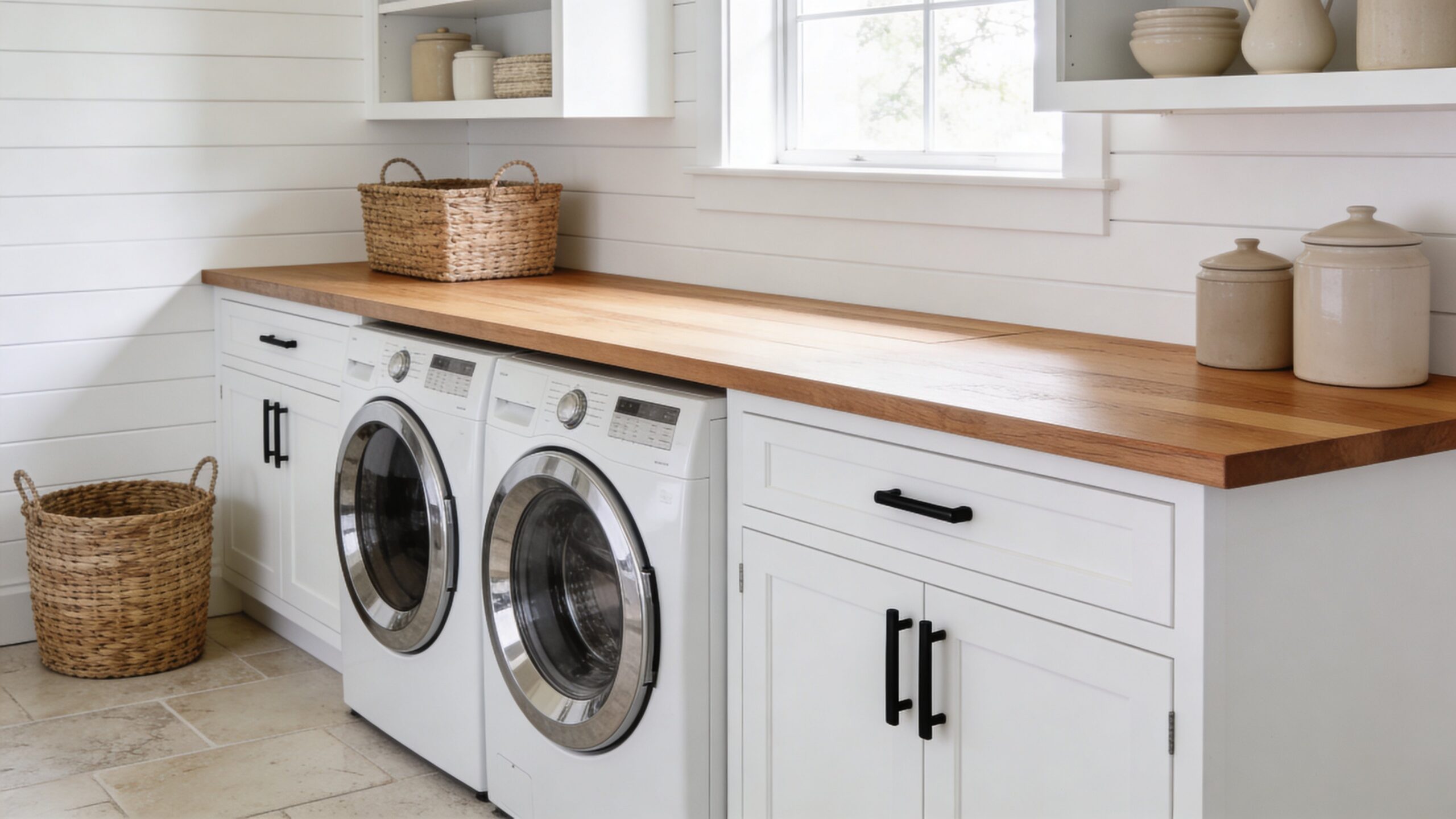
A countertop is one of the most valuable upgrades in a small laundry room. It creates a clean surface for folding, sorting, and setting down supplies. It also visually unifies the machines, giving the room a more custom, built-in appearance. In modern design, that streamlined look matters.
Even a simple wood or laminate top can make the space feel more finished. Quartz offers a premium look, while butcher block brings warmth and texture. If the room is especially narrow, a shallow counter on one side can still provide a practical work zone. In a small space, surfaces should never be wasted, and the top of the machines is one of the easiest places to gain function.
Use Closed Storage to Reduce Visual Noise
Laundry rooms collect many small, unattractive essentials. Detergent bottles, dryer sheets, cleaning sprays, stain pens, clothespins, and miscellaneous tools can quickly overwhelm the eye. In a small room, that visual clutter makes the space feel even tighter.
Closed storage keeps the room calmer. Cabinets with simple slab or shaker fronts create a cleaner look than exposed shelves packed with products. If open storage is necessary, matching bins and containers help control the appearance. Modern design is not just about style. It is also about reducing distraction. The fewer unrelated items you see at once, the more spacious the room feels.
Think Multi-Function in Every Detail
A small modern laundry room works best when each feature serves more than one purpose. A bench can hide baskets underneath. A shelf can also support hanging rods. A pull-out hamper can act as sorting storage. A countertop can double as a folding station and utility surface. Every element should earn its place.
This approach is especially important in homes where the laundry room also serves as a mudroom, pantry overflow, or cleaning closet. Multi-function design keeps the room efficient instead of overloaded. Rather than cramming in more pieces, modern design asks each piece to do more. That mindset helps small rooms feel smarter, not smaller.
Make Room for Hidden Hampers and Sorting
Sorting is one of the most time-consuming parts of laundry, yet many small rooms ignore it completely. Then baskets pile up in hallways or bedrooms. A better idea is to build sorting into the design from the start. Hidden pull-out hampers, labeled bins, or divided baskets can simplify the entire process.
Even a narrow cabinet can hold two removable hampers for lights and darks. A shelf unit can include separate bins for towels, delicates, or items that need air drying. When sorting has a clear home, the room functions better every day. It also looks better, because loose laundry no longer becomes part of the decor.
Use Slim, Space-Saving Appliances When Needed
Not every home can fit full-size machines comfortably. In very small laundry rooms, apartment-style or compact appliances may make more sense. Modern compact washers and dryers can still offer strong performance while freeing up space for storage and movement.
This does not mean downsizing automatically. It means choosing appliances that fit the room rather than overpowering it. In some spaces, stacked units are the best solution. In others, all-in-one washer-dryer combos help eliminate the need for two separate footprints. The right choice depends on household habits, available square footage, and how often laundry is done. Good design starts with real-life use, not just idealized photos.
Let Lighting Do More Than Brighten the Room
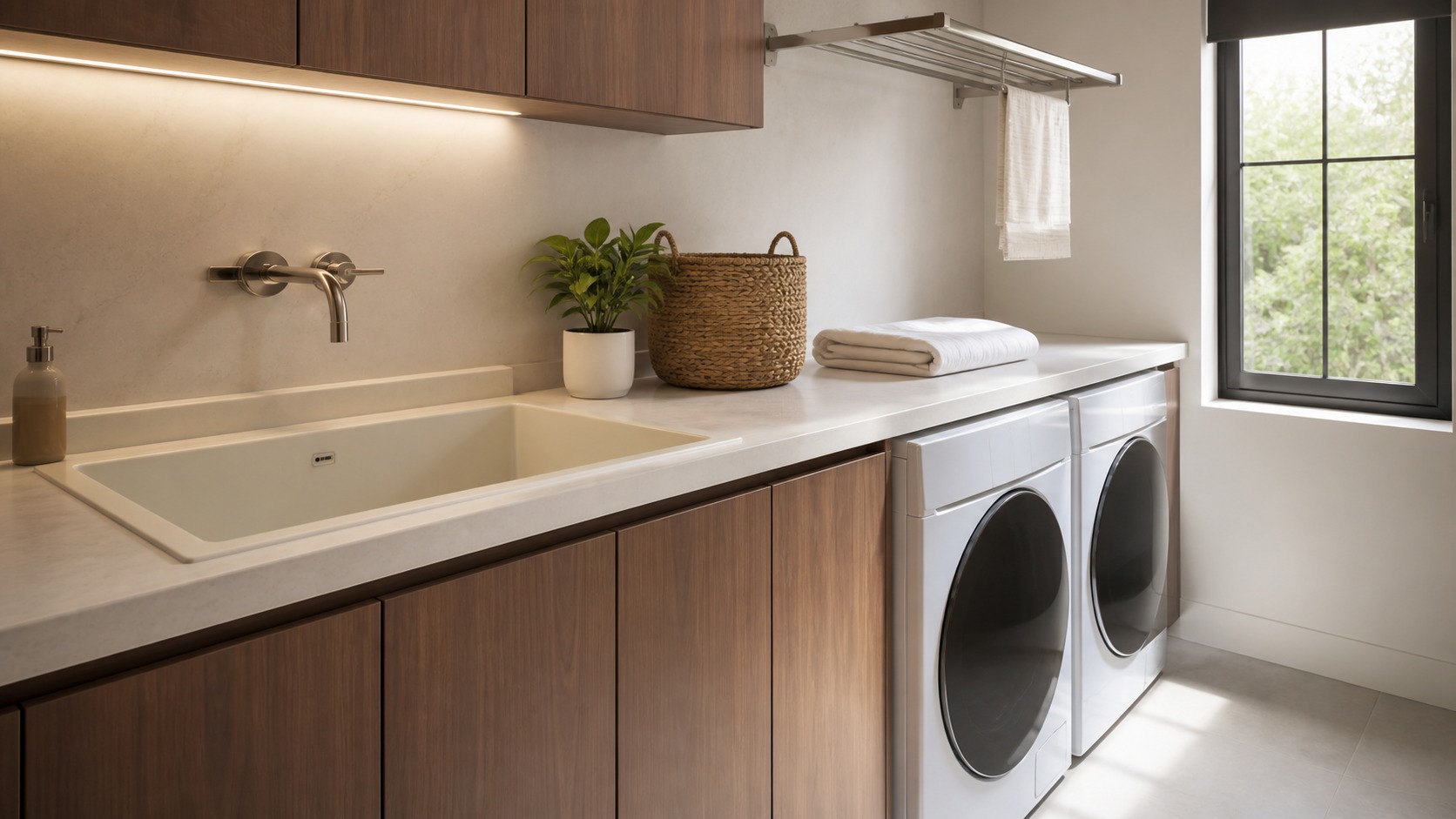
A poorly lit laundry room can feel gloomy, cramped, and difficult to use. Good lighting makes the space seem larger while also improving function. Ceiling lights should provide even brightness, but layered lighting is even better. Under-cabinet lighting, wall sconces, or task lighting near a folding area can add depth and usefulness.
Modern laundry room lighting often looks simple, but it is carefully chosen. Flush mounts, slim LEDs, and clean-lined sconces fit the aesthetic without crowding the ceiling. Reflective surfaces also help bounce light around the room. Glossy tile, pale paint, glass doors, and subtle metallic finishes can all contribute to a brighter feel in a compact space.
Choose Materials That Are Durable and Easy to Clean
Laundry rooms deal with moisture, lint, spills, and daily wear. In a small room, materials need to look good and perform well. Durable surfaces help the room stay fresh without demanding too much maintenance. That matters even more when every smudge is noticeable. Porcelain tile, luxury vinyl plank, sealed quartz, laminate, washable paint, and moisture-resistant cabinetry are all practical choices. Texture can still play a role, but it should be controlled. A modern laundry room usually benefits from smoother, simpler finishes that are easy to wipe down. When the room is small, ease of maintenance becomes part of the design itself.
Make Awkward Gaps Work Harder
Small laundry rooms often contain strange slivers of unused space. The few inches beside a machine, above a door, or next to a cabinet might not seem useful at first. In a compact room, however, these gaps can become some of the smartest storage opportunities.
Slim rolling carts are great for detergent and cleaning tools. Narrow shelves can hold baskets or spare supplies. The space above appliances can support cabinets or floating shelves. Even a wall corner can hold hooks for drying bags or hanging garments. The goal is not to stuff every gap. It is to notice where overlooked space can solve a real storage problem.
Bring in Texture Without Creating Clutter
A modern laundry room should feel clean, but not cold. Texture helps soften the space and make it feel more inviting. The key is restraint. A wood shelf, woven basket, ribbed tile, linen curtain, or matte finish can add warmth without creating visual chaos.
Because the room is small, too many competing materials can make it feel choppy. A better approach is to choose one or two textures and repeat them with intention. That gives the room character while preserving the clean, modern look. Small spaces respond well to consistency. Repetition creates rhythm, and rhythm makes the room feel more thoughtfully designed.
Hide Utility Features Whenever Possible
Laundry rooms contain many functional but unattractive necessities, from hoses and vents to plugs and drain lines. In a small room, visible utility elements can quickly make the space feel unfinished. Whenever possible, these features should be concealed or visually minimized.
Cabinet panels, utility closets, appliance surrounds, and clean wall finishes help hide the more industrial parts of the room. Storage for ironing boards, drying racks, and brooms should also be integrated instead of left exposed. A modern laundry room feels smoother when the practical pieces are accounted for in the design rather than treated as afterthoughts.
Add Personality in Controlled Ways
A small laundry room does not need to be plain. In fact, because it is a small space, it can handle a little personality very well. The trick is to keep it focused. One beautiful backsplash, a bold wall color, an elegant light fixture, or a framed print can add energy without overwhelming the room.
Modern spaces often look strongest when personality is edited rather than layered. Instead of filling every shelf with decor, choose one or two standout moments. A striking tile pattern behind the machines or warm brass hardware on simple cabinets can be enough. The room should still feel restful and organized, even when it has some style.
Create a Folding and Drying Strategy
Many laundry rooms fail because they only address washing and drying, not what happens next. Clothes need to be folded, hung, sorted, and occasionally air-dried. Even in a very small room, a clear strategy for these steps improves the whole setup.
A fold-down wall table, a slim counter, or a simple shelf can handle folding. A rod beneath a shelf can support hangers. A retractable drying line or wall-mounted rack can help with delicate items. These solutions do not need to be large. They just need to exist. The room works better when post-wash tasks are part of the plan.
Use Doors and Access Points Wisely
In a tight laundry room, the wrong door can waste valuable space. Traditional swing doors may block walkways, interfere with machines, or make the room feel cramped. Sliding barn doors, bifold doors, pocket doors, or even a curtained opening can improve access depending on the layout.
The same logic applies to cabinet doors and appliance clearances. Good design considers how everything opens and where the user stands while doing laundry. A room may look fine in photos but feel frustrating in practice if doors constantly collide. In small modern laundry room design, practical movement is just as important as appearance.
The Best Small Laundry Rooms Feel Intentional
The most successful small modern laundry rooms are not simply tiny versions of large ones. They are designed with sharper priorities. They know what needs to happen in the room and what can be left out. That editing process is what gives them their strength. A room does not need to be large to feel luxurious. It needs to feel efficient, bright, organized, and easy to use. Thoughtful storage, calm finishes, strong lighting, and smart layout choices can turn a cramped utility area into one of the most satisfying spaces in the home. When design and function work together, even the smallest laundry room can feel like a major upgrade.