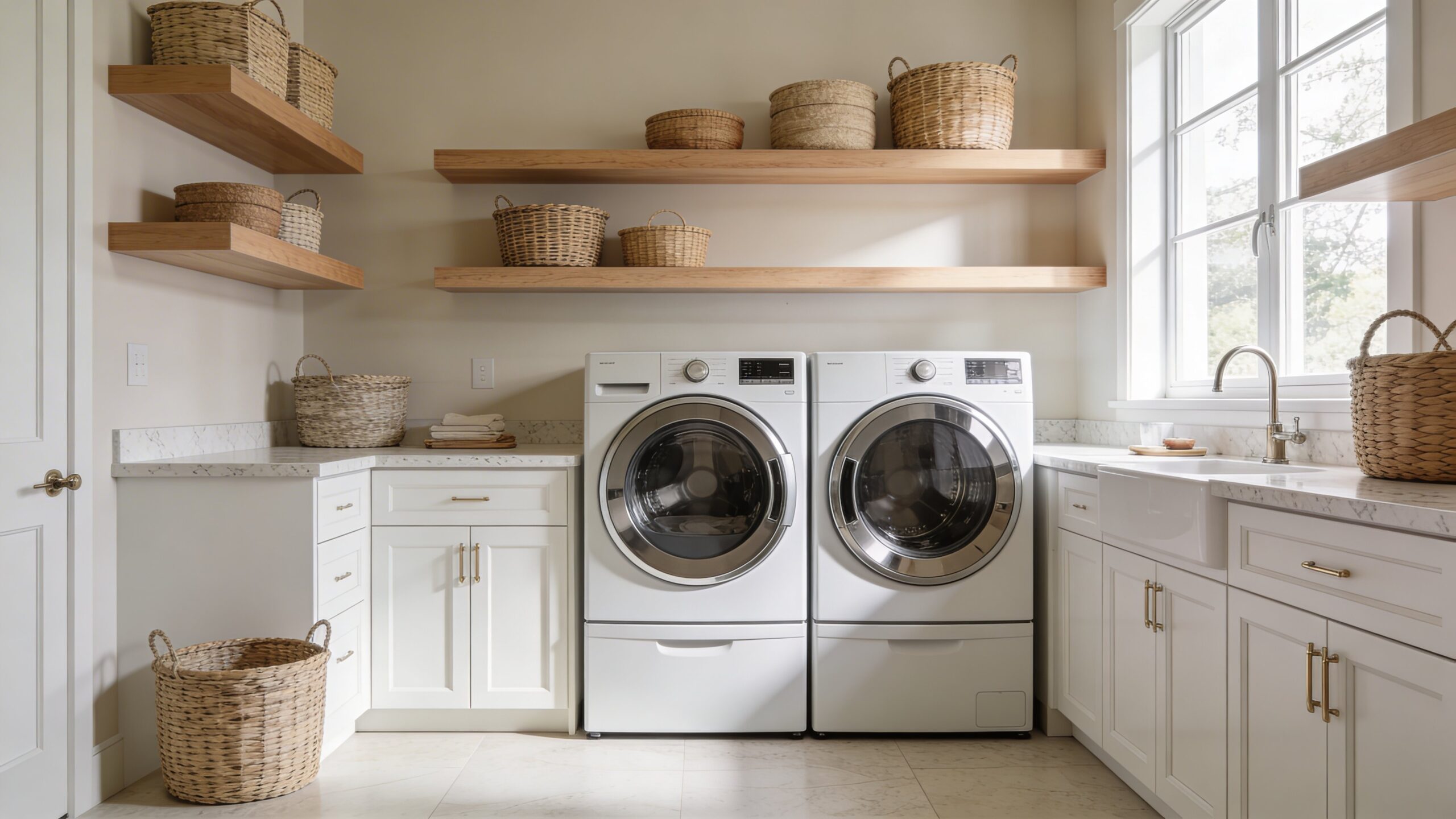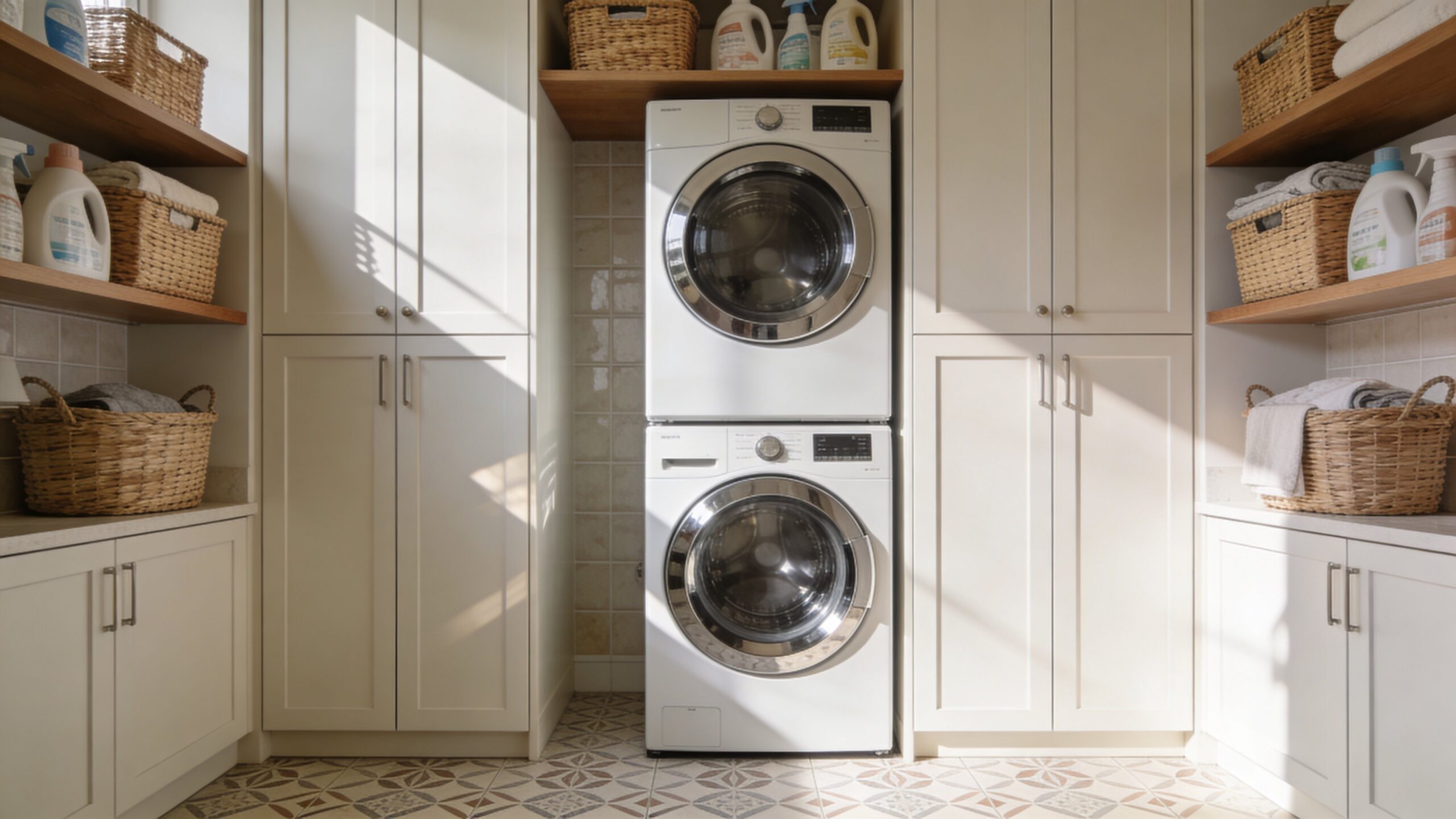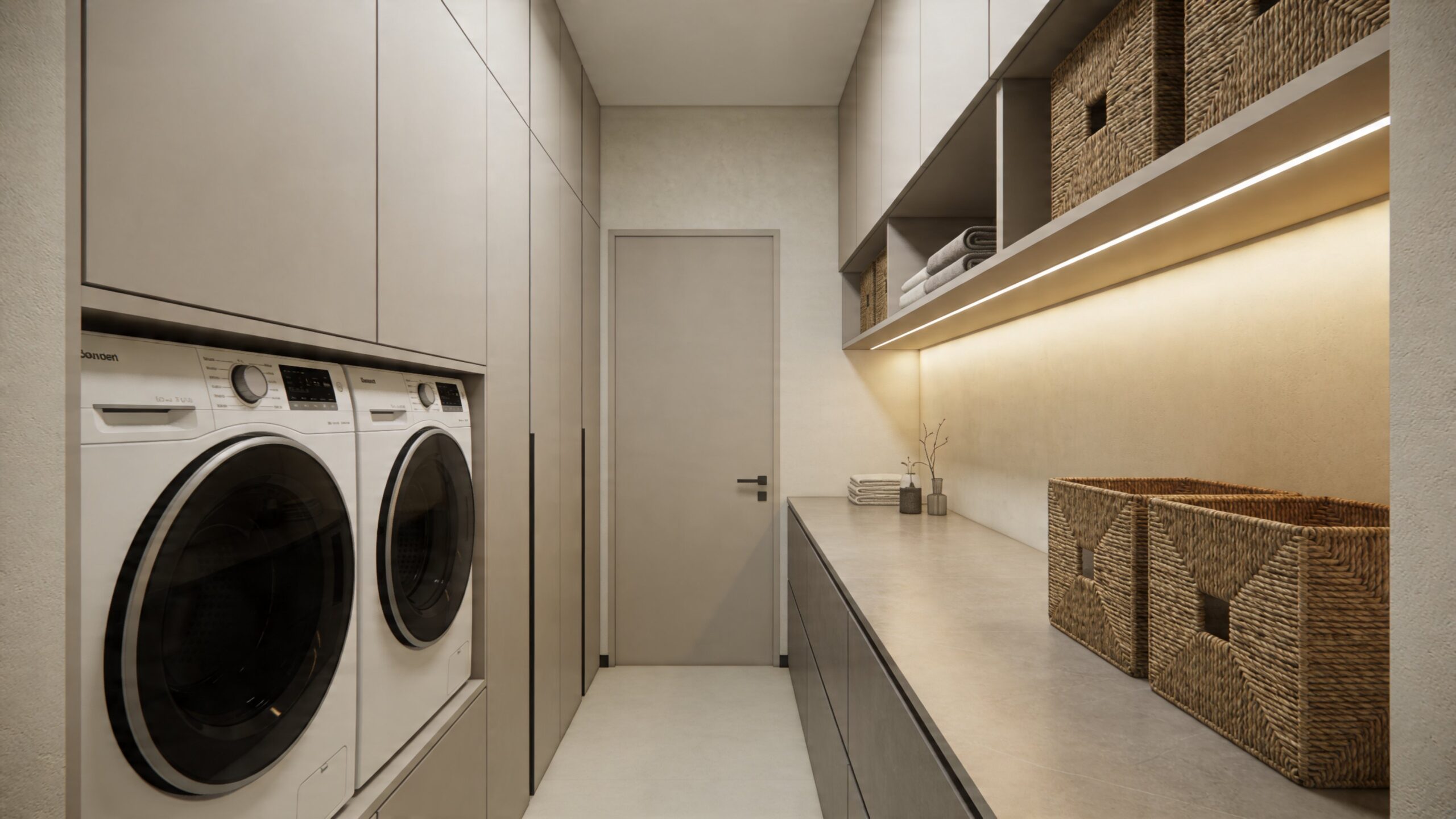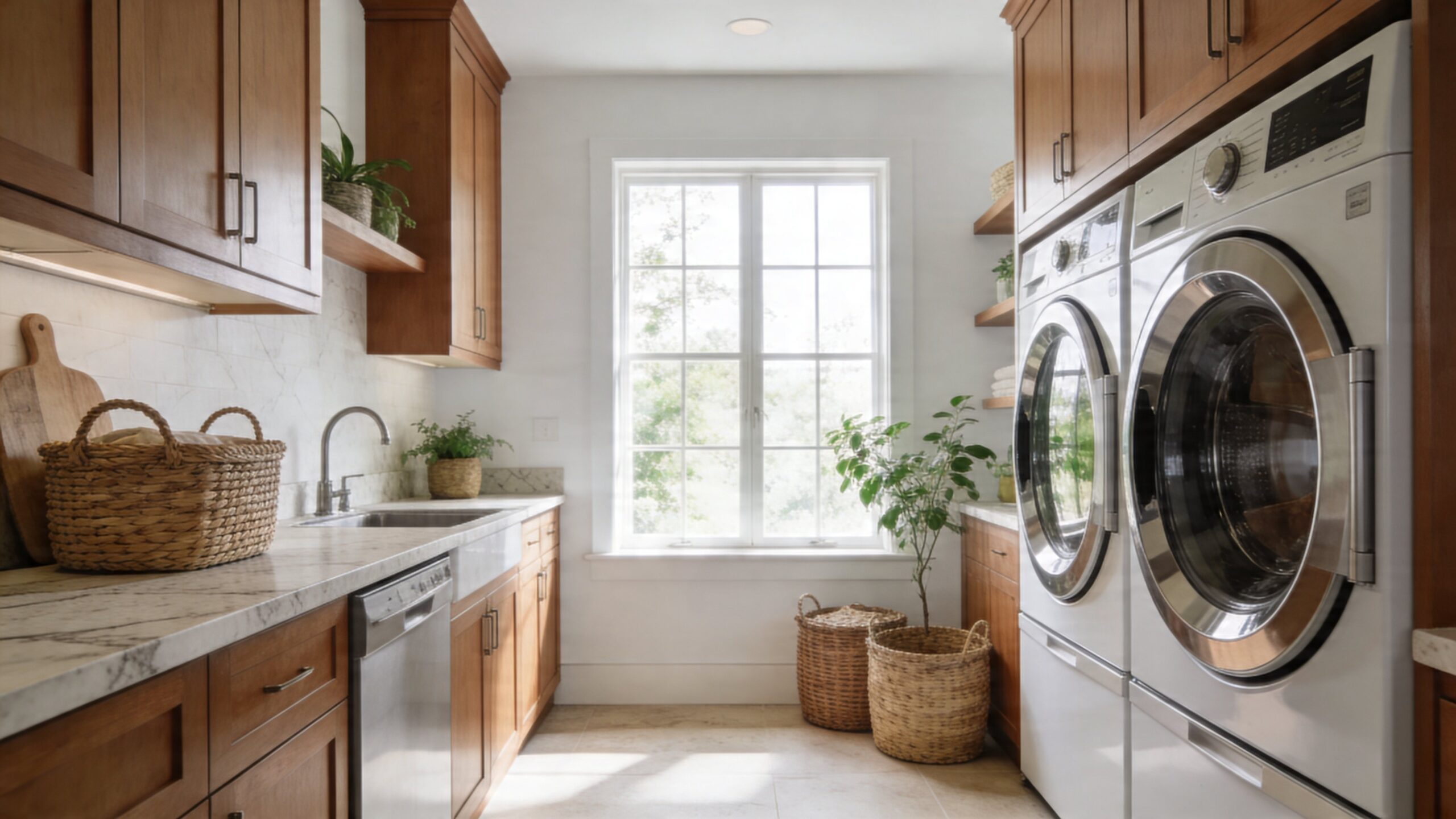
A modern laundry room should do more than hide a washer and dryer. It should make daily chores feel smoother, calmer, and more organized. When designed well, this space becomes one of the hardest-working rooms in the home, blending beauty with real purpose. Good laundry room design is not just about style trends. It is about creating a layout that supports the way people sort, wash, dry, fold, store, and move through the room.
A: A compact layout with stacked machines, vertical storage, and a slim folding surface often works best.
A: Yes, cabinets are one of the easiest ways to hide clutter and improve organization.
A: They can be, but they look best when used sparingly and kept neatly organized.
A: Soft whites, warm neutrals, muted greens, and light grays are popular because they feel clean and calm.
A: Not always, but a sink adds major convenience for soaking, rinsing, and quick cleanup tasks.
A: Yes, it adds valuable folding space and helps keep clean clothes contained in the room.
A: Durable, water-friendly flooring that is easy to clean is usually the smartest choice.
A: Use closed storage, matching containers, and clear zones for each laundry task.
A: Yes, smart storage, good lighting, and a calm palette can make even a small room feel polished.
A: Clean lines, efficient storage, durable materials, layered lighting, and a simple but intentional layout.
Why the Modern Laundry Room Matters More Than Ever
Laundry rooms have changed dramatically over the years. What used to be a forgotten utility corner is now treated as an important design opportunity. Homeowners want these spaces to feel clean, welcoming, and efficient. Since laundry is a repeating task, the environment around it has a real effect on daily life. A dark, cramped room can make chores feel heavier, while a bright and thoughtful space can make them easier to manage. Modern design also reflects how homes are used today. Many people want multifunctional rooms that combine storage, cleaning, folding, and sometimes pet care or mudroom functions. That means the laundry room must work harder than before. A good design balances visual simplicity with practical planning, so the room looks polished without losing its usefulness.
Start with the Layout Before the Decor
The best laundry room ideas begin with layout, not accessories. Before choosing paint colors, baskets, or cabinet finishes, it helps to think about how the room functions. The washer and dryer should be placed in a way that supports the natural flow of laundry. Dirty clothes come in, get sorted, washed, dried, folded, and put away. The room should make each of those steps feel logical.
In a narrow room, side-by-side appliances may work best with a counter above them. In a smaller footprint, stacked machines can free up valuable floor space. In a larger laundry room, adding a sink, open floor area, and full-height cabinetry can improve both convenience and storage. Modern laundry room design is often less about size and more about planning. Even a compact room can feel elevated when every inch is used well.
Choose Appliances That Fit the Room and the Routine
A beautiful laundry room starts with appliances that make sense for the household. Oversized machines in a tight space can make movement awkward. Appliances that are too small can create extra loads and wasted time. Modern laundry room planning works best when the machines match both the scale of the room and the needs of the people using it.
Front-load washers are often popular in modern spaces because they pair easily with countertops and built-in cabinetry. They can help create a streamlined, custom look. Top-load machines may be better for users who prefer easier access without bending as much. The right choice depends on comfort, habits, and available space. Design improves when the appliances support the routine rather than fight it.
Make Storage Look Clean and Intentional
Storage is one of the biggest differences between a chaotic laundry room and a functional one. Modern laundry rooms often succeed because they hide visual clutter. Detergent bottles, dryer sheets, cleaning sprays, stain removers, extra towels, and baskets can quickly overwhelm a space if there is no system in place.
Cabinets are one of the easiest ways to create a cleaner look. They conceal supplies and make the room feel more finished. Open shelving can also work, but it looks best when the items stored there are limited and arranged neatly. Bins, labeled containers, woven baskets, and matching jars can give a sense of order without making the room feel stiff. The goal is not to turn the laundry room into a showroom. It is to make it easier to use while keeping it visually calm.
Add a Folding Surface Wherever Possible
One of the smartest modern laundry room design tips is to include a folding area. Even a small countertop can make a major difference. Without one, clean clothes tend to migrate to other parts of the home. That leads to clutter, unfinished laundry piles, and more frustration. A dedicated folding surface keeps the task contained. A counter over front-load appliances is a classic solution. In larger rooms, a separate island or wraparound counter can provide even more working space. Materials matter here as well. Durable countertops that resist moisture and wear are ideal. A folding surface should not feel like an afterthought. It is one of the most practical features in the room and often becomes the center of the workflow.
Use Vertical Space to Increase Function
In many homes, the laundry room is not large. That makes vertical storage especially important. Walls can do much more than hold paint. Tall cabinets, upper shelves, hanging rods, and wall-mounted organizers can dramatically improve how the room works. When the floor area is limited, going upward is one of the best ways to gain storage without crowding the space.
A hanging rod is especially useful for air-drying items or placing shirts straight from the dryer. Shelves above appliances can hold everyday essentials. Hooks can store bags, ironing tools, or cleaning accessories. Modern design often looks simple on the surface, but that simplicity usually comes from smart hidden function. Vertical planning helps create that effect.
Let Light Shape the Mood of the Room
Lighting has a major influence on how a laundry room feels. A well-lit room appears cleaner, larger, and more pleasant to use. Natural light is a huge advantage if the room has a window. It softens the space and makes even routine tasks feel more comfortable. If natural light is limited, layered lighting can still create a bright and attractive result.
Overhead lighting is essential, but it should not be the only source. Under-cabinet lights or wall sconces can add warmth and improve visibility around work areas. A laundry room should feel crisp without being harsh. Modern spaces often strike this balance by mixing practical brightness with a softer design touch. Good lighting turns a utility room into a space that feels cared for.
Pick Materials That Can Handle Real Life
Style matters, but durability matters more in a room that deals with moisture, heat, movement, and cleaning products. The best modern laundry room materials are both attractive and resilient. Floors should be easy to clean and able to handle spills. Countertops should resist stains and wear. Cabinet finishes should hold up to frequent use.
Tile, luxury vinyl, and other hard-wearing surfaces are common choices because they combine practicality with design flexibility. Matte finishes often help hide smudges better than highly reflective ones. Textured materials can add warmth, but they should still be easy to maintain. A beautiful laundry room is not just one that photographs well. It is one that continues to look good after daily use.
Keep the Color Palette Calm and Fresh
Color plays a big role in making a laundry room feel modern. Many of the most appealing spaces use light, clean, and restful tones. White, soft gray, warm beige, pale taupe, muted green, and gentle blue are all common choices because they create a fresh atmosphere. These shades can make the room feel more open and less busy.
That does not mean the design has to feel plain. Contrast can be added through darker hardware, wood accents, patterned tile, or subtle texture. The modern approach usually avoids too many competing colors. Instead, it creates interest through layering and material choice. A calm palette helps the room feel organized before a single basket is filled.
Add Small Luxury to an Everyday Chore
A modern laundry room becomes more enjoyable when it includes a few thoughtful details. These do not have to be expensive. A stylish faucet, a beautiful cabinet finish, a well-chosen light fixture, or a simple runner can make the space feel more elevated. Since laundry is repeated so often, small design upgrades can have a surprisingly big impact. Luxury in a laundry room often comes from ease rather than extravagance. Soft-close drawers, a deep utility sink, pull-out hampers, hidden outlets, and organized drawers all improve the experience. The room feels better because it works better. When beauty and function meet, the everyday task itself becomes less tedious.
Build Zones for Sorting, Washing, Drying, and Storing
One of the strongest layout ideas for a functional laundry room is zoning. Instead of treating the room as one general space, it helps to think in specific activity areas. There can be a place for sorting dirty clothes, a place for the machines, a place for folding, and a place for storing finished items or supplies. These zones do not need to be large. They just need to be clear.
Zoning helps reduce mess because each task has a home. Hampers or divided baskets near the entry point can support sorting. Cabinets near the machines keep detergent close at hand. Counter space nearby supports folding. Shelves or bins can hold clean linens or overflow items. Modern design often feels efficient because it guides movement naturally from one step to the next.
Do Not Ignore the Utility Features
A beautiful laundry room still needs strong utility planning. Water lines, electrical needs, drainage, venting, and clearances all shape what is possible. The most successful designs work with these practical needs from the beginning instead of trying to decorate around them later. Good planning protects both performance and appearance.
If a utility sink is included, it should be placed where it is genuinely useful. Dryer vent paths should be efficient. Cabinets should not block access to shutoff valves or service points. Noise should also be considered, especially if the laundry room is close to living areas. Practical details may not be glamorous, but they are what allow the room to function smoothly over time.
Blend Laundry Room Design with the Style of the Home
A modern laundry room feels even better when it connects visually with the rest of the house. It should not feel like a random leftover space. Repeating similar finishes, hardware, colors, or design cues helps the room feel more integrated. This is especially important in homes where the laundry area is visible from hallways, kitchens, or mudrooms.
That consistency does not mean every room needs to match exactly. The laundry room can still have its own personality. A patterned tile floor, a bold cabinet color, or a warm wood shelf can give it character. The key is to make the room feel intentional. When it reflects the overall style of the home, it feels more finished and valuable.
Make Small Laundry Rooms Feel Bigger
Not every home has space for a grand laundry room, but small rooms can still feel beautiful and effective. The trick is to reduce visual heaviness and make the room work harder. Light colors, reflective surfaces, good lighting, and smart storage can make a small room feel much more open. Compact appliances or stacked units may help free up movement space.
Doors also matter. Sliding or pocket doors can save room where swing clearance is tight. Floating shelves can add storage without making the room feel boxed in. Even one well-placed counter or cabinet can transform a cramped layout into something much more useful. In small laundry room design, restraint is often more powerful than excess.
Personal Details Bring the Space to Life
While function is essential, personality keeps a laundry room from feeling cold. A framed print, a textured basket, a simple plant, or a patterned backsplash can bring charm without creating clutter. Modern spaces usually work best when these details are used with restraint. A few well-chosen accents are often more effective than too many decorative objects.
Personal touches should support the mood of the room. If the design is serene, the decor should not feel loud or chaotic. If the room has a warmer, more natural style, woven textures and wood accents may fit beautifully. These elements make the space feel lived in and cared for. They also help transform a practical room into one that genuinely belongs to the home.
A Beautiful Laundry Room Is Really About Ease
At its best, modern laundry room design is not about showing off. It is about making daily life feel smoother. A good layout reduces effort. Smart storage reduces clutter. Durable materials reduce maintenance. Good lighting improves mood. Thoughtful style makes the room feel less like a chore zone and more like part of a well-designed home. A beautiful and functional laundry room works quietly in the background of everyday life. It supports routines, keeps essentials organized, and offers a space that feels calm instead of stressful. Whether the room is large or small, simple or highly customized, the same principle applies. The most successful laundry room is one that helps the home run better while still feeling polished, modern, and inviting.