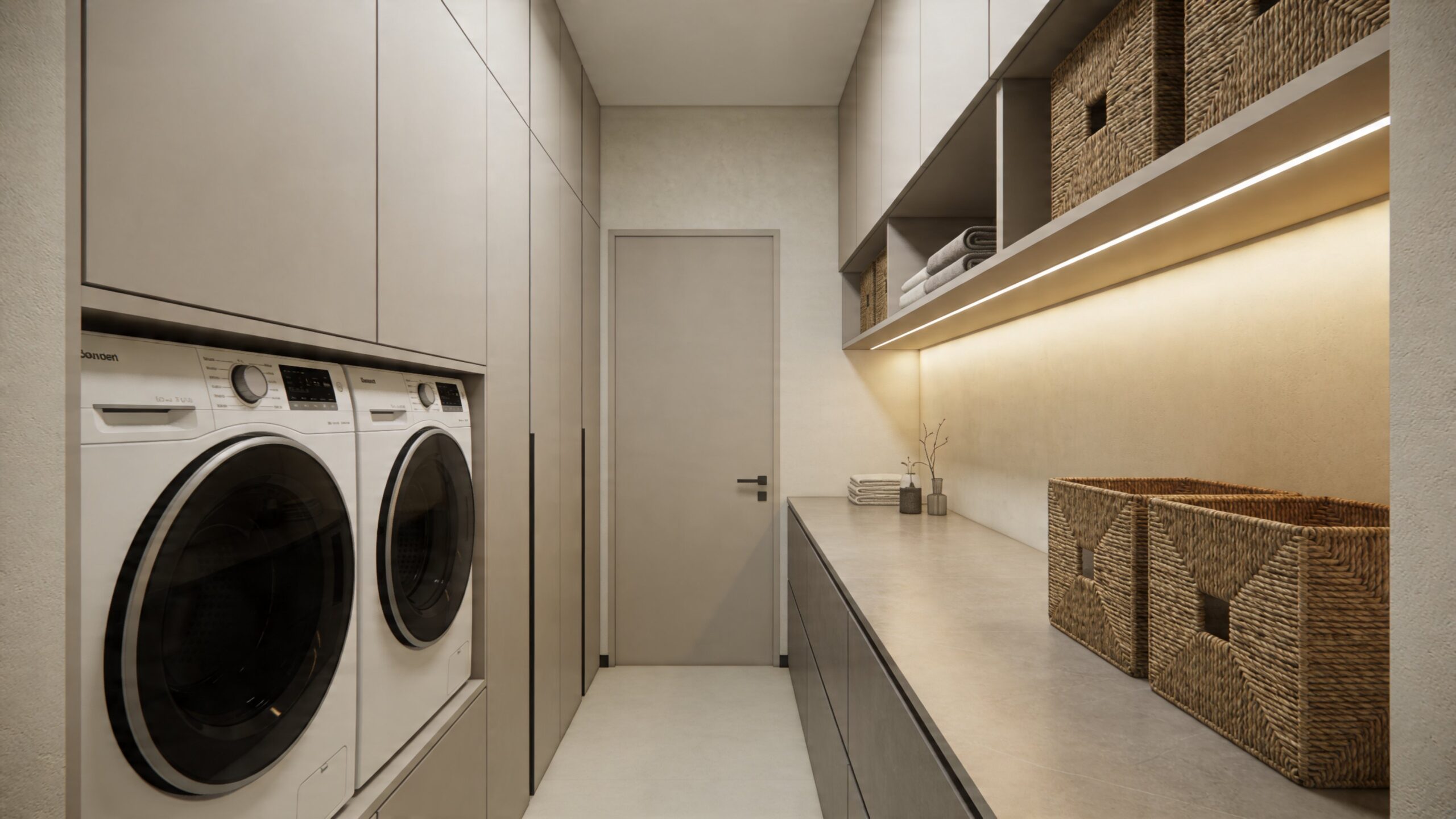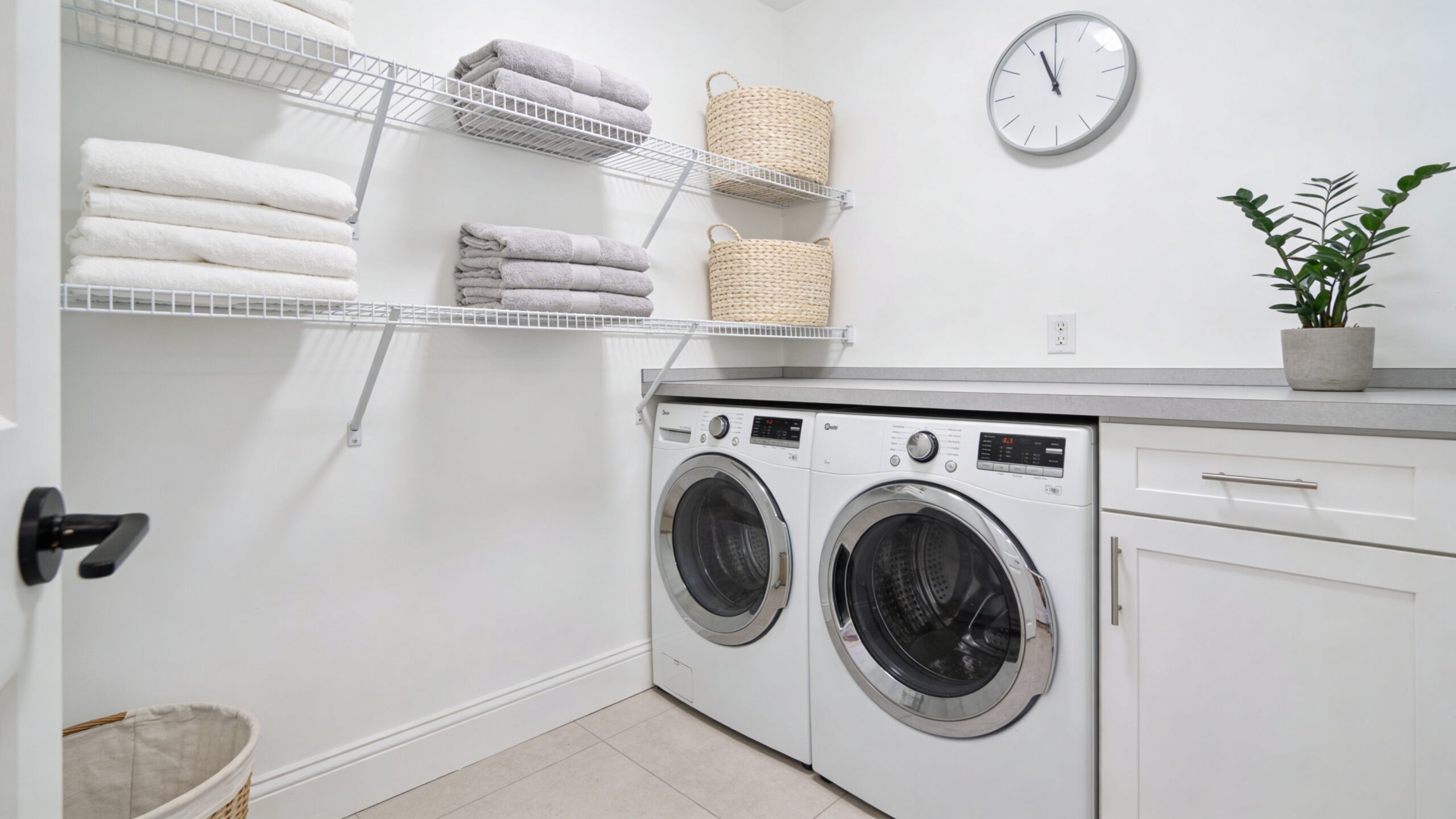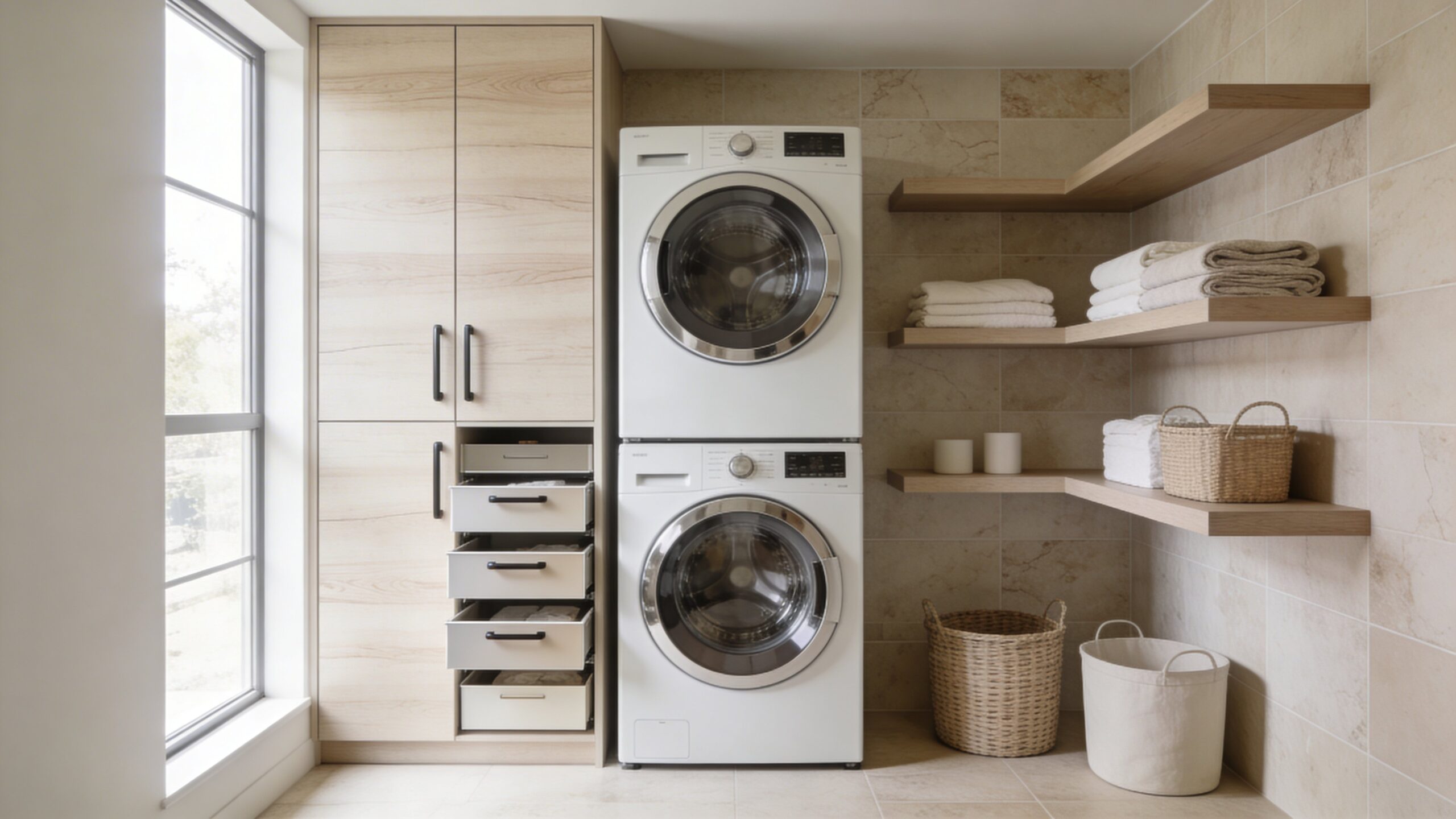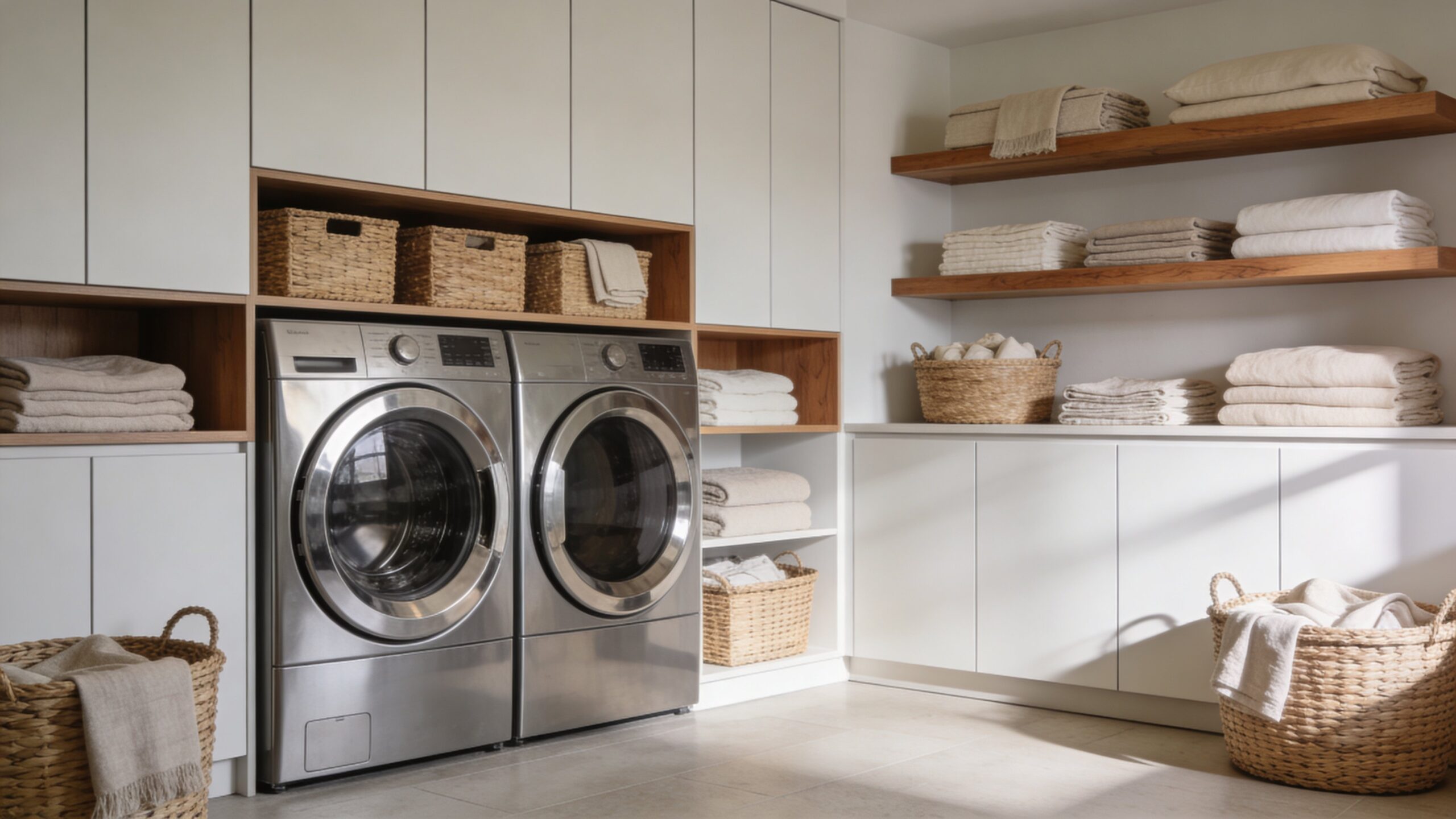
Why Modern Laundry Room Storage Matters
A laundry room is one of the hardest-working spaces in the home, yet it is often treated like an afterthought. It catches detergent bottles, cleaning supplies, dryer sheets, hampers, orphan socks, pet towels, seasonal linens, and the steady rhythm of everyday household mess. Without smart storage, even a beautiful laundry room can quickly become crowded, noisy, and frustrating to use. Modern laundry room storage is about more than hiding clutter. It is about creating a system that makes each step easier, from sorting and washing to folding, hanging, ironing, and restocking supplies. When everything has a clear home, the room feels calmer, the chores feel faster, and the entire household runs with less friction.
A: Use vertical wall space with shelves, cabinets, hooks, and fold-down drying racks.
A: Store daily items in matching bins or canisters and keep bulk packaging inside closed cabinets.
A: Yes, if you use baskets, jars, and folded items to keep the shelves visually clean.
A: Cabinets, shelves, a hanging rod, or a countertop zone can all work depending on the layout.
A: Use divided hampers for colors, whites, towels, delicates, and special-care items.
A: Keep them near the washer so stains can be treated before clothes are washed.
A: Try rolling carts, over-the-door racks, wall hooks, labeled bins, and stackable baskets.
A: Use shelves with dividers or baskets grouped by towels, sheets, guest linens, and seasonal textiles.
A: Choose clean-lined cabinets, matching containers, simple labels, warm lighting, and uncluttered surfaces.
A: A weekly reset keeps counters clear, supplies stocked, baskets sorted, and clutter from building up.
Start With a Clear Laundry Workflow
The best laundry storage ideas begin with workflow. Before choosing cabinets, shelves, baskets, or bins, think about how laundry actually moves through the room. Dirty clothes need a place to land. Supplies need to be close to the machines. Clean clothes need space to fold, hang, sort, and return to bedrooms. Items that do not belong in the laundry room need a way to move back out. A modern laundry room should support this sequence naturally. A hamper zone near the entrance helps keep piles off the floor. A detergent station above or beside the washer reduces reaching and searching. A countertop over front-loading machines creates instant folding space. A hanging rod gives delicate items a temporary home before they go to closets. The goal is not simply to store more things, but to create storage that follows the way you already live.
Use Vertical Space Like a Designer
Most laundry rooms have unused wall space, especially above the washer and dryer. Vertical storage is one of the simplest ways to make a laundry room feel organized without increasing its footprint. Floating shelves, upper cabinets, tall pantry-style units, peg rails, and wall-mounted drying racks can transform a blank wall into a hardworking storage zone.
Open shelves work beautifully when items are stored in matching baskets, glass jars, or clean-lined containers. Cabinets are better when you want to hide bright packaging, bulk supplies, or cleaning products. A mix of both often feels the most modern: closed storage for visual clutter and open display space for frequently used essentials. This balance keeps the room practical without making it feel sterile.
Add Cabinets That Hide the Chaos
Cabinets are the secret weapon of a polished laundry room. They instantly reduce visual clutter and make the room feel more intentional. Upper cabinets can store detergent, stain removers, dryer balls, extra towels, batteries, pet supplies, sewing kits, and household backups. Lower cabinets can hold larger items like buckets, cleaning caddies, bulk paper goods, and seasonal textiles.
For a modern look, choose flat-panel doors, slim hardware, soft neutral colors, or warm wood finishes. If the laundry room is small, cabinets painted the same color as the walls can help them visually recede. If the space needs personality, deeper tones like charcoal, navy, olive, or walnut can make the room feel custom and elevated. Organization inside the cabinets matters just as much as the exterior, so use bins, risers, and divided containers to keep shelves from becoming hidden clutter zones.
Create a Folding Station That Works Every Day
A folding station can completely change how a laundry room functions. If you have front-loading machines, a countertop installed above them creates a wide, stable surface for folding clothes, sorting towels, or placing baskets. In larger rooms, a built-in counter with drawers underneath can become a command center for laundry and household linens.
The best folding stations stay clear because storage is built around them. Nearby drawers can hold lint rollers, clothespins, mesh wash bags, and garment care tools. A shelf above the counter can hold labeled baskets for each family member. A trash pullout or small bin below the counter makes it easy to discard lint, packaging, and pocket debris. When the folding surface is treated as a work zone rather than a dumping ground, the room feels dramatically more efficient.
Use Baskets and Bins With Purpose
Baskets are classic laundry room storage tools, but modern organization depends on using them with intention. Instead of one large basket that collects everything, consider separate containers for whites, darks, towels, delicates, uniforms, cleaning cloths, and items that need repair. Sorting at the beginning makes laundry faster later.
Matching baskets create a clean, calm look, especially on open shelving. Woven baskets add warmth, wire baskets feel airy and industrial, and fabric bins soften a compact room. Clear bins are useful for products you need to identify quickly, while opaque bins are better for visual simplicity. Labels help everyone in the household understand the system, which is what turns good storage into lasting organization.
Make Room for Hanging and Air-Drying
Modern laundry rooms need a dedicated place for clothes that should not go in the dryer. A simple hanging rod between cabinets, under a shelf, or across a recessed niche can prevent damp shirts and delicate fabrics from ending up on door frames, shower rods, or chair backs. If space allows, combine a hanging rod with a wall-mounted drying rack for sweaters, activewear, and hand-wash items.
Retractable clotheslines and fold-down drying racks are excellent for small spaces because they disappear when not in use. Ceiling-mounted drying racks can also work in rooms with enough height. The key is to place air-drying storage near the washer so wet clothes do not drip across the room. When hanging space is built into the design, the laundry room becomes more capable and less chaotic.
Install Pull-Out Storage for Tight Spaces
Narrow gaps in laundry rooms often go unused, but they can become some of the most valuable storage in the space. A slim rolling cart between the washer and dryer can hold detergent, scent boosters, dryer sheets, stain spray, and cleaning bottles. Pull-out vertical cabinets can do the same thing with a more built-in appearance.
Pull-out hampers, tilt-out bins, and sliding shelves are especially useful in compact laundry rooms where floor space is limited. They let you access supplies without crowding the room with freestanding storage. A modern laundry room should feel easy to move through, so storage that tucks away is often better than storage that sits in the walkway.
Turn the Back of the Door Into Storage
The back of the laundry room door is often overlooked, but it can hold an impressive number of small essentials. Over-the-door racks can store stain removers, lint rollers, cleaning sprays, microfiber cloths, ironing accessories, or pet grooming supplies. Hooks can hold laundry bags, collapsible baskets, aprons, or reusable shopping totes. For a more refined look, choose a mounted rail system or shallow door organizer rather than bulky plastic pockets. This area works best for lightweight items that are used often. Keeping grab-and-go tools on the door frees up cabinets and shelves for larger storage needs.
Add a Utility Sink With Smart Storage Below
A laundry sink is incredibly useful for soaking stains, rinsing muddy shoes, washing paintbrushes, filling buckets, and handling household cleanup. The area below the sink can easily become messy, so modern storage should include a cabinet, pull-out tray, or divided bin system underneath.
Use this lower zone for cleaning products, rubber gloves, scrub brushes, sponges, and stain treatment tools. A small tension rod can hold spray bottles, while stackable bins can separate cloths from supplies. If plumbing reduces the usable area, choose flexible containers that can fit around pipes. The sink zone should feel like a mini cleaning station, not a cabinet where random products disappear.
Design a Laundry Closet Like a Full Room
Not every home has a dedicated laundry room. Many modern laundry areas are closets, hallway niches, mudroom corners, or stacked washer-dryer spaces. These compact zones can still be highly organized with the right storage choices. The trick is to think vertically and keep every item edited.
For a laundry closet, install shelves above the machines, add a slim side cart if space allows, and use labeled bins to contain supplies. A fold-down counter or wall-mounted drop-leaf shelf can create temporary folding space. If the doors close, the inside can be more functional than decorative, but a clean arrangement still helps the space feel intentional every time it opens.
Combine Laundry Storage With Mudroom Function
Many laundry rooms double as mudrooms, especially near garages, back doors, or side entrances. This creates an opportunity to organize more than clothes. Lockers, cubbies, hooks, shoe shelves, and bench storage can help manage backpacks, coats, sports gear, pet leashes, and outdoor accessories. When combining laundry and mudroom storage, separation is important. Give laundry supplies their own cabinets or shelves, and give entry items their own hooks and bins. A bench with drawers or baskets underneath can hide shoes while offering a place to sit. Tall cabinets can store brooms, mops, vacuum attachments, and seasonal gear. A well-planned hybrid room can become one of the most useful spaces in the entire home.
Use Labels Without Making the Room Feel Busy
Labels are helpful, but they should support the room’s design rather than overwhelm it. Modern laundry rooms look best when labels are clean, consistent, and easy to read. Simple text labels on bins, baskets, jars, and shelves can help everyone return items to the right place.
For a refined look, use the same label style throughout the room. Black-and-white labels feel crisp, wood tags feel warm, and minimalist adhesive labels blend into modern cabinetry. Avoid labeling every single item if it makes the room look crowded. Focus on zones that need clarity: stain care, dryer supplies, cleaning cloths, delicates, towels, and family sorting baskets.
Store Bulk Supplies Without Visual Clutter
Buying laundry supplies in bulk can save time and money, but oversized containers can quickly ruin the look and function of the room. Create a dedicated bulk storage zone away from the main work surface. Tall cabinets, deep shelves, utility closets, or lower cupboards work well for backup detergent, paper towels, cleaning refills, and extra household supplies.
Keep daily-use products in smaller containers or easy-access bins, then refill them from bulk storage as needed. This prevents the countertop from becoming crowded with giant bottles and boxes. It also makes the room feel more like a designed workspace and less like a storage closet.
Upgrade Small Details for a Cleaner Look
Some of the most effective laundry room storage ideas are small details that reduce everyday mess. A lint bin near the dryer keeps waste contained. A jar for found coins, buttons, and pocket items prevents clutter on the counter. A mesh bag station makes it easy to protect delicates. A small tray can hold stain sticks, fabric shavers, and measuring cups.
These details may seem minor, but they solve common problems before they spread across the room. Modern organization is not about perfection; it is about reducing friction. When every small item has a home, the whole laundry routine feels smoother.
Choose Storage Materials That Match the Room’s Mood
Laundry rooms are practical, but they do not have to feel plain. Storage materials can shape the entire personality of the space. White cabinets and clear containers create a bright, clean look. Wood shelves and woven baskets add warmth. Matte black hardware and metal racks create a modern industrial edge. Glass jars and ceramic containers bring a boutique feel to everyday supplies.
The best laundry rooms feel connected to the rest of the home. If your home is modern farmhouse, use warm wood, simple hooks, and soft neutrals. If it is contemporary, choose sleek cabinets, integrated handles, and smooth surfaces. If it is coastal, use light colors, natural textures, and airy shelving. Storage should be functional first, but style helps make the room enjoyable to use.
Keep Cleaning Supplies Safe and Sorted
Laundry rooms often store more than laundry products. Bleach, disinfectants, stain removers, sprays, and specialty cleaners need thoughtful storage. Keep potentially hazardous products out of reach of children and pets, preferably in upper cabinets or locked storage if needed. Avoid mixing products in unlabeled containers, especially chemicals that could be dangerous if confused.
Organize cleaning products by use. Laundry stain care can stay near the washer. General cleaning sprays can go in a caddy. Floor care supplies can live in a tall cabinet. Extra sponges, gloves, and cloths can be grouped in bins. This approach makes the room safer and faster to use.
Make the Room Easy for Everyone to Maintain
A laundry room only stays organized if the system is easy to follow. If bins are hard to reach, labels are unclear, or storage is too packed, the room will drift back into clutter. Good organization should feel obvious. Frequently used items belong at eye level or within easy reach. Heavy products belong lower. Rarely used supplies can go higher or farther back.
Think about every person who uses the room. Kids may need lower hampers or labeled baskets. Guests may need a visible place for towels. Busy households may need separate zones for uniforms, school clothes, workwear, and linens. The more intuitive the room feels, the less effort it takes to keep it clean.
Add Hidden Storage Wherever Possible
Hidden storage gives a laundry room a polished, custom look. Toe-kick drawers can hold flat items like dusters or extra dryer sheets. A pull-out ironing board can disappear into a cabinet. A hidden hamper can slide out from beneath a counter. A tall cabinet can conceal a broom, mop, vacuum, and ironing board behind one clean door.
This kind of storage is especially valuable in open laundry rooms connected to kitchens, mudrooms, or hallways. When the space is visible from other areas of the home, concealed storage helps it feel calm even when chores are in progress.
Plan for Linens, Towels, and Household Extras
Many laundry rooms become secondary linen closets, especially in homes where bathroom storage is limited. If you plan to store towels, sheets, blankets, table linens, or cleaning cloths in the laundry room, give them dedicated shelves or cabinets. Stack items by category and use shelf dividers to prevent piles from collapsing. Deep shelves are useful for bulky blankets, while shallow shelves work better for towels and sheets. Baskets can hold guest linens, pet towels, pool towels, or seasonal textiles. When linens are stored close to the laundry area, washing, folding, and restocking become much easier.
Use Lighting to Support Organization
Storage works better when you can see what you are storing. Under-cabinet lighting, ceiling fixtures, task lights, and bright wall colors can make the laundry room feel cleaner and more functional. Dark corners create forgotten clutter, while good lighting makes shelves, labels, and work surfaces easier to use.
If the laundry room has cabinets, lighting under the upper cabinets can illuminate the folding counter. If it has open shelves, soft lighting can make baskets and jars look intentional. A well-lit laundry room feels less like a chore zone and more like a purposeful part of the home.
Create a Reset Routine
Even the most organized laundry room needs a reset routine. Once a week, clear the folding surface, return supplies to their zones, empty the lint bin, restock detergent, match loose socks, and remove items that do not belong. This quick habit keeps the room from becoming a catchall.
A reset routine is easier when storage is simple. If each basket, cabinet, and hook has a specific purpose, tidying the room takes minutes instead of hours. Modern laundry room storage is not just about the installation; it is about creating a system that stays useful long after the makeover is finished.
Final Thoughts: A Laundry Room That Feels Calm, Capable, and Complete
Modern laundry room storage turns an ordinary utility space into a room that supports daily life. With cabinets to hide clutter, shelves to keep essentials visible, baskets to sort the flow, and smart zones for folding, hanging, cleaning, and storing, the laundry room becomes easier to use and easier to love. The best storage ideas are not always the biggest or most expensive. Sometimes the most powerful change is a labeled basket, a clear counter, a pull-out cart, or a simple hanging rod. When every item has a place and every task has a zone, laundry feels less like a mess to manage and more like a system that quietly works.