Shelving Works Best When Every Level Has a Job
Open shelves can make a laundry room faster to use, lighter to look at, and easier to adapt than a wall of fixed cabinets. They can also become a highly visible holding area for mismatched bottles, empty baskets, and objects that belong elsewhere. The difference lies in planning shelves as part of the workflow rather than treating them as leftover horizontal space. A useful scheme considers what is safe to display, who needs to reach it, how deep each object is, and what happens when a basket is removed. It combines generous clearance with enough containment to keep small supplies from spreading. Modern shelving does not require perfectly styled jars or a rigid row of identical bins. It needs durable materials, strong attachment, honest capacity, and a visual rhythm that relates to the machines and work surfaces below. When those decisions are made deliberately, shelves can support everyday organization without asking the household to maintain a showroom.
A: Base depth on its intended basket or supply while protecting headroom, sightlines, and appliance operation.
A: Only when their structure, fasteners, and published load rating safely support the full expected weight.
A: Lightweight items used in most sessions, such as clean baskets, garment bags, or clothespins.
A: No. Consistent scale and clear purpose create more order than perfectly identical containers.
A: Enough to grasp its handles and tilt or slide it out comfortably when full.
A: Yes, if both loads are structurally supported and garments have drip clearance and airflow.
A: In secured storage that follows product guidance and the household's specific safety needs.
A: Limit each run to a narrow purpose, contain small items, and preserve visible breathing room.
A: A smooth, sealed, washable surface is generally easier to maintain than rough unfinished material.
A: When existing containers are overcrowded, categories overlap, or stored items properly belong elsewhere.
Start With Reach Zones, Not Shelf Count
Divide the wall by frequency of use. The easiest level to reach should hold lightweight items handled during most laundry sessions: clean baskets, clothespins, garment bags, or folded cleaning cloths. Higher shelves can accept seasonal supplies and backstock, while low open cubbies suit baskets that travel in and out of the room.
Keep chemicals out of reach where children or vulnerable household members may access them, and follow every product’s storage guidance. An open shelf is not automatically appropriate for detergent simply because it is convenient. Safety locks, closed storage, or a higher secured cabinet may still be necessary.
Choose Depth From the Object and the Room
A shelf that is too shallow leaves baskets overhanging; one that is too deep hides the back row and projects into headroom. Measure the containers and folded goods intended for each location. Narrow shelves can serve small utility items near a sink, while deeper shelves may be justified above a base cabinet where users do not stand directly beneath the edge.
Consider sightlines from the doorway. Thick deep shelves across a narrow wall can make the room feel compressed even when they provide storage. A short run beside a window or one deep shelf above a counter may feel more open than several continuous bands.
Before finalizing depth, map doors and appliance lids in motion. Top-load washers need unobstructed opening space, and a shelf above a front-load machine should not encourage users to store objects where vibration can move them toward an edge.
Anchor Shelves for the Loads They Will Actually Carry
Laundry supplies become heavy quickly. Several refill containers, wet linens, or a packed basket can exceed the assumptions behind decorative floating-shelf hardware. Fasten supports into framing or an appropriate structural backing and follow the hardware manufacturer’s load and spacing requirements. If walls are open during renovation, add blocking where shelves, rails, and fold-down accessories will be mounted. For masonry or other wall assemblies, use fixings selected for that substrate. A shelf should not depend on drywall anchors merely because its brackets are concealed.
Use Baskets to Define Movements, Not Just Categories
A basket system becomes more useful when it reflects where contents go next. One low cubby might hold an incoming delicate-load basket, while an upper open slot keeps each family member’s clean carry-out basket ready. The distinction reduces mixing and turns shelving into a traffic system.
Choose baskets that can be lifted comfortably when full. Handles should clear shelf edges, and the opening above the basket should allow it to tilt or slide out without scraping. A beautiful tight-fitting bin often remains unused because removal requires two hands and exact alignment.
Combine Open and Closed Storage Deliberately
Shelving excels at access but exposes every silhouette. Pair it with a nearby cabinet or drawer for irregular products, hazardous supplies, repair tools, and backstock. The open portion can then remain focused on baskets and washable everyday items rather than carrying the room’s entire inventory.
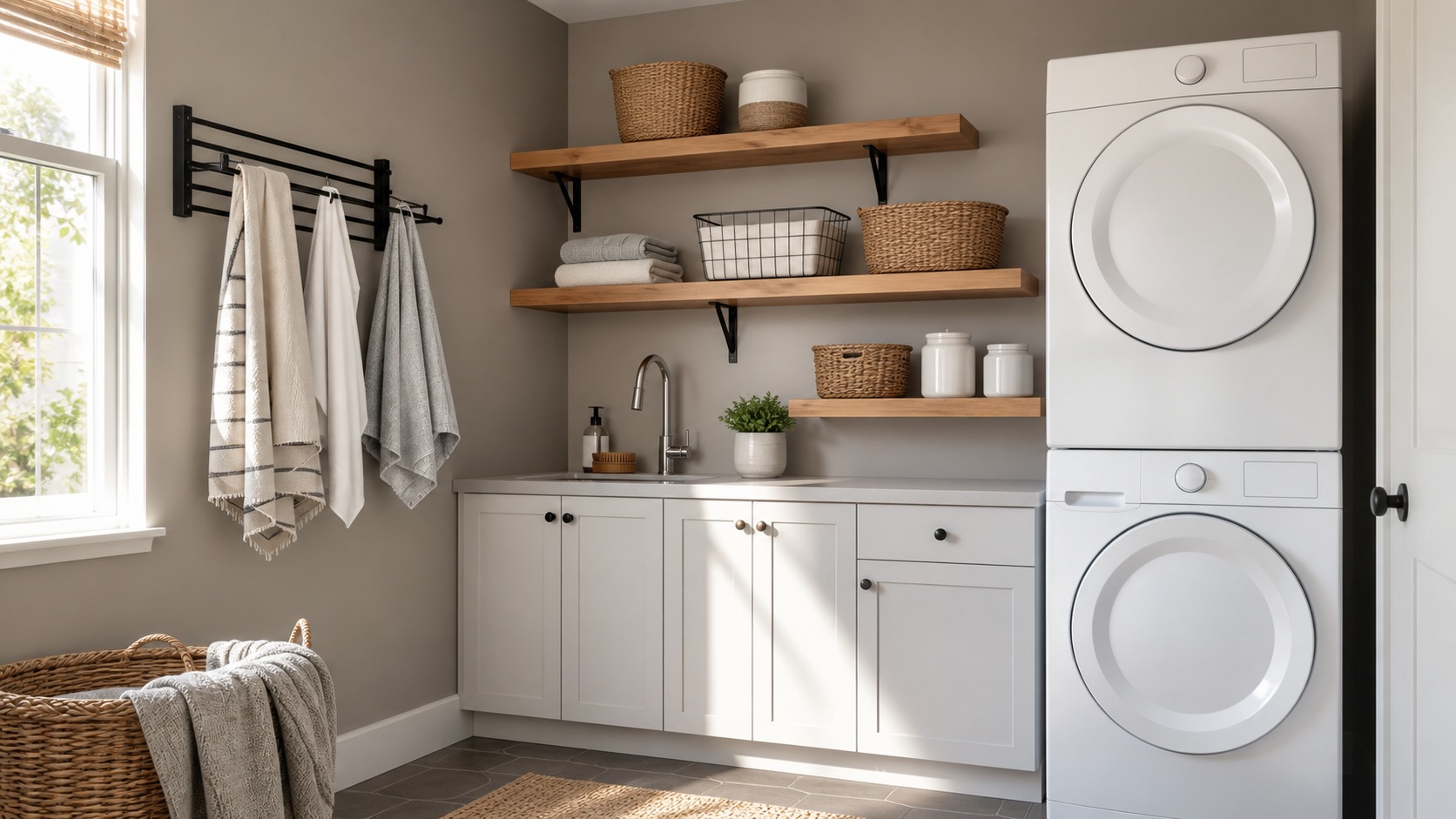
Set a clear boundary between the systems. For example, an open oak shelf can span the folding counter while a tall painted cabinet contains bulk supplies and cleaning equipment. Repeating the shelf material at a small detail elsewhere helps the open element feel integrated rather than added later.
Do not hide a shortage of closed storage by buying more baskets. If users must remove three bins to locate one bottle, the room has gained visual order but lost functional clarity. Containers should reduce handling, not multiply it.
Turn a Shelf Into a Folding and Sorting Station
A shelf mounted just above the counter can hold shallow trays for pocket finds, mending, and garments requiring special treatment. Keeping these delayed decisions off the folding surface allows the main task to continue. Select trays with a lip and enough visual difference that they are not confused with clean-laundry baskets.
Above a wider folding station, open cubbies can temporarily separate completed loads. Keep them large enough for a reasonable folded stack but not so deep that clothing is forgotten. A family system works better when each cubby has a consistent position; permanent readable labels are unnecessary if location and routine are stable.
Integrate Drying Without Tangling the Display
A rail beneath a shelf uses one wall for storage and air-drying. Confirm that hanging garments will not touch the counter, block a sink, or drip onto baskets. The rail and shelf need independent load consideration because wet clothing adds weight and movement.
For a small room, a fold-down rack between shelf supports can provide temporary capacity and return flat when unused. Leave enough side clearance for garments and enough air around them to dry. Avoid placing drying equipment directly in front of cabinet doors or utility shutoffs.
Material selection matters in damp zones. Seal wood on all faces, choose corrosion-resistant metal, and allow towels or cleaning cloths to dry before storing them in enclosed baskets. Open shelving can improve airflow, but only when items are not compressed into dense stacks.
Create Modern Rhythm Without Forced Symmetry
Modern shelving often looks strongest when it responds to architecture. Align one edge with a window, cabinet, backsplash joint, or appliance tower, then let the other end terminate where the function ends. This creates order without stretching a shelf across an entire wall for the sake of symmetry.
Varying lengths can distinguish zones, but keep thickness, material, or bracket language consistent. Too many independent shelf sizes create a collage effect. A pair of longer shelves above a counter and one short shelf beside a sink may be enough to articulate the room.
Style With Useful Objects and Breathing Room
Begin with functionally necessary contents, then assess whether the elevation needs anything else. Folded towels, a handsome utility brush, a plain vessel, or a small plant suited to the light can add texture. Laundry-themed signs and rows of decanted products are not required to make the room feel finished.
Leave portions of the shelf open. Empty area makes baskets easier to return and gives irregular daily activity somewhere to land without immediately appearing chaotic. It also highlights the material and construction of the shelf itself.
Rotate or remove objects when they stop serving the routine. A display that demands dusting around ten small accessories is working against the practical purpose of the room. Two substantial useful objects often create a clearer composition than many tiny ones.
Plan Shelves Around Cleaning
Laundry rooms collect lint and fine dust. Smooth sealed surfaces and removable baskets simplify wiping, while highly textured unfinished wood can hold residue. Maintain enough vertical clearance to clean the shelf and the wall behind its contents. If the shelf sits near detergent use, choose a finish that tolerates splashes without staining.
Brackets and rails also need access. Concealed hardware creates a clean appearance, but visible brackets can be an honest design element and may simplify inspection. Whichever system is selected, avoid decorative crevices that are difficult to reach and ensure mounting points remain tight over time.
Prevent the System From Becoming Overflow Storage
Assign capacity limits before shelves fill. One basket for stain treatment, one zone for clean carry-out, and one upper area for backstock are easier to maintain than broad categories such as miscellaneous laundry. When a container reaches its boundary, use or edit its contents instead of adding another shelf.
Watch what repeatedly appears in the wrong location. If hangers collect on the counter, add a short rail. If empty containers remain beside the sink, place recycling near the exit. If folded loads occupy the drying shelf, provide a dedicated departure cubby. Organization improves when the structure responds to observed behavior.
Modern laundry shelving should make the next action obvious. Strong attachment, object-specific dimensions, safe storage, and restrained styling allow open shelves to remain useful even when the room is busy. The smartest design is not the one with the most perfectly matched baskets; it is the one that helps supplies move, laundry leave, and the work surface become clear again.
Adapt Shelving to Small and Shared Rooms
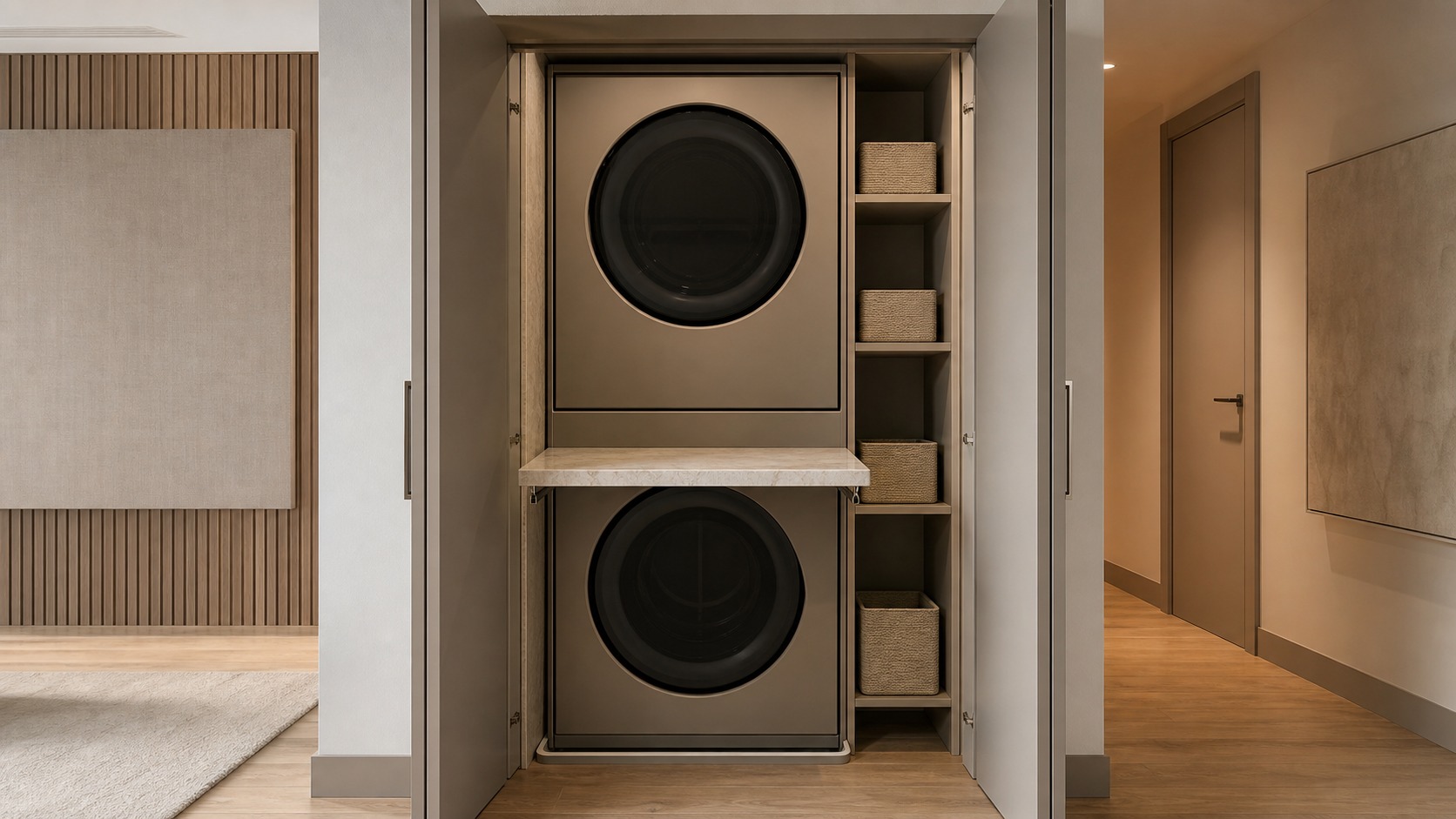
In a laundry closet, shelves should protect the limited operating envelope rather than occupy every available inch. A single shelf above a stacked pair can hold carry-out baskets, while a narrow side ledge supports treatment tools without blocking machine doors. In a mudroom combination, locate open laundry storage away from shoes, pet gear, and the primary bench so clean textiles do not absorb dirt or become a general drop zone. Shared apartment facilities call for another approach: personal removable caddies and clearly separated temporary areas are more appropriate than leaving products permanently exposed. Renters should use only attachment methods approved by the property owner and avoid loading tension or adhesive systems beyond their documented capacity. The shelving concept must fit the room’s ownership, circulation, and users—not merely its wall dimensions.
Coordinate Shelves With the Whole Elevation
Study the shelf composition beside the backsplash, lighting, switches, and cabinet fronts. Under-shelf lighting needs concealed wiring, a suitable channel, and enough setback to avoid glare. A tiled wall may require shelf anchors to be planned before installation so drilling does not crack finished surfaces or land unpredictably on grout joints. If shelves cross near a window, preserve casing, blind operation, and room for cleaning the glass. These relationships are easier to resolve on a measured elevation than during installation.
Finally, specify how shelves terminate. A clean wood end, a metal return, or a support aligned with a cabinet side can make a simple board look intentional. Confirm that finish samples complement the counter and floor under both daylight and evening light. Modern shelving succeeds through these quiet alignments: it belongs to the architecture, carries an appropriate load, and places useful objects exactly where the next part of the laundry routine needs them. Photograph the completed installation before shelves are filled, and keep the fastener specifications with the renovation records. That reference helps future owners understand concealed supports, safe load assumptions, and wiring routes. It also provides a useful baseline when a shelf begins to sag, a bracket loosens, or the household considers adding heavier storage.